

Downtown – Dallas, Texas
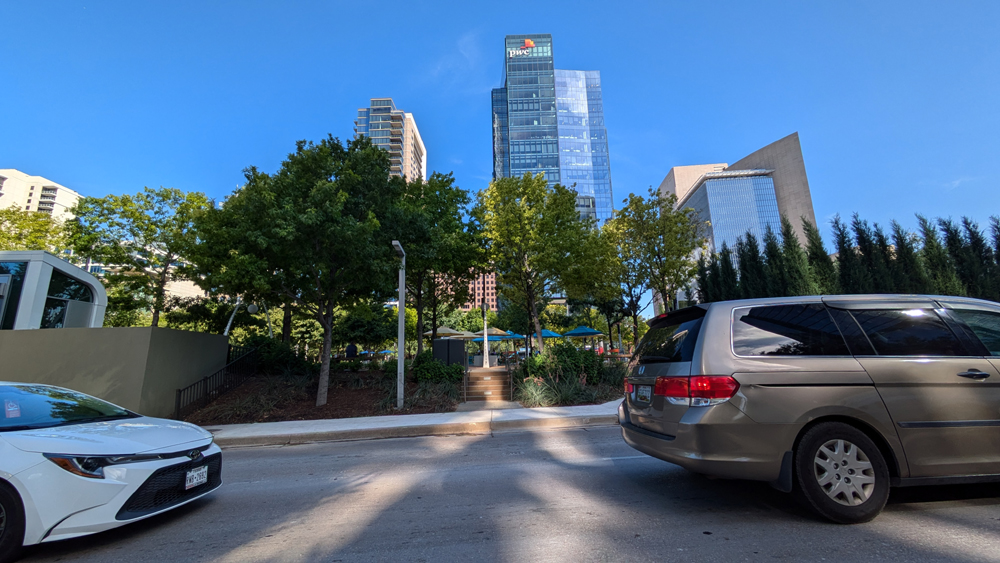
Klyde Warren Park view from across the Woodall Rodgers Freeway. The prominent, 20-story glass skyscraper towering in the center background is the PwC Tower at Park District located at 2121 North Pearl Street. Opened in 2018, it serves as a premier Class A office anchor for the Uptown and Arts District submarkets. The green, tree-lined space in the mid-ground is a section of Dallas’s iconic 5.2-acre deck park. Built over a recessed freeway, it acts as a central pedestrian hub connecting Downtown and Uptown.

Steps lead directly into one of the park’s main shaded relaxation terraces. It features an array of signature yellow and blue patio umbrellas, bistro tables, and movable green chairs where visitors regularly gather to work, dine, or rest. The patio is framed by rows of lush, mature ginkgo trees alongside native Texas ornamental grasses and pink-flowering perennials, creating a serene urban oasis. Visible in the background between the tree branches is the distinct red-brick and stone architecture of the 2100 Ross Avenue tower, highlighting the park’s unique position surrounded by downtown high-rises.

This view looks west down Ross Avenue from the intersection of North Pearl Street in downtown Dallas, Texas, just a block south of Klyde Warren Park. On the right corner stands an official concrete pillar directory marking the southern gateway of the Dallas Arts District, the largest contiguous urban arts district in the United States. Towering on the immediate right is the soaring facade of the Trammell Crow Center at 2001 Ross Avenue. This 50-story, late-modernist skyscraper is a core anchor of the Dallas central business district. Visible directly down the center of the street corridor is the iconic, pointed emerald-glass peak of Fountain Place, one of the most recognizable architectural anchors of the Dallas skyline. On the left is the modern white vertical-slat parking garage serving the adjacent high-rises.

View down Ross Avenue near its intersection with North Ervay Street, capturing a stark architectural contrast between historic and modern Dallas.
Featured Skyline Landmarks
- 2100 Ross Avenue: The massive multi-tiered grey high-rise to the right of the street is the tower whose parking structure was featured in your previous stop. It houses major corporate offices, including Lockton.
- Cathedral Santuario de Guadalupe: The prominent red-brick Gothic Revival church on the left is the mother church of the Roman Catholic Diocese of Dallas. Completed in 1902 and designed by renowned architect Nicholas J. Clayton, it serves one of the largest cathedral congregations in the United States.
- Chase Tower: Towering directly behind the cathedral’s spire is the iconic 55-story glass skyscraper known for its unique “keyhole” opening at the top, a landmark anchor of the Dallas skyline.
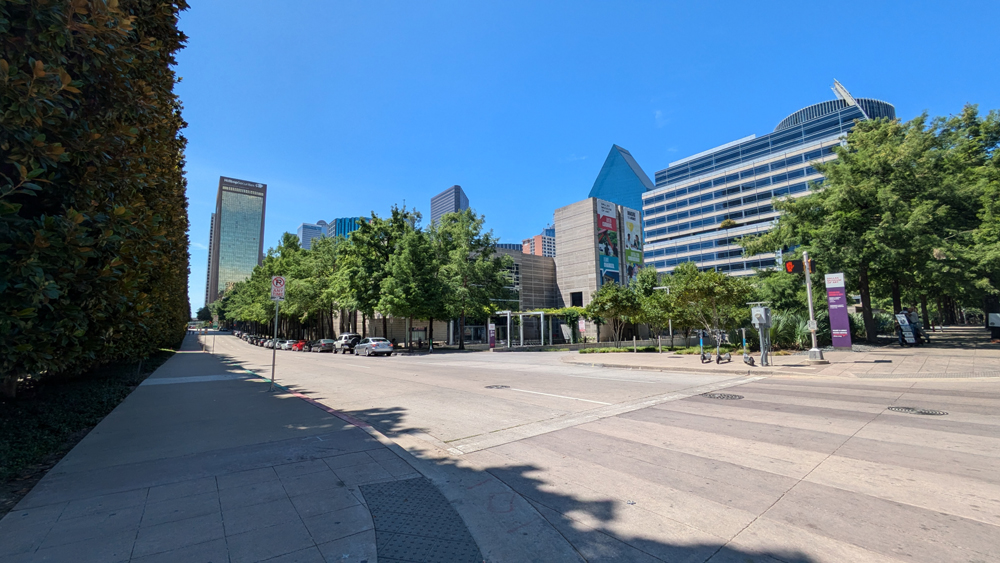
Harwood Street from near its intersection with Woodall Rodgers Freeway, standing alongside the eastern edge of Klyde Warren Park in downtown Dallas.
- Dallas Museum of Art (DMA): The sprawling, low-rise geometric concrete complex directly across the street is the main campus of the DMA. This massive institution anchors the Dallas Arts District and houses a global collection spanning thousands of years of art history.
- Fountain Place: The sharp, emerald-green glass pyramid peak of Fountain Place is visible towering in the background directly behind the museum complex.
- Klyde Warren Park Access: The tree-lined pedestrian plaza and lawn to the right mark the southeastern entrance to Klyde Warren Park, where park visitors can transition directly into the city’s cultural museum hub.

The shaded, gravel Ginko Promenade runs parallel to the central lawn, framed by a canopy of mature oak and ginkgo trees that offer relief from the Texas sun. On the right side, along the outer perimeter (Sallie Maxie Way), a rotating daily lineup of local food trucks serves park visitors. The high-rise residential and luxury hotel towers of the Uptown Dallas neighborhood are visible in the background, lining the northern edge of the deck park.

This image shows the shaded pavilion floor of the Muse Family Performance Pavilion at Klyde Warren Park. This modern, open-air structure features an expansive polished stone stage supported by soaring steel pillars. It serves as the park’s primary venue for live concerts, theatrical performances, and community festivals. A park worker wearing an “Event Services” uniform is seen mopping the surface, keeping the space clean for daily visitors. In between formal performances, the shaded platform acts as a casual public space where local dancers, fitness enthusiasts, and visitors gather to practice routines or rest. Savor Gastropub is visible through the trees on the left is the glass facade of the park’s signature restaurant space, anchoring the central plaza.

This wide view looks northeast across Woodall Rodgers Freeway toward the sleek Park District development in the Uptown neighborhood of Dallas, Texas. This specific angle showcases a cluster of premier high-rises anchoring the northern edge of Klyde Warren Park:
- PwC Tower at Park District: The prominent 20-story glass office building in the center, located at 2121 N Pearl Street, serves as a corporate anchor for the submarket.
- The Residences at Park District: Standing directly to the left of the PwC tower is the matching 34-story luxury residential skyscraper, featuring high-end apartments and an upscale amenity deck.
- 2100 McKinney Avenue: The distinctive angled stone and glass tower on the far right houses major financial and corporate offices overlooking the park corridor.
- The landscaped plaza between the base of the towers features an illuminated interactive water fountain, pocket seating areas, and a dedicated drop-off valet lane in Park District Plaza.

Photo looking south down North Pearl Street toward the Arts District and Downtown Dallas skyline, taken from near the intersection with McKinney Avenue.
- Fountain Place: On the left is the unmistakable 60-story, rocket-sharp emerald glass pyramid tower. It remains one of the most celebrated achievements of architectural modernism in the city.
- AMLLI Fountain Place: Standing directly adjacent to the right is its sibling residential skyscraper, completed in 2020. It mirrors the exact glass tone of the original tower but features a dramatic, asymmetrical sloping roofline.
- Meyerson Symphony Center: In the center background at the end of the street corridor, you can glimpse the distinctive curved concrete roofline of the Morton H. Meyerson Symphony Center, home to the Dallas Symphony Orchestra.
- The Residences at Park District: The luxury apartment high-rise featured in your previous stop lines the immediate right-hand edge of the frame.
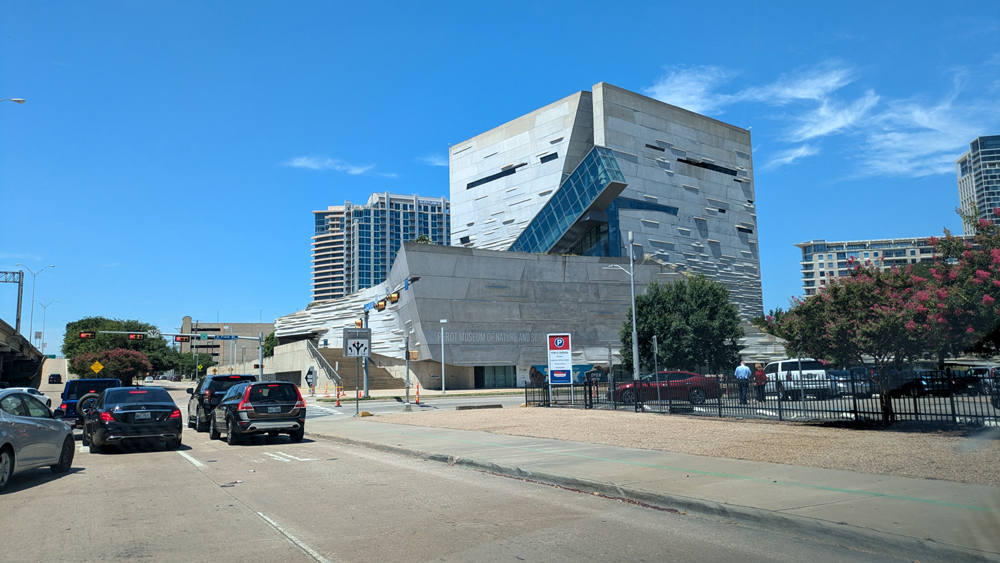
The Perot Museum of Nature and Science is located at 2201 North Field Street at the intersection of Broom Street in downtown Dallas, Texas. The landmark building is a masterpiece of modern, sustainable architecture: It was designed by Pritzker Architecture Prize laureate Thom Mayne and his firm, Morphosis Architects. The main building is a massive, 170-foot-tall textured concrete cube that appears to float over a landscaped plinth. The exterior features wavy, precast concrete panels designed to mimic regional Texas geology. Its most famous signature feature is the 150-foot glass-enclosed escalator structure that slashes diagonally across the southeast face of the building, offering riders sweeping views of the city skyline as they ascend.

This historic industrial complex located at 1001 Lower Lamar Street is at the corner of Broom Street in the West End district of downtown Dallas, Texas. The structures perfectly showcase Dallas’s adaptive reuse of its early 20th-century warehouse infrastructure. This sprawling red-brick complex originally served as the historic Corinth Chair Company factory, featuring multi-toned masonry, large industrial windows, and iconic rooftop water towers. The upper levels of the tallest brick building now house the high-tech Blue Cross and Blue Shield of Texas (BCBSTX) C-1 Innovation Lab, a dedicated space where clinicians, designers, and data scientists collaborate to develop new healthcare delivery solutions. The ground floor of the corner building houses On Premise, a trendy local restaurant, bar, and nightlife lounge featuring patio seating. Running along the right edge of the frame is the elevated concrete structure of the Woodall Rodgers Freeway overpass.
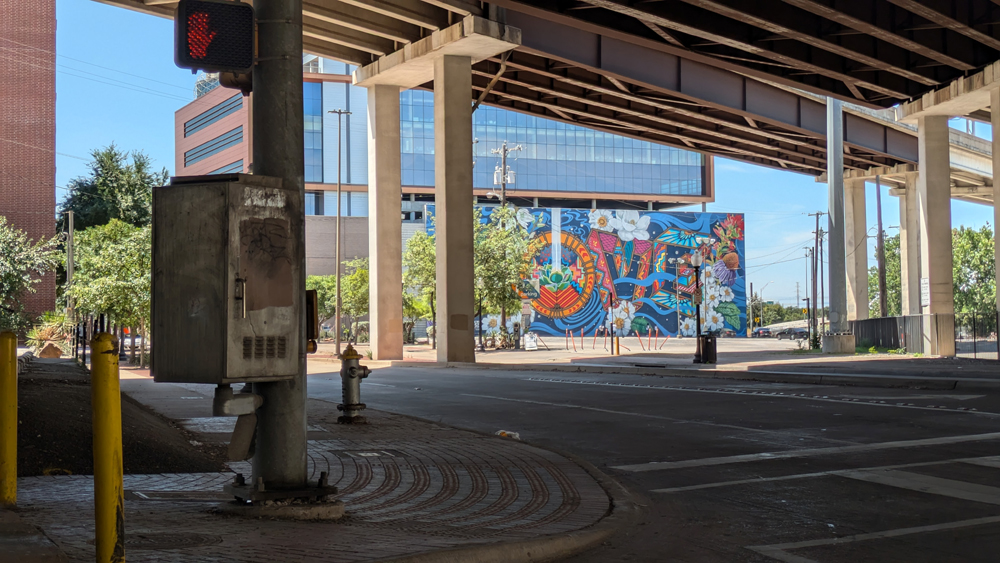
“The Power of Love“ is a massive public art piece viewed looking north from underneath the elevated concrete structures of the Woodall Rodgers Freeway. Unveiled in 2018, this highly vibrant mural was collaboratively designed and executed by celebrated Texas-based artists Brad Oldham and Brandon Adams. The mural functions as an enormous, colorful visual tapestry celebrating the universal theme of love. The bold, central typography spelling out the word “LOVE” features striking graphic patterns heavily inspired by traditional Mexican Talavera tiles. This focal text is beautifully framed by oversized, intricately painted native Texas wildflowers and botanical flora. The piece is painted across the prominent north-facing exterior facade of The Luminary, a creative multi-story office building located at 1201 Houston Street in the heart of Dallas’s historic West End Innovation District.
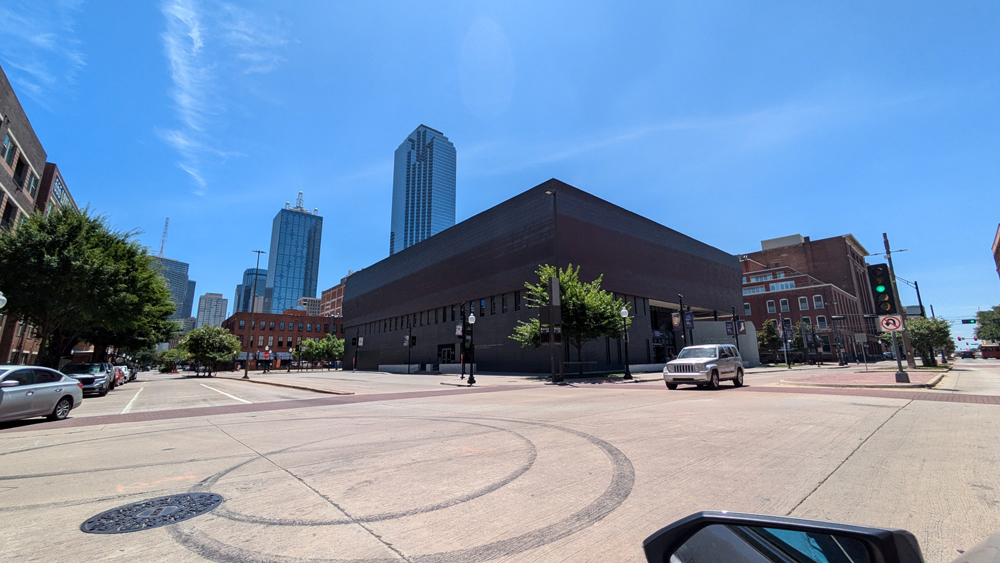
Dallas Holocaust and Human Rights Museum is located at 300 North Houston Street at the intersection of Pacific Avenue in the historic West End district. The state-of-the-art facility features a striking architectural presence. Opened in September 2019, the 53,000-square-foot building was designed by Dallas-based firm Omniplan. It features a copper-clad upper exterior that will naturally patina over time, juxtaposed against a dark, secure masonry base. The design intentionally funnels natural light into specific gathering spaces while keeping the gallery spaces intimate and reflective to respect the gravity of the history preserved inside. It is one of the few institutions in the nation to feature permanent wings dedicated to both the Holocaust and global human rights struggles, including a unique, permanent exhibit on LGBTQ+ rights.
Visible rising into the clear blue sky directly behind the museum complex are iconic pillars of the central business district:
- Bank of America Plaza: Towering on the left is the city’s tallest skyscraper, instantly recognizable at night by its silhouette of green neon and argon lighting.
- Renaissance Tower: Popping up directly over the museum’s roofline is the multi-point spire of the city’s second-tallest building.
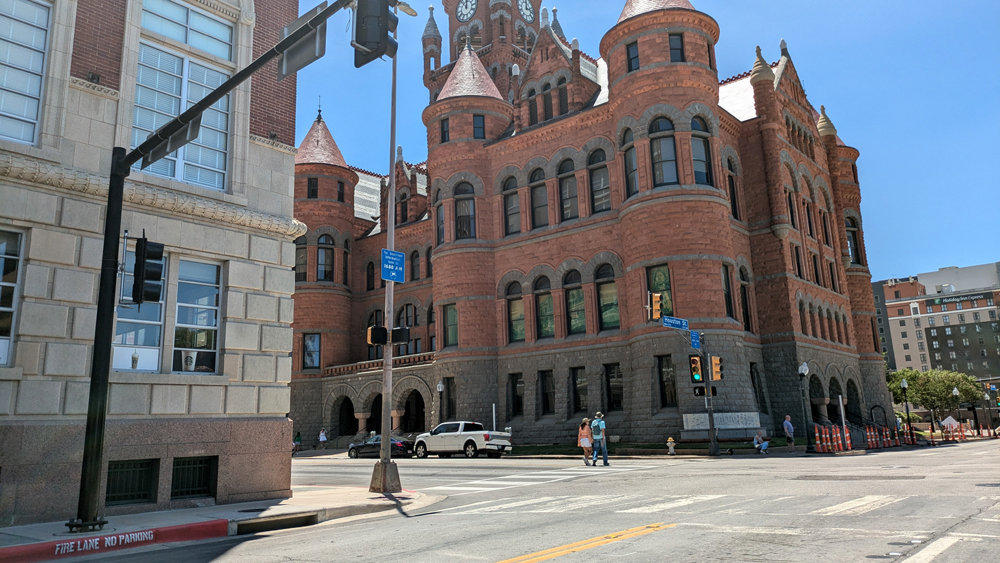
Exterior of the historic Old Red Courthouse, officially known as the Dallas County Courthouse, located at 100 South Houston Street. The building is one of the most iconic and recognizable historic landmarks in north Texas. Built in 1892, the monumental structure is a masterpiece of the Richardsonian Romanesque architectural style. It was designed by prominent architect Orlopp & Kusener. The striking exterior features a stark contrast of materials, combining a rugged, dark gray granite base with upper stories crafted from vibrant Pecos red sandstone. The castle-like facade is heavily embellished with soaring circular turrets, arched window groupings, terra cotta decorative details, and a massive 118-foot central clock tower topped with a soaring weather vane.
The courthouse sits directly adjacent to historic Dealey Plaza, serving as an immediate neighbor to the infamous Texas School Book Depository building. Though it originally served as the heart of the county’s judicial system, the meticulously restored interior now functions as the Old Red Museum of Dallas County History & Culture, preserving regional artifacts from early pioneer days to the modern era.

Dealey Plaza intersection looking northeast toward Elm Street. The location is one of the most famous and heavily visited historic sites in the United States.
- The Texas School Book Depository: The prominent seven-story, orange-brick building in the background is the former Texas School Book Depository, located at 411 Elm Street. Today, the upper levels house The Sixth Floor Museum at Dealey Plaza, chronicling the life, assassination, and legacy of President John F. Kennedy.
- The Grassy Knoll: The sloping, tree-lined lawn on the left side of Elm Street is the infamous “Grassy Knoll,” topped by a white concrete pergola monument structure that serves as a core focal point of historical interest and conspiracy theories.
- The Peristyle Structures: The concrete alcoves visible behind the trees are part of the original 1930s Art Deco park design built to honor early Dallas civic leaders.

The Triple Underpass is an Art Deco concrete railroad bridge built in 1936 that spans Elm, Main, and Commerce streets at the western gateway of Dealey Plaza. The bridge was built as a multi-span railroad overpass to untangle a dangerous mesh of ground-level railway lines. It channels the three core downtown streets beneath a busy railway corridor still active today. Designed in the mid-1930s as a centerpiece of Dealey Plaza, it features decorative Art Deco concrete pillars, vertical fluting, and stylized balustrades. This underpass is globally recognized as the route President John F. Kennedy’s motorcade was traveling through when he was assassinated in Dealey Plaza on November 22, 1963.