

Main Street Now – Tulsa, Oklahoma (2026)

The Main Street Now conference is the largest gathering of downtown revitalization leaders each year. This year the conference is in Tulsa from April 12-15, 2026.
Wayfinding helps to orient to the downtown. There are multiple subareas that they define. I started in the Cathedral District, moved through the Art Deco district and got as far as Utica Square by scooter.
Took a brief detour at the Philbrook Art Museum. Was impressed by how they packed in an encyclopedic collection within a private residence. As an aside when the owners moved out in 1939 they intentionally left it to become the museum it is today with a very large endowment to boot. This is the ethos of Tulsa. Money made here stayed here and did not leak out like other boomtowns.
Sunday, April 12
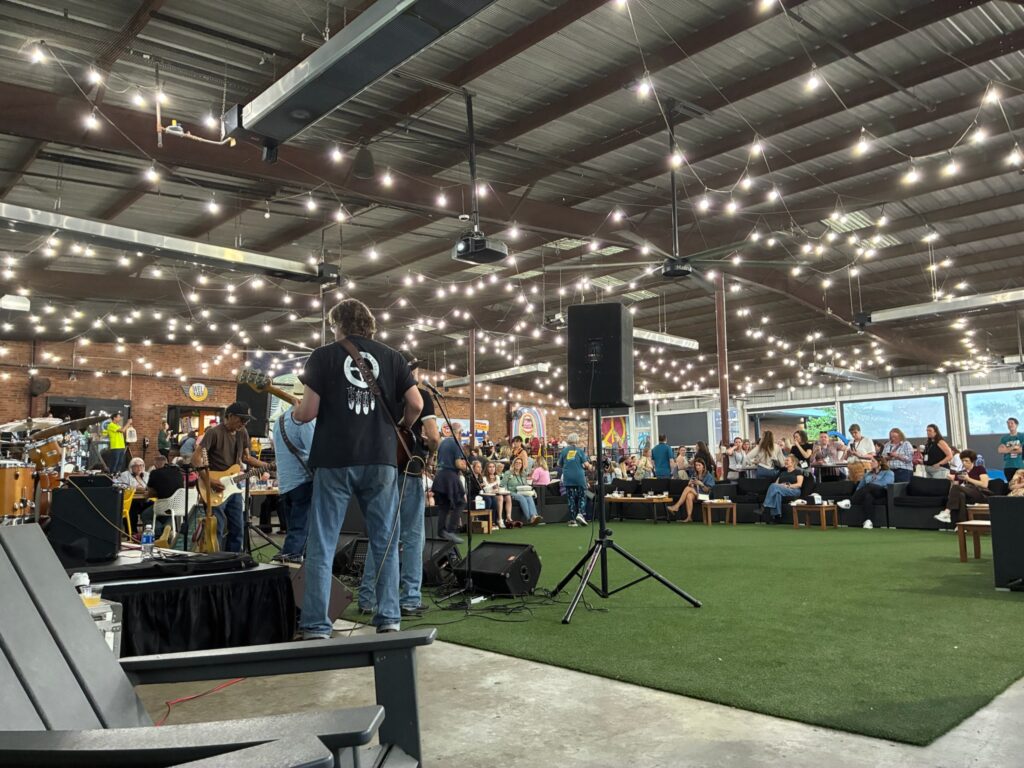
The Main Street America welcome reception at Mother Road Market embodied all I have learnt to love about Main Street over two decades:
- Like minded people joined by a shared purpose to make our communities stronger and better
- Live music presented by the Levitt Family Foundation from which I received a grant for one of the original 10 Levitt AMP communities in the country
- Amazing food from small businesses, much like those we work with and for in our districts
- A nonprofit food hall venue with people friendly design including a sizable covered space for social gathering
Taking it all in I am full of gratitude for this community and movement that I am proud to be a part of.

Monday, April 13
Conference leaders opened Main Street Now 2026 in Tulsa by welcoming attendees, acknowledging local Tribal nations and the Tulsa Race Massacre, and thanking organizers and sponsors. Oklahoma Main Street Director Buffy Skee and state and city leaders highlighted Oklahoma’s 40-year Main Street anniversary, statewide growth to 50 communities, and Tulsa’s corridor-based revitalization, spotlighting districts such as the Global District, Kendall Whittier, Route 66 Main Street, and the historic Greenwood District, alongside mobile workshops intended to show implementation in practice.
Governor Kevin Stitt emphasized pro-business policy priorities aimed at reducing bureaucracy and accelerating permitting to support entrepreneurship, while Tulsa’s Chief Economic Development Officer Aaron Persley shared district-specific outcomes and initiatives (including mixed-income housing, community-led planning and land development structures in Greenwood, and the Plaza Santa Cecilia entrepreneurial hub).
National Trust and Main Street America speakers framed Route 66—approaching its centennial—as both a preservation and economic development opportunity, describing Tulsa’s planning, façade/neon grant efforts, and the road’s evolving role as a connector while noting historically excluded communities and the Green Book context for Black travelers.
Main Street America CEO Erin Barnes positioned “durability” and civic participation as core themes, summarized national impact metrics (reinvestment, business creation, and jobs), and launched/advanced the “History Happens on Main Street” national storytelling project to broaden how communities document and activate complex local histories, using examples including Anniston’s Freedom Riders site work and Tulsa/Greenwood.
Erin Barnes, President and CEO of Main Street America had these profound words to share:
We can use our stories to measure how far we’ve come and how far we still have to go to live up to our shared American values. Because as stewards of place, we are also stewards of stories. Not the easy versions, not the polished versions, but the true ones even when, especially when, they challenge us. – Erin Barnes
The plenary concluded with recognition of Great American Main Street Award semifinalists and the announcement of the 2026 GAMSA winners: Farmington Main Street (Michigan), Downtown Wytheville (Virginia), and Downtown Sykesville (Maryland).
Tuesday, April 14

On Tuesday was the first of two sessions that we helped to put on. Our session dealt with community gift card programs. Donna Novitsky, the CEO of Yiftee, presented alongside me about how community-branded, Mastercard-backed gift cards could function as a local “currency” restricted to participating merchants and used to drive measurable downtown spending.
Isaac Kremer shared results from Princeton, NJ and Royal Oak, MI, emphasizing BOGO promotions funded by sponsors or city/government dollars; examples included $130K sold in Princeton (with $33K BOGO), Royal Oak’s $1.9M city investment, 17+ campaigns, ~72,000 store visits driven, and an estimated $2.3M incremental spend. He gave guidance to deploy BOGOs during slower periods to smooth redemptions.
The discussion highlighted analytics available from the platform (sales, redemption rates) and framed “customer acquisition cost” as a key decision metric for Main Street and individual businesses. Isaac also noted that merchants in the bottom 20% of gift card sales had a 4x higher likelihood of closing, positioning the data as an economic vitality tool to target technical assistance.
Donna explained the operating model (no platform fee to communities or merchants; consumer convenience fee at purchase; merchants paid through normal Mastercard settlement), policy choices (consumer cards did not expire; promotional cards could expire with unspent funds returned to the program sponsor), and risk controls (provider assumed fraud/chargeback risk; cards declined outside enrolled/activated merchants).
Practical implementation challenges centered on merchant education and activation, with a recommendation for “boots-on-the-ground” support to complete activation transactions; options for physical printed cards were available via a paid printing partner. The group reviewed diverse applications beyond holiday shopping—restaurant week, festivals, employer/university rewards, tourism “stay and get” incentives, disaster relief distributions, mitigation during downtown construction, food insecurity farmers-market programs, and youth after-school activity subsidies—and concluded with commitments to offer follow-up coaching on participants’ selected use cases and a limited matching incentive (up to $1,000) to help communities launch BOGO campaigns, alongside distributing small-value cards at an event to demonstrate the program firsthand.
On Tuesday night was the Expo Hall reception. A few hours prior to the start I was asked to join the Dr. Downtown table to provide guidance to fellow Main Street leaders. I really enjoyed the interactions and even found myself going in depth on a preservation project.
Wednesday, April 15

Main Street America CEO Erin Barnes kicked off Wednesday with a big idea session with the President of the International Economic Development Council. Following the wide ranging conversation, there was a question and answer session with the audience. Some of the feedback demonstrated a remarkable depth of knowledge and experience. For me as someone who has straddled the worlds of Main Street and economic development, this was a coming of ago or arrival of sorts.

A session from Staunton, Virginia, highlighted their grant program to support local businesses. What started during the pandemic as an initial to encourage cross-promotion and cooperation, has become a full fledged program to strengthen the local economy.
Advocacy Community of Practice
Speakers outlined how Louisiana Main Street rebuilt state-level support through a structured, multi-year advocacy approach led by Amanda Lanata, emphasizing that advocacy extended beyond funding asks to education and impact storytelling—especially important for programs housed in state government and restricted from lobbying. Lanata described diagnosing a severe budget decline, then systematically identifying priority legislators (district mapping, key committees/caucuses, influence and leadership roles) and leveraging local directors’ existing relationships to secure meetings, ultimately narrowing outreach to a small set of champions.
The group reviewed tactics that proved most effective, including “walking the district” with legislators to show visible Main Street outcomes, and developing a concise legislative one-pager (including cross-state comparisons and ROI/jobs language) as a high-impact leave-behind; in contrast, large events and lengthy materials were considered inefficient. To operate within lobbying constraints, Louisiana relied on a nonprofit partner (the Main Street Managers Association) and created a legislative task force of directors and allied partners (including a chamber representative) to handle communications and actions staff could not perform, supported by shared tools and regular coordination.
Lanata also detailed how Louisiana streamlined “Main Street Day at the Capitol” to maximize legislator contact (letter campaign, packets, brief hallway meetings, formal chamber recognition), while positioning the day as a capstone to year-round relationship-building rather than the primary driver; she reported funding results achieved over time (initial efforts in 2022–2023, followed by major gains beginning in 2024, growth in 2025, and movement toward recurring base funding in 2026).
Participants added lessons from other states and roles (e.g., persistence leading to major grant programs, engaging legislative spouses and campaign-season outreach, cultivating local elected “farm teams,” navigating different housing structures and budget climates, and alternative strategies like dedicated revenue mechanisms), and MSA representatives highlighted available resources including the policy agenda, board advocacy handbook, advocacy training in Main Street Academy, and the monthly Advocacy COP; the primary meeting outcome was an invitation for attendees to join the COP via advocacy@mainstreet.org and use shared templates/materials to replicate and adapt the Louisiana model in their own contexts.
Community Grant
Speaker 1 described how a $10,000 “Main Street for the Better Together” award was structured into a small-grants program intended to spark new downtown products, events, and business models by requiring collaboration between organizations, with the core goal of building a habit of working together rather than competing. They shared outcomes and illustrative partnerships, including a bookstore and salon creating a joint literary event, the American Shakespeare Center partnering with the Blackburn Inn to relaunch performances outdoors via socially distanced lawn seating, and the Heifetz Institute partnering with Augusta Health to bring student performances into the hospital atrium to support patients and staff.
The speaker outlined program mechanics: a highly simplified application with four questions, mandatory two-business signatures, and funding targeted to ideas rather than overhead (no rent or payroll), with awards of up to $500 per partner (typically $1,000 per two-partner project) usable for marketing and supplies. To match entrepreneurial timelines, the program used a rolling submission model with committee decisions within 30 days (often faster), and the speaker emphasized an implementation approach where organizers acted as “brokers of the spark” by helping solo applicants identify potential partners, facilitating introductions, and then stepping back to avoid managing projects directly.
Homelessness Session
A speaker from the Augusta Downtown Alliance outlined their organizational history and downtown programming—volunteer-driven events, public art/murals, university partnerships, and a signage grant program—and shared operational approaches to downtown homelessness, emphasizing a “good neighbor” policy, respectful accountability, a merchant group chat for real-time coordination and mutual aid, and pragmatic collaboration with police and service providers to connect individuals to resources and reduce business impacts.
Texas Design Session
Speakers Jamie Crowley (Texas Main Street architect, Texas Historical Commission), Donna Dow (Denison Main Street manager), and Mary Tate (Denison development services director) described how Denison’s Main Street work used storytelling, design, and “preservation-based economic development” to build credibility, align stakeholders, and attract reinvestment, including through data-forward infographics and award-related materials that economic development audiences could readily use. They emphasized that communities often needed to do substantial groundwork before developers arrived, citing Denison’s master planning and comprehensive streetscape efforts as signals of local commitment that helped catalyze private projects; they also highlighted property tours (“imagine the possibilities”) as a tool to convert prospects into active rehabilitations.
Tate outlined the importance—and practical friction—of implementing a layered regulatory environment (base zoning, historic overlay, National Register district, entertainment district), explaining that Denison relied on local design guidelines, preservation tools (including CLG-related processes), and weekly predevelopment meetings (now required) to reduce surprises, educate applicants, and protect downtown character while keeping approvals predictable; the group noted ongoing ordinance refinement, particularly for sidewalk/streetscape use and dining.
Dow presented operational tactics to manage downtown construction impacts, including a contractor guidance handout addressing parking, site behavior, and working in constrained historic districts, and noted additional visibility measures (window decals and street sign toppers) to ensure owners and tenants understood district requirements and benefits.
Crowley reinforced key preservation concepts (significance and integrity vs. condition) through Texas examples demonstrating how sensitive rehabilitation and compatible additions could make projects financially viable, and the team previewed Denison’s Rialto Theater as an active rehabilitation case while flagging recurring challenges when owners or tenants were not fully prepared for code, life-safety, and change-of-use requirements; no formal votes were taken, but the session aligned participants around readiness planning, proactive ordinances, and consistent predevelopment engagement as the core implementation approach.
Closing Session
Ride to Airport
During the Uber driver to the airport we discussed civic “vision” and momentum, citing Tulsa as an example of a downtown turnaround. My driver attributed Tulsa’s revitalization to catalytic investments such as a ballpark and major developments (including BOK-related projects) alongside private restaurant activity, and they noted hearing about redevelopment plans for Greenwood while meeting local stakeholders. The conversation also reflected on the harms of past urban renewal and highway routing decisions that intentionally disrupted Black neighborhoods, which I drew parallels to Detroit’s Black Bottom/Paradise Valley and emphasizing the importance of preserving community stories. The driver shared personal family history connected to the 1921 Tulsa Race Massacre, including how fear and local power dynamics suppressed public discussion for decades. They closed by discussing present-day opportunity and setbacks in equity efforts.