
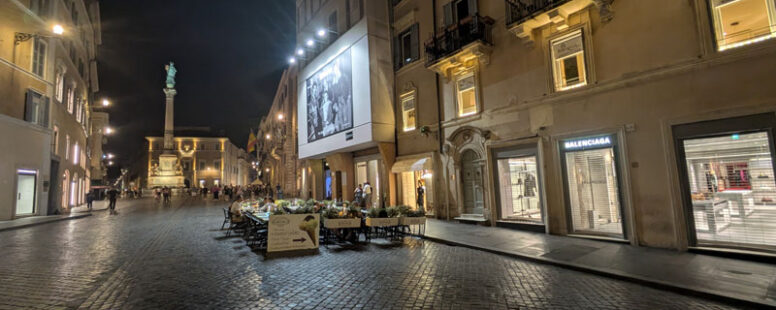
Column of the Immaculate Conception – Rome, Italy
The Column of the Immaculate Conception (Colonna dell’Immacolata Concezione) is in the Piazza Mignanelli in Rome, Italy. The monument was erected in 1857 to commemorate the proclamation of the dogma of the Immaculate Conception by Pope Pius IX in 1854, which states that the Virgin Mary was conceived free from original sin. The monument was designed by architect Luigi Poletti. The main column itself is an ancient Roman Corinthian column made of Cipollino marble, discovered during excavations in 1777. At the very top is a bronze statue of the Virgin Mary, sculpted by Giuseppe Obici, depicting her standing on a globe and crushing a serpent (a symbol of original sin).
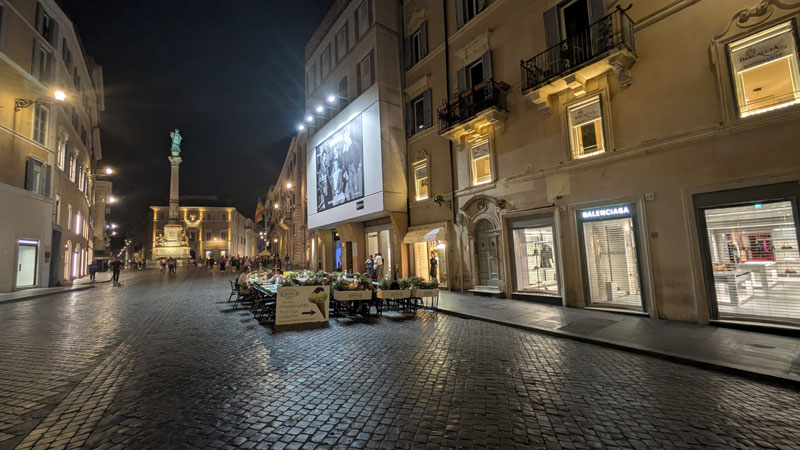
At first we saw the column only from a distance, though our eye was drawn towards it. The buildings in this particular section of Rome were very well lit for viewing at night.


As we drew closer the column took a more prominent position.
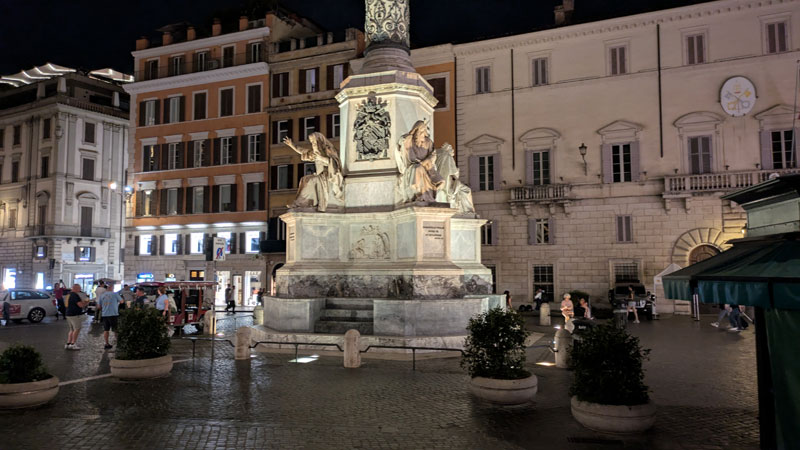


The marble base is adorned with four statues of biblical prophets that foretold the Virgin Birth: Moses, Isaiah, Ezekiel, and David. Every year on December 8th, the Feast of the Immaculate Conception, the head of the Italian fire department uses a fire truck to place a wreath of white roses around the arm of the Virgin Mary statue in a traditional ceremony that is often attended by the Pope. The Piazza Mignanelli is adjacent to the more famous Piazza di Spagna, at the foot of the Spanish Steps. It is conveniently located in the historic center, making it a popular spot for both tourists and locals.


Facing the column is a platform with an art installation reflecting the sky above. The steps give a place to linger and take in the surroundings.
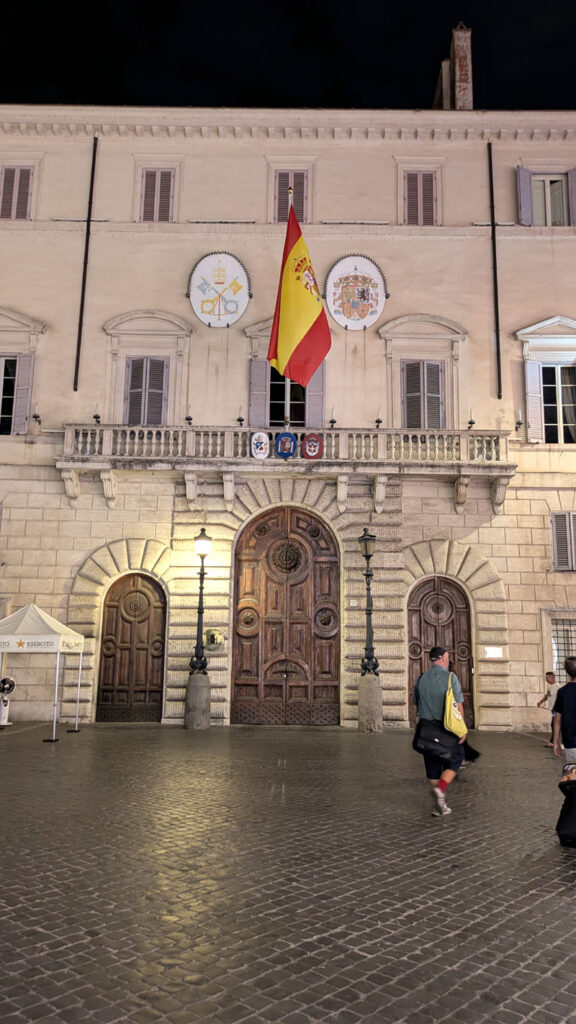
The Palazzo di Spagna (Palace of Spain) has housed the Embassy of Spain to the Holy See since 1647, making it the oldest permanent diplomatic mission in the world. The palace is located in the famous Piazza di Spagna (Spanish Square), at the foot of the Spanish Steps. The square and steps were named after the palace due to its status as the Spanish ambassador’s residence. It is a historic Italian Baroque-style palace that was acquired by the Spanish Crown in 1654. The architects Borromini and Antonio Del Grande contributed to its development, including the design of the main staircase and hall. The embassy has been a major diplomatic and social hub in Rome for centuries. The nearby Column of the Immaculate Conception was erected in 1857 in the adjacent Piazza Mignanelli, in part to honor Spain’s historical defense of the related Catholic dogma.