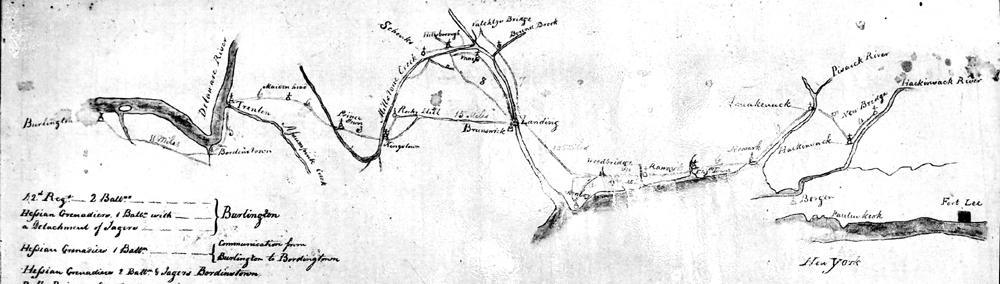
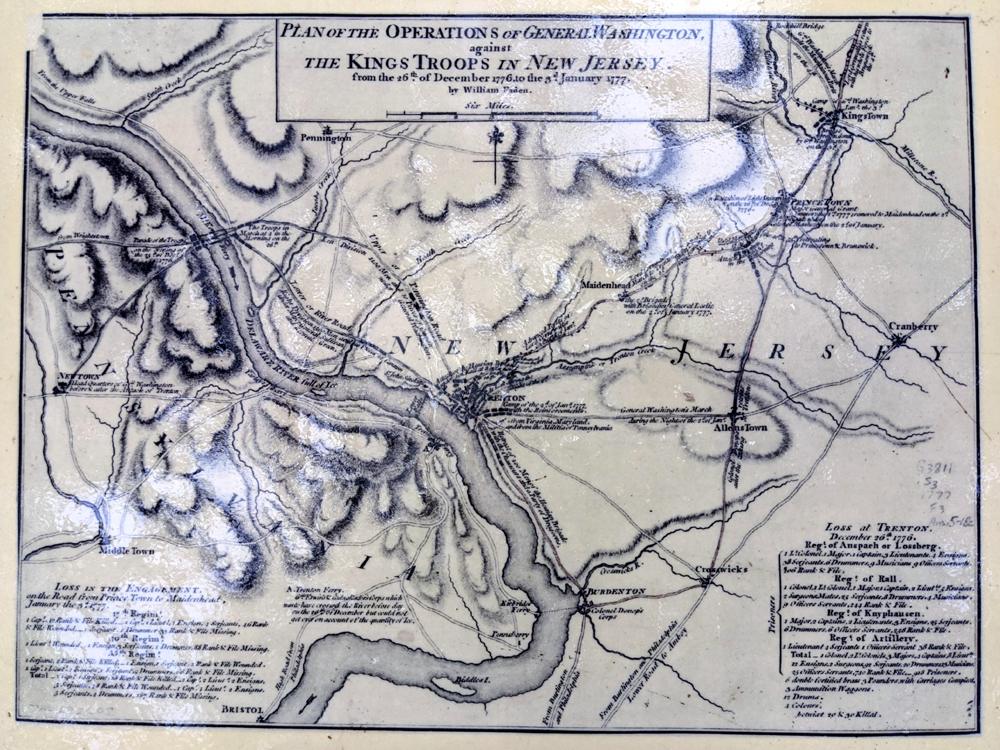
With New York City in British hands, Forts Washington and Lee on the Hudson River (North River) fell to British attack November 16 & 19, 1776, respectively. General George Washington moved his army souththrough New Jersey, crossing the Delaware River into Pennsylvania. The British Army and German auxiliaries followed, reaching Princeton on December 7th and Trenton on December 8th. With the American Army temporarily out of reach, British and German troops fortified and garrisoned towns along the main road, including Princeton and Trenton. This arrangement allowed the British to gather provisions over a wider area but made mutual support difficult if attacked. Washington took advantage of this vulnerability by crossing the Delaware RiverChristmasnight, attacking the next morning the garrison closest to his army, the German Regiments at Trenton.
After fleeing from Boston, British troops occupied New York City. Forts Washington and Lee on the Hudson River feel on November 16 and 19, 1776. General Washington moved his army souththrough New Jersey, crossingover the Delaware River into Pennsylvania. British and German auxiliaries were in pursuit, reaching Princeton on December 7th and Trenton on December 8th. Unable toreach the American Army, British and German troops fortified and garrisoned towns along the main road, including Princeton and Trenton. This allowed the British to gather provisions over a winderarea but made mutual support difficult. Washington took advantage of this vulnerability and crossed the Delaware Riverwith his army on Christmasnight, attacking the garrison closest to his army – the German Regiments at Trenton.
Washington moved his whole forcebackto Trenton over the next week, assembling nearly 6,000 soldiers by January 2, 1777. With British strength at Princeton now at nearly 8,000, General Charles Cornwallis moved to attack Trenton on January 2. A strong American force under Colonel Edward Hand in Maidenhead (now Lawrenceville) began a running battle, slowly giving groundback into Trenton. Darkness ended this Second Battle of Trenton and found the town divided between British and American forces.
With his backto the Delaware River, Washington used informationfrom the Cadwalader spy mapto make a withdrawal east and around the British troops in Trenton and Maidenhead. Under strict silence, tired American soldiers marched through the night, arriving here on the Clarke family farms shortly after dawn on January 3rd.
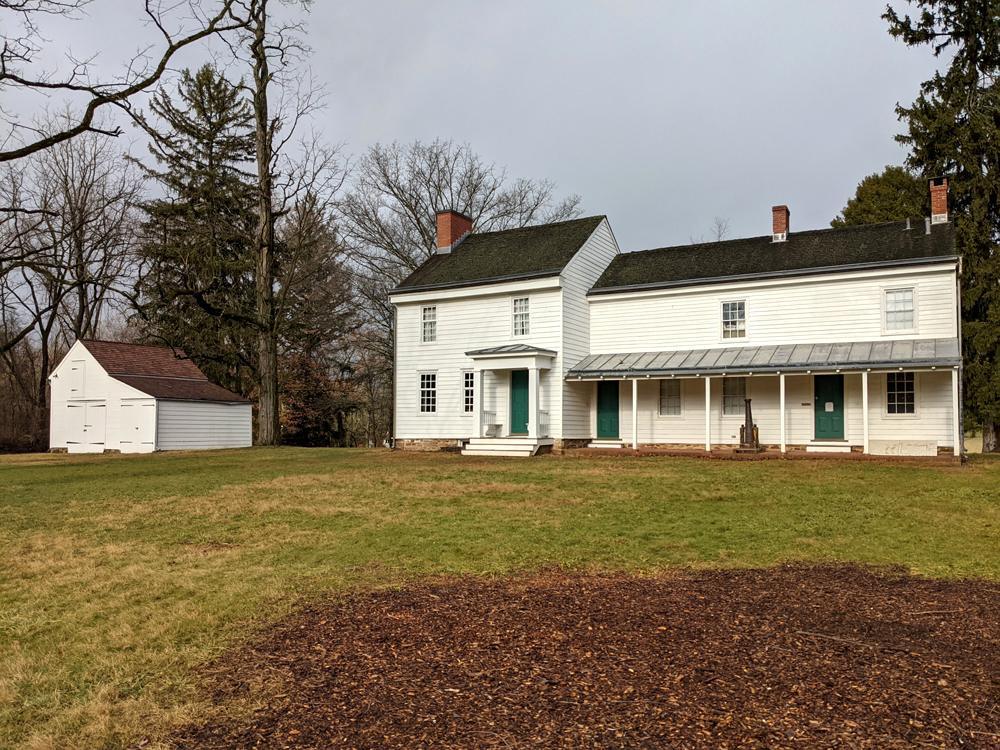
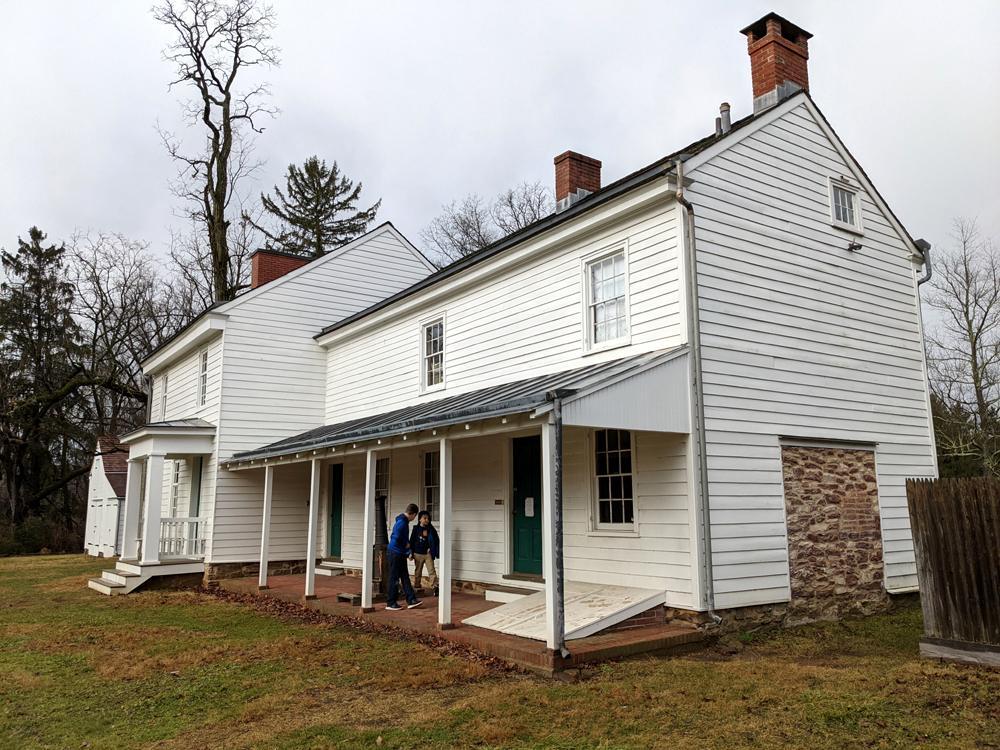
Thomas Clarke purchased 200 acres of landfrom his brother William in 1772. The land had been in the Clarke family since 1696. An existing structure was replaced with the mainhousethat stands here today. He lived there with at least two of his sisters, Hannah and Sarah, until his death in 1802. Sarah inherited the property and remained in the house until her death in 1840. Her nephew, JohnH. Clarke, enlarged the east wing which included a new kitchen. The house sold in 1863 to Henry E. Hale and again in 1944 to Blackwell Smith. The State of New Jersey purchased the property in 1946, and established the Clarke House Museum in 1976.
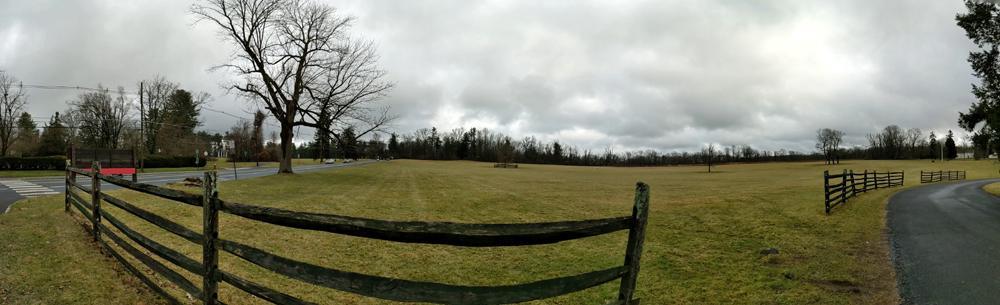
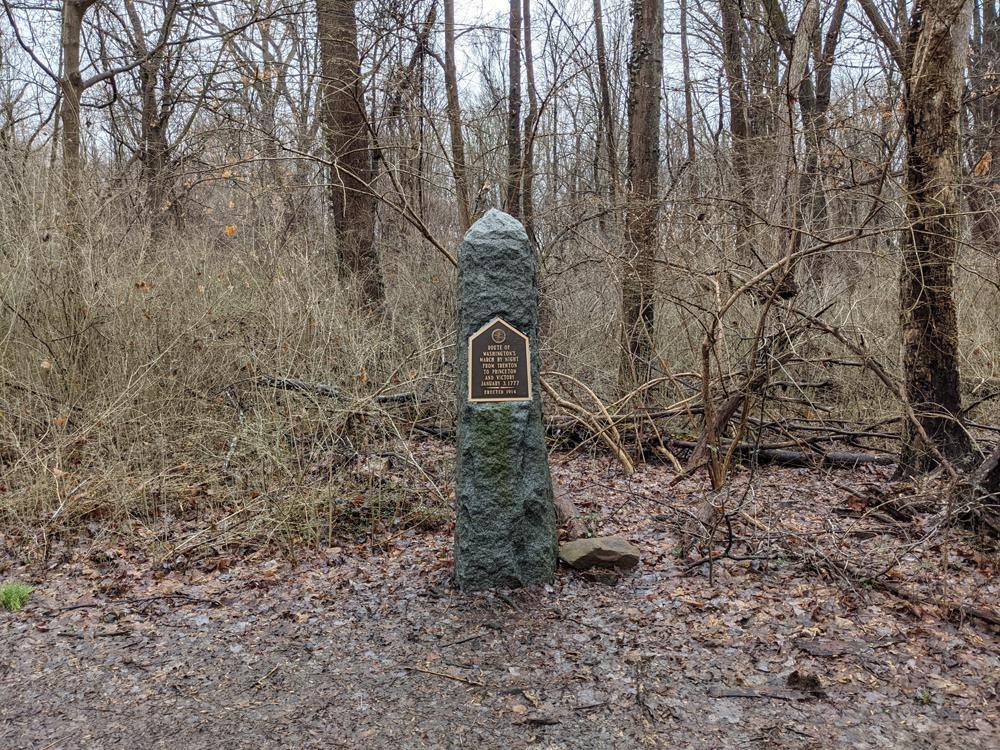
Members of the Friends community first settled the Institute Lands in 1696. General George Washington marched his troops by nightfrom Trenton to Princeton across these lands in the pre-dawn hours on January 3toengage the British forces in the pivotal Battle of Princeton in 1777.
George Washington, Hugh Mercer, and Alexander Hamilton were among the commanders and leaders of approximately 4,500 Americans going up against 1,200 British troops under Charles Mawhood and Charles Cornwallis.
Site of Moulder’s Battery
At the height of the battle, British forces under the command of Lieutenant Colonel Charles Mahwood, forced the American brigades to fall back. They rallied around a small artillery battery, led by Captain Joseph Moulder. Two guns handeld by some twenty men recruited from Philadelphia’s dockarea supported by the Delaware Militia company of Captain Thomas Roday. Moulder directed intense and accurate firefrom the American guns which prevented British forces from advancing across the field.
The Moulder Battery defense bought time for Washington to arrive on the field and organize a counterattack.
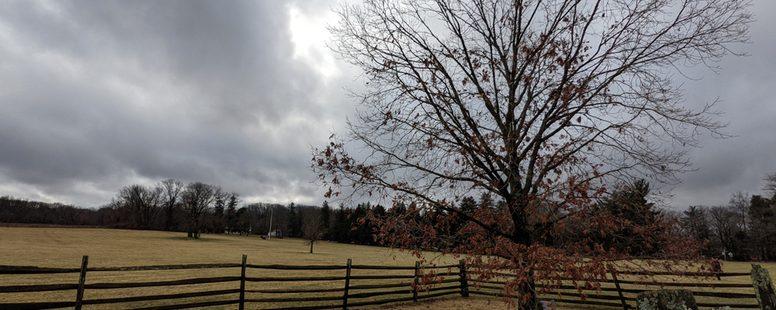
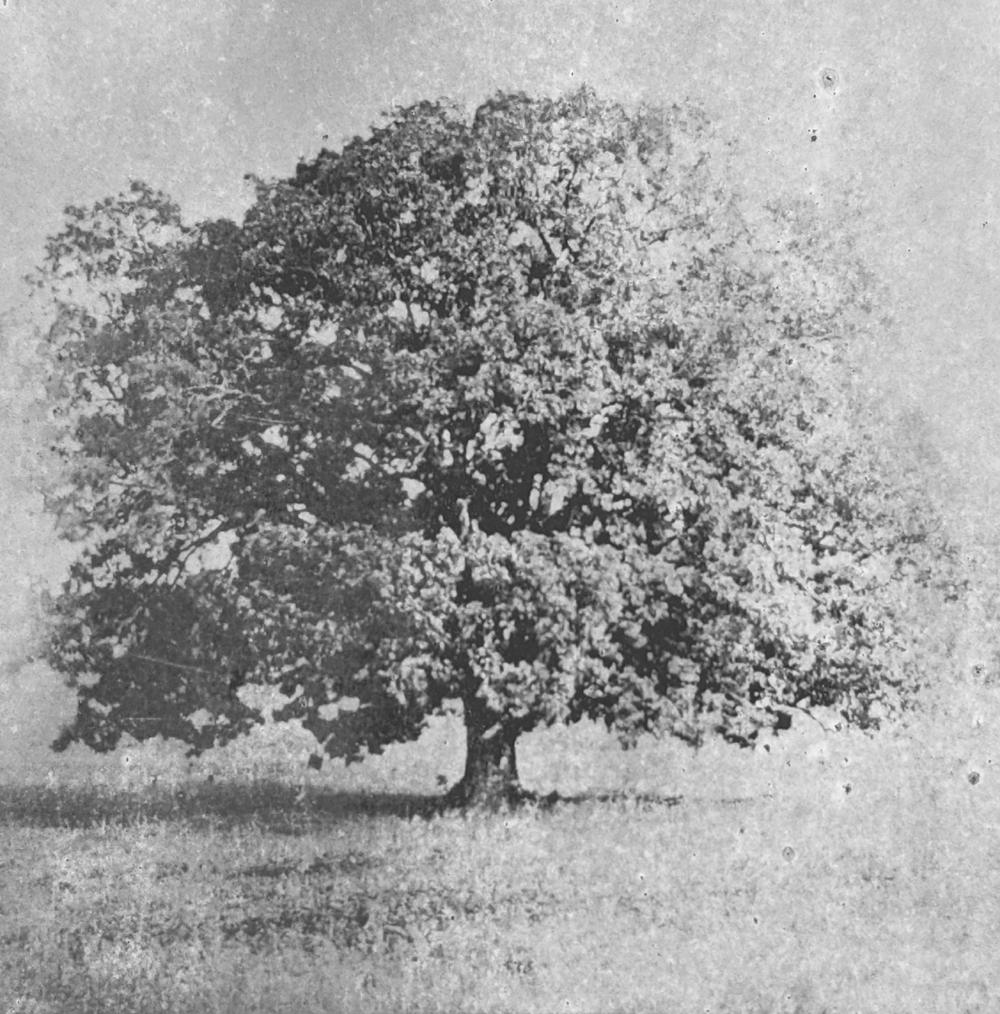
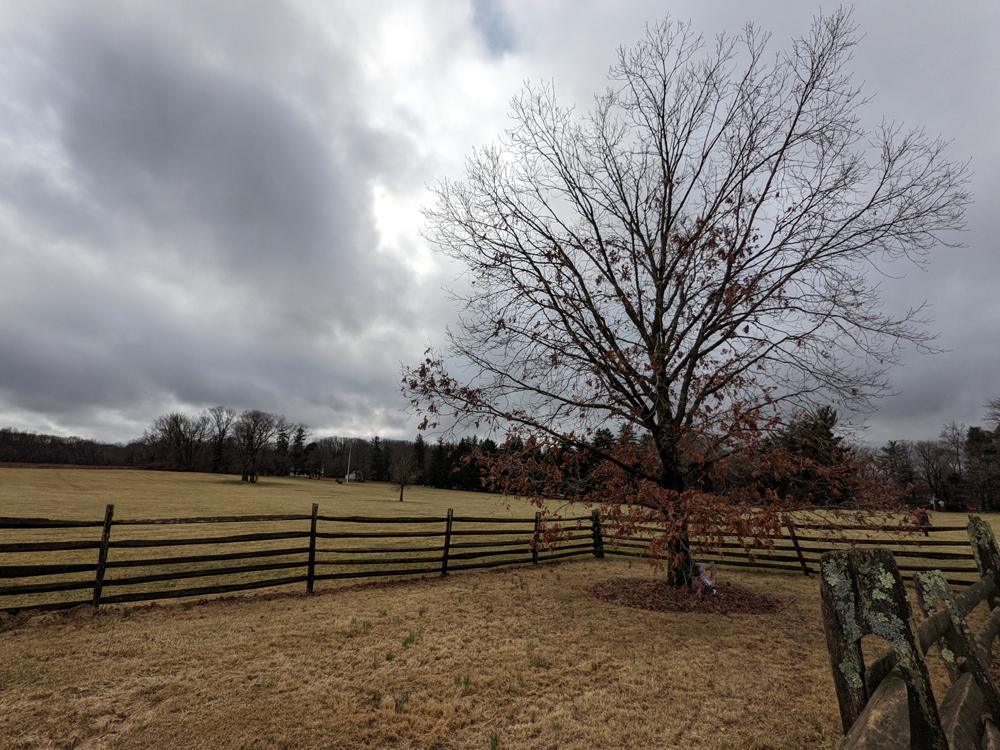
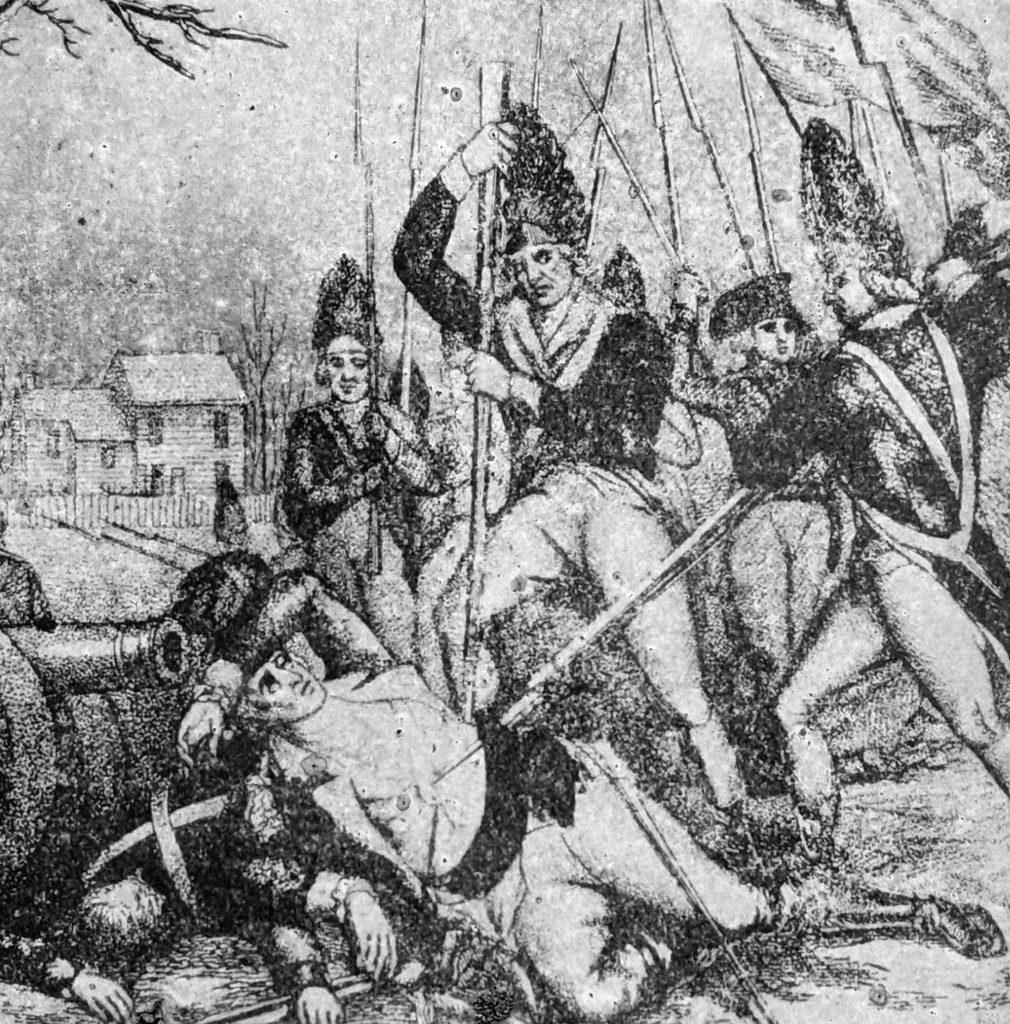
Awhite oak was believed to have been located in the field where General Hugh Mercer was mortally wounded at the Battle of Princeton. Elsewhere on the Battlefield site a cenotaph remembers General Mercer, and also attests to how the Battlefield grew in importance to the communityover a period of time:
TO THE MEMORY OF GENERAL HUCH MERCER THE REVERED MARTYR OF AMERCAN INDEPENDENCE BOAN IN SCOTLAND ABOUT 1720. EDUCATED AS A PHYSICIAN, EMIGRATED TO AMERICA 1747 WAS APPOINTED BY CONCRESS JUNE 5, 1776, A BRIGADIER GENERAL IN THE AWERICAN ARMY. WAS MORTALLY WOUNDED AT THE BATTLE OF PRINCETON JANUARY 5, 1777. AND DIED IN THE HOUSE NOW STANDING NEAR THIS SPOT JANUARY 12, 1777, THIS TABLET WAS ERECTED BY MERCER ENCINE COMPANY NO 3 OF PRINCETON. N. J. OCTOBER 1, 1897. AT ITS SEMI- CENTENNIAL CELEBRATION.
Nassau Hall
The battle finally ended at Nassau Hall where Brigadier General John Sullivan encouraged 194 British troops to surrender. Following the battle, General Washington moved his army to Morristown, and the British evacuated to southern New Jersey.
Aftermath of the Battle of Princeton
Following the Battle of Princeton, the Clarke House served as a fieldhospital for wounded soldiersfrom both armies. Among them was Brigadier General Hugh Mercer, who suffered seven bayonet wounds. American and British doctors, including Dr. Benjamin Rush, cared for the wounded. Mercer died in the houseninedayslater tended by Major George Lewis, a nephew of General Washington.
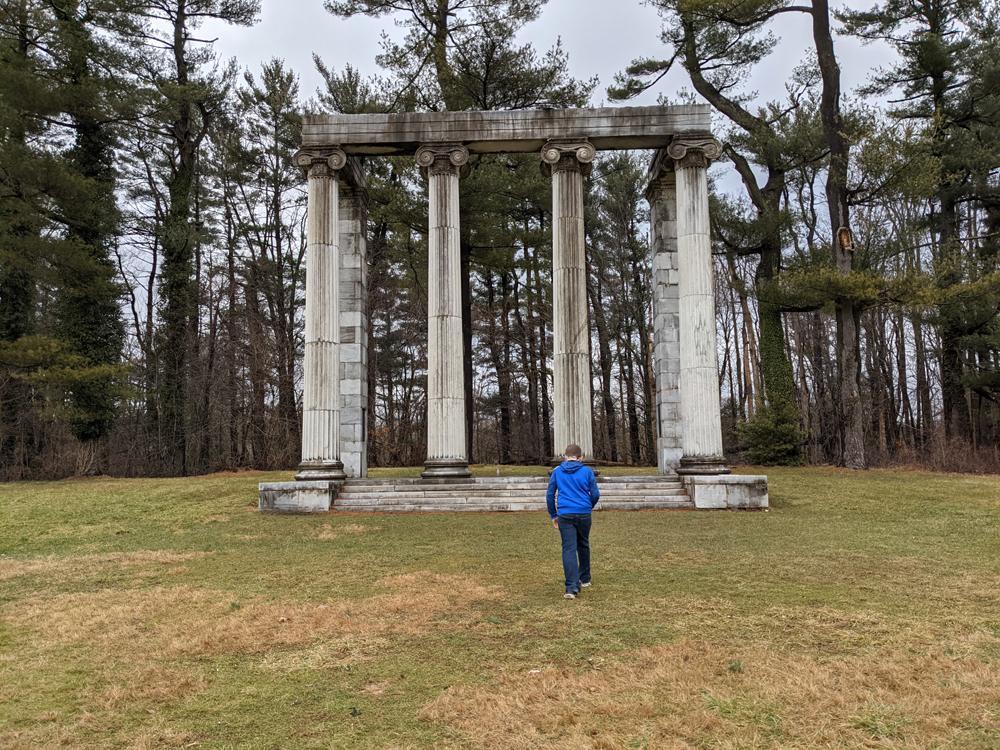
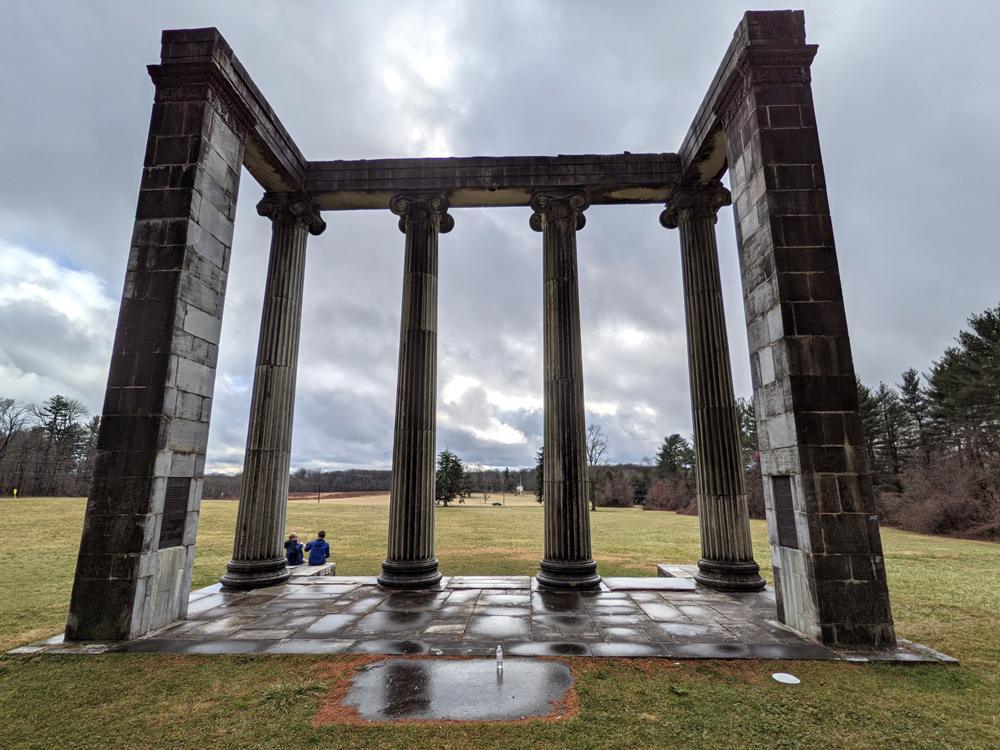
Colonnade and Gravesite
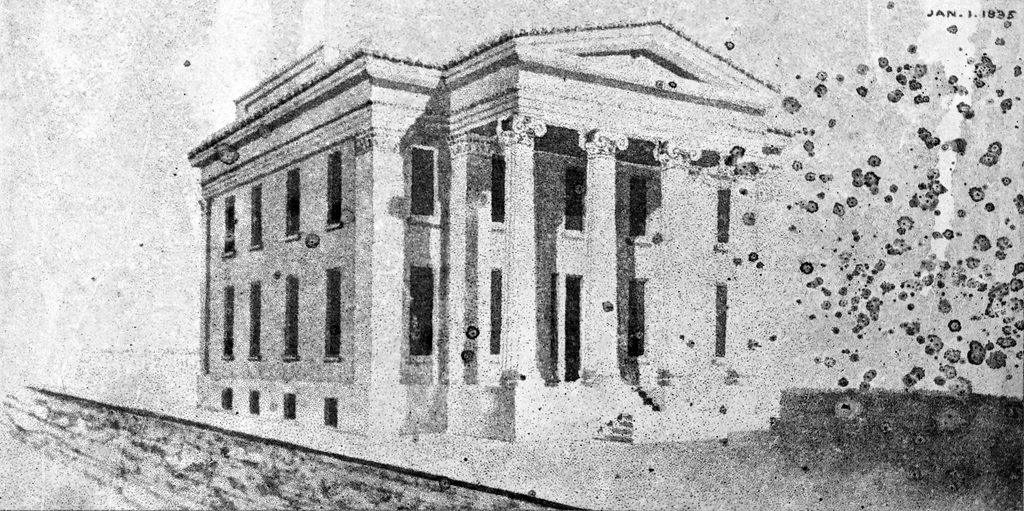
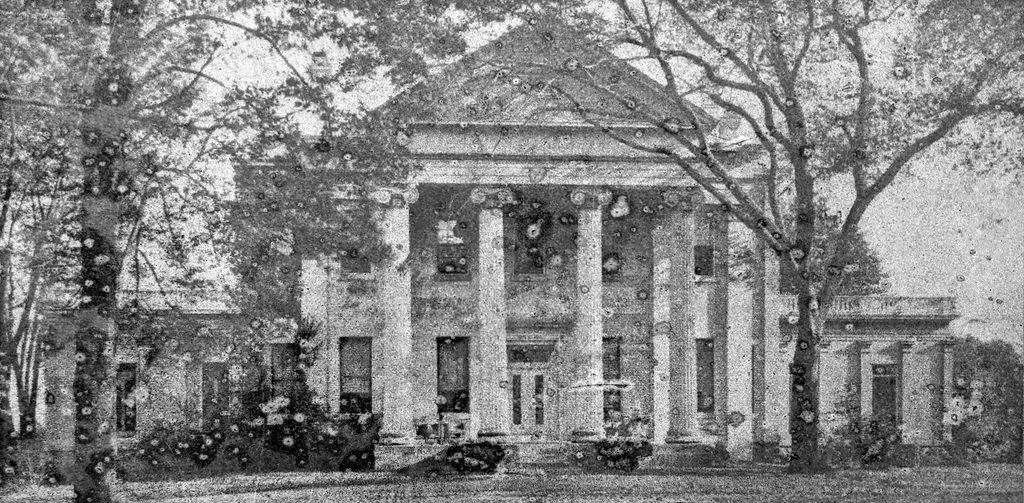
This colonnade was originally part of Mathew Newkirk’s home in Philadelphia, Pennsylvania, later called St. George’s Hall. The house was designed by Thomas U. Walter, who later designed the dome on the U.S. Capitol Building in Washington, DC. In 1900, the colonnade was transported to Princeton, and became the entrance of the Mercer Manor, which formerly stood on the east side of the Battlefield. Upon the Manor’s demolition in 1957, the Institute for Advanced Study donated the colonnadeto the State of New Jersey. The colonnade was dedicated where it stands in 1959, and declared a National Historic Monument in 1962.
Beyond the colonnade lies a circular stonepatio and a tablet dedicated to the men who died in the Battle of Princeton. The memorial was erected in 1918, in memory of the thirty-six unknown soldiers buried nearby, including fifteen American and twenty-one British soldiers. The words engraved on the tablet are those of Alfred Noyes (1880 -1958), taken from his poem Princeton (1917). Noyes was a visiting professor at Princeton University, and later became Poet Laureate of England.
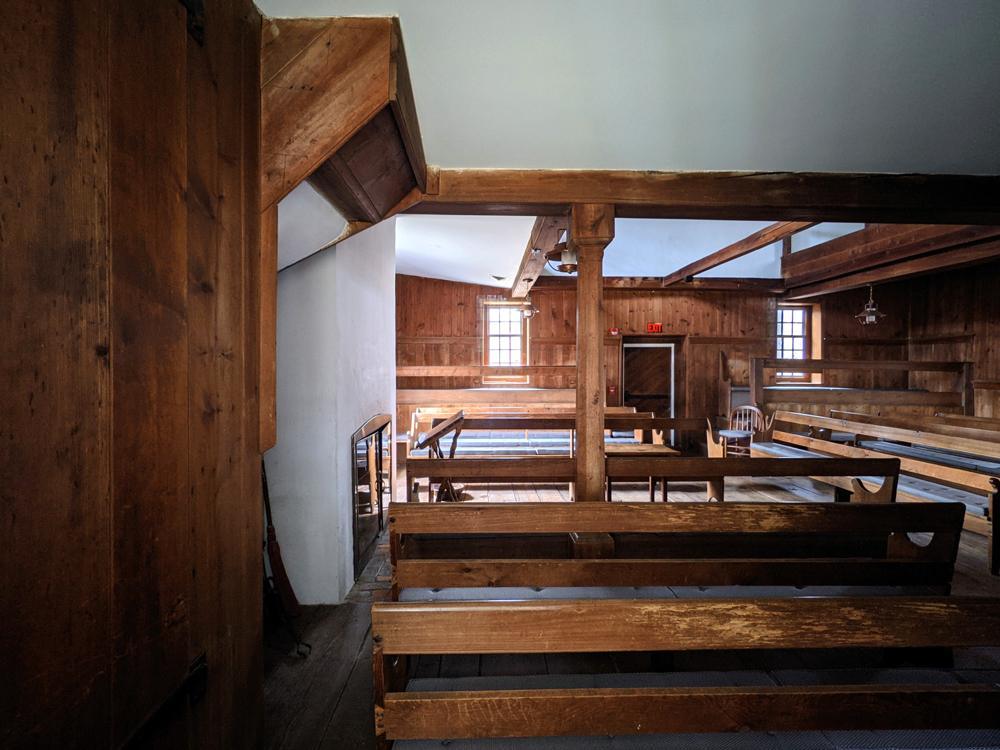
Stony Brook Meeting House
Originally the meeting house and the area around it was part of “stony Brook Village.” A majority of settlers were Quaker farmers who purchased much of the land along Stony Brook from proprietors Thomas Warne and William Penn. Initially, the Quakers met for worship in private homes, but in 1709, Benjamin Clarke gave nine acres of landto Richard Stockton and his fellow trustees of the Chesterfield Monthly Meeting of friends. The trustees laid out a gravesite in 1724 and stonemasons set towork on the Stony Brook Meeting House – the same year Princeton was given its name. The building was gutted by fire in 1758, but was quickly repaired.
During the Battle of Princeton, the meeting house was used as aninfirmary both for British and American soliders. In 1781, a school was established by the Quaker Friends society. In 1800, a schoolhouse was built next to the meeting house, though it was torn down a century later. In 1838, Stony Brook became part of the new Princeton Township.
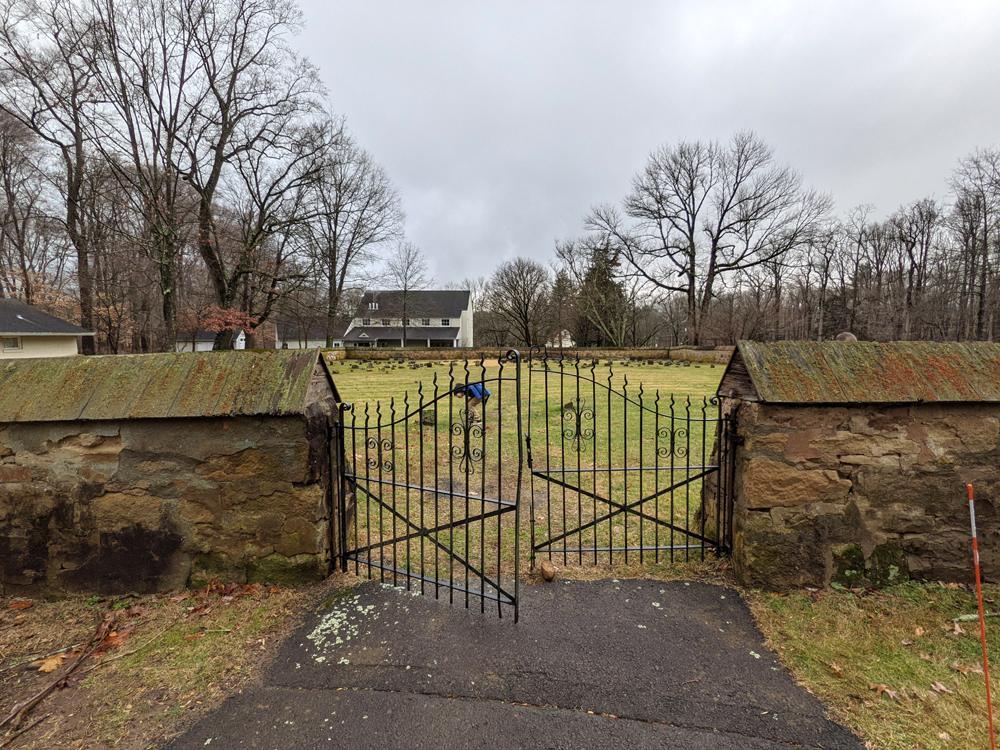
Quaker Burial Ground
Richard Stockton, a signer of the Declaration of Independence, was buried in these grounds.
Institute Lands
From here walkthrough the Institute Lands. This 589-acretract of woods and farmland are know for their natural beauty and historic significance. The northern half of the Institute Lands is a mixed forest known as the Institute Woods, a sanctuary for migrating, nesting, and wintering birds. This forest also has a remarkable diversity of tree species and soil types.