
Saint George
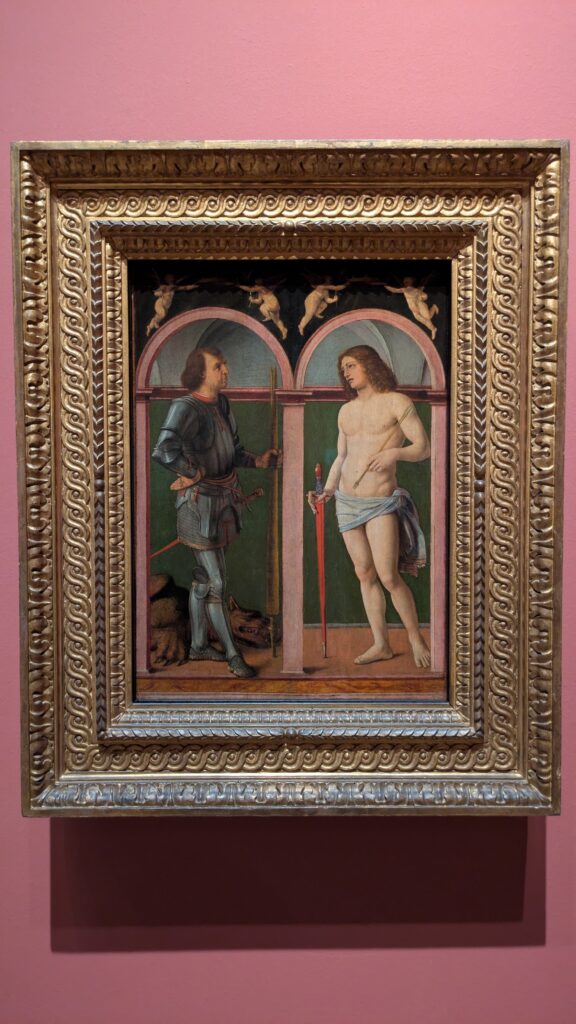
Saint George was born in Palestine. He was a soldier who became a tribune in the Imperial Guard. He left the army and dedicated himself to fighting the cause of his fellow Christians who were being persecuted by the Roman emperor, Diocletian. After freeing his slaves, selling everything he owned and giving away all his money, he set off to see the emperor. On the way, at Beirut, he is thought to have met and killed a crocodile-the ‘dragon’ that, in the popular imagination, George is reputed to have slain. It is possible that the dragon – a symbol of paganism and his slaying of it represent the conversion of a heathen country to Christianity. When he reached the imperial court, his pleas to the emperor were in vain, and George himself stood accused of allegiance to Christ and was tortured and beheaded. He was buried at Lydda in Palestine, and a church was later built above his tomb by the emperor Constantine. St George is thought to have visited England, and his reputation was enhanced by English crusaders. He is the patron saint of England and of the Italian city of Genoa, and also of soldiers and sailors. He is the protector of rocky coasts and of areas at risk of flooding, and is particularly associated with the rose. His emblem is a red cross on a white ground (the English flag). His feast day is April 23 (Dictionary of Saints) Photo from the Detroit Institute of Arts, Detroit, Michigan, 2025.