

Ransom Place – Indianapolis, Indiana
Ransom Place Historic District is an area that includes subdivisions platted in 1865 and 1871. It is the most intact neighborhood associated with the city’s African-American population. Numerous prominent citizens lived in the area including attorney and civic leader Freeman B. Ransom (1882-1947). It was listed on the National Register of Historic Places in 1992. A historical marker was erected in 1993 by the Indiana Historical Bureau with support from the Ransom-Cox and Brabham-Douglas families.


We first encountered Ransom Place when it was a neighborhood in transition. Some of the buildings were being minimally used and received even less maintenance. Still the historic character shone through such as on this corner commercial building.


A historic signage campaign was somewhat neglected also, such as this sign for 836 California St where damage has caused part of the sign to be illegible.

The house at 839 California has a distinctive pyramidal roof.
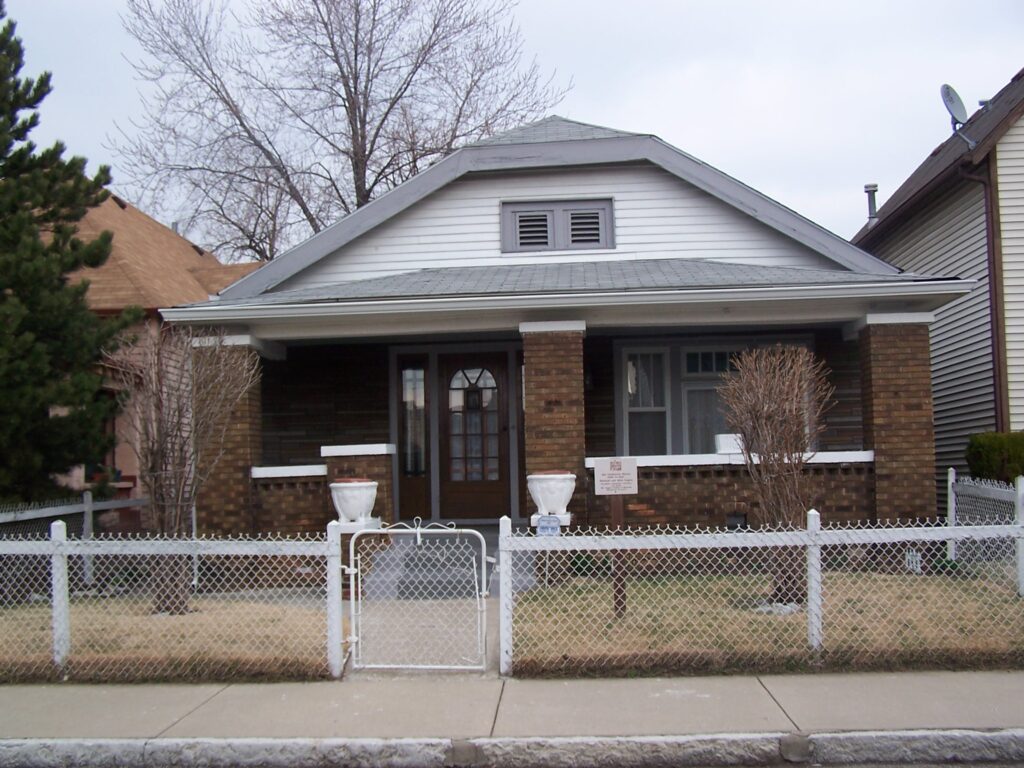
This historic bungalow at 835 California Street was built around 1820. Howard and Allie Logan lived there. They had three daughters Henrietta, Dorothy, and Ruth. Mr. Logan worked at Hygrade (Kingans) for 45 years.

This foursquare with dramatic bay window on the ground floor at 819 California was built in 1916. The Hayes family lived here.

At 816 California this simple bungalow was home of Gertrude Hickman, a teacher, and Julius Hickman, a brakeman. They also had boarders living with them in the house at various times.

Philip & Martha Tash lived at 807 California Street from 1925-1928. In 1928 they moved to W. Fall Creek Parkway in Indianapolis. Their stucco home was trimmed with geode stones and stands today.


This church building with distinctive stained glass windows in the nave, was worse for wear with the roof clearly needing attention.

The home at 848 Camp STreet for Naomi Acton, Laundress, was in an excellent state of preservation. Particularly noteworthy was the five-color paint scheme.

This Folk Victorian Cottage also has a distinctive paint scheme. The central window beneath the gable appears to be a replacement for the siding shows ghost marks of an earlier window.

The house at 845 Camp Street was built in 1920. Joseph Conn, his wife, and sons Henry, James, and Thomas lived here along with their daughter. Conn was a chef at the Columbia Club.

This house is boarded up awaiting preservation.

Gingerbread beneath the eaves of a Folk Victorian Cottage.

The home at 832 Camp Street was built in the 1920s for attorney James A. Bryant and his family. His law office was #207 in the Meyer-Kiser block at 134 E. Washington Street.


Another Folk Victorian Cottage at 817 Camp Street has distinctive bargeboards in the gable end. The entrance door, unfortnately, replaced earlier historic fabric.


The house at 812 Camp Street, while lived in and cared for has not been restored like others on the block. The Colemans and Carpenters lived here after it was built in 1925.

Looking up camp street the varied size, scale and orientation of buildings gives a distinctive character to this street.

The house at 621 W 10th Street at the time was a rental and awaiting restoration. Some of the distinctive features include the beaded frieze board between the porch posts.

The house at 951 Camp Street while well cared for had an unconventional paint scheme in 2005.
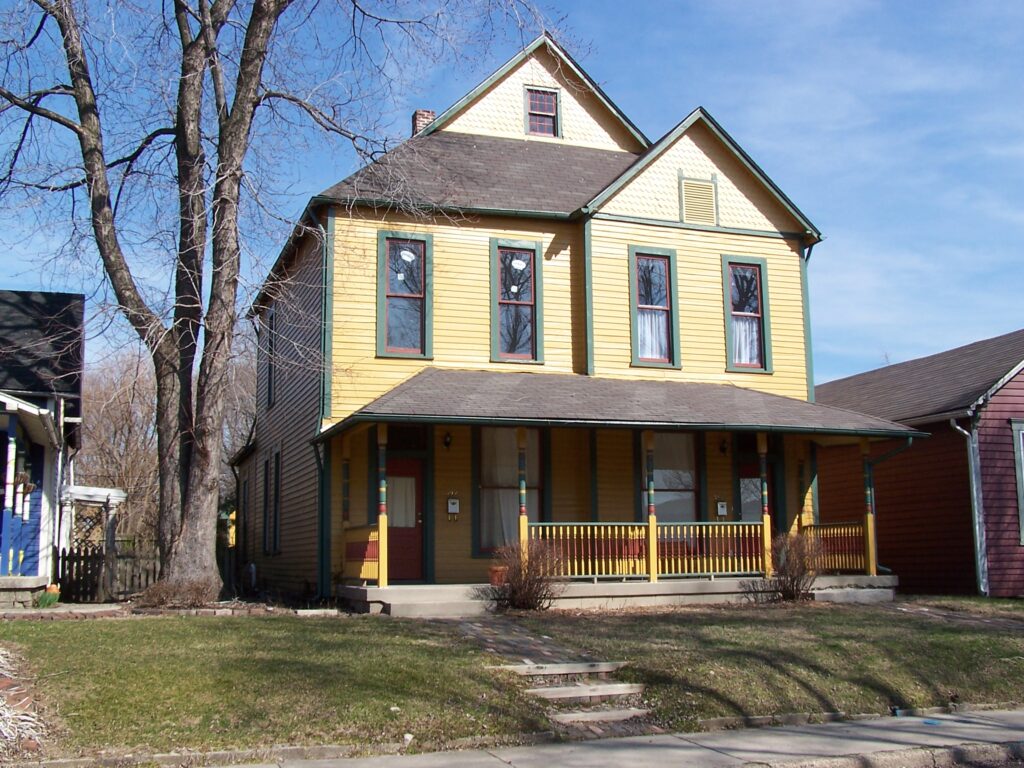


Two houses of sisters Cynthia and Doris Sims were at 943 and 945 Camp Street. Built in 1917, at least one of the sisters cooked at the Flanner House, 800 N West Street. Shotgun houses like these were the smallest and among the oldest houses built in Ransom Place. The house at 945 Camp Street had no exterior changes until an extensive renovation in the late 1990s. In the 1940s bathroom facilities were moved indoors. The house at 941 Camp Street (on the right in above photo) was built between 1904 and 1906 for William & Nettie Smith Marshall. He was a postal worker and barber. Their children Oneida, William, Frances, and Mildred (Hall) grew up in this house.
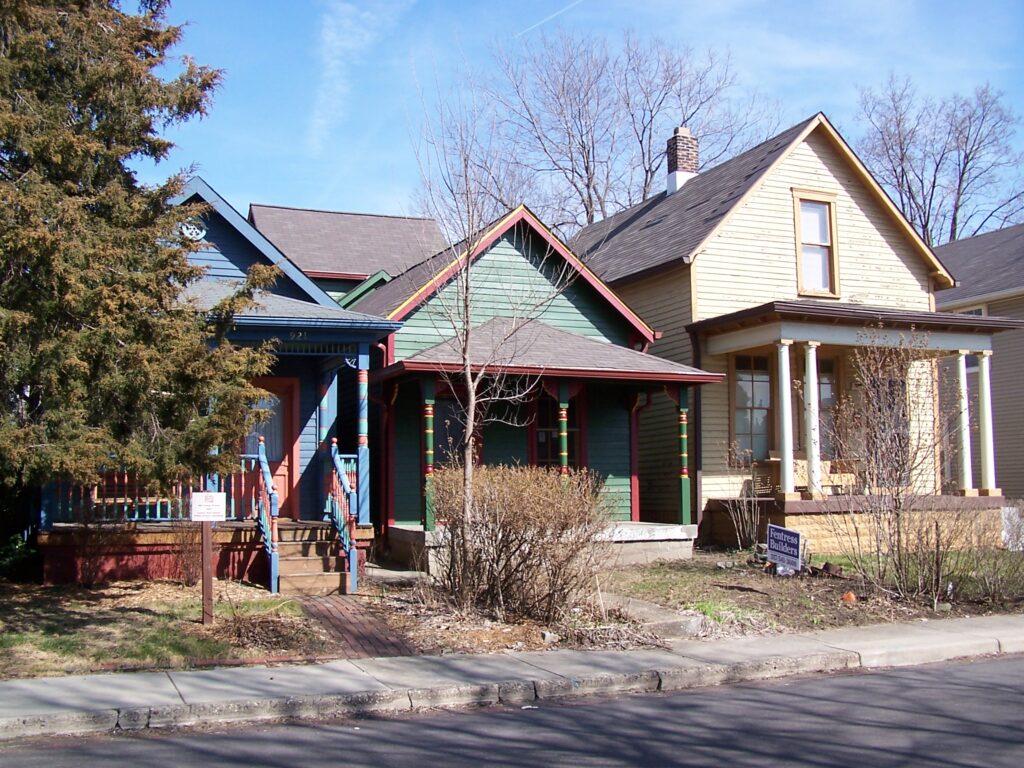
The house at 921 Camp Street on the left was built in 1920 and home for the Luther Hall family. Luther was a public school custodian.
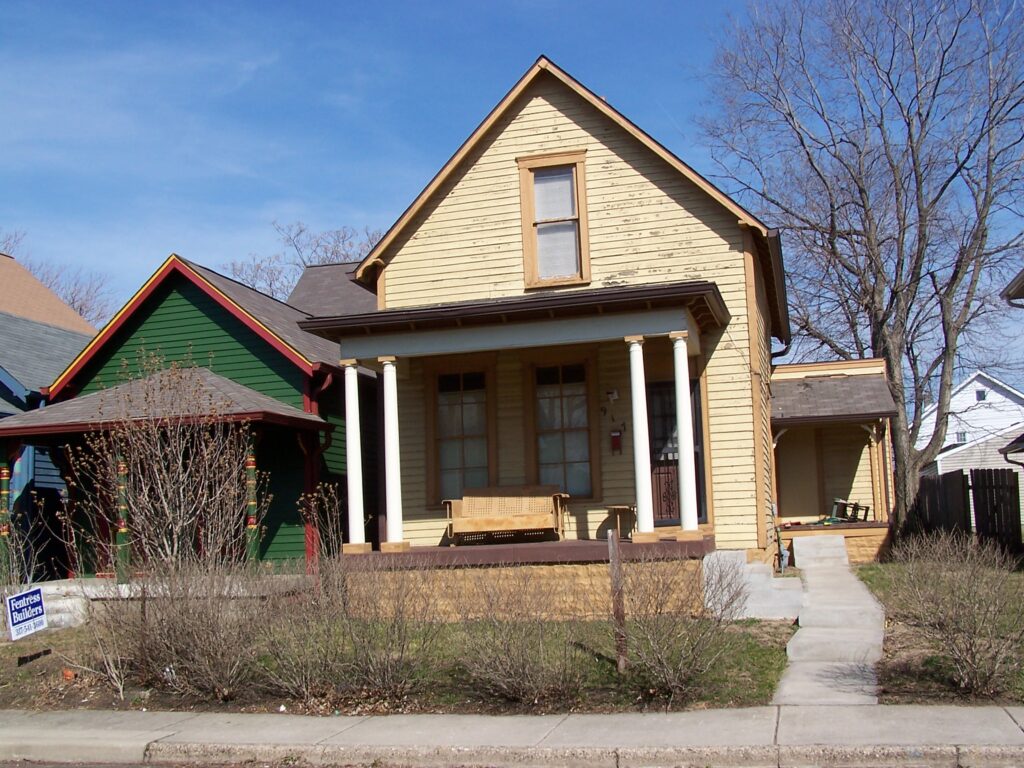
The house at 917 Camp is a gable front vernacular cottage with corner boards. The paired post supporting the porch appear to have replaced earlier posts or columns.


Markers at 920 Camp Street remember the neighboring house at 914 Camp Street built in 1911 for Senator Robert Lee Brokenburr, Esq. He wrote articles of incorporation for the Madam Walker Manufacturing Company in 1910. His house was built in Ransom Place a year later. Brokenburr served as attorney for the Walker Company and was appointed by President Eisenhower as an Alternate Delegate to the United Nations between 1955-1956. He also was a two-term Indiana STate Senator.
The same house at 914 Camp Street was home of Noble Sissle, a composer and band leader for over 40 years. He gained prominence during the Harlem Renaissance in the 1920s. Teaming up with Eubie Blake he wrote words for “Shuffle Along” starring Josephine Baker and Florence Mills. Sissle directed and wrote with Blake “Chocolate Dandies” in 1924. Outstanding jazz musician Sidney Bechet was a member of the Sissle Band. In 1904, Sissle’s father, Rev. George A. Sissle was Presiding Elder of A.M.E. Church.

Another street view shows the varied scale of historic buildings, allowing two smaller more affordable houses between larger two-story houses to either side. This did much to encourage diversity of incomes within the neighborhood.
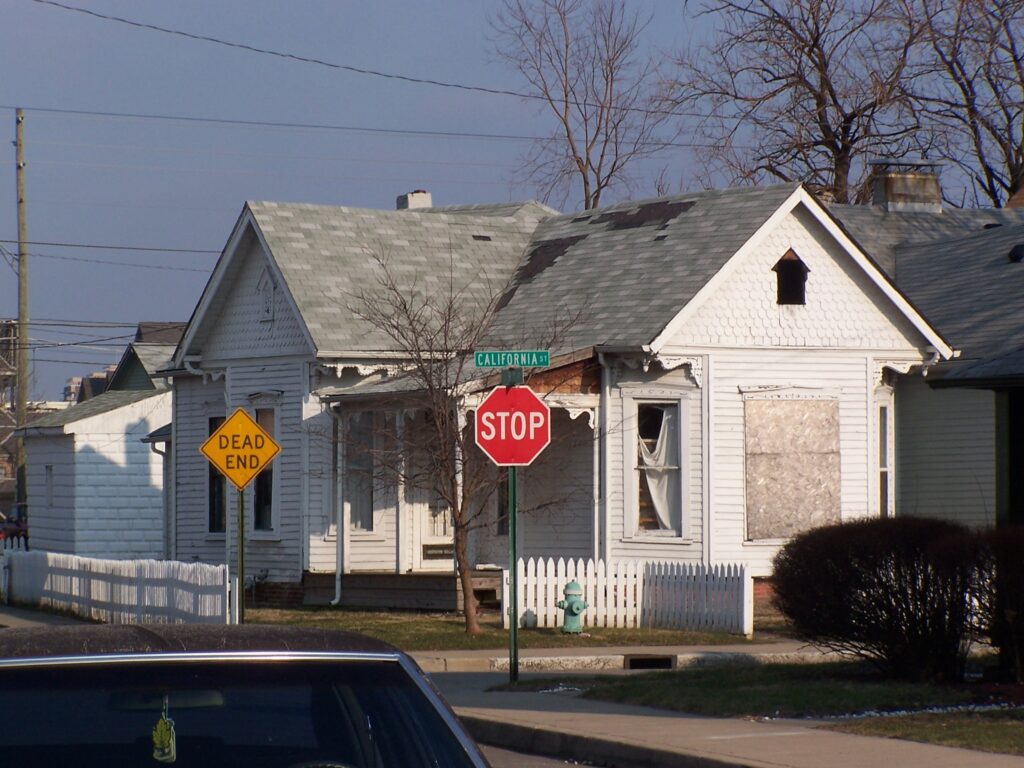
House at the corner of California and 9th Street was awaiting restoration in 2005.

Another handsome Folk Victorian Cottage with spindled frieze, turned posts, and elaborate quarter round detailing in the gable end.

The location at 908 N. California Street was for a home built in 1916 for Harmious T. Laurey, a chef. The present house is a replacement built in 1989.
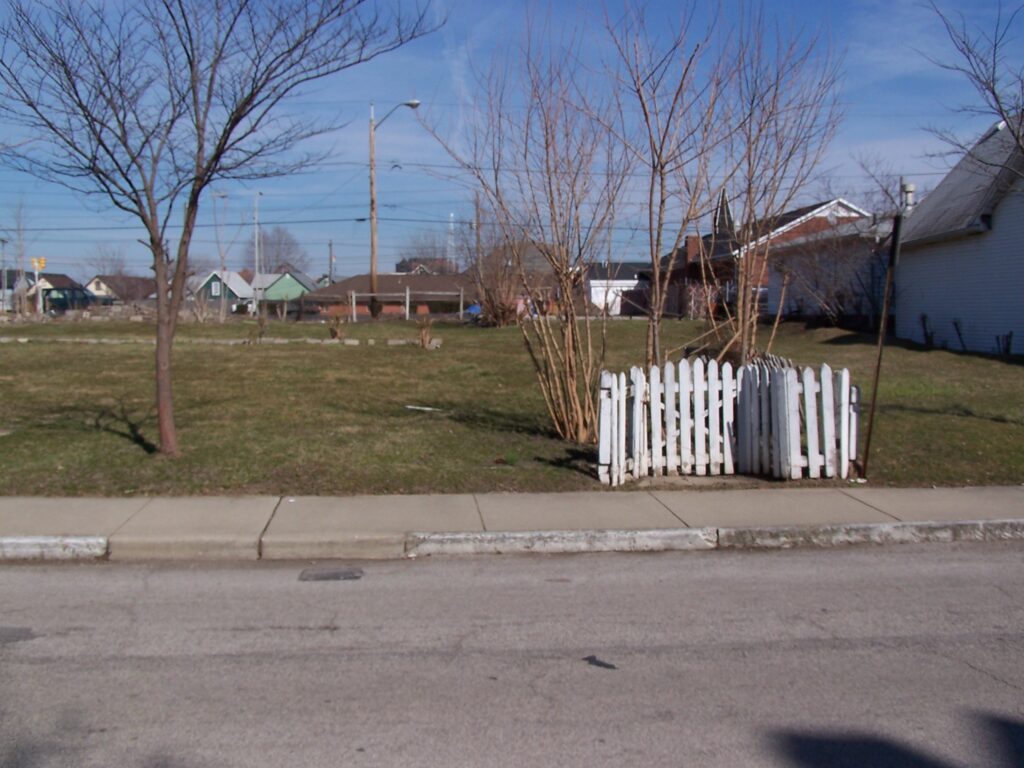
Portions of the neighborhood could not escape demolition. Here a single gate makes the site where a home once stood.

This house has

A modified Chicago window and two tone shingles in the gable end give this house unique character. The porch pillars have been replaced by metal though the roof form remains.

This new house attempts to make a nod to the historic buildings in the neighborhood with bay window that has shingles in the gable. Overall the massing, form, and materials however reveal this as a modern insertion. The newness of this building is evident from the blank window on the second floor over the main door and the double hung windows on the first and second floor.

A well cared for historic home. One of the most interesting features is the porch pier with a paneled base. The window surround drip molding and crown gives nice character from the street. A three-color paint scheme shows colors do not need to go over the top.

Despite having the historic form similar to other houses in the neighborhood, the vinyl siding and vinyl windows clearly detract from the historic character of this house.
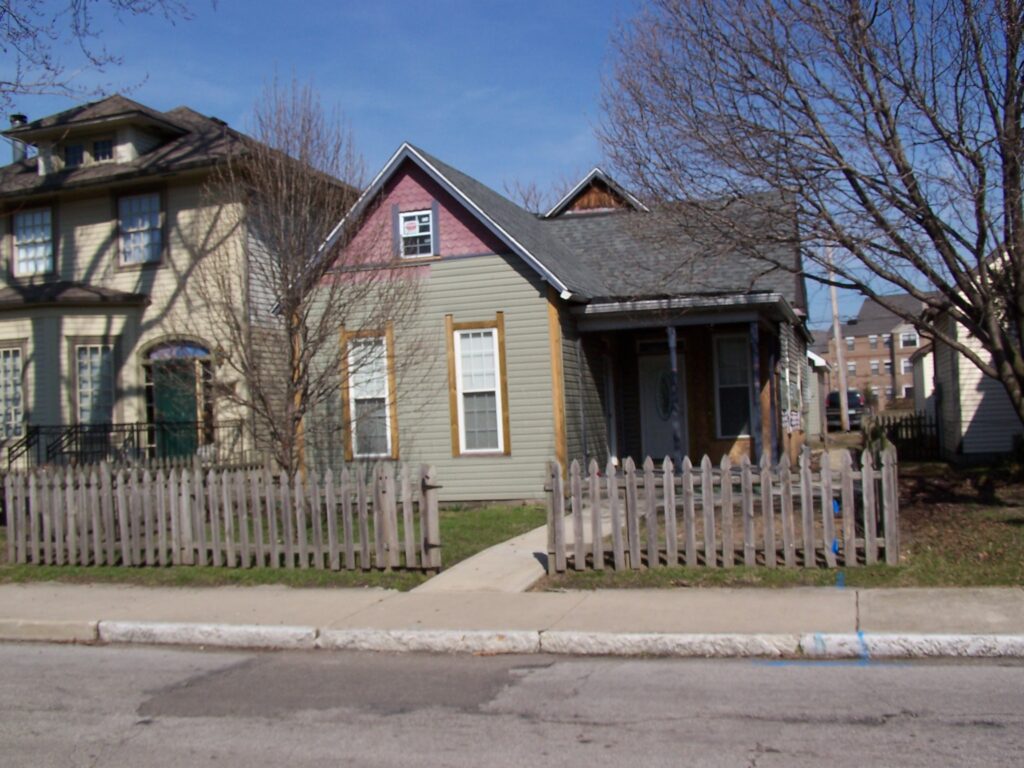
Vinyl windows are on this house too, though interestingly the shingles in the gable are partially left unconvered by vinyl.