Downtown – Staunton, Virginia


T. J .Collins designed the Marquis Building on Beverley Street with a corner turret, bay windows, and gable-roofed bays. Together these give this commercial building a commanding presence at the intersection that it rests upon.

The T. J .Collins designed Switzer Building with triple arches on the 2nd floor based on larger Venetian palazzos with a diamond pattern of terra cotta.

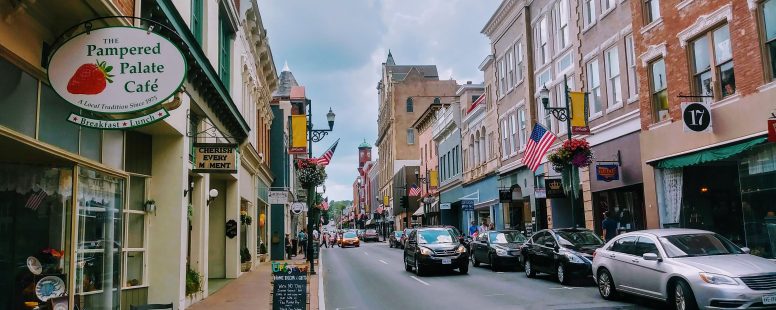
The charm of Staunton is in its landmark buildings but also the streetscapes. From the brick sidewalks, to furniture, to plantings, to storefronts – everything is well designed and cared for.
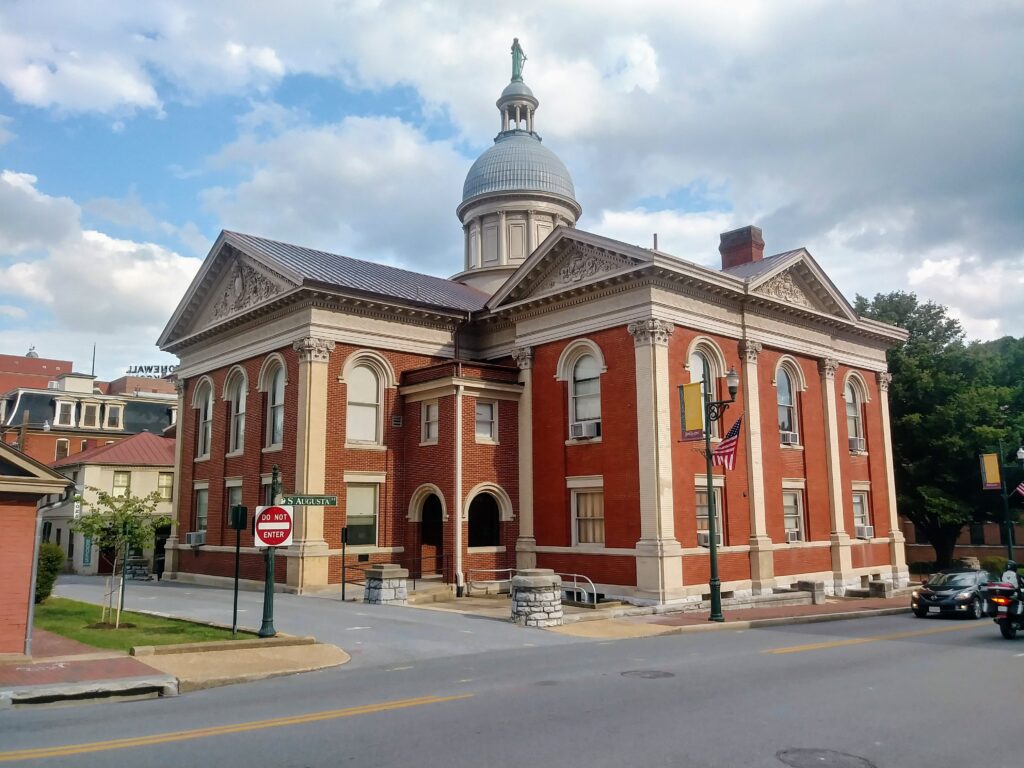
Augusta County Courthouse Building is a Beaux Arts style building with a two-story front-bay central portico and one-bay hyphens connecting to one-bay wings on either side. At the crossing is a domed cupola. Extensive ornamentation is in the pediments. Pilasters and capitals are made from a yellow pressed brick that contrasts with the red brick color of the building walls. A stone belt course surrounds the first floor of the building. The building was designed by T.J. Collins and construction completed in 1901.

Excellent way to recognize building owners who have made improvements by placing a plaque.

Ice cream shop has figured out how to “show me don’t tell me” by showing the different sizes and costs.
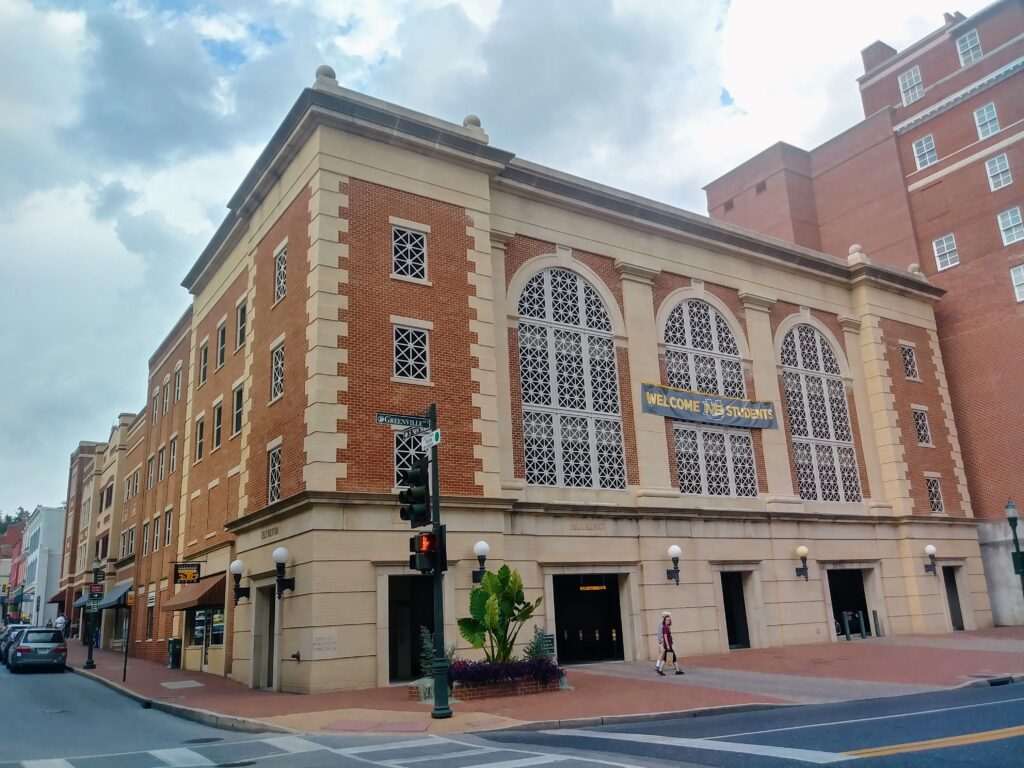
Even the parking garage is done well. Notice the uses at ground floor to encourage pedestrian activity at street level. The architectural details screen the deck and make it fit in with other nearby buildings. This is also where the Visitor’s Center may be found. This parking deck and its detailing rivals other genuine historic buildings on the block. That might give preservationists pause to think about the difference between old and new architecture.
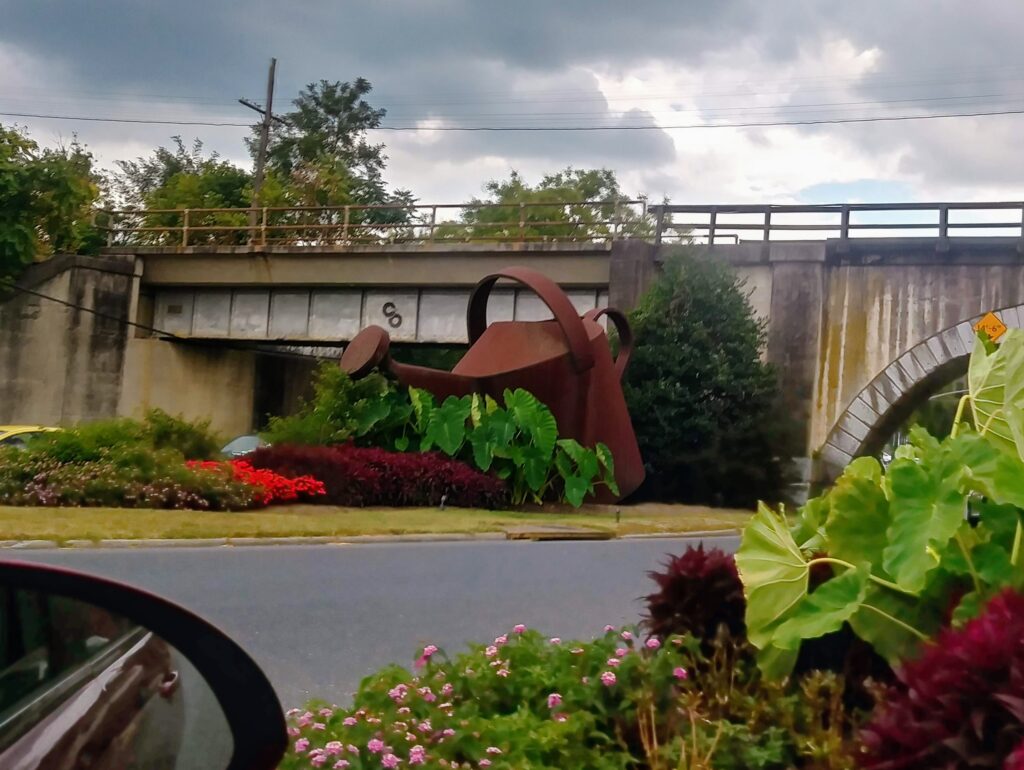
Ordinary landscaping would simply not do for Staunton. That is why this 18 foot watering can greets motorists as they are coming and going. Also, it screens the railroad bridge behind it nicely.
Flashback to 2013
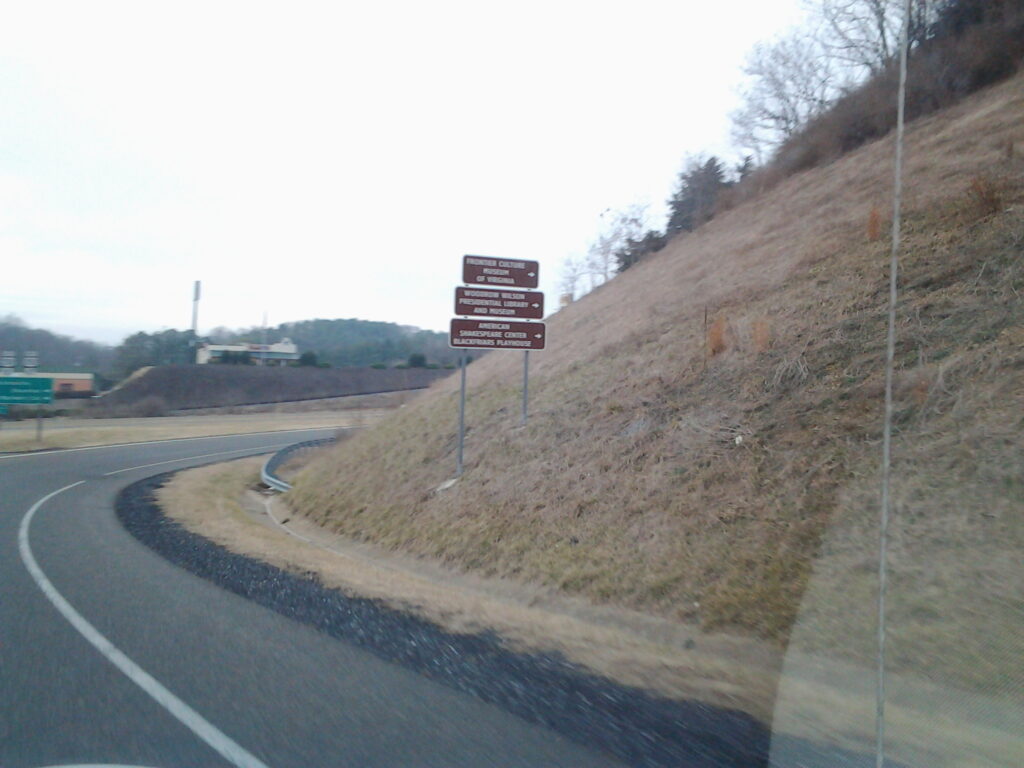
As we approached Staunton for the first time the wayfinding directed us towards the Frontier Culture Museum of Virginia, the Woodrow Wilson Presidential Library and Museum, and the American Shakespeare Center Blackfriars Playhouse. We ended up visiting two of three on this visit. The Frontier Culture Museum would have to wait. We found it curious how each sign was a slightly different scale. An opportunity for improvement to the wayfinding to make it more legible would certainly be helpful here. Also, nothing said Staunton.
Blackfriars Playhouse


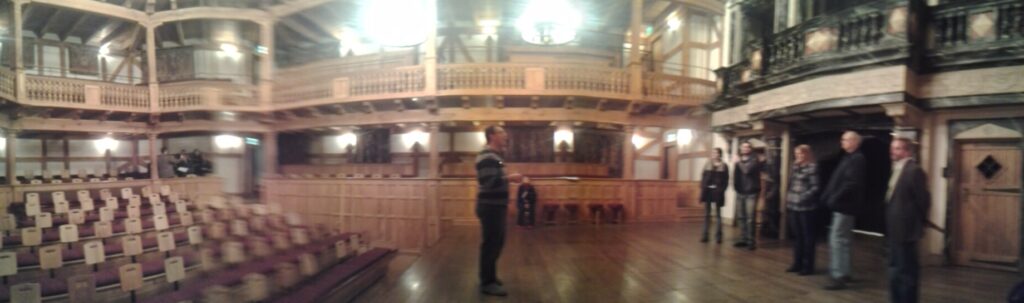
Blackfriars Playhouse provided us an unexpected treat. An Elizabethan theater was recreated for us to visit in Southwest Virginia. While we were on our tour a play was rehearsing. We got a very good sense of the space with its thrust stage and scenae frons. A second floor balcony provided excellent sight lines to the stage below from most seats. The chandelier lighting and modern lights well disguised, further enhanced the historic feel and authenticity of the space.
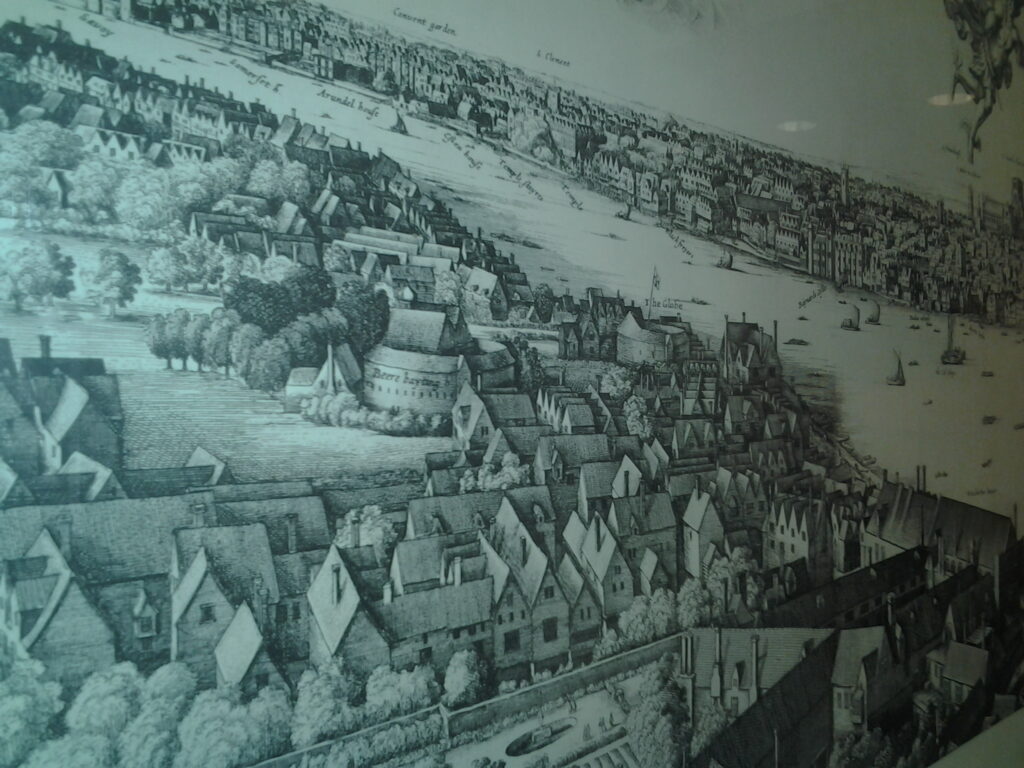
It’s impossible to visit the Blackfriars and not think about The Globe and all of the other performance venues in London at the time of Shakespeare. What a unique place and time to be alive.
Historic Downtown


The historic downtown had much to offer. Most buildings were brick between two and as many as four stories. One building with a three-story oriel window with a belltower atop it, exhibited some real architectural ingenuity. The transition from a round base to a square tower was achieved by dramatic brick corbelling.
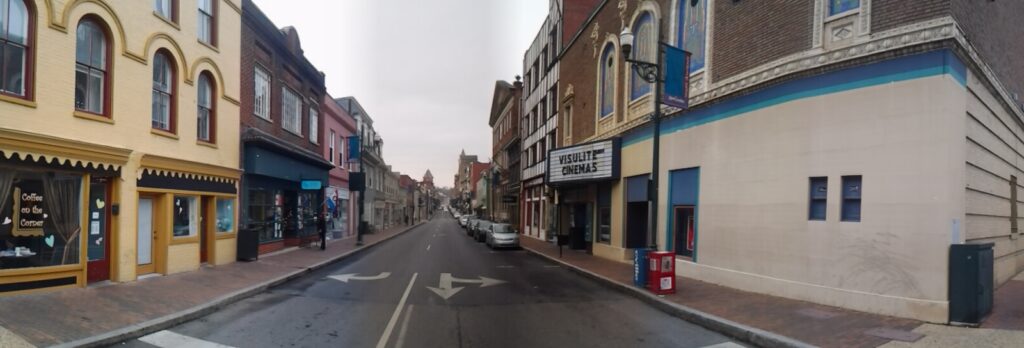
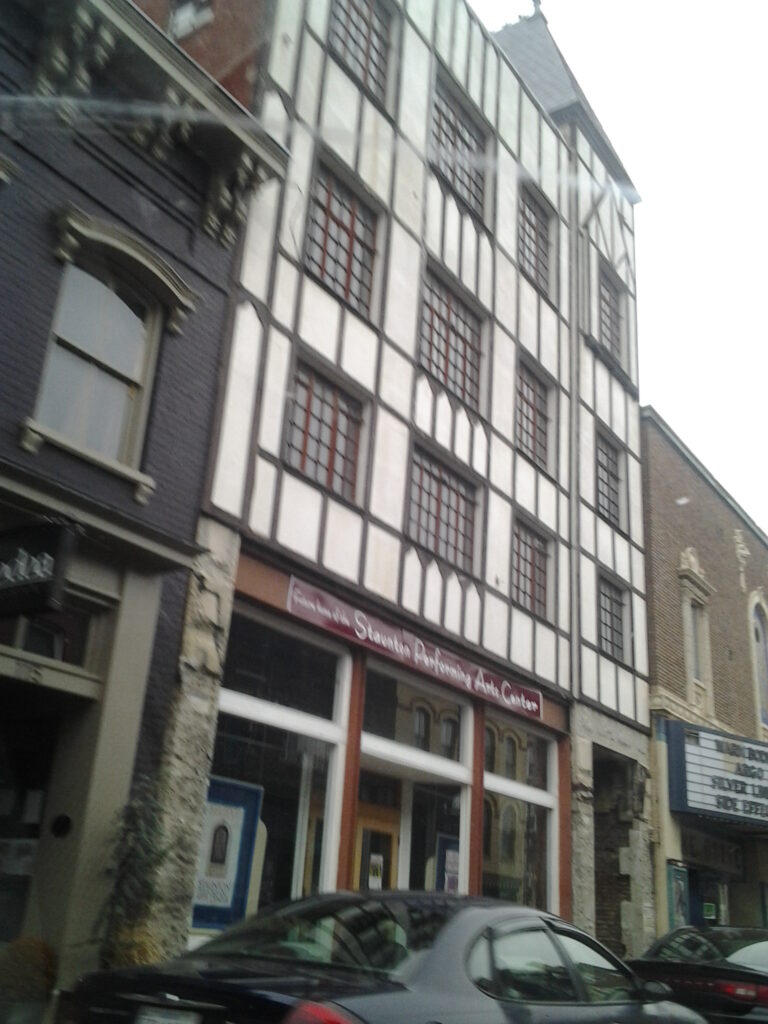
A cinema was also located in the downtown. Creating a cluster of entertainment options for visitors. The Staunton Performing Arts Center was in a faux Tudor building. The half-timber construction with plaster was likely a clever reference to the Blackfriars theater nearby, which, in comparison, was in a more modern building.
Something else that impressed us about the historic downtown was the buy local focus that several of their promotions had. For the farmers’ market it was obvious to promote “Buy Local at the Farmers’ Market.” Another promotion called “Love, Downtown” focused on 28 ways in 28 days to showcase the merchants and charities – all that had offers throughout the month. The poster promoted “buy local, give local” as their positioning. This pairing of for-profit and non-profit was a creative way to expand the impact of buy local initiatives that tend to only support businesses.


Woodrow Wilson Presidential Library and Museum
We did visit the Presidential Library and Museum which we wrote about here.