
tomb
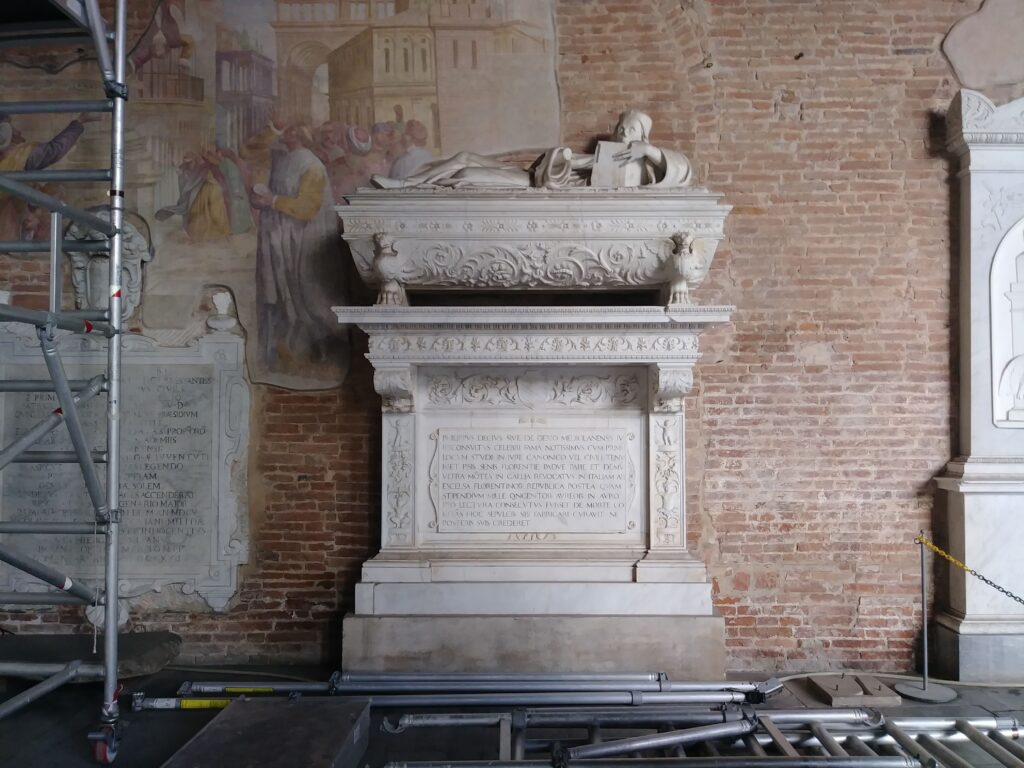
A structural resting place for the dead. (Saylor, 1952) Photo from Pisa, Italy, 2018.
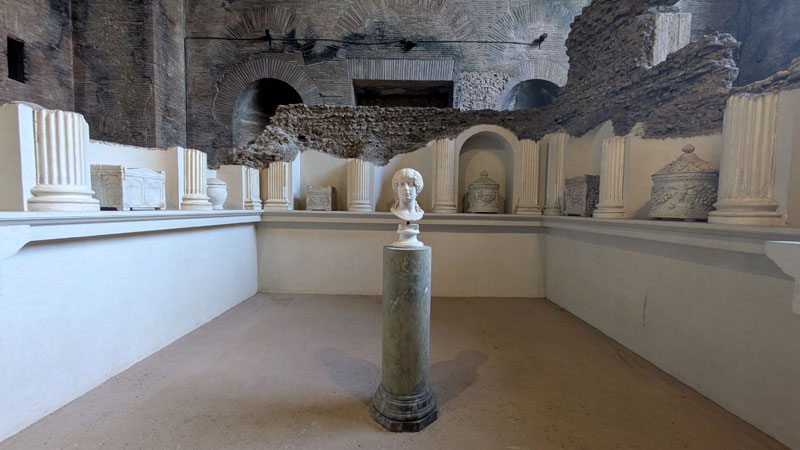
Photo from Museo Nazionale Romano, Rome, Italy, 2025. Photo of This room is the reconstructed Tomb of the Platorini family (Sepulchre of the Sulpicii Platorini. The tomb was discovered in 1879–1880 during excavations along the banks of the Tiber River. The mausoleum was dismantled and meticulously reassembled within the museum in 1911 to preserve it. The marble bust dates to around 40 CE and depicts a young woman, likely Minatia Polla, described in an inscription as having died at around 16 years old. An urn bearing her name was found inside the tomb, containing her ashes and some bone fragments. The exhibit is a rare example of a fully preserved Roman tomb, providing insight into Julio-Claudian age funerary practices and artistic styles. Other artifacts and busts of family members, including Gaius Sulpicius Platorinus, a politician close to Emperor Augustus, were also found at the site, Museo Nazionale Romano, Rome, Italy, 2025.