
Visit to the Metropolitan Museum of Art – New York City, New York
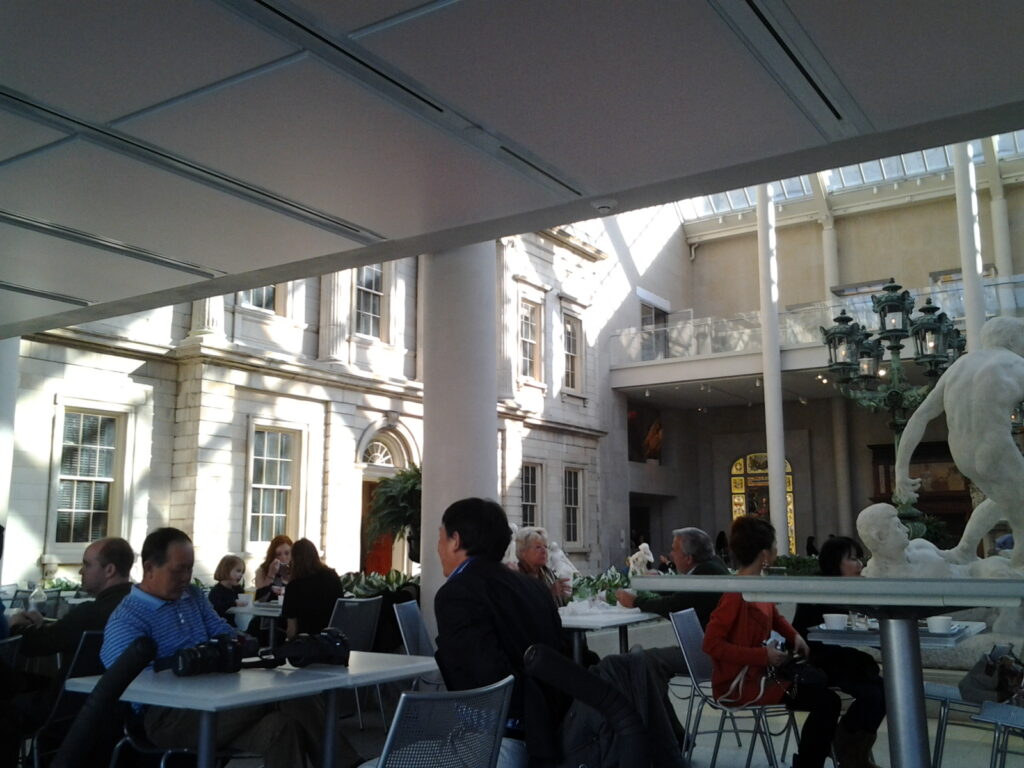
The Charles Engelhard Court is a spacious light-filled space that presents the Museum’s collection of American monumental sculpture, architectural elements, and stained glass. On the second floor are holdings of American silver, pewter, jewelry, ceramics, and class. The court serves as a grand vestibule to the American Wing, with period rooms and galleries dedicated to the decorative arts, paintings, and sculpture.


The entrance hall for Laurelton Hall, a country estate of Louis Comfort Tiffany on Long Island. In the foreground of the photo above are columns from the loggia at Laurelton Hall. Exotic capitals are festooned with flowers. The loggia frames the stained glass Oyster Bay window of leaded favrile glass by Louis Comfort Tiffany. This illusionistic window is framed by a trellis and wisteria vines dripping with blue and white blossoms. The view is similar to what Tiffany saw from his country estate, Laurelton Hall, in Oyster Bay, New York. The window was commissioned by William C. Skinner for his New York City town house as a reminder of his family estate in Holyoke, Massachusetts, named Wistariahurst.
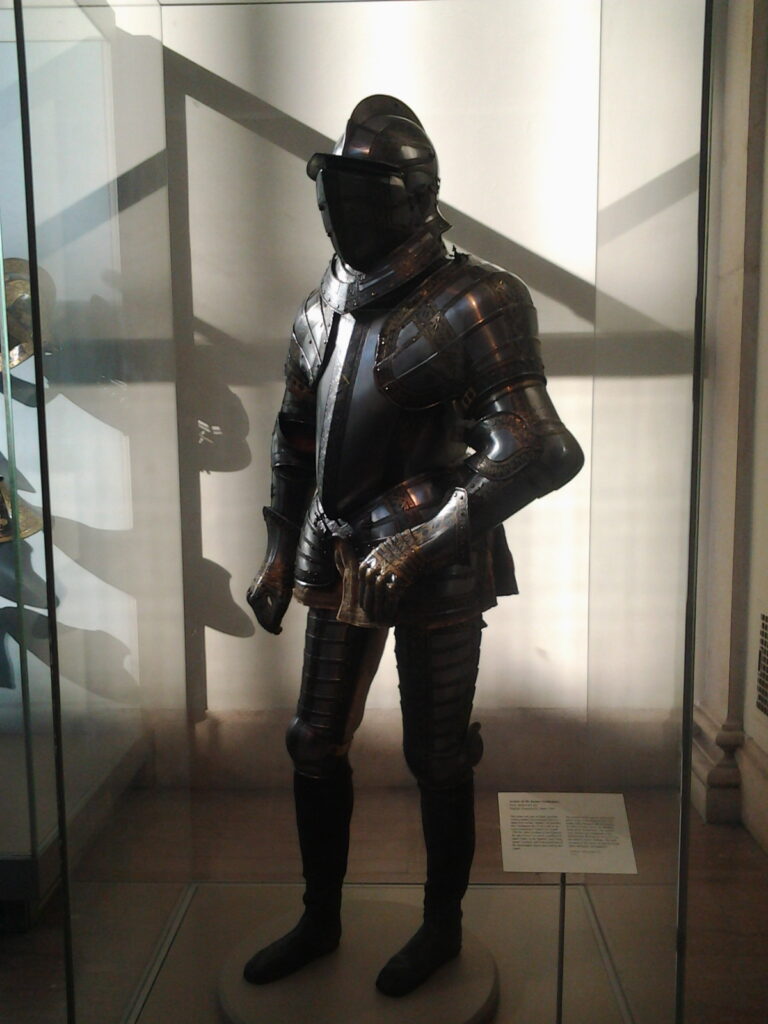
The Armor of Sir James Scudamore is from Greenwich, England, around 1595. The armor was made in the royal workshops at Greenwich around 1595 and 1596. Scudamore accompanied the earl of Essex on a naval expedition to attack Cadiz, on the Spanish coast. The armors were restored by the Metropolitan Museum of Art in 1915 by the armorer Daniel Tachaux.
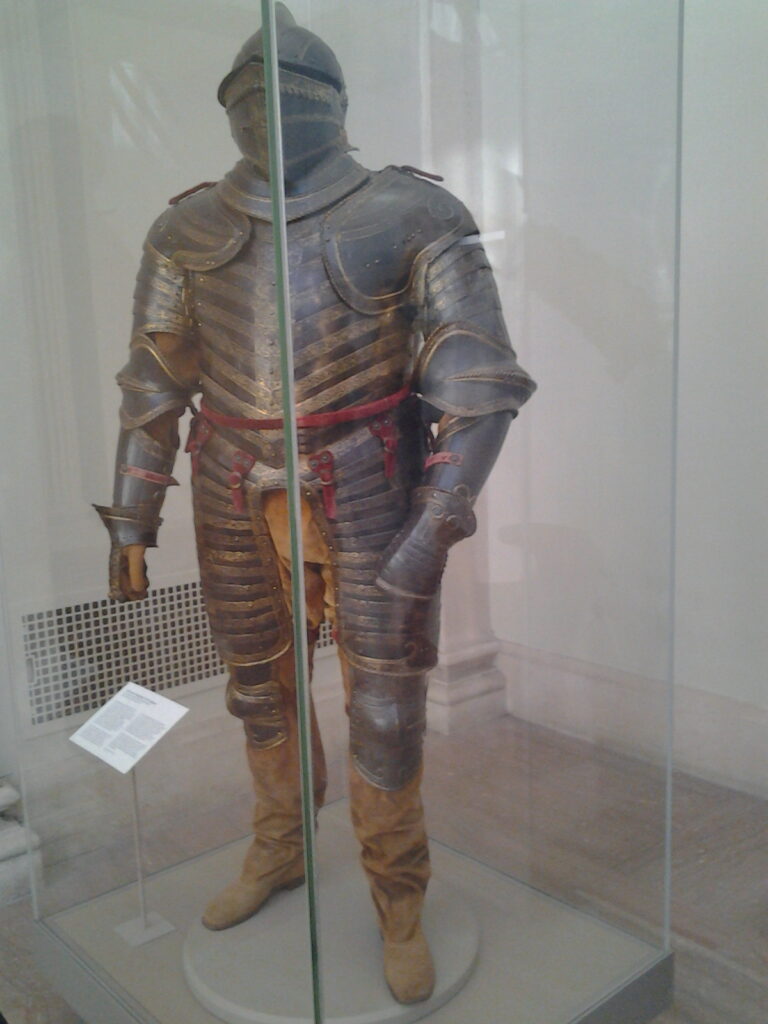
The Field Armor of King Henry VIII of England, in comparison, is far more massive to accommodate his greater girth.
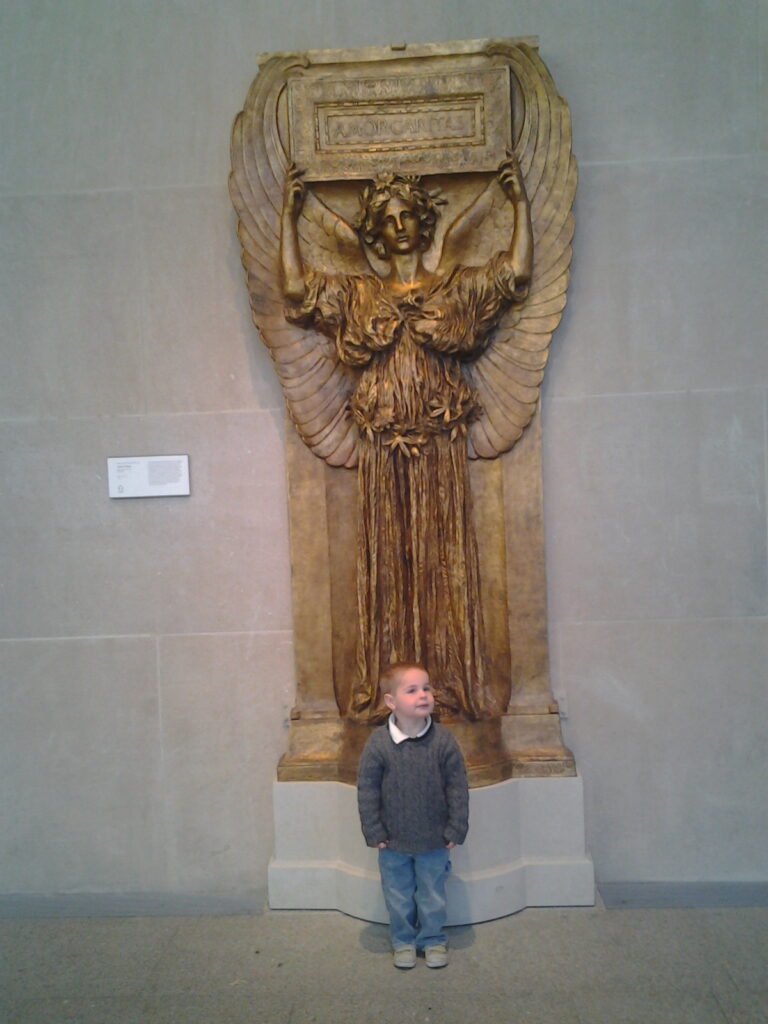
Amor Caritas by Augustus Saint-Gaudens was designed 1880–98, and cast 1918. “Amor Caritas” represents the perfection of Saint-Gaudens’s vision of the ethereal female, a subject that he modeled repeatedly, beginning in 1880. The elegant figure in a frontal pose with free-flowing draperies and downcast eyes also appears in the caryatids for the Vanderbilt mantelpiece (25.234) and in several funerary works. Here, Saint-Gaudens made subtle changes in the drapery and added upward-curving wings, a tablet, and a belt and crown of passionflowers. He considered several titles with universal themes, including To Know Is to Forgive, Peace on Earth, God Is Love, and Good Will towards Men, before settling on Amor Caritas [Love (and) Charity].
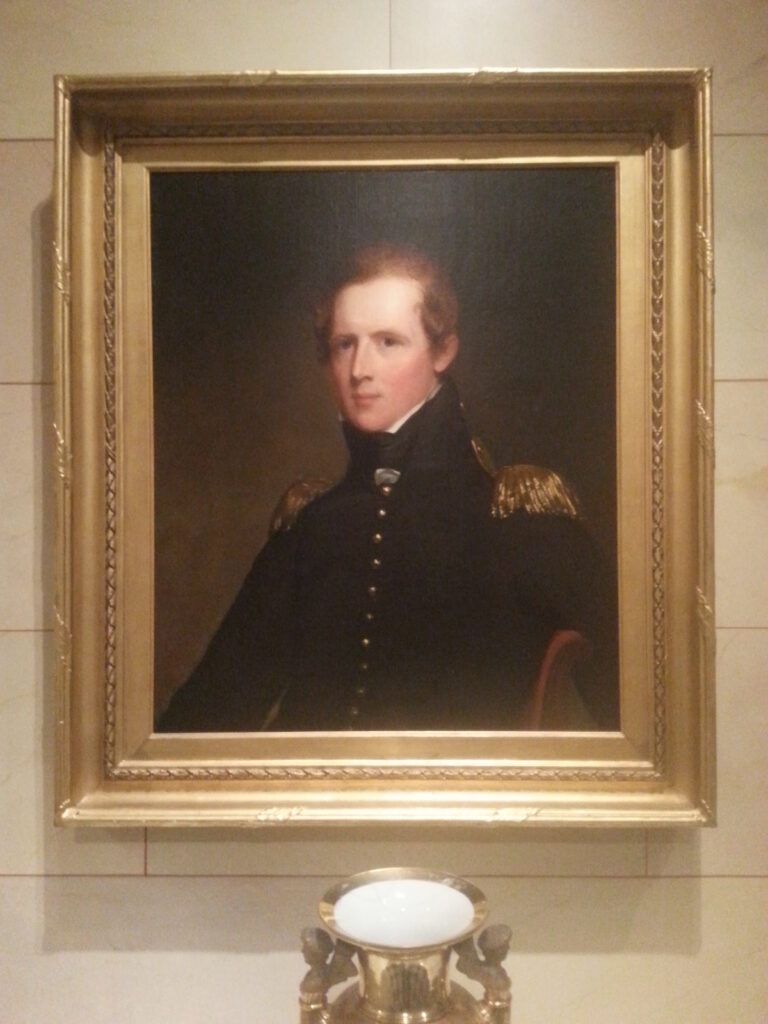
The portrait of Major John Biddle was meaningful for me, as I lived for a short time in Wyandotte, Michigan, where he built a house.
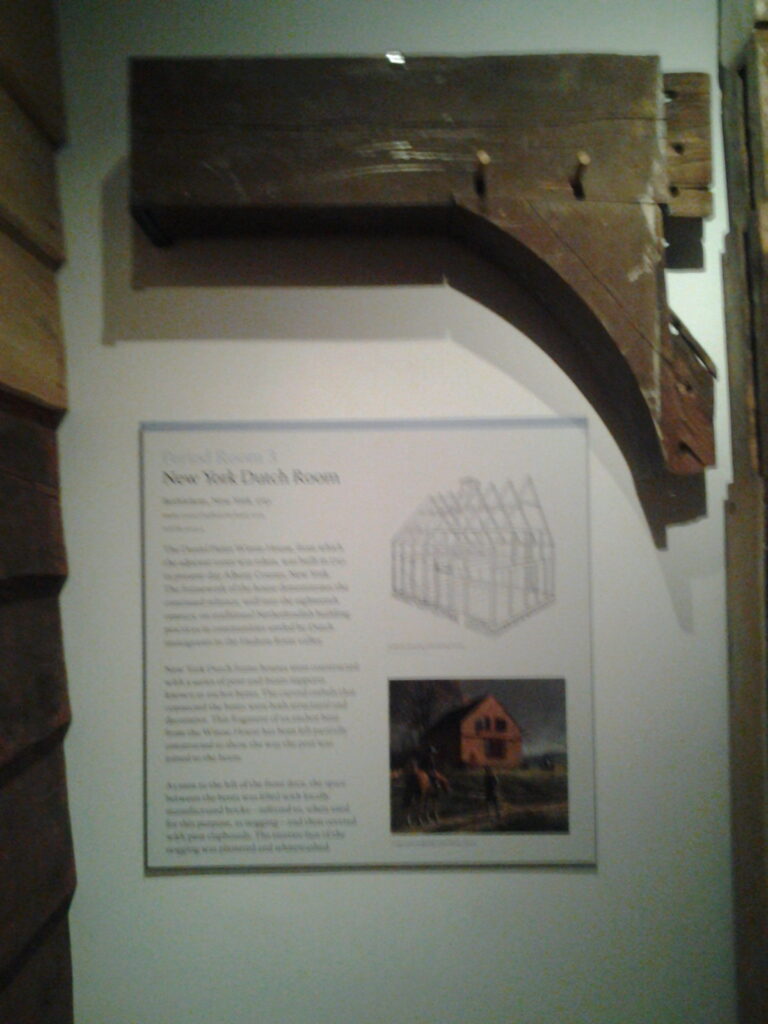
This section of joinery from the New York Dutch House brought to light older construction methods.
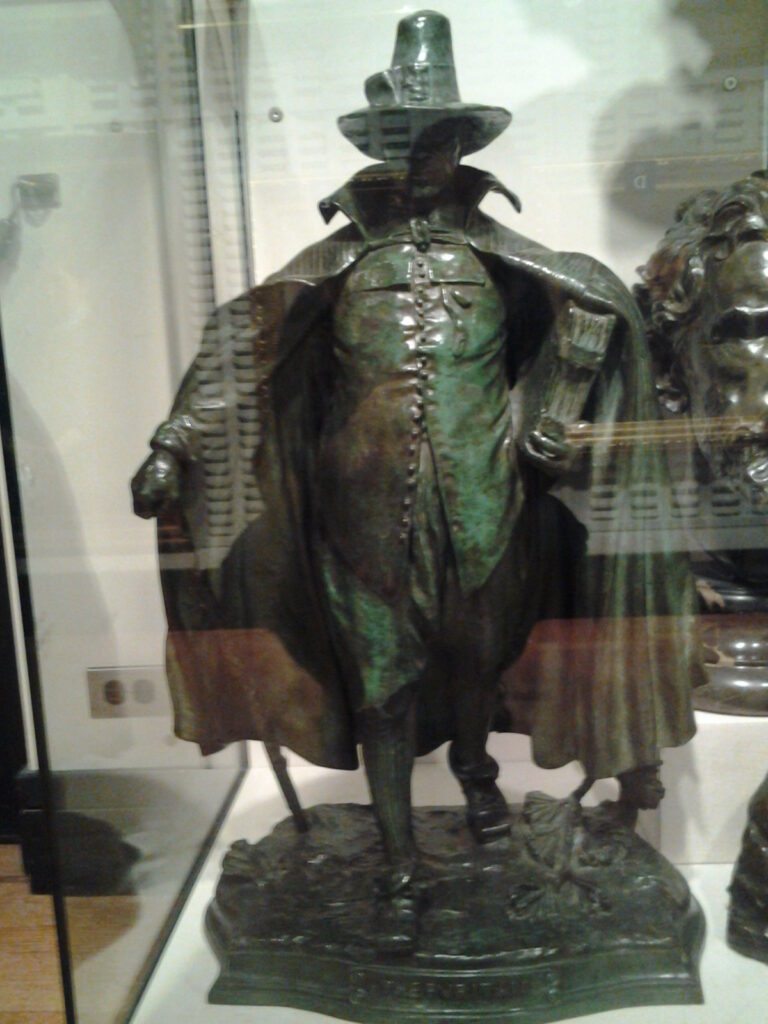
Sculpture of The Puritan provided a reminder of early groups of people who helped to settle the Massachusetts Bay Colony.


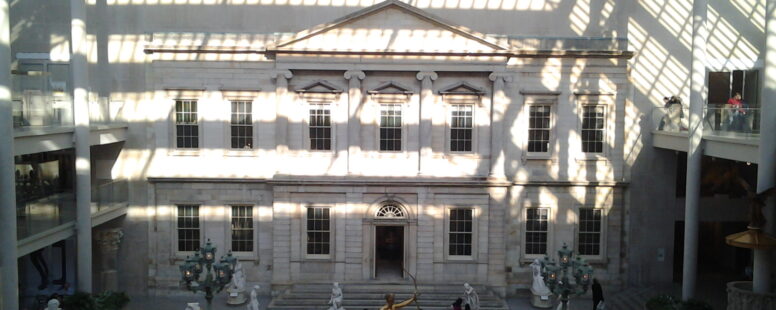
The Neoclassical facade of the Branch Bank of the United States is installed at one end of the court. It was designed by architect Martin E. Thompson and originally located on Wall Street. During visits in 2011 and 2015 respectively, it is fascinating how the courtyard and building fragments take on an entirely different character depending on the condition of outside light.