

Preservation Activities – Detroit, Michigan (2006-2007)
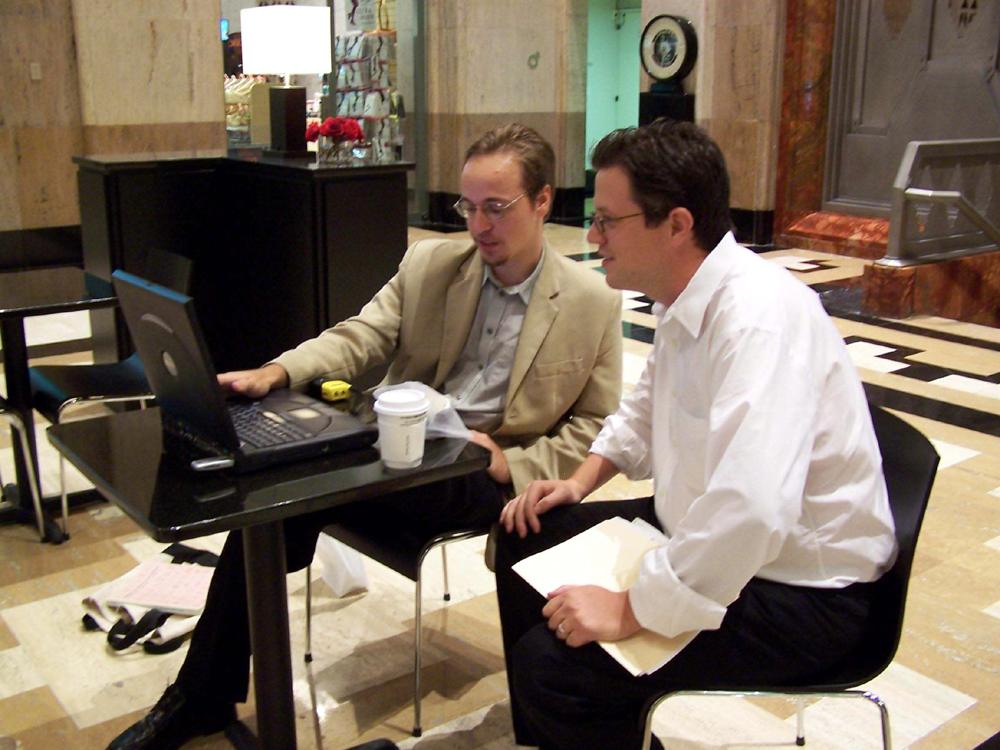
August 31, 2005. Isaac Kremer and Francis Grunow worked together on the Preservation Wayne website in the historic lobby of the Guardian Building in downtown Detroit, Michigan. Both men became well-known figures in Michigan’s preservation, urban planning, and placemaking communities.
- Isaac Kremer today is a nationally recognized downtown revitalization leader and Main Street professional. He has directed community development initiatives across the country and currently serves as the Executive Director of the Royal Oak Downtown Development Authority in metro Detroit.
- Francis Grunow: A prominent Detroit-based urban planner, writer, and historic preservation advocate. He has led civic organizations such as Preservation Wayne and the Detroit Greenways Coalition and worked extensively on neighborhood stabilization and structural preservation throughout the city.
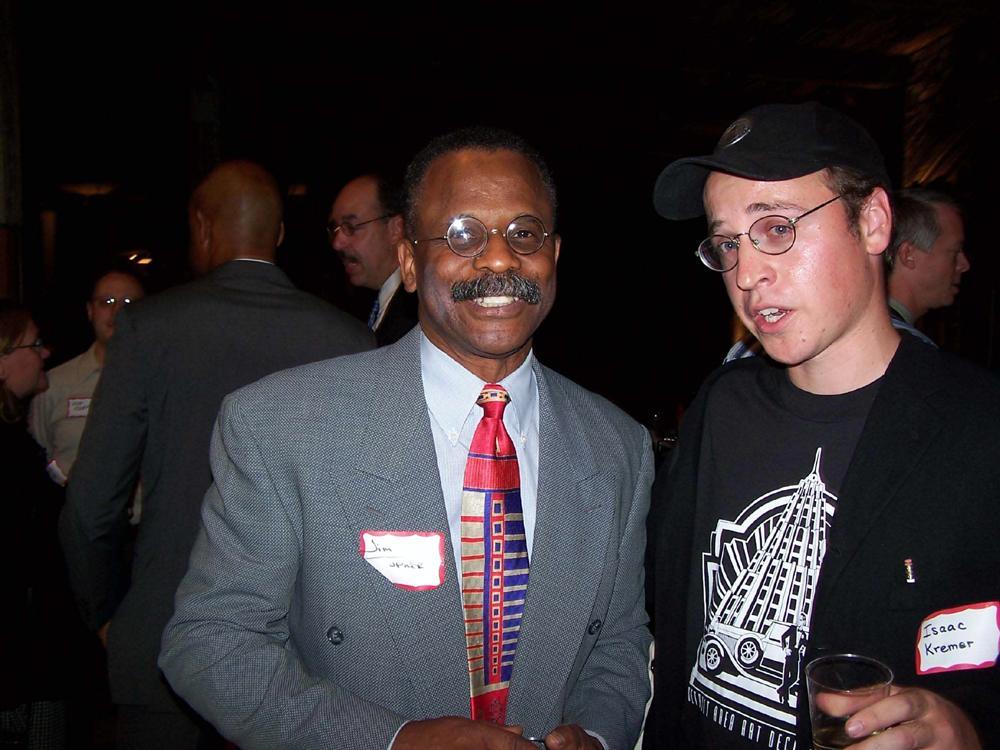
September 15, 2005. James A. “Jim” Turner (left) standing alongside downtown revitalization leader Isaac Kremer (right) at a Preservation Wayne function. Jim Turner is the founder of Turner Restoration, a highly respected Detroit-based firm specializing in the meticulous preservation of historic steel and wood windows. A former president of Preservation Wayne (now Preservation Detroit), Turner is a foundational leader, master craftsman, and passionate advocate within the modern Detroit historic preservation movement. Isaac Kremer went on to become a nationally recognized placemaking specialist and executive. In this photo, Kremer is wearing a t-shirt displaying Detroit’s historic Art Deco Penobscot Building, reflecting the duo’s shared dedication to preserving Michigan’s rich architectural history.
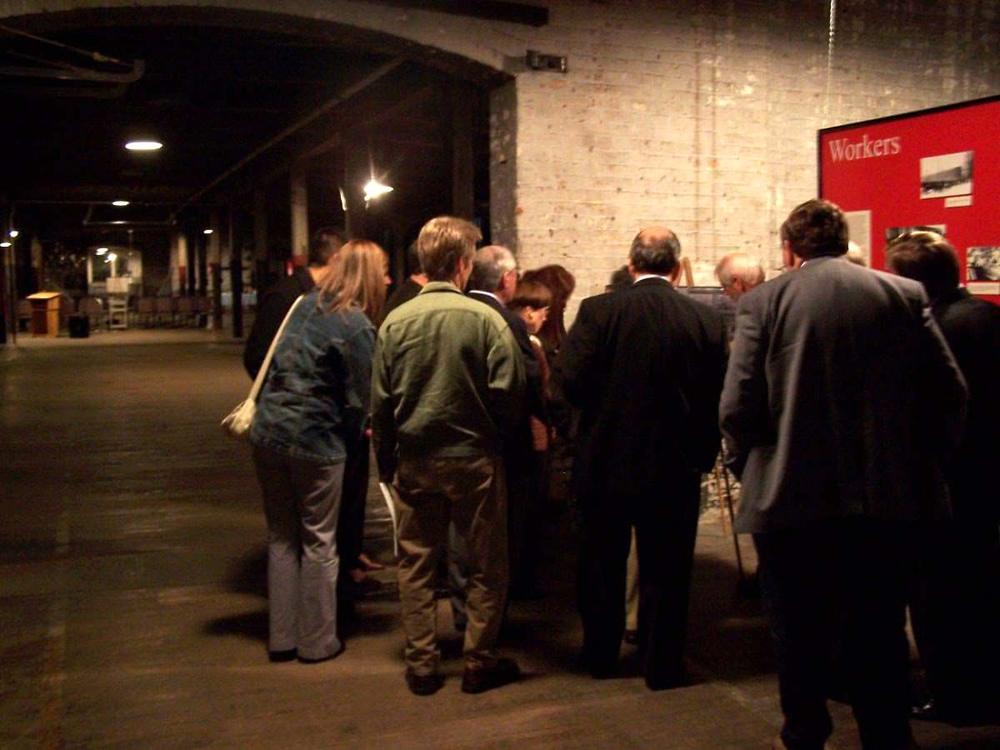
October 20, 2005. This image shows visitors gathered inside the raw, industrial interior of the Ford Piquette Avenue Plant at 411 Piquette Avenue in Detroit, Michigan. The group is viewing an educational museum panel titled “Workers,” which documents the history and daily lives of the early labor force that assembled the first Ford vehicles. Built in 1904, the plant is a National Historic Landmark recognized as the birthplace of the Ford Model T and the location where Henry Ford pioneered early automotive manufacturing techniques.

February 11, 2006. The historic 4731 Grand River Avenue building, a prominent artist incubator, gallery space, and cultural landmark located in the Core City neighborhood of Detroit, Michigan. The brick structure features a large circular “4731” logo sign and a colorful patchwork street art mural decorating its lower exterior wall. Remnants of the city’s commercial history are visible higher on the facade, including a vintage white-painted brick section and an old ghost sign advertisement for the “Michigan Estate Furniture Co.” For years, this converted multi-story warehouse functioned as a grassroots center providing affordable art studio rentals, coworking spaces, and gallery venues designed to nurture local Detroit artists, designers, and creative entrepreneurs. The building showcases classic early 20th-century Detroit industrial architecture, featuring arched bay window accents along the street level and robust brick craftsmanship. Situated along Grand River Avenue, it sits in a historic commercial corridor that has increasingly become a canvas for vibrant outdoor murals, community gardens, and neighborhood revitalization projects.
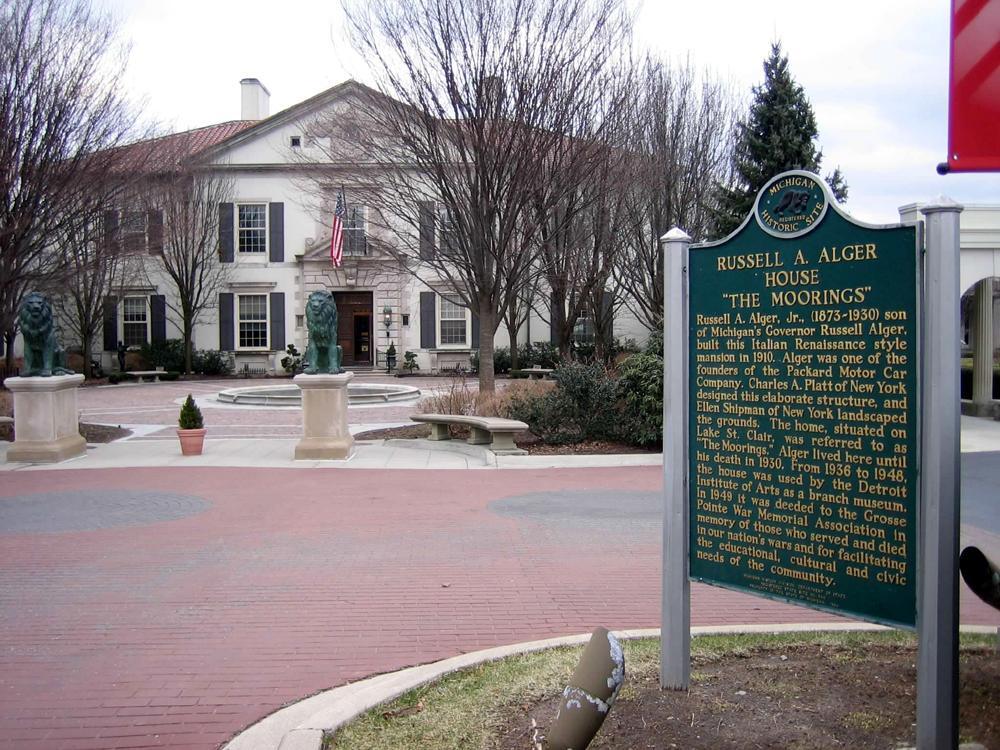
March 14, 2006. The Russell A. Alger House, widely known as “The Moorings,” which serves today as the home of the The Grosse Pointe War Memorial located at 32 Lakeshore Drive in Grosse Pointe Farms, Michigan.
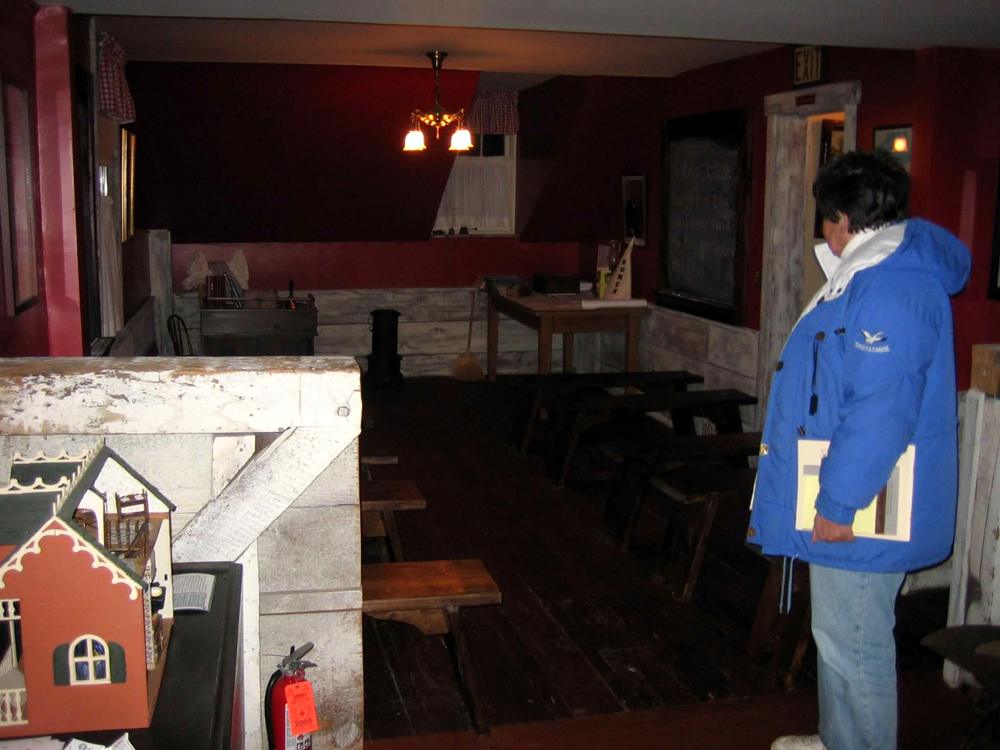
March 14, 2006. Carolyn Mosher exploring a historical recreation of a late 19th-century schoolhouse classroom, located inside the Grosse Pointe Historical Society collection or an affiliated regional museum exhibit. The space is designed to show early Michigan educational life, featuring rows of simple wooden student benches, a teacher’s desk, a wall-mounted chalkboard, and a vintage potbelly stove used for winter heating. In the lower left corner, a detailed architectural model of a historic home is on display near a timber support beam.

March 15, 2006. Developer Ric Geyer receiving a tour of the Flat Rock Hotel, which was undergoing a restoration under the leadership of the Flat Rock Historical Society. Originally constructed in 1896 at the busy intersection of Telegraph Road and Gibraltar Road, the hotel faced imminent demolition in 1999 when a pharmacy chain purchased the property. To protect the structure, an agreement was reached to physically move the massive brick hotel to The Historic Park (on “Memory Lane” behind the Flat Rock Public Library).

The historic Gertrude Reading School Building (commonly known as the Reading Building), stood at 26084 Gibraltar Road in Flat Rock, Michigan. The foreground shows Ric Geyer, a preservation advocate, framing a photograph of the 112-year-old structure. Built in 1911, this distinctive two-story red brick Classical/Arts and Crafts-style building featured an elegant arched central entryway and served as Flat Rock’s primary K-12 schoolhouse for decades before being used for school administration.
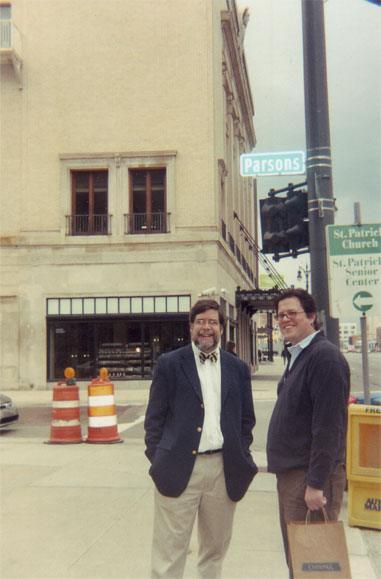
June 14, 2007 (est). One final shot is Dr. Ken Reardon, then with Cornell University, and Francis Grunow outside of the Detroit Opera House. Kremer and Reardon were undertaking an impromptu tour of the region prior to his lecture that afternoon in Dearborn.