

National Shrine of the Little Flower Basilica – Royal Oak, Michigan (2025)


The central sanctuary of the National Shrine of the Little Flower Basilica has a massive, custom-designed Art Deco baldachin (ciborium) suspended above the main altar. The box-like hanging canopy features intricate stained glass panels that glow from internal illumination. The glass depicts tongues of fire, symbolizing the Holy Spirit. Multicolored, vertical glass prisms and geometric metallic tubes hang from the base of the fixture to reflect light dynamically across the altar space. In the background, the distinctive multi-tiered, octagonal seating arrangement and narrow, vertically grouped clerestory windows are clearly visible. The altar was designed for maximum visibility before Vatican II. Architect, Henry McGill, drafted this unique octagonal sanctuary plan.

The main altar has a peacock relief. The front face of the white marble altar block features an intricate relief carving of two peacocks flanking a chalice and cross. In traditional Christian iconography, the peacock symbolizes immortality, resurrection, and the eternal life granted through the Eucharist. Suspended directly over the altar is a large, ornate crucifix. It hangs beneath the Art Deco baldachin’s lower tier of hanging glass prisms and lighting cylinders. The octagonal architecture frames two symmetrical, recessed side altars visible on the left and right flanks. These contain devotional shrines flanked by smaller religious icons and decorative panels. In the background behind the main altar, the elevated steps lead toward the historic tabernacle location and the choir loft/organ structure split across the upper tier.

An Art Deco ceiling medallion is located directly above the central altar. The ceiling features a massive, geometric multi-pointed sunburst design. It utilizes a palette of muted pastel greens, creams, and pinks outlined in crisp architectural borders. The center of this floral rosette serves as the mounting and suspension point for the heavy steel cables holding the massive hanging baldachin canopy. An ornamental metal vent grate is integrated right into the innermost ring of the design to seamlessly blend building mechanics with liturgical art. Recessed spotlight fixtures frame the perimeter to cast ambient light onto the ceiling.
The M.P. Möller pipe organ ia integrated into the background lofts.
Adoration Chapel

Baptismal Font is in the St. Therese Chapel.
Heritage Hall
St. Therese Chapel


A triptych of Saint Francis of Assisi and Saint Clare of Assisi are on facing walls, leading to the St. Therese Chapel.

This is the marble full-relief side altar. The sculpture depicts St. Thérèse of Lisieux (the “Little Flower”) kneeling in prayer before the Child Jesus, who is seated on the lap of the Virgin Mary. The relief features the distinctive, geometric Art Deco style prevalent throughout the entire minor basilica. It is set against a gilded, gold-leaf background. It is situated at the base of the tower at the end of the church’s Narthex.
1 Heritage Hall Main Door
3 Heritage Hall SW Door
4 Church East Door
5 Church South Door
9 Church West Door
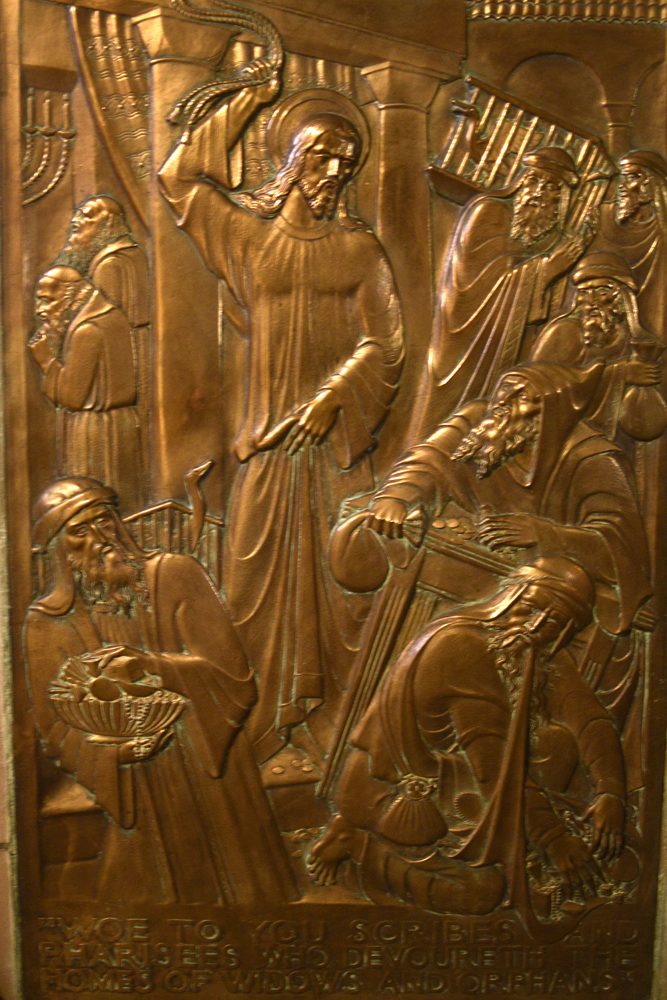
This bronze high-relief panel depicts Jesus Christ cleansing the Temple, casting out the money changers and merchants with a whip. The bottom features the etched biblical warning: “WOE TO YOU SCRIBES AND PHARISEES WHO DEVOUR THE HOMES OF WIDOWS AND ORPHANS”. The sculptor, Rene Paul Chambellan, designed much of the shrine’s metalwork and stone carvings. The location is inside of the Church West Doro entrance.


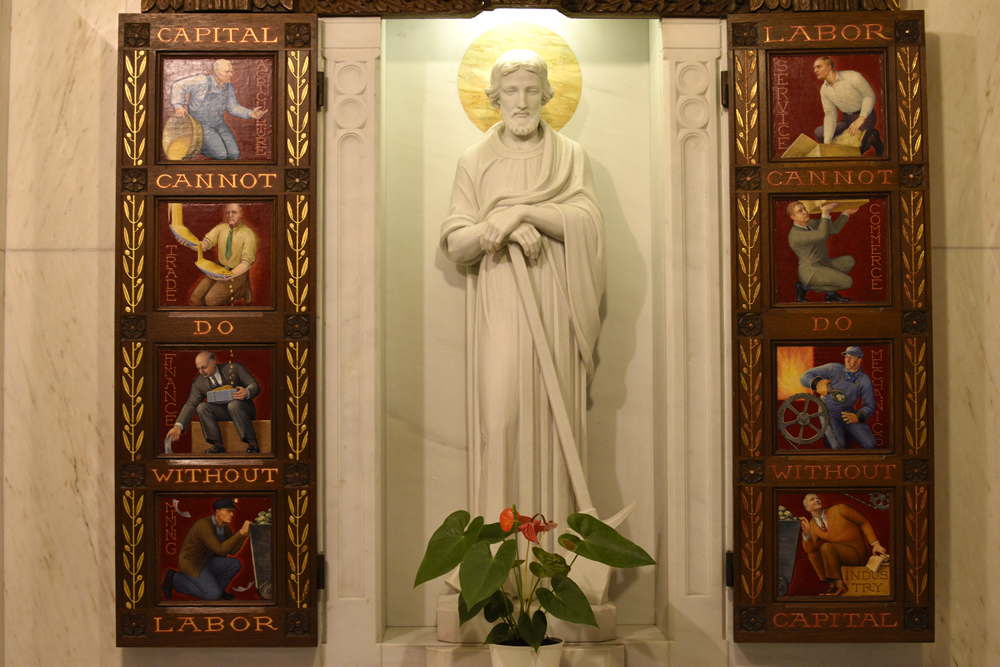
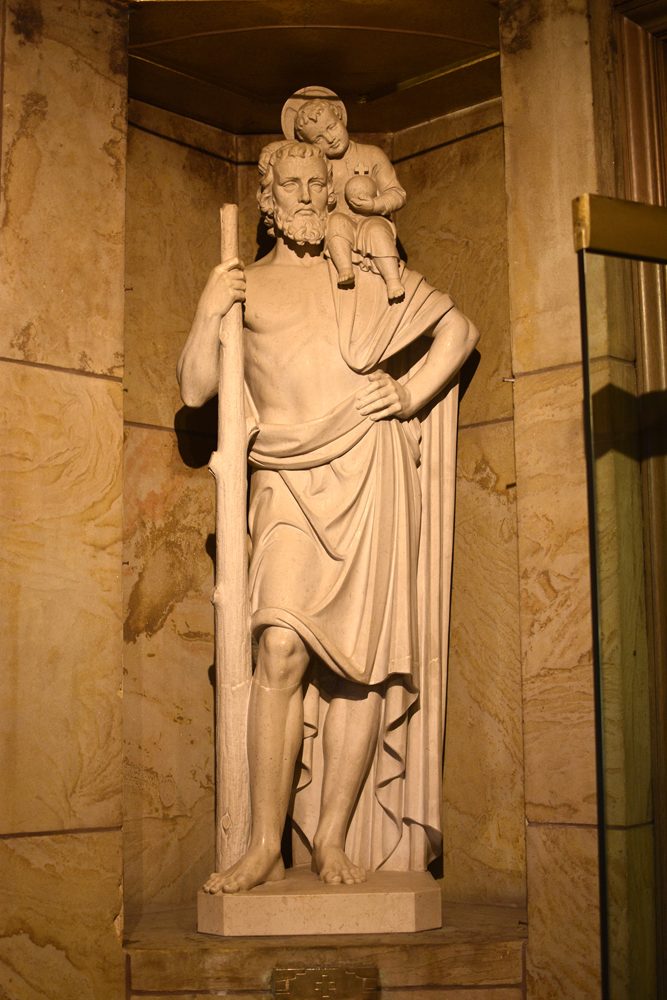
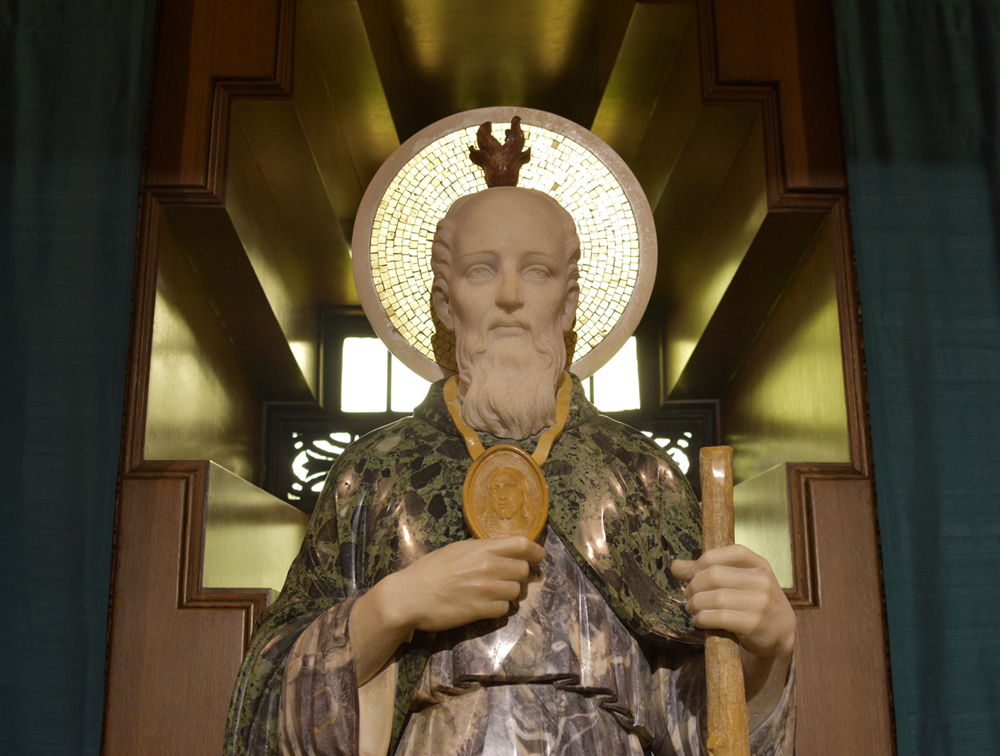
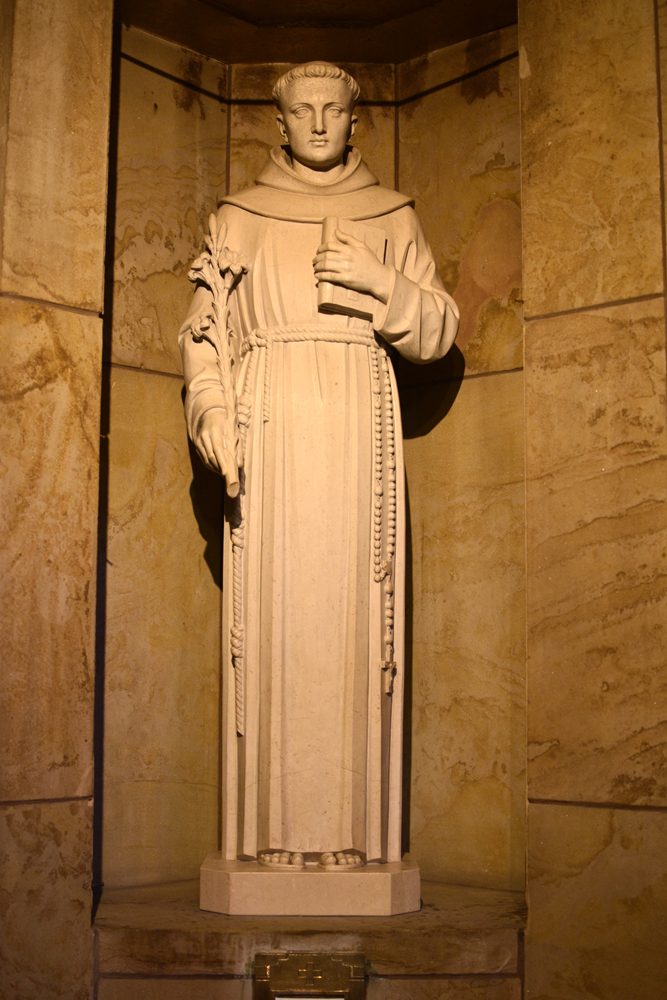
Excellent religious statuary is throughout the basilica. Pictured from top to bottom, left to right, are the Sacred Heart of Jesus, Virgin Mary Queen of All Saints, Saint Joseph the Worker, Saint Christopher, Saint Jude, and Saint Francis.
10 Church North Door
15 Heritage Hall North Door

“One thing alone is necessary during this life, and that is to love Jesus with all our strength.” – The Little Flower
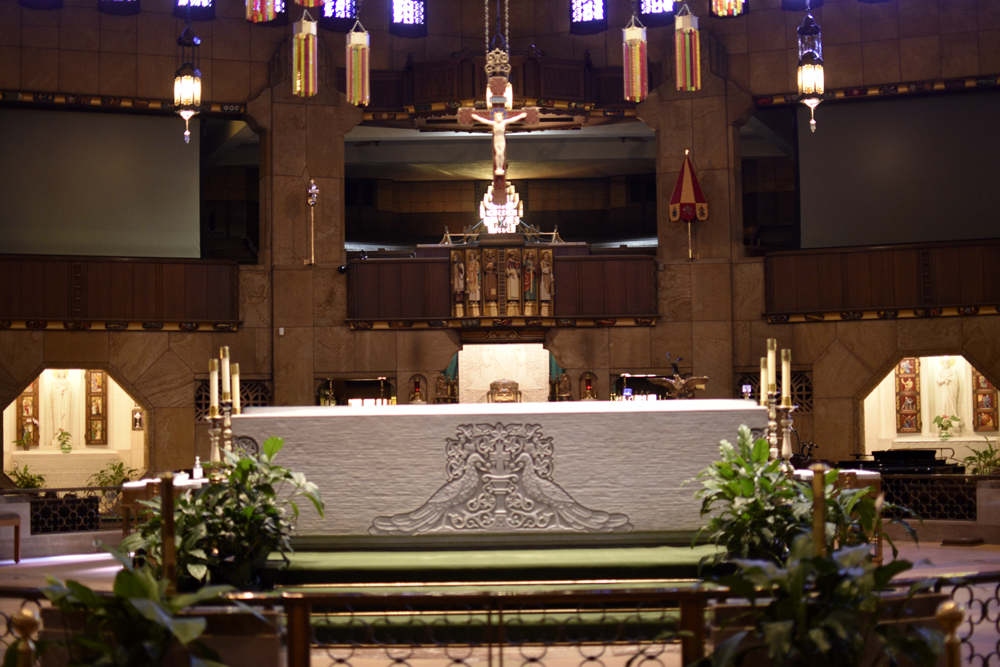
Photo of National Shrine of the Little Flower, Royal Oak, Michigan, 2026.