

Downtown – Birmingham, Michigan (2025)
Birmingham has a core of historic buildings; interesting storefronts with restaurants, bars, and shops; a variety of housing options; and features that make desirable public spaces. Taken together these make the downtown an enjoyable place to visit.

The Ford-Peabody Mansion was built in 1878 by Frank Ford and given to his daughter, Alta, a year later when she married Burt Peabody. The Second Empire style house was designed by renowned Detroit based architect, Almon Varney. The house has a mansard roof with dormers, decorative brackets below the eaves, hooded windows and bay window. The Peabody’s sold the house in 1918 to the Birmingham Masonic Lodge No.44. Shortly after the purchase of the property a large addition was added to the rear of the building. The Masons owned the mansion until 1968 when it was sold to Jack Milan. Mr. Milan intended to demolish the property and build a parking lot. However, several Birmingham commissioners and historical board members persuaded the new owner to preserve the building and convert it to commercial use. In 1977 the Ford-Peabody Mansion was declared historic and has since undergone a major restoration which replaced many original features. Most notably are the windows and dormers on the third floor which were once removed and have now been rebuilt, and the extension of the mansard roof over the Mason’s addition.

The Birmingham Theater Building. The Briggs Investment Company and John H. Kunsky Theatre Enterprises erected this large building in 1926 to contain shops, offices, a bowling alley in the basement, and a motion pictures theater with facilities for vaudeville productions. The theater stopped operation in 1994 but was restored to its former grandeur and opened just 2 years later, in 1996. Except for the individual stores which have been changed frequently, the facade looks today very much as it did in 1926.

The Erity-Nixon Building. This red brick building was erected in the 1880’s by William Erity and his son-in-law, Chauncy Nixon. The Erity family and later the Nixon family owned and operated a mill near the corner of Evergreen Road and Riverside Drive in Beverly Hills. The two men also kept a seed and feed store in the north half of the first floor of the Woodward building. The facade has lost its cornice and roof balustrade, but the handsome second floor windows remain unchanged, and the original cast iron column between the two street level shops still supports the front wall of the second floor. The original fieldstone walls and brick floor can still be seen in the basement.

The Quarton Building. Fred V. Quarton erected this building in 1916 on the site of the family home of his wife, Emma Blakeslee. Through the years, the facade at street level has changed several times, but the second floor has kept its original appearance even including the metal cornice with its four distinctive metal spheres and the letters of the name Quarton just under it. The Levinson family, present owners of this building, purchased it prior to the Great Depression, and have owned if for over 70 years.

The Detroit Edison Building. In 1931, the engineering staff at Detroit Edison designed this building and had it erected. It was intended to harmonize with the then new Municipal Building and the Baldwin Library. Edison used it until 1978 when it was sold for use as a restaurant and offices. It was restored in 1979 by Anthony S. Brown, Zaid D. Elia, and Denise Ilitch.
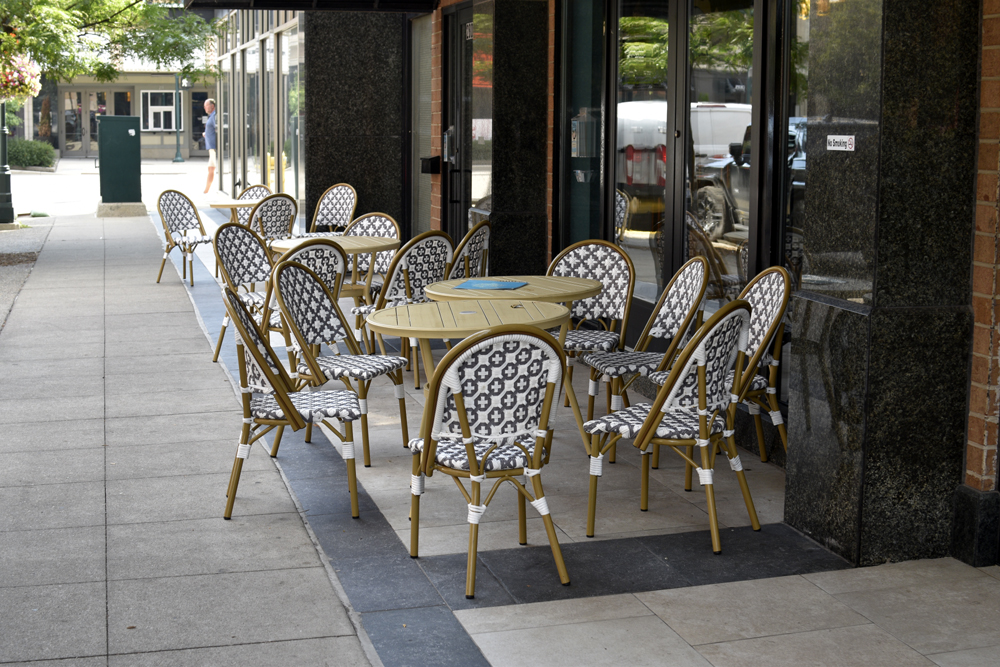

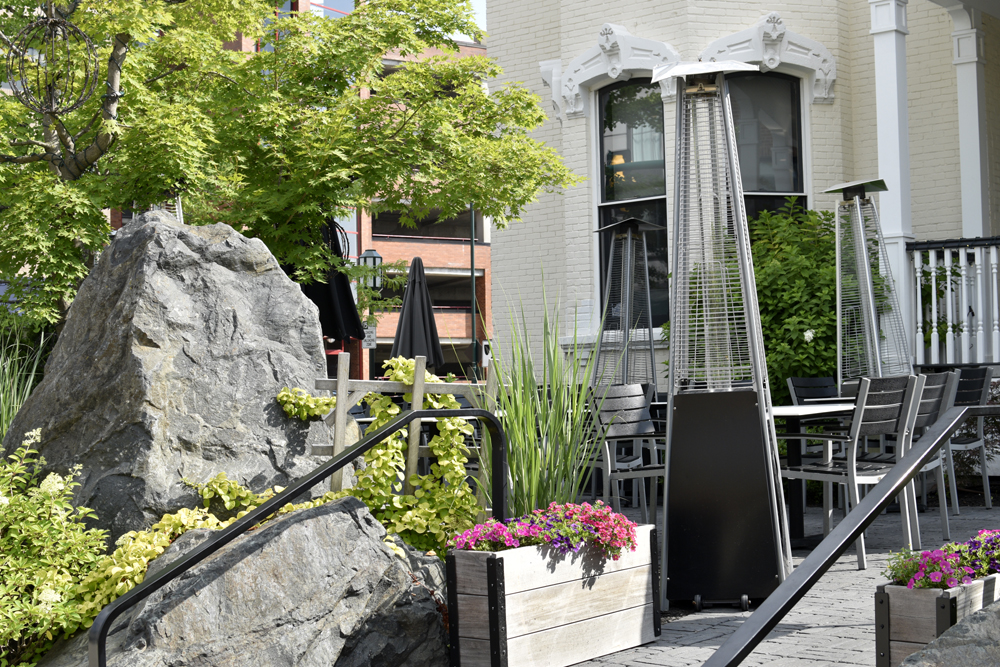
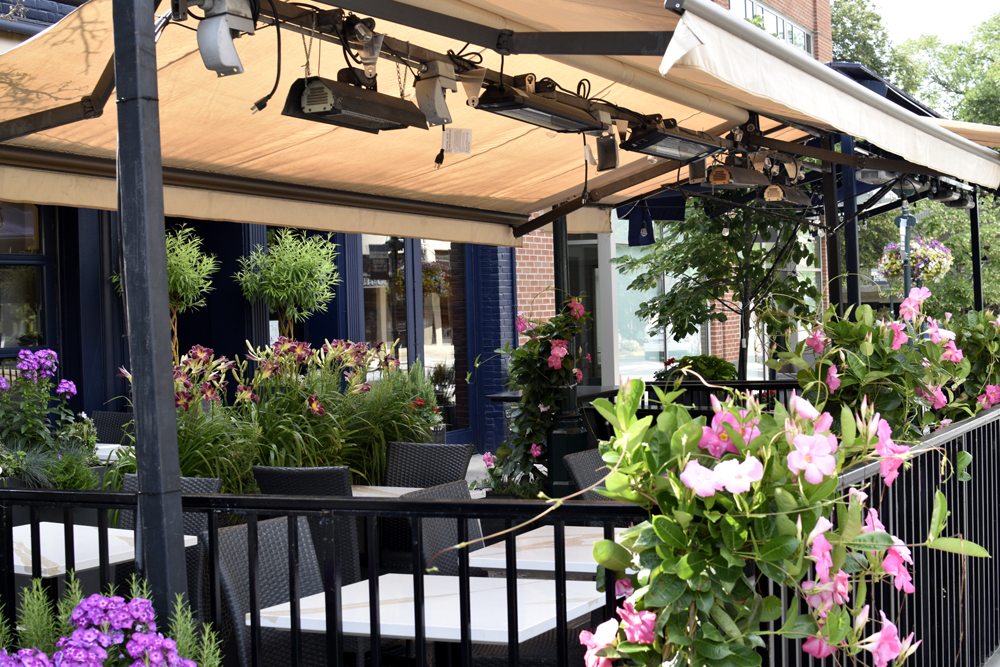


Outdoor dining is elevated in Birmingham. Whether it be infrared or other heating apparatus. Furnishings, lighting, umbrellas and tasteful railings all exceed basic utilitarian standards common in other places.

The Townsend Hotel is a destination in the heart of the downtown. Visited by luminaries, it defines excellence in accommodations.

This limestone facade is consistent with the Beaux-Arts architecture found at The Willits condominiums. The building features a curved design meant to conform to the local streetscape. Completed in 2001, this 5-story building offers high-end luxury residences with a waiting list and units that sell from $1.5 million to $5 million or more.

The Palladium is home of Emagine Theater.


Public art is incorporated discreetly at locations throughout the downtown. From a “Fresh Popcorn” near the Birmingham Theater, to a large laser cut steel silhouette of a rhinoceros, to an abstract metal sculpture.


Public spaces and passages are landscaped and richly planted. This triggers a biophilic reaction that puts people at ease, despite the fact they are walking through a less urbane and refined area.

The Detroit Design Awards program creatively recognizes businesses that are winners of awards they give out. A vinyl graphic on transparent panel highlights this winning restaurant and bar design.
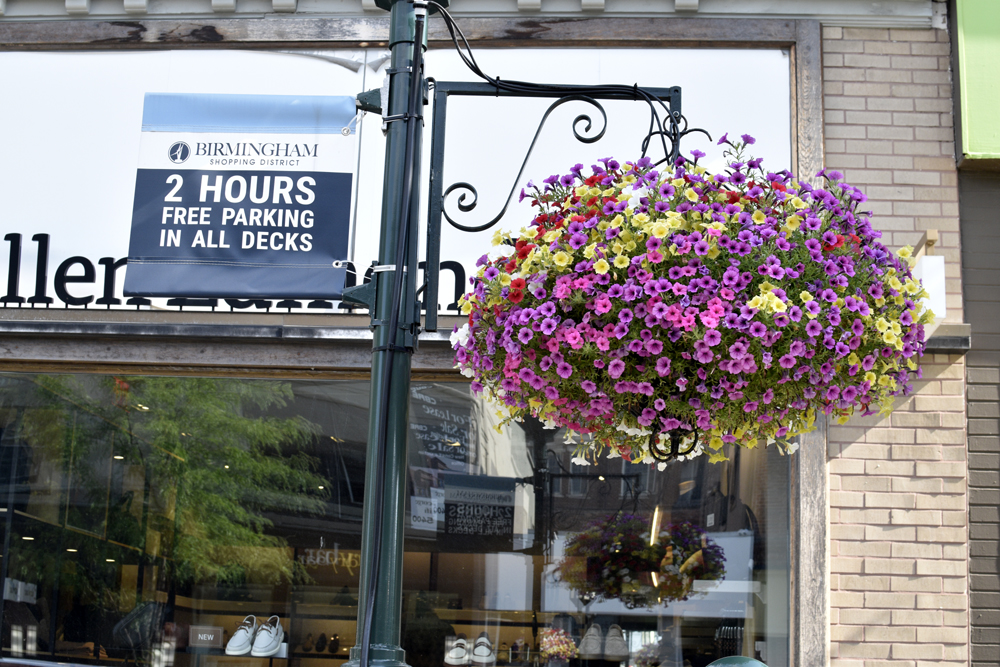
The 2 hours of free parking in all decks is promoted clearly throughout the downtown using these petite and discreet but also effective banners.

The digital meter head has clear countdown, and the parking rules laid out in an easy to follow manner.

This bus stop at a central location is transparent and harmonizes with its surroundings, while also protecting riders from weather and the cold.