Mammoth Cave National Park – Mammoth Cave, Kentucky (2012)
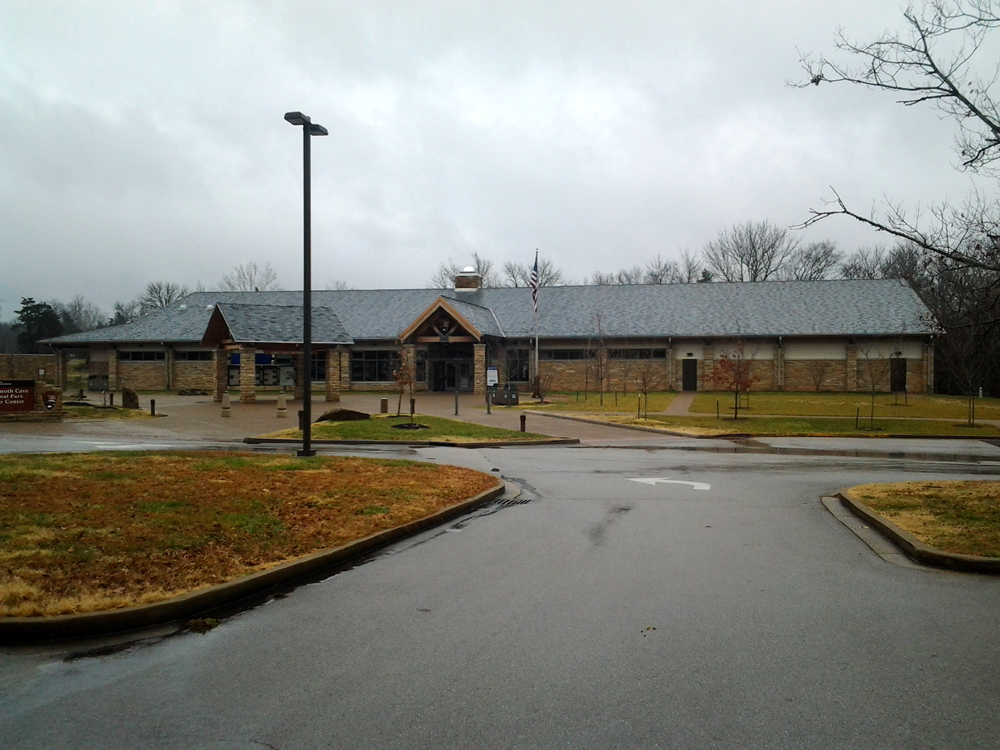
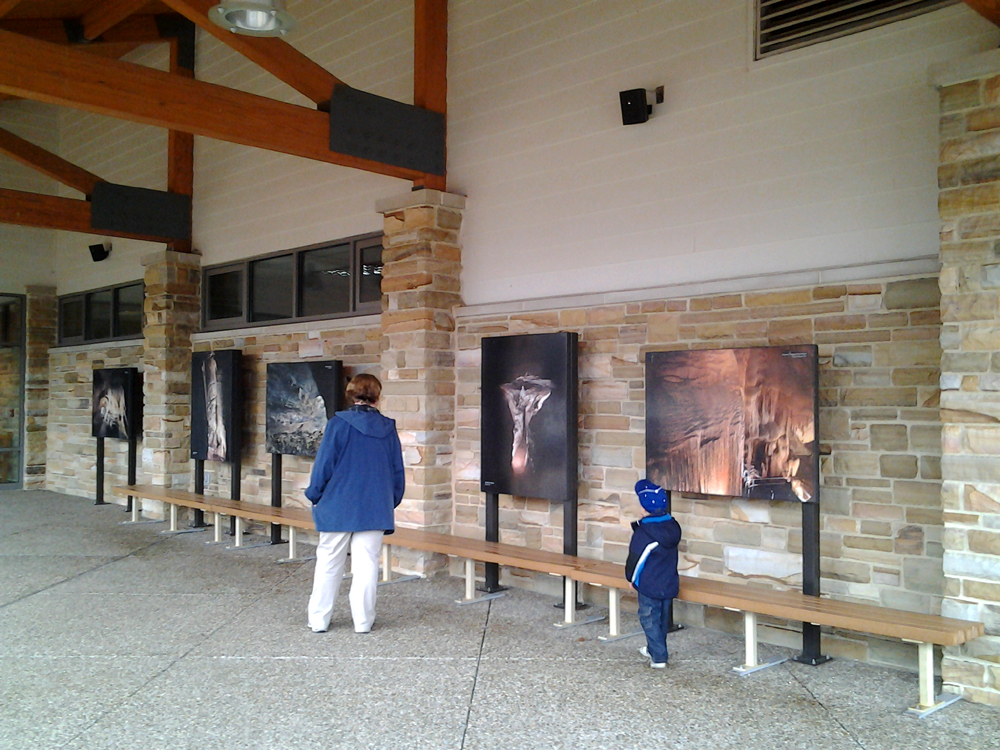
The Visitor Center provides a nice overview of the cave system before actually visiting the caves themselves. Mammoth Cave is the largest known cave system in the world.
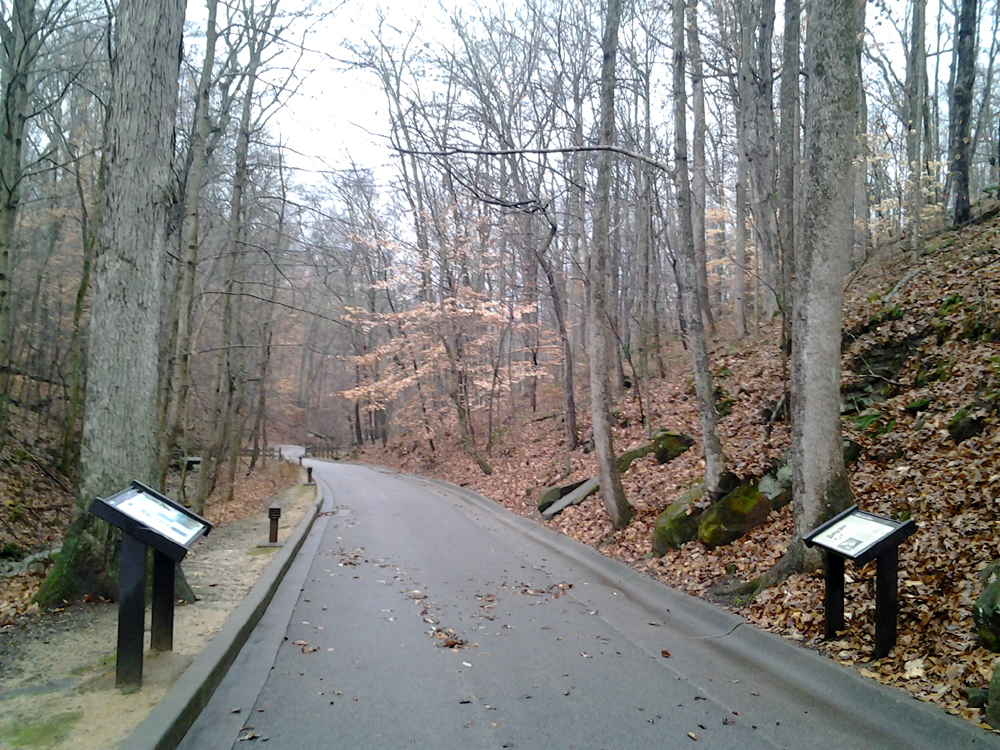
In the Pennsylvanian Period, 280 million years ago, a layer of sand and silt was laid down by an ancient river delta, forming the slanted layer of mixed sandstone and shale visible immediately across this ravine. Beneath this “caprock” lie 600 feet of layered limestone beneath. This caprock of sandstone and shale acts like a roof, shedding water to the side of the ridge protecting the cave system beneath.
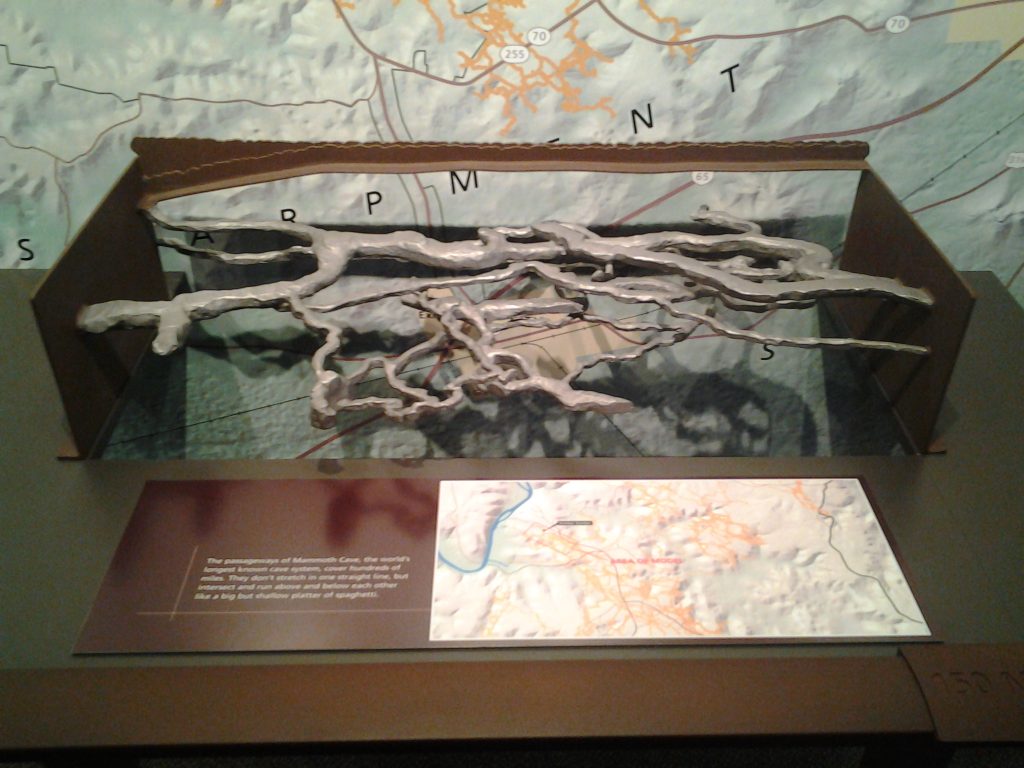
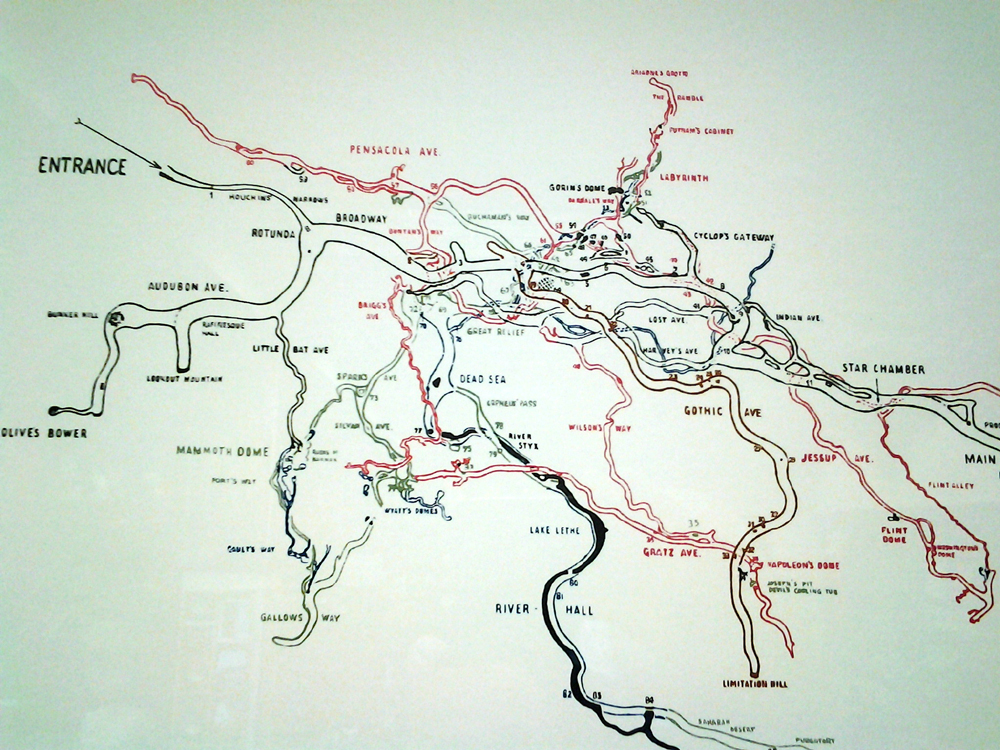
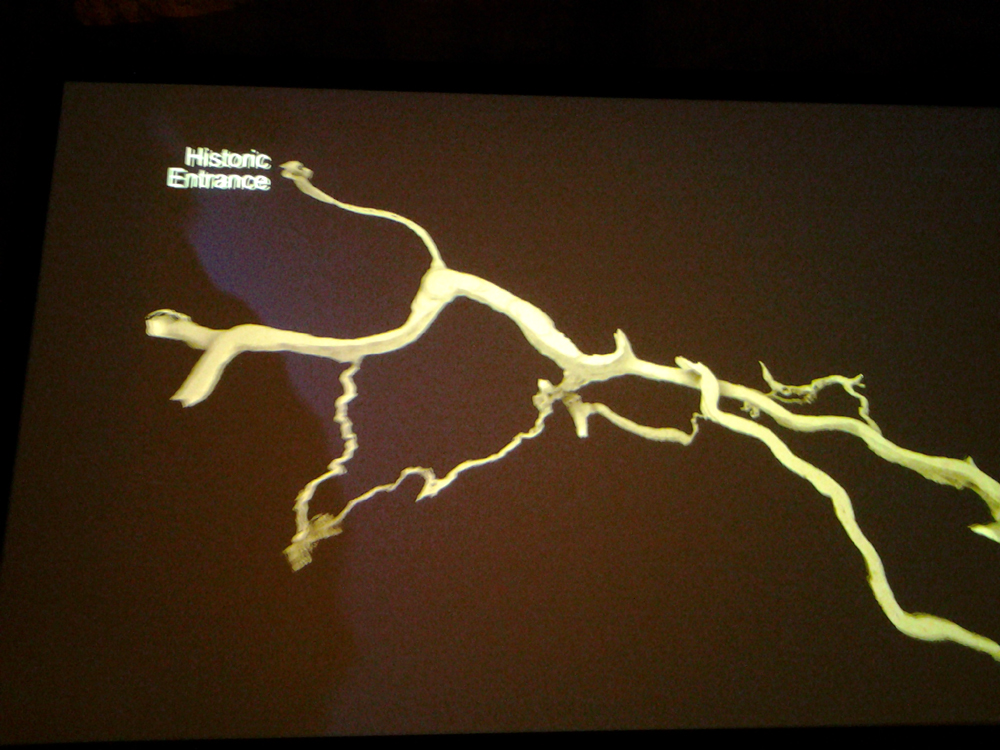
Hundreds of miles have been explored with new caves being found regularly. A landscape in which water moves rapidly underground by dissolving rock is called a karst landscape. Limestone is a common soluble rock, and karst landscapes are found throughout the United States and the world. Mammoth Cave’s karst landscape is part of one of this nation’s largest region of cavernous rocks. Caves and springs commonly occur in karst regions like Kentucky, southern Missouri, and Florida.
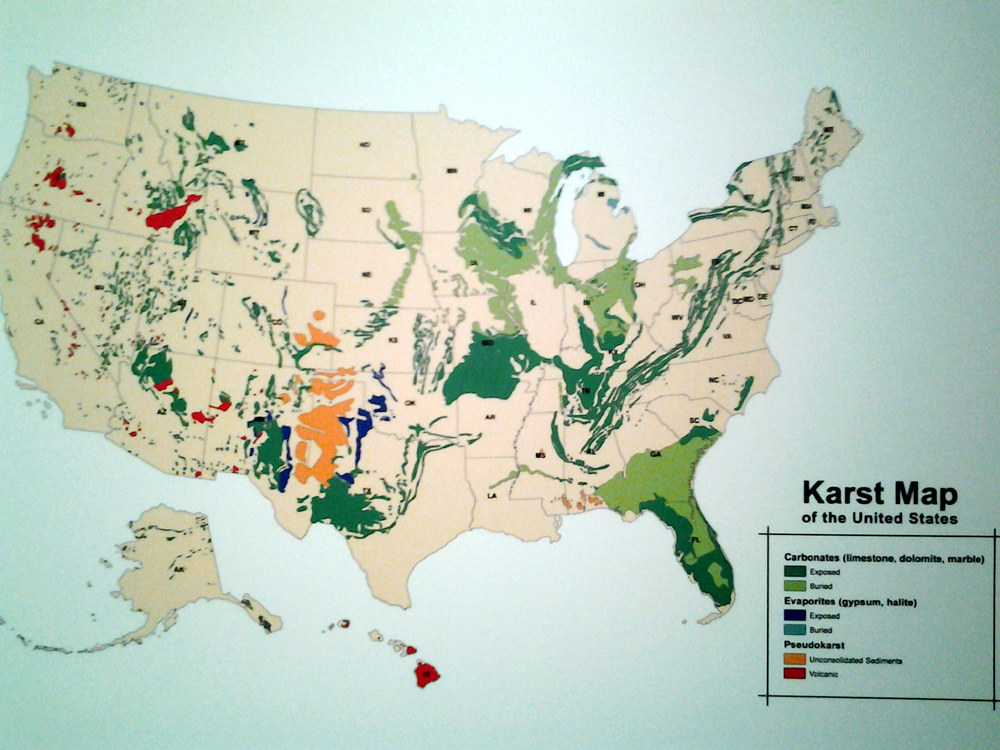
Karst is key to Mammoth Cave’s origin because rock must be readily dissolved by mildly acidic water for cave passageways to form. What Mammoth Cave has that some other karst caves lack is an insoluble sandstone roof. Sandstone protects the rocks below it.
Current length of other long caves in 2012 follows
- Jewel Cave South Dakota: 160 miles
- Optymistychna Ukraine: 147 miles
- Sistema Ox Bel Ha Mexico: underwater, 145 miles
- Wind Cave South Dakota: 137 miles
- Sistema Sac Actun Mexico: 135 miles
- Lechuguilla Cave New Mexico: 130 miles
- Hoelloch Switzerland: 123 miles
- Fisher Ridge System Kentucky: 118 miles
- The Clearwater System Malaysia : 117 miles
By 1816, Mammoth Cave had become a tourist attraction, 125 years before it became a national park. In the 1800s and early 1900s, travelers arrived after long journeys involving stagecoach rides, train trips, or excursions up the Green River by steamboat. All the caves were privately held, and owners competed fiercely for tourist dollars.
For generations, guides have led tours at Mammoth Cave. For many years the guide house was their base of operations.
Guided tours of the cave could be very strenuous by today’s standards. Tourists wore special outfits called “cave costumes” to protect their clothes. Cave trails were developed and spectacular displays of flaming torches lit the huge rooms and disappeared into the Bottomless Pit. Like those tourists of yesteryear, we still make journeys to Mammoth Cave to experience the awe and beauty of this magnificent cave system.
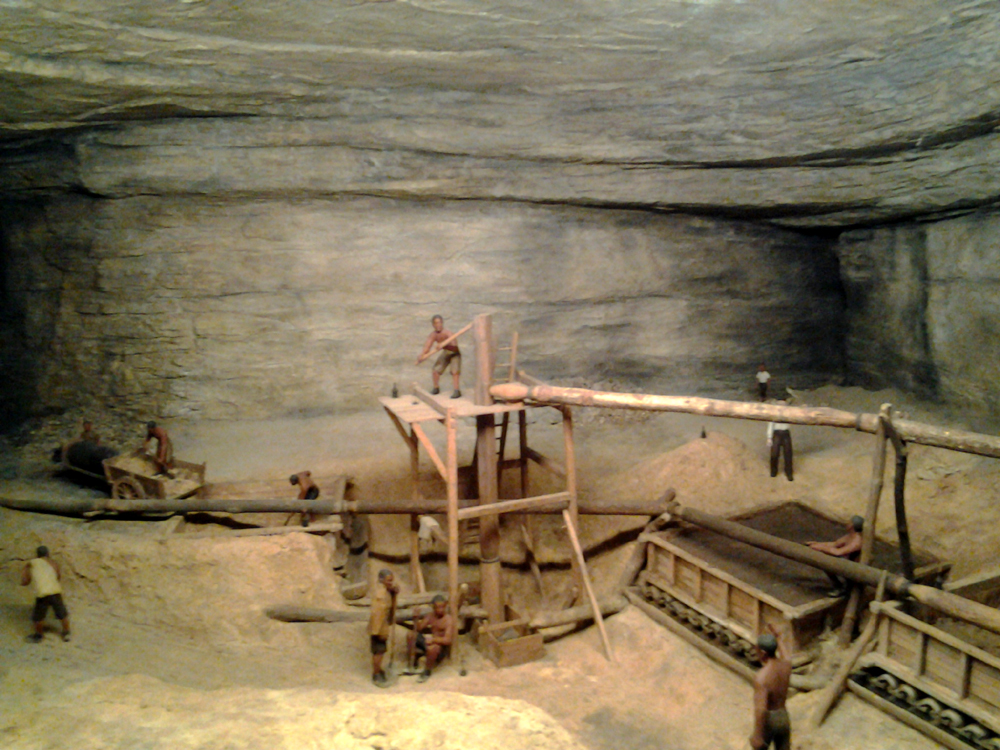
The Saltpeter Cave
One of the earliest uses for Mammoth Cave was as a source of nitrate for producing saltpeter, a key ingredient of gunpowder. In the first decade of the 180os commercial production of saltpeter began, and enslaved African Americans were brought to the cave to produce nitrates from cave sediments. While the War of 1812 increased the demand and price for saltpeter, the end of the war was the beginning of the demise of what had been a highly profitable operation at Mammoth Cave. In the Civil War, the cave’s location in the border state of Kentucky prevented Mammoth Cave from again being used as a source of saltpeter for the war’s munitions.
Tapping the Cave Environment
The cave’s otherworldly environment has prompted people to test theories and try experiments. Dr. John Croghan believed the constant temperature of cave air would benefit his tuberculosis patients. In 1842, he had stone and wood huts built inside the cave to house over a dozen sufferers of this wasting disease of the lungs. No patients were cured by this treatment, and the sanitarium shut down in 1843. Dr. Croghan himself died of tuberculosis in 1849. Later uses for the cave included a mushroom farm, a well-known 1938 sleep cycle experiment, and a civil defense shelter in the 1930s and 1960s.
FLOYD COLLINS and the Park’s Creation
It took the death of avid caver Floyd Collins in 1925 to once again focus national attention on the Mammoth Cave area. The widespread publicity raised its profile in time for it to be included in legislation establishing three national parks in the eastern United States. Floyd Collins and his family developed and managed a local show cave. While exploring Sand Cave, Collins became trapped in a narrow crawl way. The futile two-week effort to extract him was followed hungrily by newspaper and radio all over the United States.
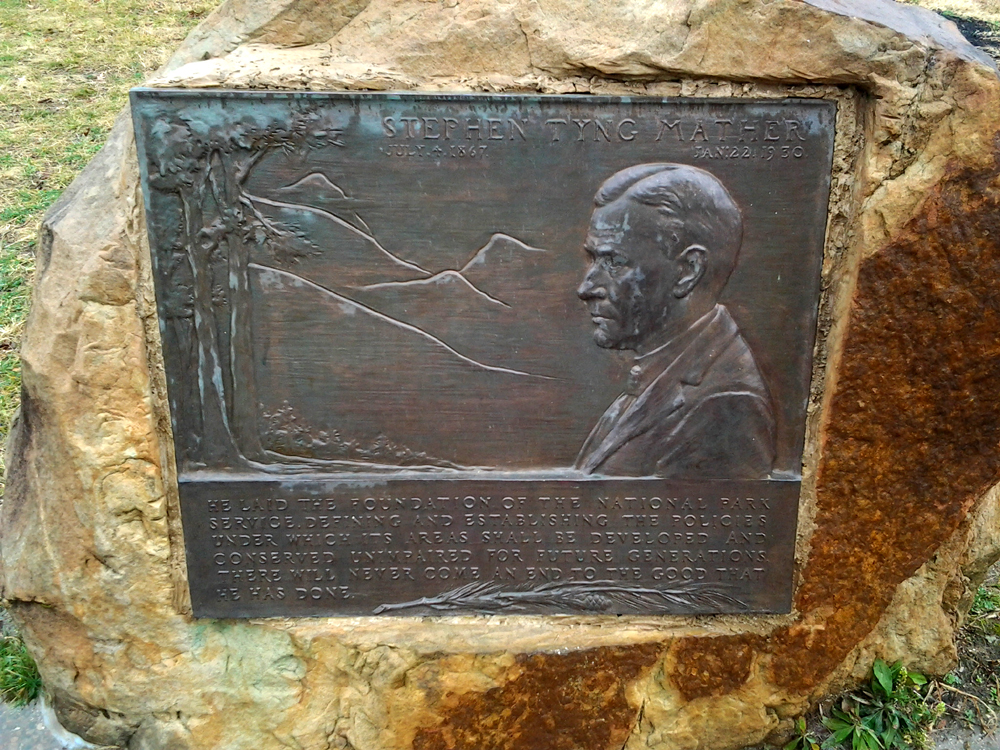
Stephen Tyng Mather
One other figure stood out related to Mammoth Cave and the broader National Park Service. He is credited for laying the foundation of the National Park Service by defining and establishing the policies under which its areas were to be developed and conserved unimpaired for future generations. He was recognized by a plaque along the trailside.
From the visitor center there was a downward sloping walkway to the caver entrance.