

Downtown – Ithaca Commons, Ithaca, New York
Ithaca, New York, has one of the few surviving pedestrian plazas. In the 1970s several downtown areas closed streets to traffic to create a pedestrian area in the public realm. Very few of these were effective, and later the street was reintroduced in many. Ithaca has been resistant to this trend, instead choosing to replace their original design with brand new elements.

North Tioga Street gateway entrance leading into the Ithaca Commons pedestrian plaza. On the right is the historic corner building housing local banking services like M&T Bank, exhibiting classic brick masonry and architectural columns characteristic of the city’s downtown business district. The modern black steel framework and glass awning serve as a prominent entryway designed by Firehouse Architecture LAB during the major plaza revitalization project. Just past this gateway sits The Bernie Milton Pavilion, which acts as an open-air community gathering hub and host to the popular Summer Concert Series highlighted on the hanging banner.

Artist designed Pay it Forward station in the downtown. The following description on the box explains how funds raised will be used: “Pay it Forward is a fundraising program run by the Downtown Ithaca Alliance, a 501(c)3 non-profit organization. Pay it forward helps our homeless and people in need get food and other basic necessities immediately from businesses downtown who are participating in the program. 100% of your donation helps buy a warm meal or basic living necessities for a person in need. Give with intention.”

Stone slab with a wood and steel bench structure resting on a portion of it. Creates a convenient space for a guitar player.

Lush landscaping spills out of the beds. Fills the area with height, texture, and color.

Fixed seating and tables, with checkerboard inset on top.

Detail of checkerboard inset.


Several planter boxes aligned to create an oasis of beauty and color.

Looking down the East State Street stretch of the Ithaca Commons, a multi-block pedestrian mall packed with boutique shops, restaurants, and bars. The brick building houses local businesses, including the visible storefront for Vape Dragons. A large construction crane towers over the skyline, marking the development of the Harold’s Square mixed-use building complex right along the plaza. The corridor features its signature brick-paved walkways, decorative flower planters, catenary string lighting overhead, and modern blue metal benches for lounging and people-watching.

View of the Commons from April 2002, prior to being renovated.

Evidence of an active culture of civic participation. Ithaca Underground started in 2007. The mission is: “To provide the people of Ithaca and the surrounding communities with an all ages, racially inclusive environment for their do-it-yourself ambitions, ensuring that new and challenging music and art is available to all.”

LimeBike is a dockless bike share program that helps people inexpensively get between two points. The bike is picked up, you can unlock it using an app installed on your smartphone, and then pay for the ride. GPS tracking makes other riders aware of where bikes are available to pick up.

The Ithaca carshare is yet another example of the sharing economy.

Public art is evident throughout the downtown.

This covered pedestrian walkway features twin sunflower murals painted inside an alleyway off the Ithaca Commons pedestrian plaza. The walkway features symmetrical vertical panels painted on a light green brick backdrop, each depicting a vibrant, blooming sunflower planted inside a terracotta pot. This alleyway serves as a colorful visual portal connecting the bustling shops of the main pedestrian mall to the quieter service lanes and secondary entrances behind the historic downtown storefronts.


This public art installation in an alley creates a welcoming passage way.

And, while it is technically not on the Commons, ithacamade has “gifts made with (by) character(s).” The store features Ithaca artists and products made in Ithaca. This maker culture and its influence is evident in so many ways throughout Ithaca, giving it a unique flavor and character unlike any other town.
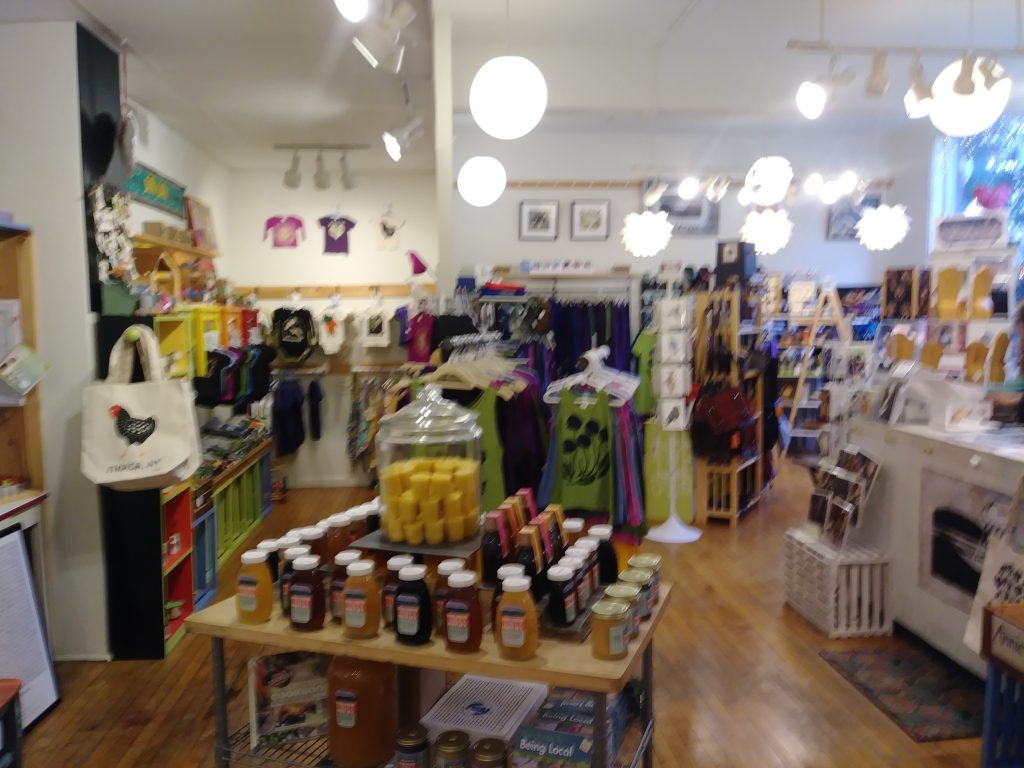
This charming boutique interior belongs to Ithacamade, a local gift shop specializing in regional crafts and products. It is located inside the historic DeWitt Mall building at 215 North Cayuga Street. True to its name, Ithacamade acts as a curated retail gallery celebrating regional talent, carrying items made exclusively by artists, makers, and food producers from Ithaca and the surrounding Finger Lakes area. The central display rack showcases rows of locally harvested raw honeys, natural preserves, maple syrups, and artisan small-batch goods. Hanging in the background is a colorful collection of screenprinted clothing, including unique block-printed tees and children’s onesies from the iconic Ithaca-based eco-apparel brand Silk Oak.

“ithacamade gifts, made with (by) character(s). featuring ithaca artists and products made right here in ithaca. send a slice of quirky, creative ithaca in a box or find us here!”
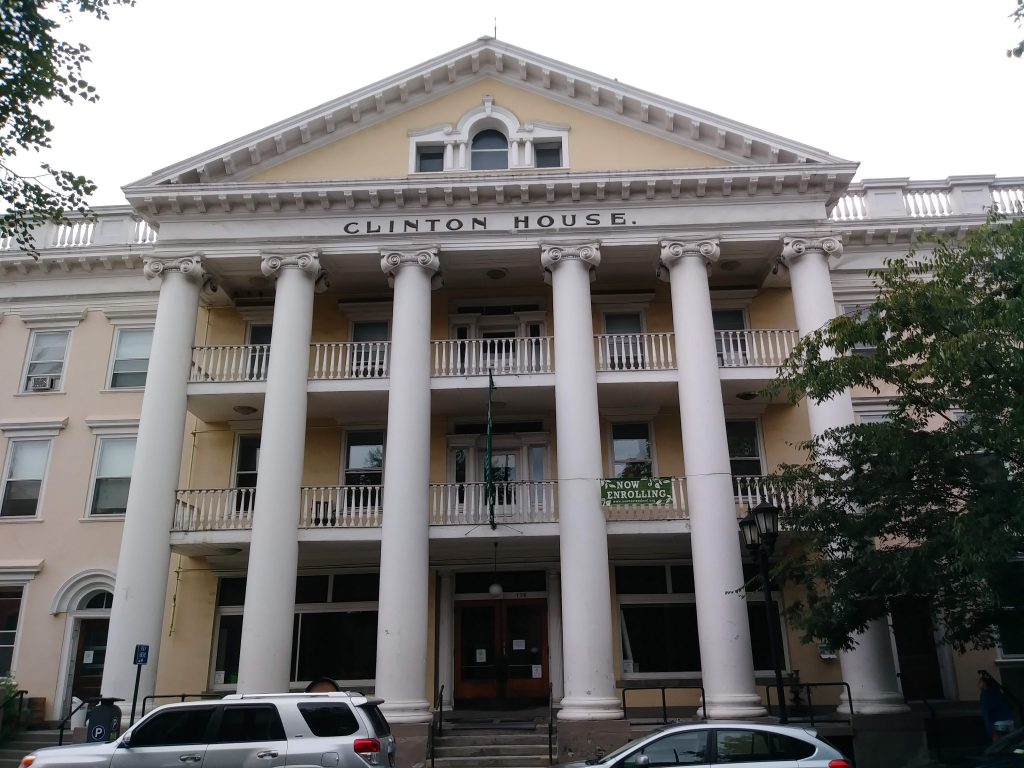
The historic Clinton House is located at 116 North Cayuga Street in downtown Ithaca. Built between 1828 and 1829 by local architect Ira Tillotson, it was originally an upscale 150-room hotel. When it opened, it was proclaimed the finest hotel west of the Hudson River. The hotel served as a major civic hub, hosting film stars during Ithaca’s silent-movie era and lodging at least four U.S. presidents. Slated for demolition in the early 1970s to build a modern hotel, it was saved by a grassroots community campaign led by Historic Ithaca. It was added to the National Register of Historic Places in 1971. The building is a premier local example of Greek Revival architecture, immediately recognizable by its massive white columned portico, heavy triangular pediment, and symmetric facade. Today, the building is repurposed into a vibrant multi-use space: The facility serves as the permanent campus for New Roots Charter School, a tuition-free public charter school focusing on regional sustainability and community-based education. The upper levels continue to house business offices and residential units.
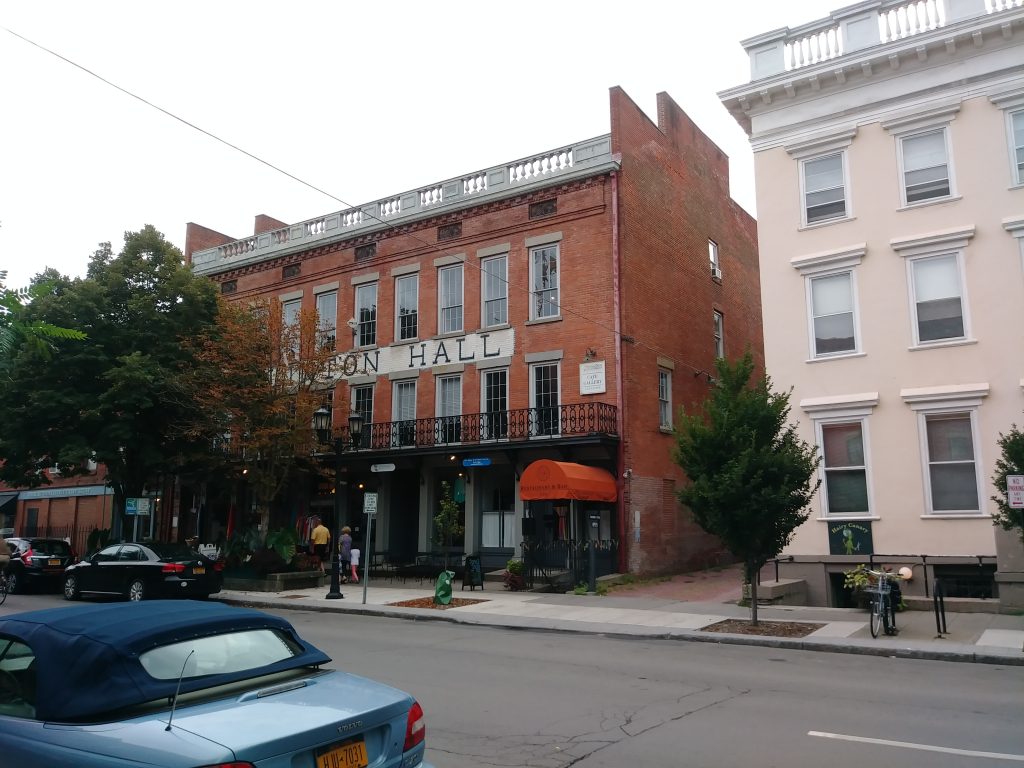
This brick structure is Clinton Hall, located at 108-114 North Cayuga Street in downtown Ithaca, New York. Built between 1847 and 1851, it stands directly adjacent to the pale yellow Clinton House visible on the right. The owners of the neighboring hotel built Clinton Hall to provide high-end shops and dining options for affluent hotel patrons. To respect the prominence of the grand hotel’s columned portico, the developers purposely set Clinton Hall further back from the street. This design detail creates the unique staggered sidewalk layout. The building’s name stems from a massive 500-seat upper-story auditorium that hosted live lectures, dances, and traveling vaudeville acts. By the 1910s, it operated as the Manhattan Theater, showcasing Ithaca’s early silent motion pictures. A severe fire gutted the building’s interior in 1975, leaving it vacant for a decade. Facing a municipal demolition order in 1985, local preservationists and developers stepped in to restore the structural block and return the facade to its 1850s appearance.
While much simpler than its monumental neighbor, Clinton Hall is celebrated as one of the most prominent remaining examples of historic Greek Revival commercial brickwork in the region. It features a distinctive symmetric pattern of tall windows topped with stone lintels, capped off by a decorative top-floor balustrade. Today, the fully restored, ADA-compliant interior houses a blend of local professional services: [1]
- The CommonSpot: A vibrant, shared community workspace utilized by local mission-driven businesses and freelancers.
- Ithaca Medical Aesthetics: A boutique health and beauty wellness office operating out of Suite 6.
- Professional Suites: Multiple private offices hosting local criminal defense attorneys and legal counsel.

East Gateway Entrance to the Ithaca Commons, located at the intersection of East State Street (Martin Luther King Jr. Street) and South Aurora Street. Similar to the North Tioga Street entrance you viewed earlier, this eastern portal features an architectural black steel trellis framework that extends over the crosswalk to mark the transition into the pedestrian-only zone. Occupying the prominent corner spot on the left at 102 East State Street, this branch location offers a curated collection of Cornell University apparel, textbooks, tech gear, and unique Ithaca-themed souvenirs. The massive brick commercial block framing the right side of the plaza entrance historically housed Rothschild’s, a premier regional department store that anchored downtown commerce for nearly a century.