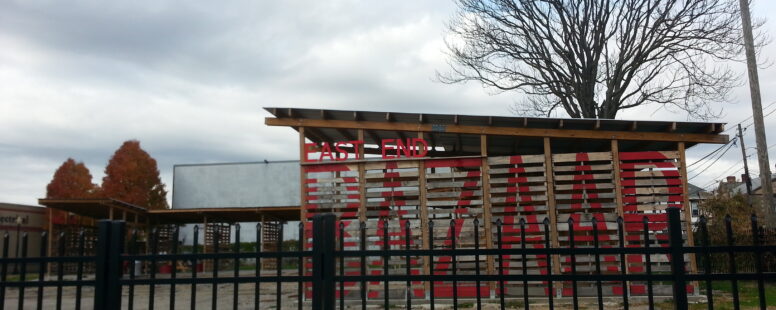
East End Bazaar – Charleston, West Virginia

Isaac Kremer/ November 21, 2013/ Economic, Field Notes, market, Physical, plaza, Social, tactical urbanism/ 0 comments

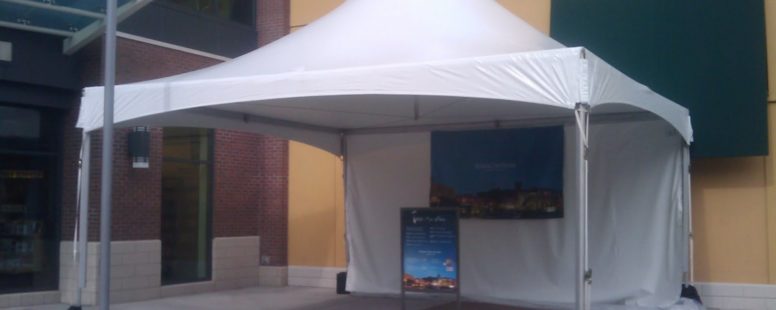
Just a few blocks away from the Capitol Market in Charleston is the East End Bazaar. While it doesn’t look like much, this market space serves a valuable function supporting farmers and makers. The low-cost and temporary looking structures here are the exact opposite of the Capitol Market. Both serve an important function contributing to the social, economic, and civic

Read More

Farmers Market – Capitol Market, Charleston, West Virginia

Isaac Kremer/ November 21, 2013/ Economic, market, Physical, preservation, Social/ 0 comments

Charleston, West Virginia, is fortunate to have not one but two markets downtown. The traditional Capitol Market is an enclosed building with a long central hall and vendors to either side. Originally this was built after the Kanawha and Michigan Railroad built a rail yard on Smith Street. After falling into disrepair, the market was reestablished as the Capital Market

Read More

Field Notes: Campus Martius – Detroit, Michigan

Isaac Kremer/ August 28, 2012/ Economic, Field Notes, Physical, placemaking, plaza, public art, Social/ 0 comments

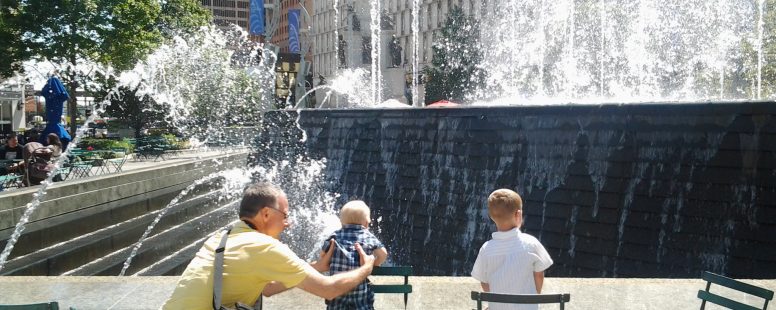
The dancing fountain is a focal point of Campus Martius Park. Movable chairs give flexibility and freedom for people to sit wherever they want to. The large lawn is a natural gathering place between many of the largest buildings in the CBD. This sizable street leading towards Campus Martius Park has ample space should the park be expanded at some

Read More

Downtown – North Adams, Massachusetts

Isaac Kremer/ November 7, 2010/ downtown, Field Notes, museum, Physical, placemaking, plaza, preservation, public art, Social, wayfinding/ 0 comments

MASS MoCA is the jewel of North Adams attracting people in search of contemporary art. Going around town there are ample signs of an emerging arts scene from galleries, to theater, to public art. Mills are an important part of the identity of North Adams. These posters in a door describe several of them – the Eclipse Mill, Windsor Mill,

Read More

Field Notes: Stamford Town Center Jazz on the Plaza – Stamford, Connecticut

Isaac Kremer/ July 3, 2009/ Field Notes, Social/ 0 comments

As most visitors to Stamford, Connecticut might attest, this is a city and downtown in search of its center and whose history is not immediately apparent. Founded in the 17th century, very few relics from the colonial era and 18th and 19th century heritage are present. This issue is put into stark contrast by a New York Times article from

Read More

Field Notes: Heritage Tourism – Easton, Maryland

Isaac Kremer/ November 2, 2008/ Field Notes, Social/ 0 comments

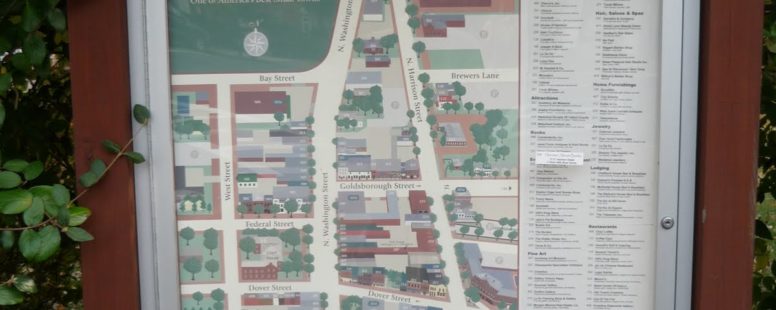
Easton, Maryland, is located on the Eastern Shore of the Chesapeake, 90 minutes by car from Washington, D.C. The Easton Main Street program in recent years appears to have been at the forefront of promoting Easton. According to their website, approximately 75,000 people are attracted to the Easton area each year through “producing and sponsoring high quality, family oriented arts

Read More

Hands Across Woodward – Detroit, Michigan

Isaac Kremer/ August 19, 2007/ Civic, Field Notes, Social/ 0 comments

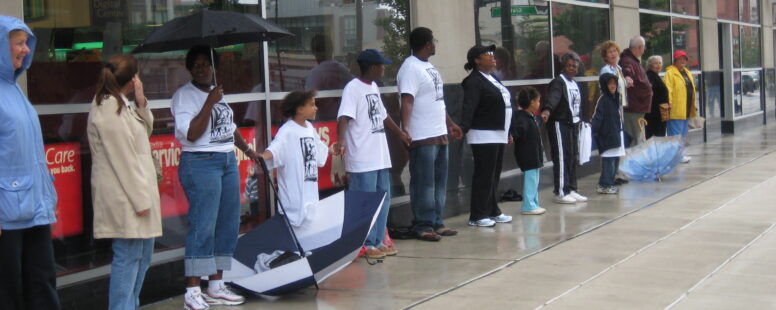
In 2007, an effort was made to encourage civic unity in the communities lining the 26 mile long Woodward Avenue between downtown Detroit and Pontiac. Citizens gathered and held hands. While a continuous line was not possible, there were many spirited pockets. The Madam Cadillac dance company added to the sense of historic happening with their costumed dancers joining in

Read More

Downtown – Almont, Michigan

Isaac Kremer/ July 22, 2007/ Civic, downtown, Economic, Field Notes, market, museum, Physical, plaza, Social, storefront, streetscape/ 0 comments

Probably the most impressive historic building in Almont is the First Congregational Church. The prominent tower and spire, steeply pitched roof, and wall buttresses all combine to create a strong architectural statement. Downtown Almont is fortunate to have a number of attractive two and three-story brick buildings. A handful have been covered up with a slip cover, though there likely

Read More