

Downtown – Midland, Michigan (2018)

Heading into Midland, Live Oak Coffee House proudly displayed the outline of an oak in black and white against a landscape full of vibrant and colorful colors.

Once downtown, the landscaping caught us right away. An effort was clearly made to utilize native plants and grasses.

The Midland Visitor Center gave us a good overview of what to find in the region.

I particularly liked the carpet inside with a Michigan map and showing the Midland location on it.
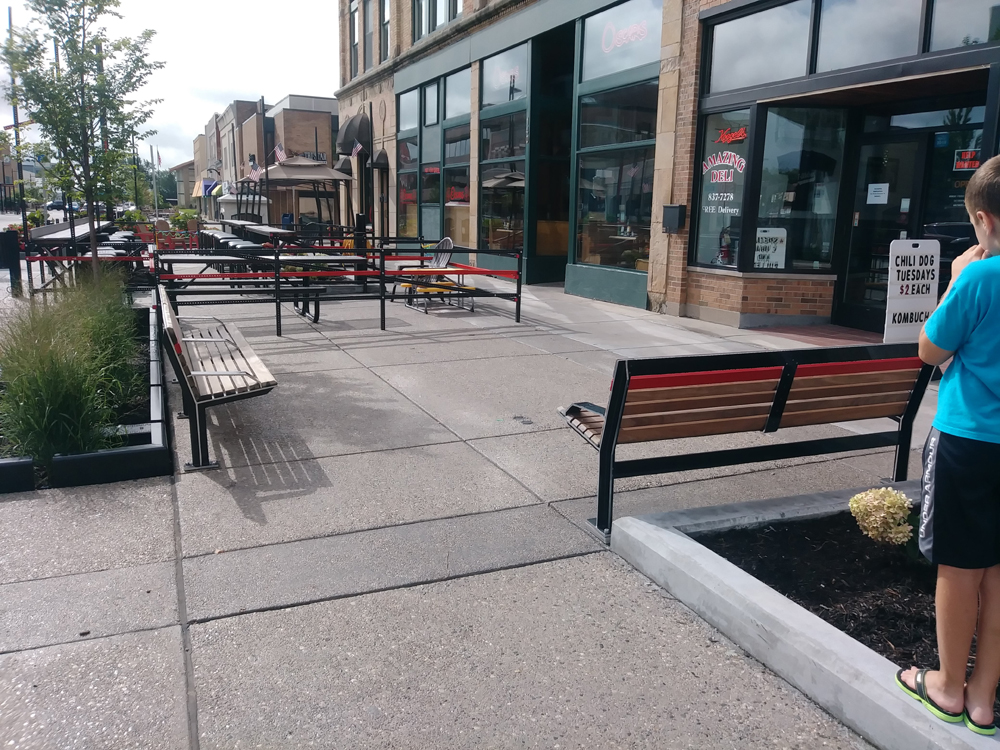
Ample public spaces with sidewalks, plantings and benches gave plenty of places for people to informally gather. Shade was somewhat lacking but there were plenty of places to sit.

This curved pergola was a bit over the top. Interestingly, it did not provide much shade at the time we were visiting, nor were people sitting beneath it. Still the structure looked cool.
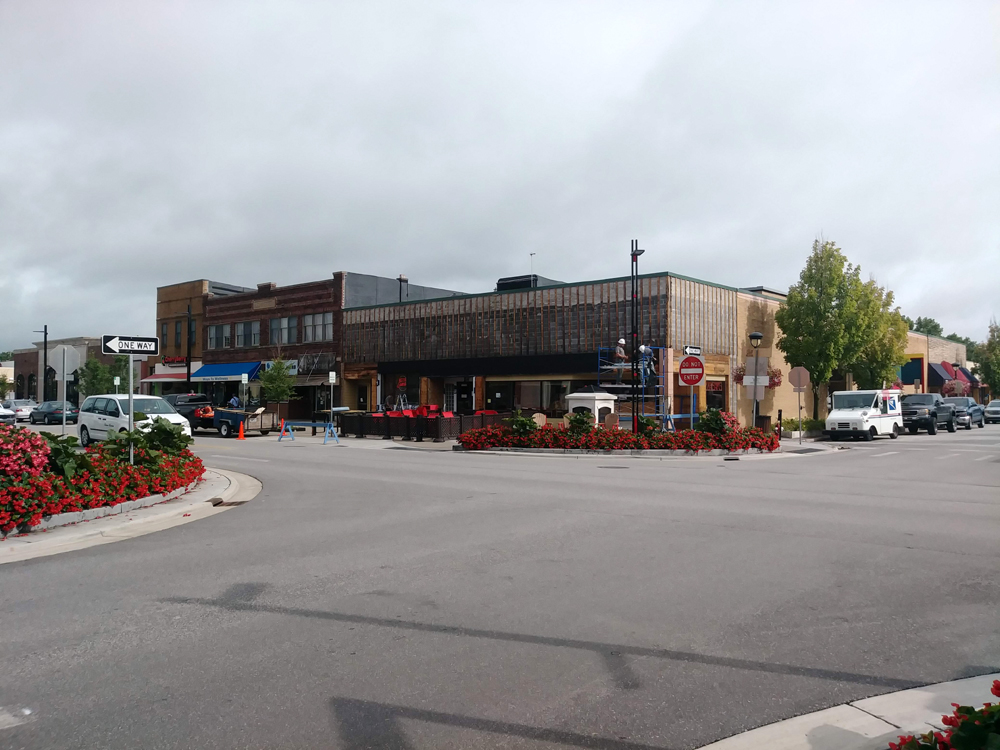
This is the intersection of Main Street and McDonald Street, looking northwest down Main Street toward Ashman Street. The prominent, curved brick landscaping beds overflowing with bright red flowers are a staple visual anchor of the Downtown Midland streetscape project. The construction scaffolding is set up along the commercial buildings on the block hosting local favorites like the Peel ‘N Pare kitchen store.
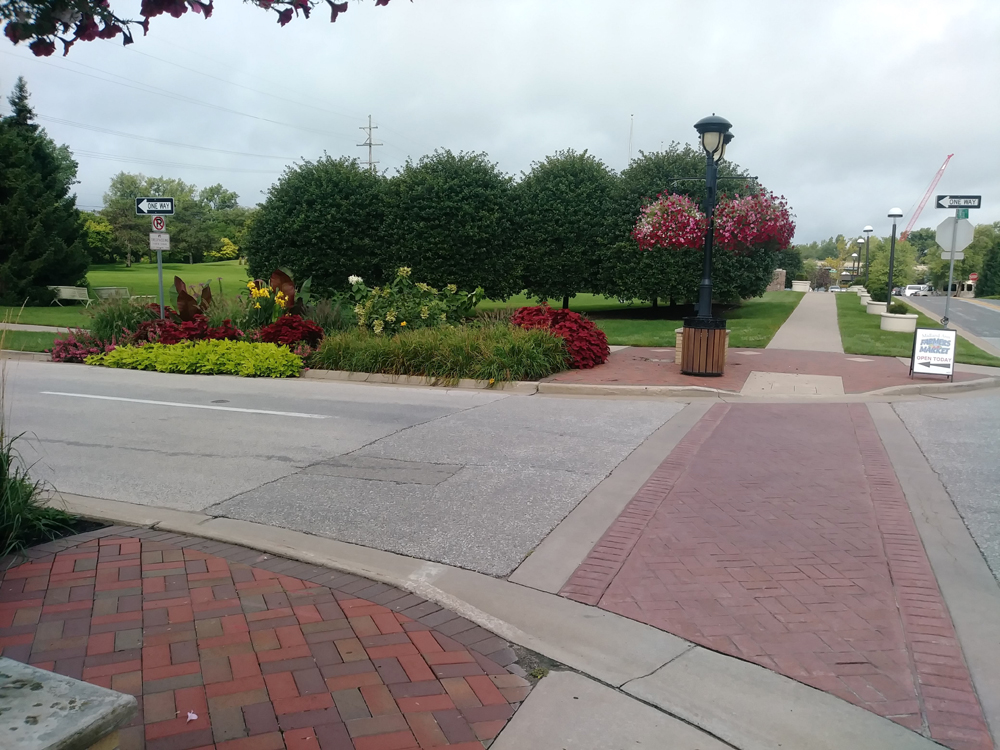
Generous landscaped planting areas spill over into the street itself. These and the overflowing flower baskets create a welcome sense of arrival to the area.

This beautiful streetscape bed is built right around a utility pole at the corner of the Midland Area Farmers Market, recognizable by the distinct green roofs of the market pavilion structures visible in the background background. The prominent, spiky purple flowers featured in this downtown planter are Cleome (commonly known as Spider Flower or Bee Plant). The cluster features dramatic, airy pink-purple flower heads with distinctly long, spidery stamens extending outward. These tall annuals are growing alongside deep red Coleus at the base and yellow-flowering Wild Senna or similar leguminous shrubs.
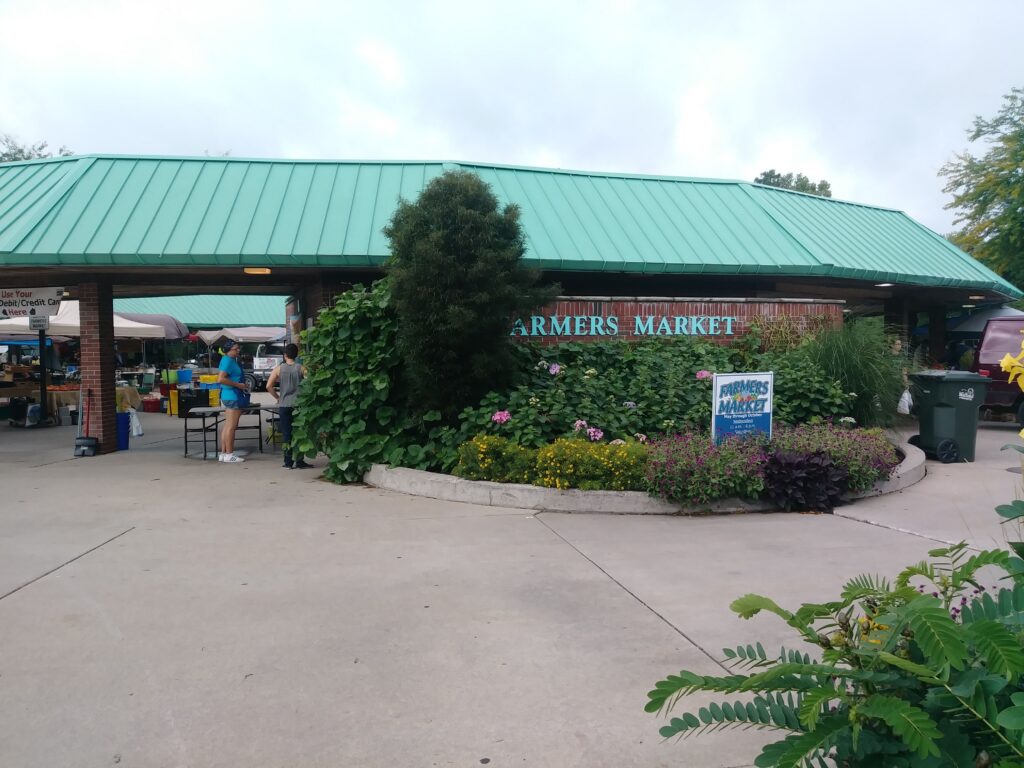
The plantings helped to direct us to the Farmers Market. This distinctive circular structure gave an opportunity to comparison shop, while providing protection for all of the vendors beneath.

The “Market Master” and volunteers were well on display near the entrance and the core of the building. beyond the circle created by the market shed is in view.

This baker brought both a refrigerator on rollers and a display trays above and below. This created a layered presentation with plenty to draw the eye to.

Another vendor specialized in produce with all their product laid out on several tables. They also had large tomato plants for sale for those who wanted to try their hand at gardening.

Another baker was to the left beyond the column. Though it was hard to compete with the earlier baker and the display that they brought.

A soap vendor broke up all of the food vendors. This handmade product made in Midland was touted as all natural. The also carried shampoo and shaving cream.

Our favorite vendor by far had the heirloom tomatoes. We made a point of both buying several and also saving the seeds for our own garden.

Beyond the market was a well-manicured park with trails. The famous tridge where three bridges meet at one point was not very far off.

The Zagster bike station was in the park, sponsored by Bike Midland, the Midland Area Community Foundation, and others. The bikeshare required registering, unlocking, and riding, and then returning to the station.


From this circle, one trail led to The Tridge, Midland’s famous three-way pedestrian footbridge located at the confluence of the Tittabawassee and Chippewa rivers. It consists of a central pillar supporting three distinct spans that connect Riverside Park, Chippewa Nature Trail, and the downtown area. Built in 1981, it features prominent wooden arches and a timber deck widely used by walkers, runners, and cyclists. The bridge serves as a major trailhead, seamlessly linking downtown Midland directly to the Pere Marquette Rail-Trail.
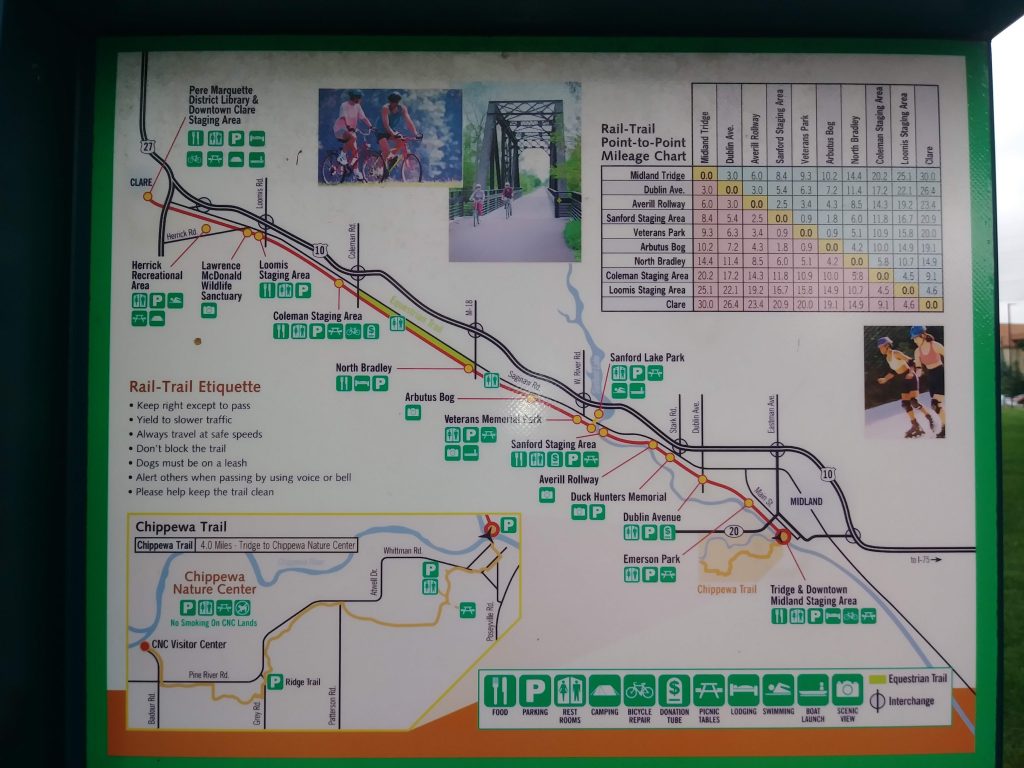
The Pere Marquette Rail Trail of Mid-Michigan (PMRT) stretches 30 miles from downtown Midland to the City of Clare and is a dedicated multi-use, non-motorized transportation path, providing barrier free recreational and transportational opportunities for bikers, skaters, walkers, etc. It is recognized as one of the premier trails in the USA by national trail organizations and was inaugurated to the Rails to Trails Conservancy’s “Hall of Fame” in 2009.
The PMRT is built on an abandoned CSX railroad corridor that was once part of the Flint and Pere Marquette Railroad. In 1874, the tracks stretched from Ludington to Flint transporting supplies to the thriving timber industry and lumber/timber to southern Michigan’s mills. The trail is named for the railroad, which was named for Pere (Father)
Jacques Marquette, a French Jesuit missionary who founded Michigan’s first European settlement at Sault Ste. Marie.
The first section of trail was opened in July 1993 with subsequent sections opening in 1994, 1995, 2001 and most recently the final section to Clare in 2009. Additional spurs to the Chippewa Nature Center and Sanford Park have been added.
The trail serves as a resource for the local communities but also attracts visitors and national bike rides from far and wide. Typically there are upwards of 170,000 users/year and many local businesses benefit from the trail. Also there are turn-outs at many points of historical interest along the trail.
The trail is maintained by the City of Midland, Midland County, Isabella County and Clare County. The ‘Friends of the Pere Marquette Rail Trail,’ a non-profit volunteer group, provides support for the trail.

A bench celebrates Greater Midland being named a 5-time winner of America’s Promise 100 Best Communities for Young People.

The Midland sign came with instructions that people should stand in the gap between M and D to be a human “I”. The sign read: “We need you! Help us complete the word. INSTRUCTIONS: Stand and form your body to replace the missing letter. Take a picture. Share with friends.”

The H Hotel, a prominent luxury boutique hotel located at 111 W. Main Street in downtown Midland, Michigan. The brick structure at the entrance features a large, illuminated sign with the hotel’s signature “the H” logo under a classic analog clock. It serves as a gateway leading directly into the property’s central outdoor courtyard and patio seating area. The hotel hosts popular local culinary spots, including Café Zin (a French-style bistro) and Oxygen Lounge (O2), known for its patio seating and cocktails.

Mackinac Center for Public Policy is located at 140 West Main Street in downtown Midland. This single-story brick and limestone building features large arched windows and sits directly across the street from The H Hotel. Founded in 1987, the Mackinac Center is a prominent free-market, nonpartisan research and educational institute (think tank) focusing on Michigan public policy issues.

This modern curved concrete and timber street bench integrated directly into the downtown Midland streetscape. The bench serves as a retaining wall for the signature downtown landscaping beds, which are densely planted with bright red wax begonias and large elephant ear plants. It features a smooth, poured-concrete base topped with curved hardwood slats and black metal armrest dividers to prevent skateboarding and grinding. This specific seating bump-out is located on Main Street, looking southeast back toward the intersection of McDonald Street.

Gift of Hope Boutique, located at 143 West Main Street is a faith-based, non-profit boutique that sells handmade home decor, accessories, and gifts. Sales directly support sustainable job creation and orphan prevention programs in Haiti. The window display showcases Michigan-themed art (including a woven mitten shape of the Lower Peninsula), throw pillows, and the words “family gather” alongside their web address. It sits on the main downtown strip, right next door to the popular kitchen store Peel ‘N Pare.
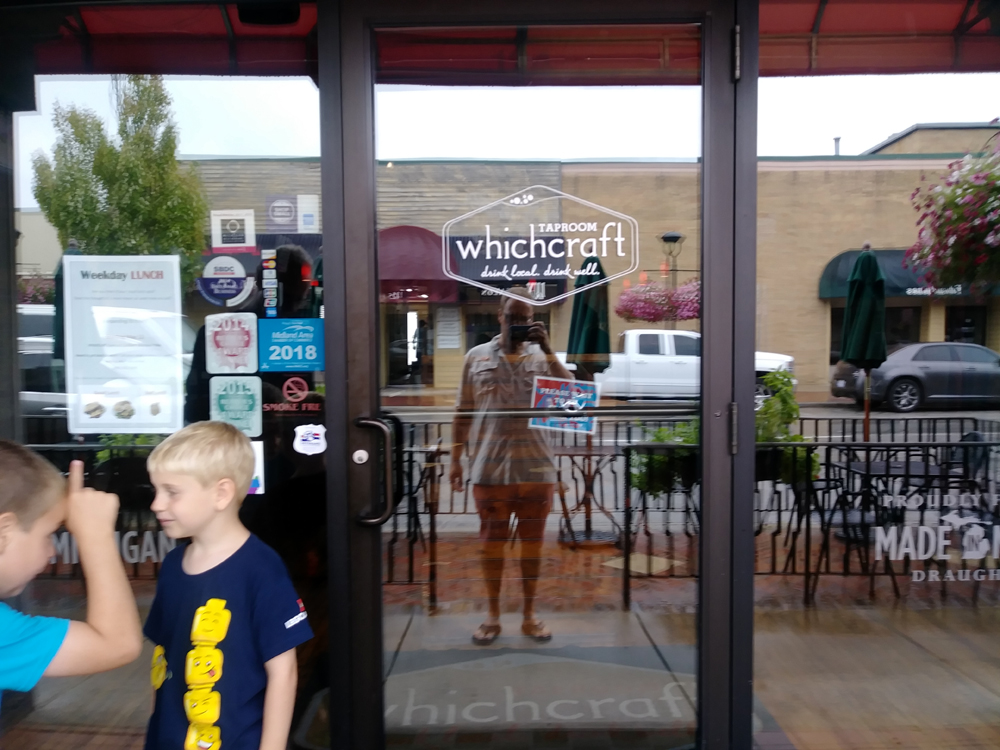
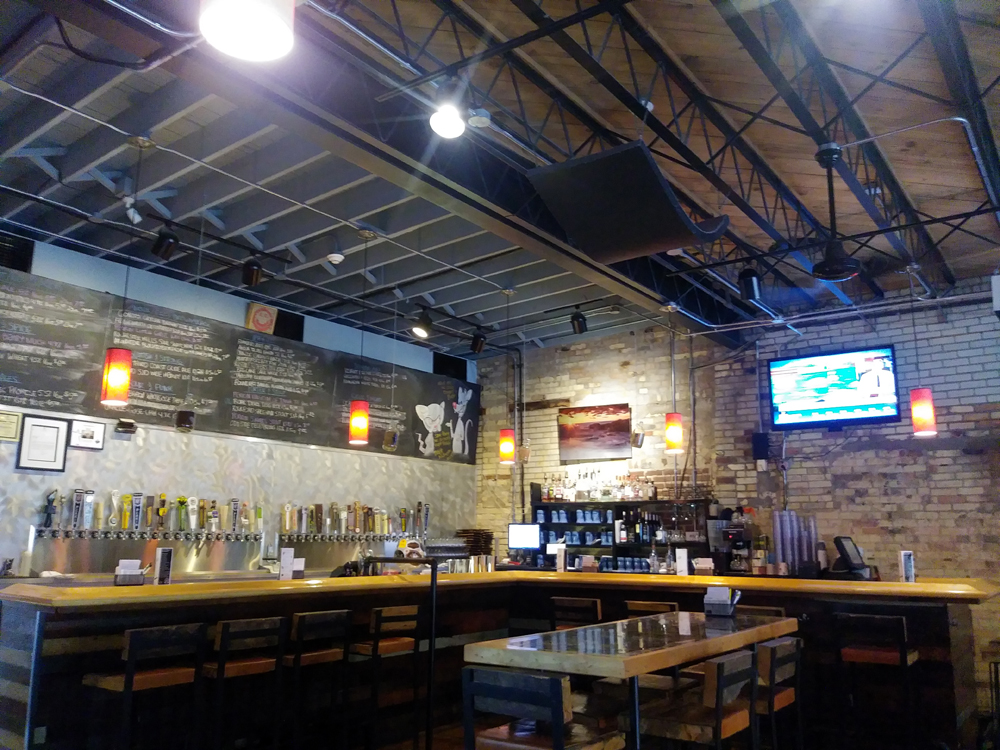
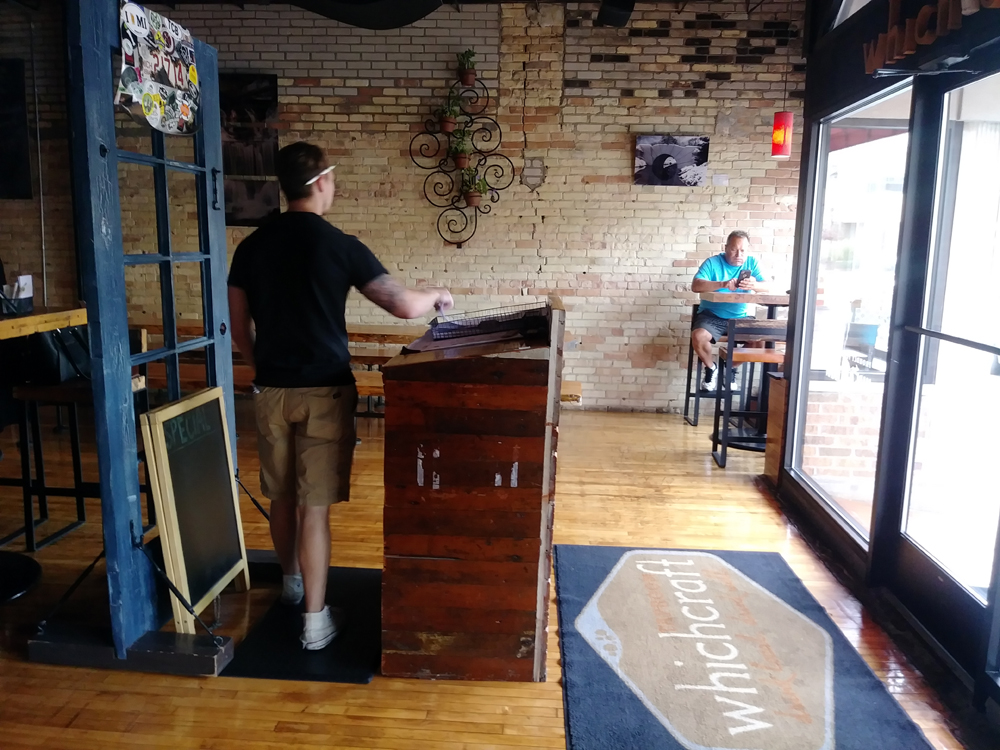
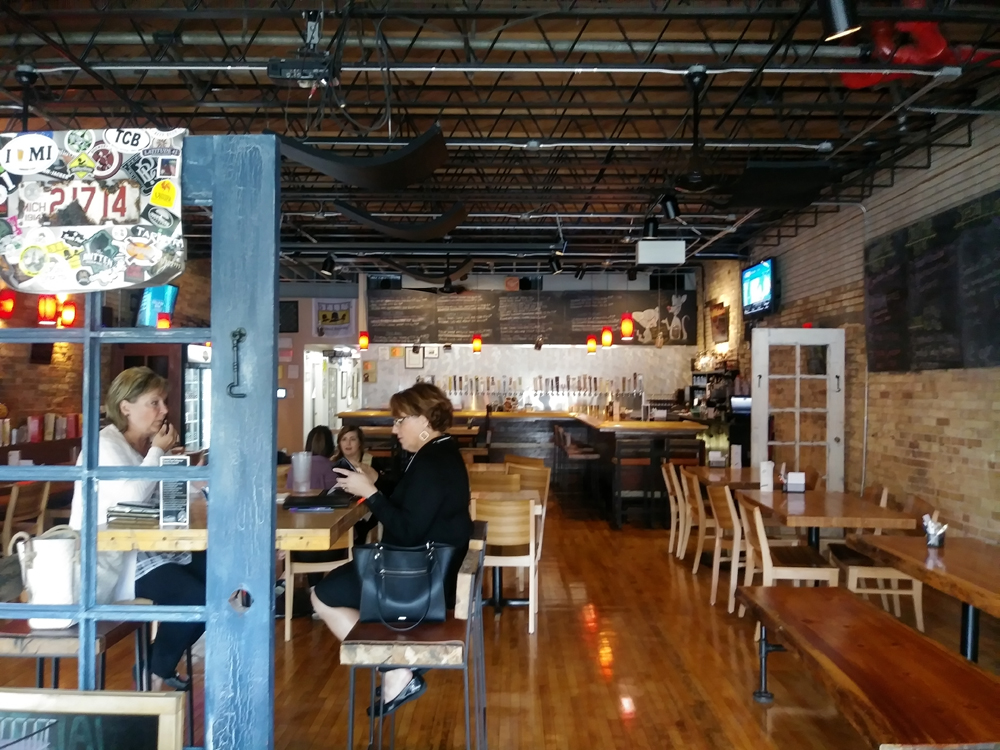
WhichCraft Taproom is located at 124 Ashman Street in downtown Midland. Opened in 2013, the taproom prides itself on a 100% Michigan-made drink menu, showcasing beers, wines, ciders, meads, and spirits crafted exclusively within the state. The space features gorgeous polished hardwood floors, exposed brick walls, thick wood slabs repurposed into custom bar tops, and industrial ceiling joists. The blue vintage door frame near the foreground is covered in stickers from regional craft breweries, local bands, and iconic Michigan brands.
Visit in 2019

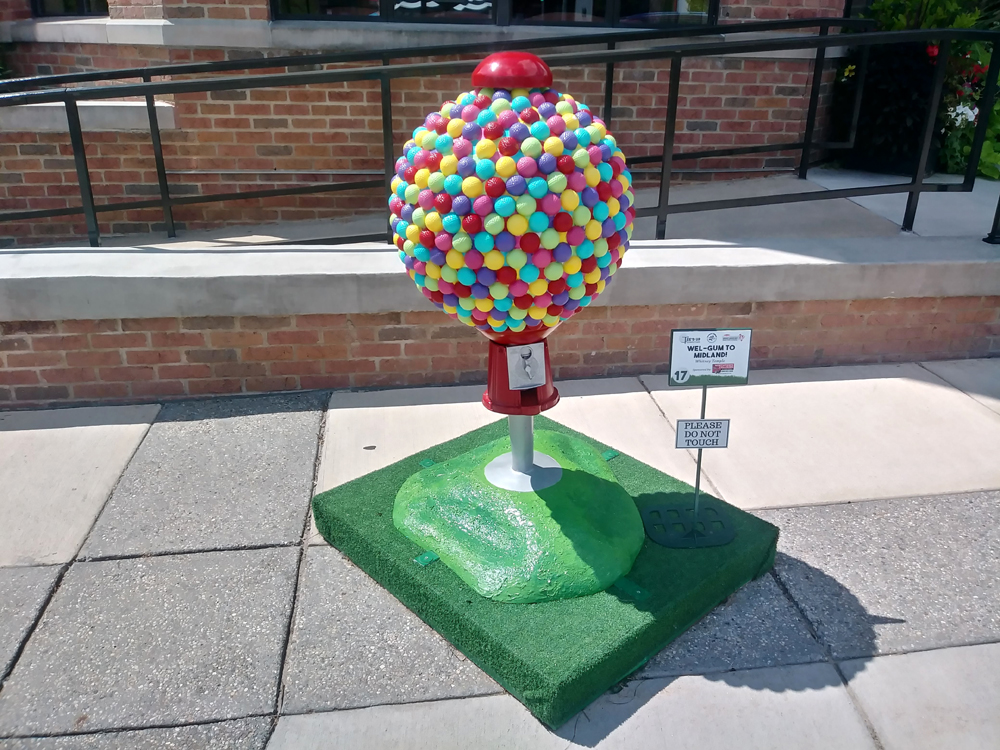

This public art project took golf balls on tees and transformed them into public art.
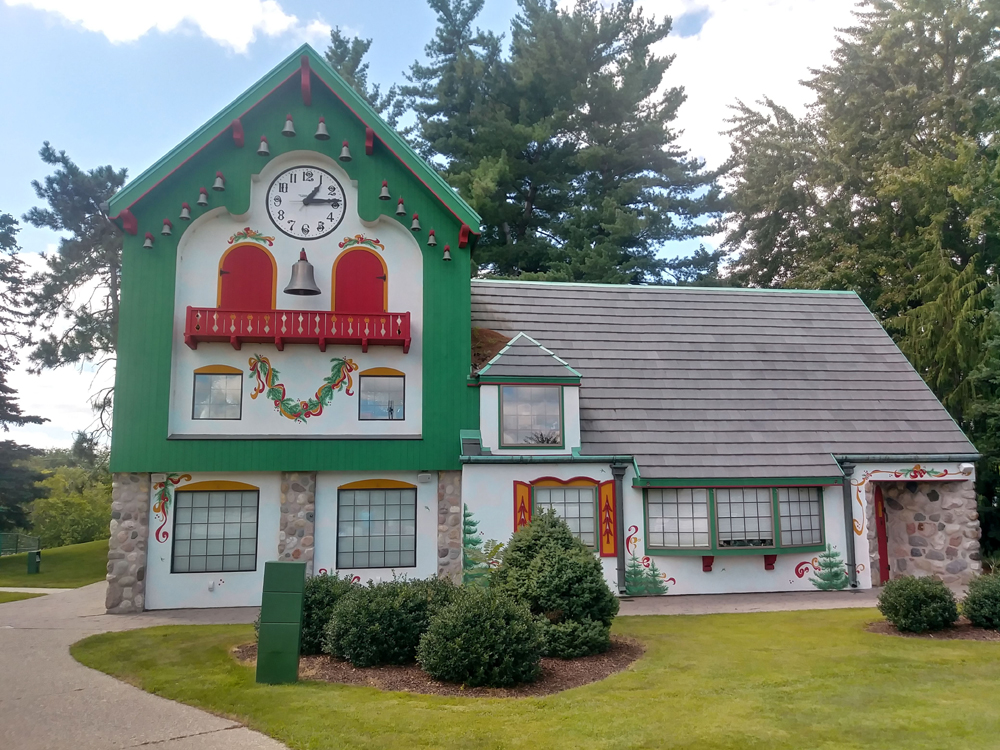
Midland Area Santa House in Midland, Michigan, showing its painted wood siding and stone entrance archways.
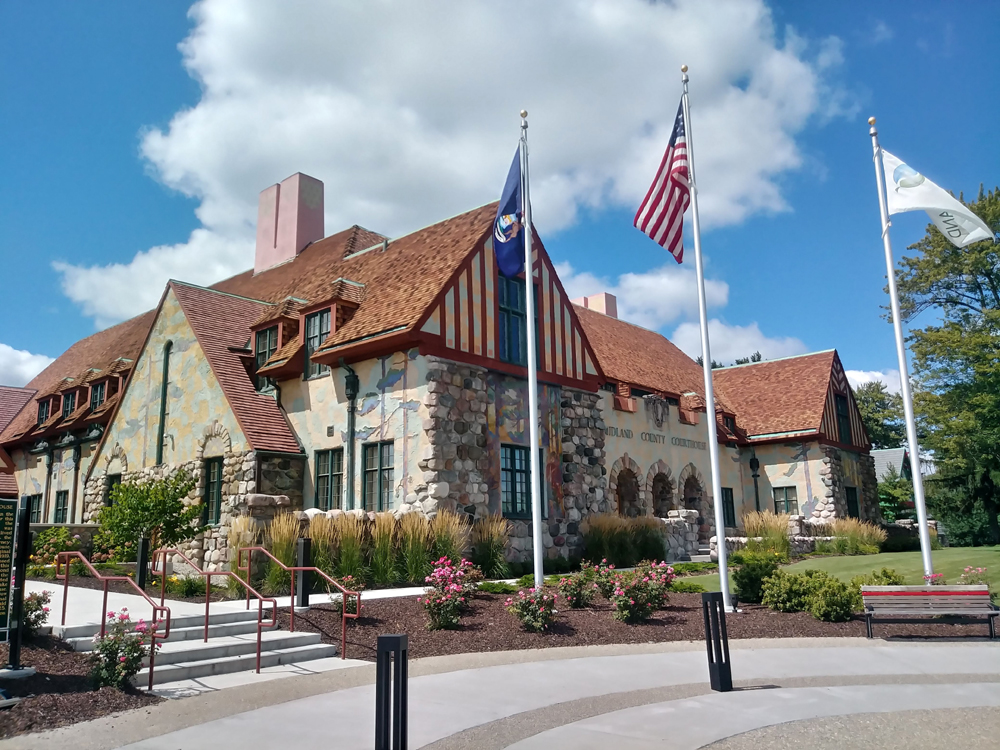
In 1831 the first white settlers in the area built a fur trading post near this site, called “Little Forks” by the Indians. When Midland County was organized in 1850, 65 people lived here. In 1856, Henry C. Ashmun, the county’s first prosecuting attorney was authorized to locate a courthouse, and he chose this site. The original courthouse served until 1926. In 1919, Mayor Joseph A. Cavanagh proposed that a new courthouse be built at this site. Voters approved a $225,000 bond issue in 1920 and, in gratitude for the war effort of area servicemen, invited the Midland American Legion to make its home here at the courthouse. Herbert H. Dow, founder of The Dow Chemical Company, provided additional funds and materials. Dr. Dow laid the cornerstone on March 29, 1925. This courthouse was occupied on January 1, 1926.
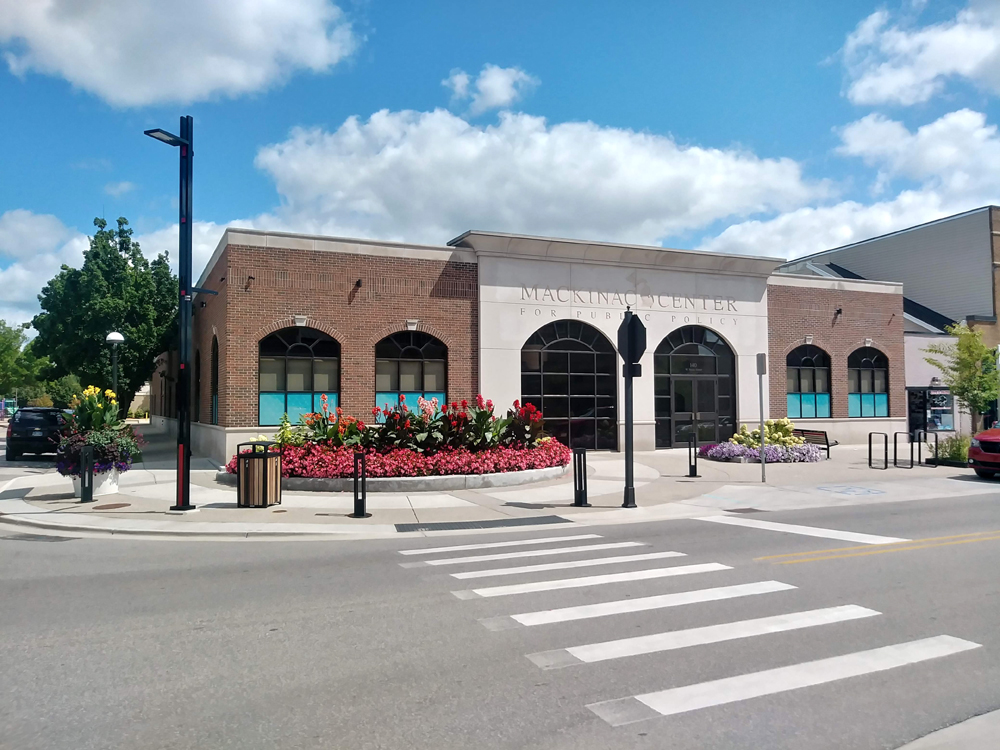
Mackinac Center for Public Policy is located at 140 West Main Street in downtown Midland.
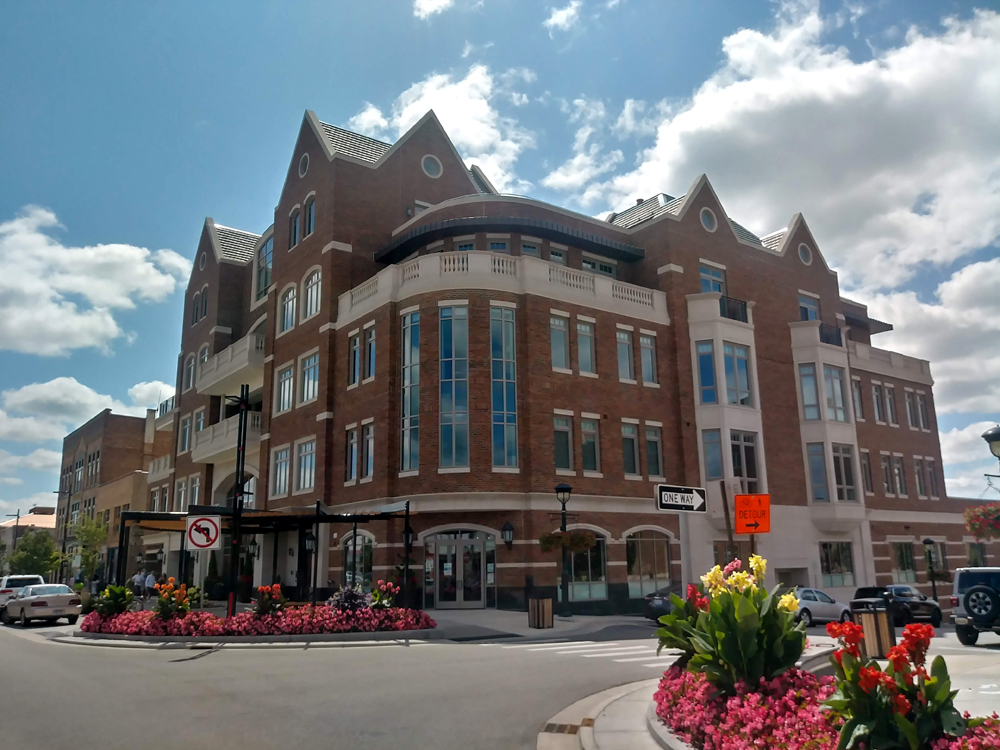
This is The H Residence, is located at 110 E. Main Street on the corner of Main and Ashman streets in downtown Midland.
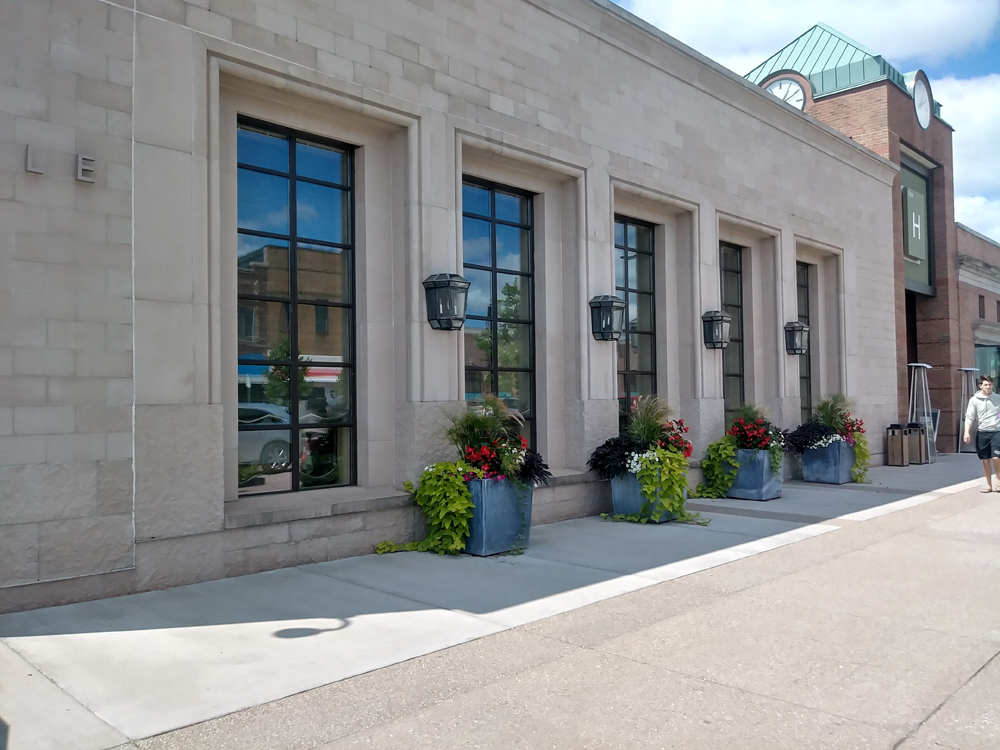
The H Hotel, a AAA Four Diamond luxury boutique property located at 111 W. Main Street. The limestone building features distinctive grid windows, elegant coach-light wall sconces, and a prominent brick clock tower capped with a green patina roof bearing the signature “H” logo. The windows shown look out from the property’s premier dining establishments. The hotel features ONe Eighteen, a mid-century modern-inspired American tavern, alongside Cafe Zinc, a casual French-style bistro Originally opened as the Ashman Court Hotel, the property underwent extensive luxury multi-million dollar renovations to become a staple centerpiece of Midland’s walkable, revitalized downtown streetscape.
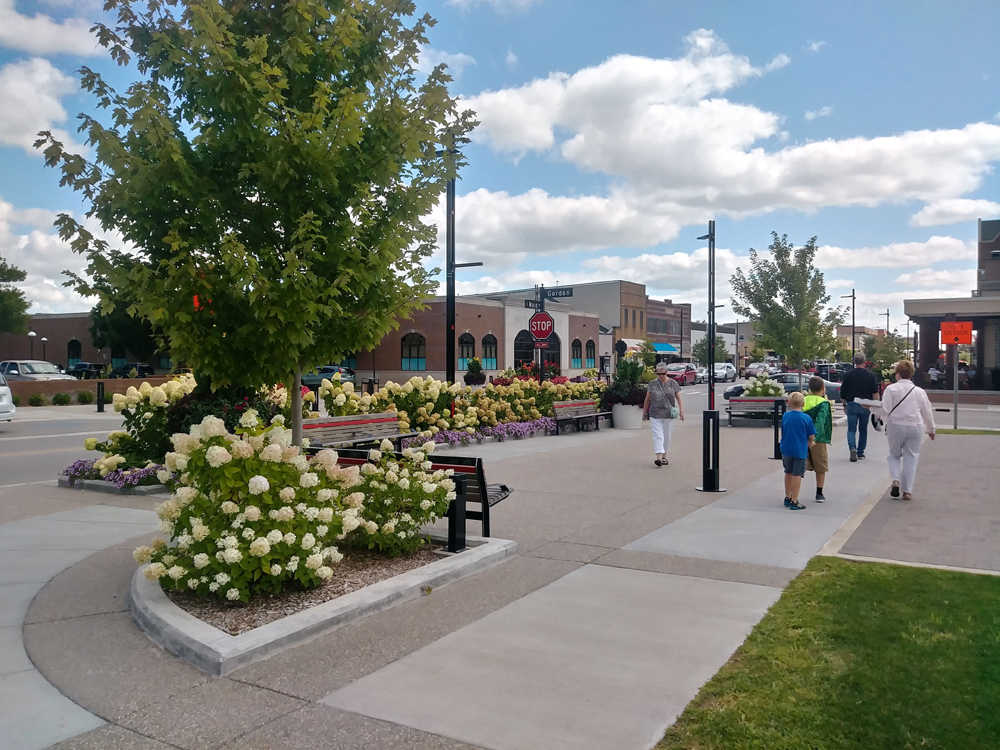
Once again the extensive plantings jumped out at us. Here is a grouping of them with the Mackinac building in the background.
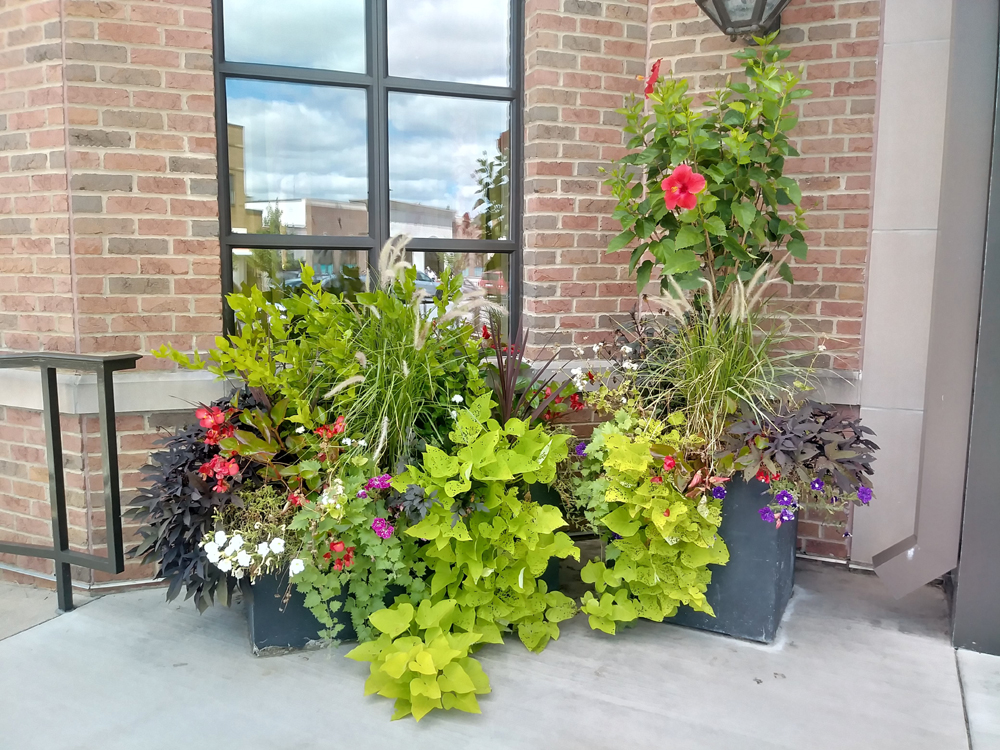
The planters are lush and overflowing. Grouping of planters together here creates a moment greater than a single planter alone. The planters use a classic “thriller, filler, spiller” design arrangement:
- The Thrillers (Height): A tall, red Tropical Hibiscus tree anchors the right side. It is flanked by feathery Fountain Grasses and dark red Spike Plants (Cordyline) to add vertical texture.
- The Fillers (Body): Bunches of bright red and pink Begonias, trailing Petunias, and dark purple Sweet Potato Vines (Ipomoea batatas) fill out the mid-sections.
- The Spillers (Trailing): Chartreuse-colored Lime Green Sweet Potato Vines aggressively cascade down the front of the dark charcoal planters to meet the sidewalk.
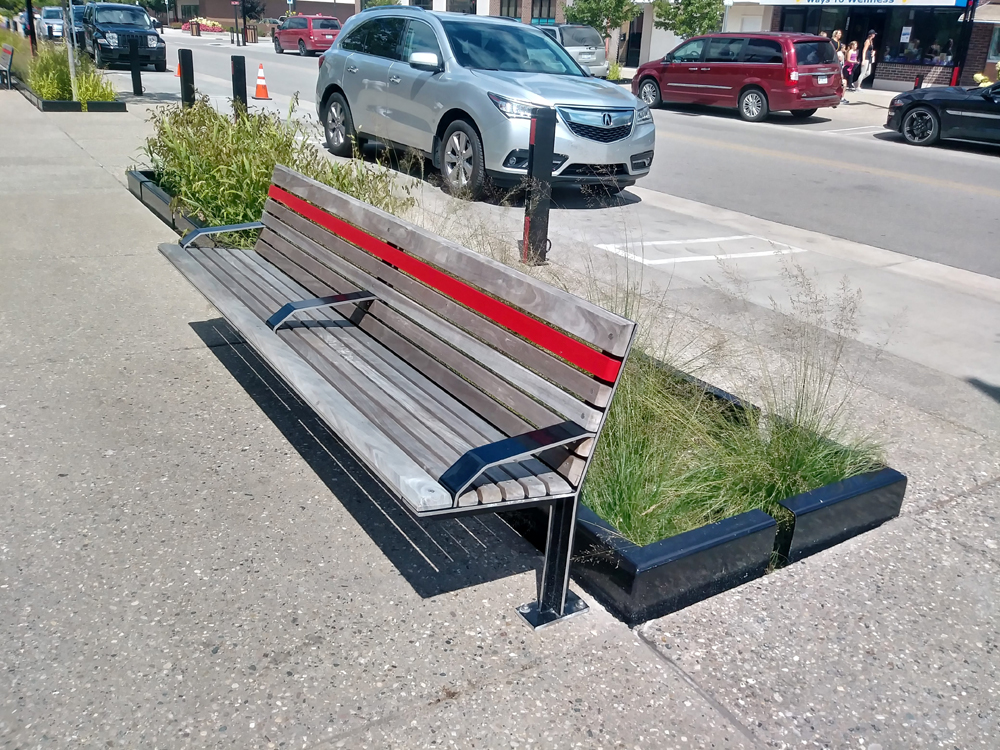
This bench with the distinctive red board to set it apart makes for a comfortable seating area. Behind it is a landscaped bed with native grasses.
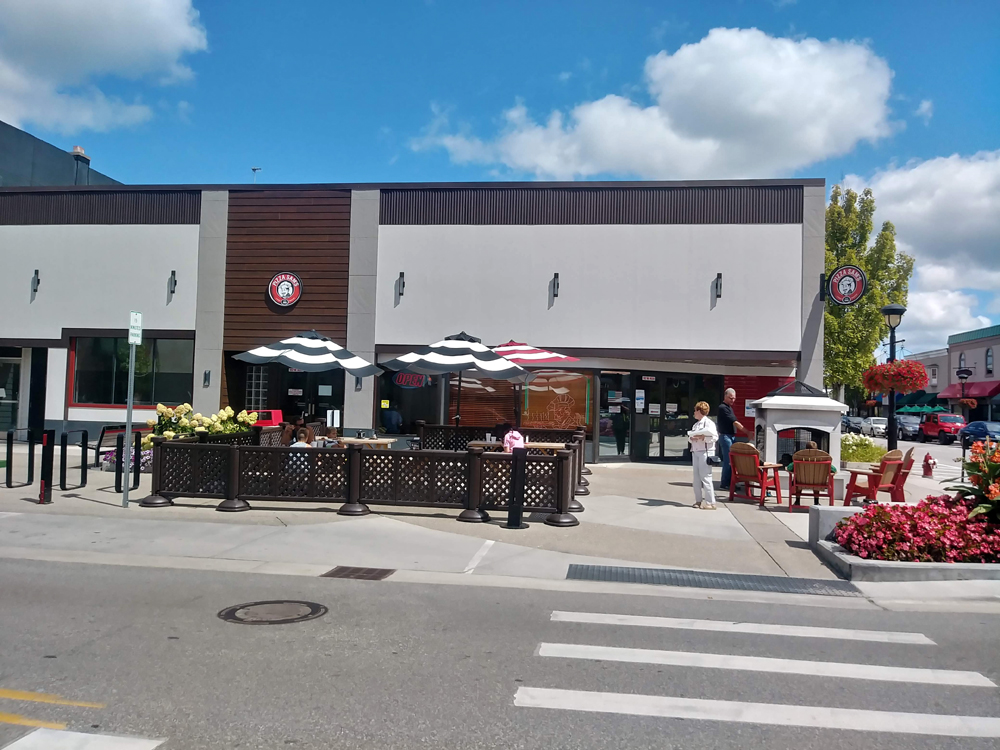
Outdoor dining and social gathering spaces are incorporated into the streetscape.
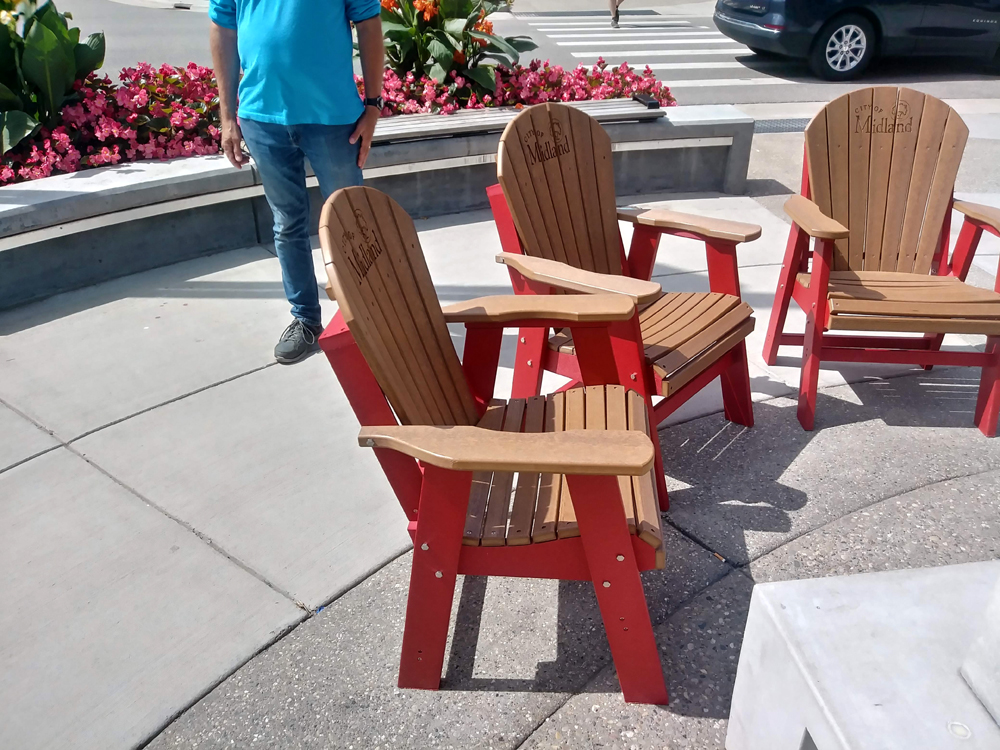
A grouping of Adirondack chairs also carry through the red coloring from the bench and provide a place for people to informally socially gather. Best part is that the chairs are movable.