Detroit Riverwalk – Detroit, Michigan

Isaac Kremer/ May 17, 2026/ AI Assisted, Field Notes, garden, Physical, trail, wayfinding/ 0 comments

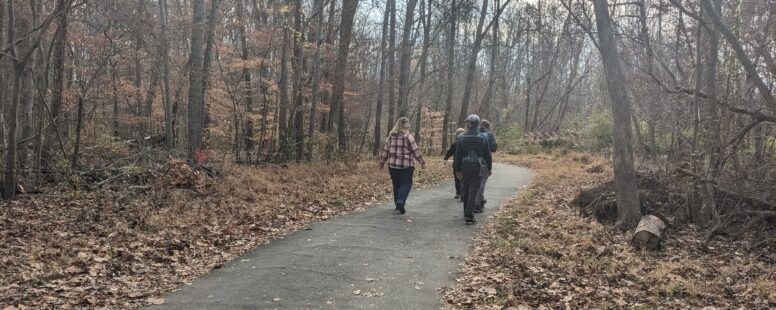
The Detroit Riverfront Conservancy continues to expand in both directions between the Belle Isle bridge and the Ambassador Bridge. Not too great an imagination is needed to see future expansions beyond that. This perspective showcases a newer, modernized stretch of the award-winning Detroit Riverwalk. Distinct structural elements right next to Hart Plaza include a steel mesh and glass panel partition.

Read More

Field Notes: Wayfinding Signage

Isaac Kremer/ May 4, 2025/ Field Notes, wayfinding/ 0 comments

Gatlinburg, Tennessee, 2013. Clearly visible to vehicular travelers including at a height that can easily be viewed by trucks and more importantly tour busses. Gatlinburg, Tennessee, 2013. Store directory with guidance to the Riverwalk. The framing is probably the most impressive part of this with some carefully crafted molding features. Concord, New Hampshire, 2022. Providence, Rhode Island, 2014. Lambertville, New

Read More

Hoboken Walking Tour – Hoboken, New Jersey

Isaac Kremer/ August 17, 2024/ Field Notes, Physical, placemaking, preservation, storefront, streetscape, wayfinding/ 0 comments

From the train sheds it is a short walk into the station. Whereas other stations are functional, this one is attractive to bringing people in like kings and queens. Warrington Plaza recognizes the planner who helped to start the NJ Transit system with the Hoboken station as the first property. This bank with Roman Ionic pilasters and parapet with enrichment

Read More

Heritage Villa at Chestnut Square – McKinney, Texas

Isaac Kremer/ July 2, 2024/ Field Notes, museum, preservation, wayfinding/ 0 comments

Taylor House was built in the 1860s. Originally it stood across the street. It was sold in 1868 to Armstead Joshua Taylor, a cabinetmaker. He married Tabitha Jane Scott, daughter of Collin County pioneer Preston Scott. The Taylors operated the house as an inn for traveling salesmen or “drummers.” Because overnight lodging was available for 25 cents. It was called

Read More

Highland Park Shopping Village – Dallas, Texas

Isaac Kremer/ July 2, 2024/ Field Notes, Physical, preservation, storefront, streetscape, wayfinding/ 0 comments

Highland Park Village in Dallas is a prime example of the Spanish Colonial Revival architectural style. The complex features seven detached one- and two-story buildings arranged around an interior surface parking area and a central plaza. The buildings are designed with arched doors and windows, imported red tile roofs, overhanging balconies, and ornate tile work, all finely crafted to reflect

Read More

Wakefield Park – Annandale, Virginia

Isaac Kremer/ November 24, 2023/ Field Notes, Physical, wayfinding/ 0 comments

The Cross Country Trail has a number of Native American archaeological sites. In Wakefield Park many of the hill and ridgetops contain sites. Native Americans utilized the available quartz outcrops, shaping the stone into knives, spear and arrow points, and other tools. They camped on high and well drained land, as it would provide lines of site for hunting and

Read More

Downtown – Lawrenceville, New Jersey

Isaac Kremer/ June 2, 2023/ downtown, Field Notes, Physical, placemaking, wayfinding/ 0 comments

Lawrenceville is a small town with a few blocks of commercial buildings. Most are transitional residential type buildings that have been repurposed for commercial uses. One of the nice features of the town are passageways connecting parking to the rear with the street. This is because the residential buildings were detached from one another giving space between them to walk.

Read More

Downtown – Kingston, New York (2023)

Isaac Kremer/ February 18, 2023/ downtown, Economic, Field Notes, museum, Physical, preservation, public art, storefront, wayfinding/ 0 comments

The James and Mary Forsyth House, an architectural landmark located at 31 Albany Ave, Kingston, New York. A two-and-a-half story, brick Italian villa-style home designed by the renowned architect Richard Upjohn. Completed in 1851 for local attorney and politician James Forsyth and his wife, Mary. The house was widely known in the area for its lavish construction and high-society parties.

Read More