

Riverside Cemetery – Albion, Michigan
Originally known as Albion Cemetery and Albion Burying Ground, this cemetery was named Riverside in 1886 by the city council. In addition to a unique array of tomstones, the cemetery includes impressive mausolea, an office, a receiving vault and a fishpond. Riverside Cementery contains the remains of Albion pioneers and veterans as well as distinguished and notorious citizens. Those interred here include Washington Gardner (1845-1928), who served in the U.S. Congress and as Michigan’s Secretary of State; and Michigan State Senator Warren G. Hooper (905-1945), who was shot gangland style before he could appear before a grand jury and testify regarding corruption.
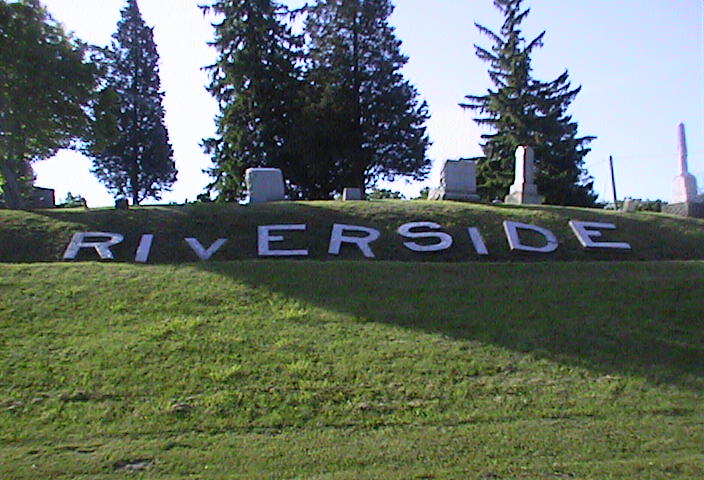
The first burial in this cemetery occurred in 1837, the year Michigan became a state. The previous year, land developer Jesse Crowell had purchased a one and one-half-acre parcel; he later cleared it for burials. In 1842 Crowell sold the land to the Albion Cemetery Corporation for two dollars. The cemetery was enlarged in 1853, 1885, and 1914, resulting in a total of forty-six acres. Reflecting Albion’s ethnically diverse population, the cemetery has areas known as the “Russian Section,” “German Hill,” and a section for African American World War I veterans. A private Catholic cemetery contains the remains of people from Italy, Lithuania, and Poland.


Sheldon Mausoleum in 1999 was in very bad condition with the skylight broken allowing for water infiltration.


Frederic S. Goodrich (1865-1948) was a professor and interim President for Albion College.


Augustus P. Gardner family plot.


Jesse Crowell (1787-1872) founder of Albion and recognized as “Albion’s Greatest Benefactor.”


George Dean, President of Union Steel Products and his wife Belle in the Dean family plot.


Samuel Dickie (1851-1925), Albion College President and national chair of the Prohibition Party.


John Lawrence Seaton (1873-1961), Albion College President.


George Bemis Jocelyn (1824-1877), Albion College president.

Munroe mausoleum.

