
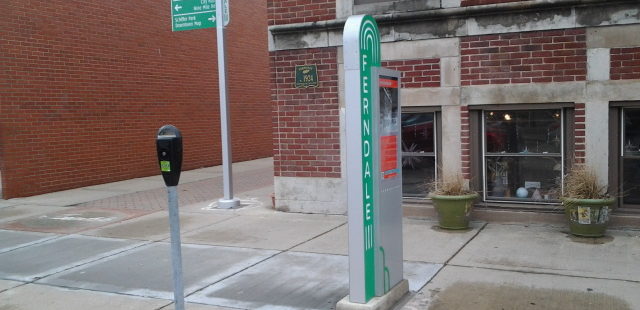
Ferndale Way-finding Sign Project – Ferndale, Michigan (2012)

The Ferndale Way-finding project was supported by a Preserve America grant. What resulted from this, thanks to the tireless work of the Ferndale Downtown Development Authority, City of Ferndale, National Park Service and other partners is something that truly amazed me a few months ago when I visited Ferndale for the first time in a long while.
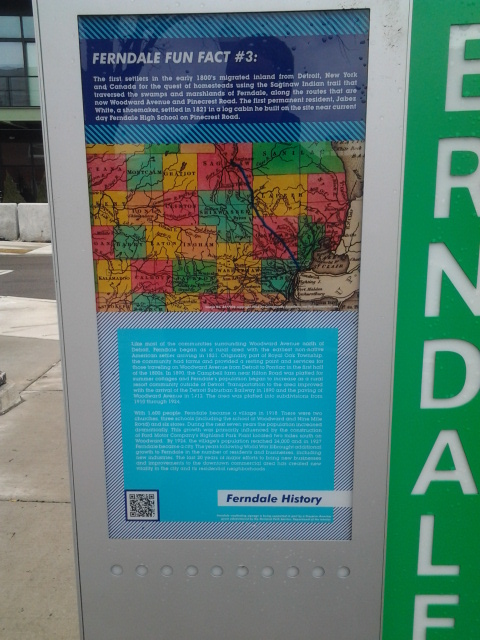
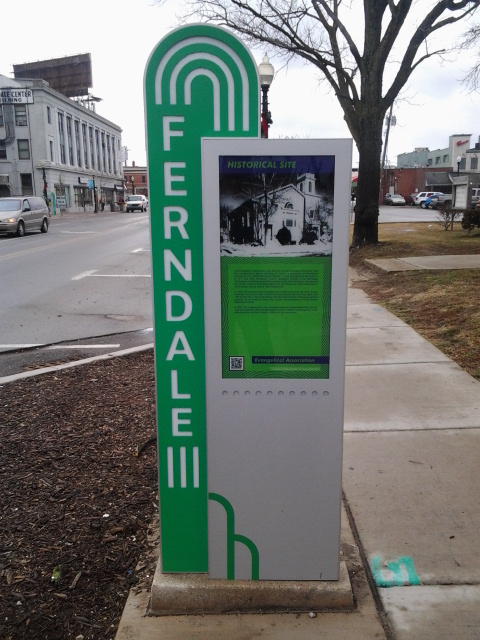
What Ferndale did well is take a typically stodgy topic – interpretive and way-finding signs – and update these to make them both fun and friendly. Let’s start with the interpretive signs first. These are placed at strategic locations throughout the community. The sites they refer to is visually proximate to the sign. This allows for some interesting comparison of historical photos with the buildings as they appear today. The casing for the sign has a marquee in green and white with the word “Ferndale” in large block letters. The interpretive panel is surmounted by a large scale photograph. Text describing the landmark is below. The reverse side of each sign has a “Fun Ferndale Fact.” I found these signs to be both playful and instructive.
Some of the many sites featured with an interpretive sign are the Evangelical Association, Pioneer & Merriman Apartments, Five and Dime, Ferndale State Bank and Ferndale Central School.
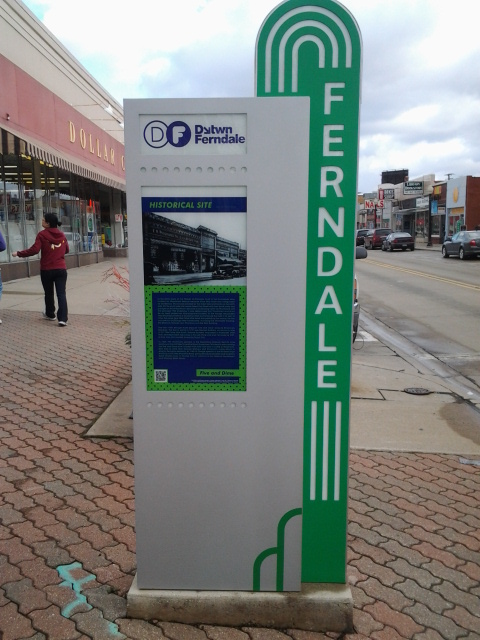
Interpretive sign showing building in background.
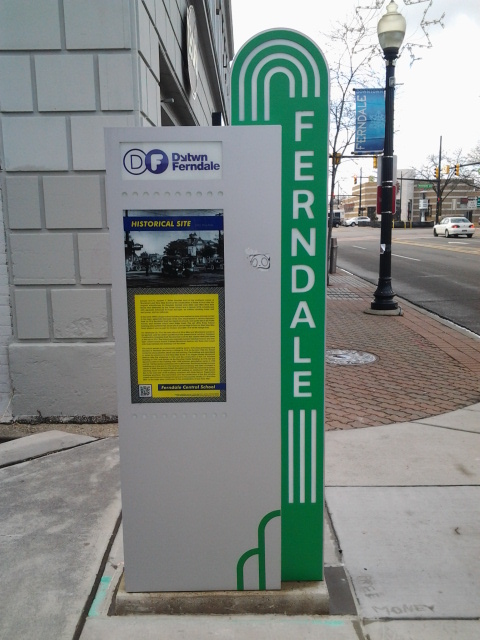
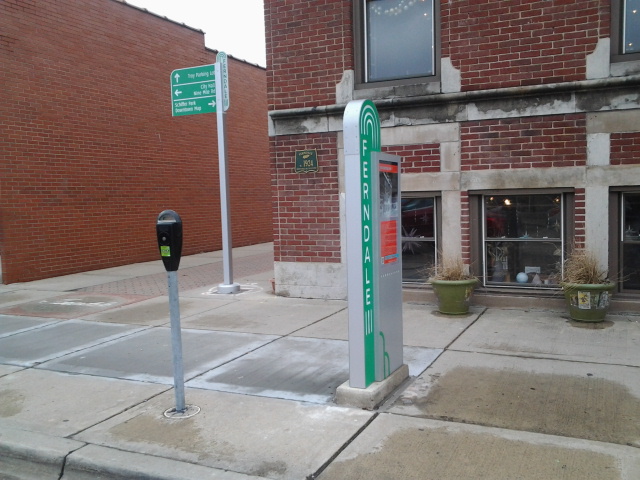
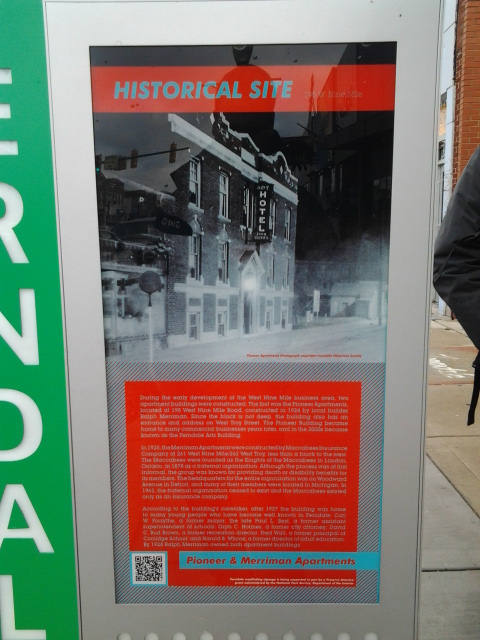
Sign system working together in concert to guide and direct. This historical site sign is for the Pioneer & Merriman Apartments.
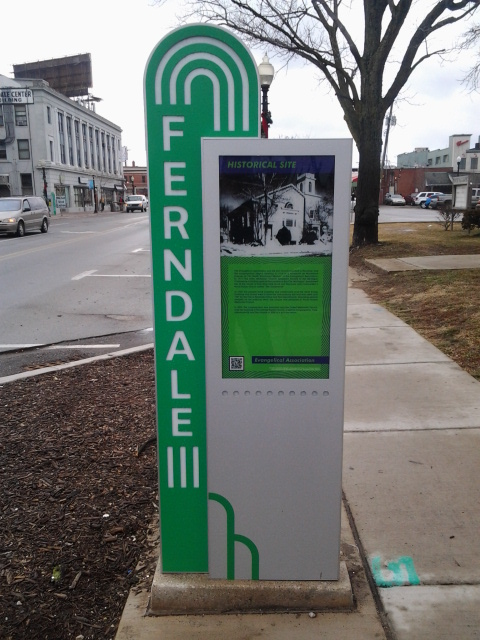
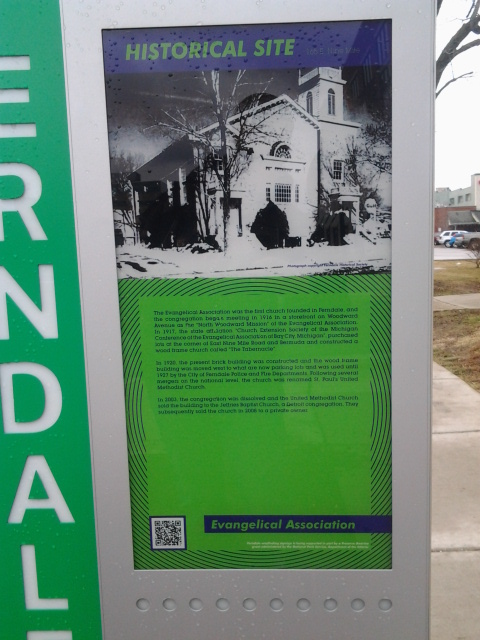
This historical site marker is for the Evangelical Association.
Another type of sign used are the way-finding directional signs. Here the marquee motif is used again, though it is shrunk in size to fit a smaller sized sign. The white and green are inverted to create a white background with green text over it. In the directional portion of the sign with arrows and names of sites, a green background and white text and arrows make the content jump out. There are two versions of the directional signs – a larger version on the street targeted towards automobile traffic, and a smaller version on the sidewalk targeted towards pedestrians.
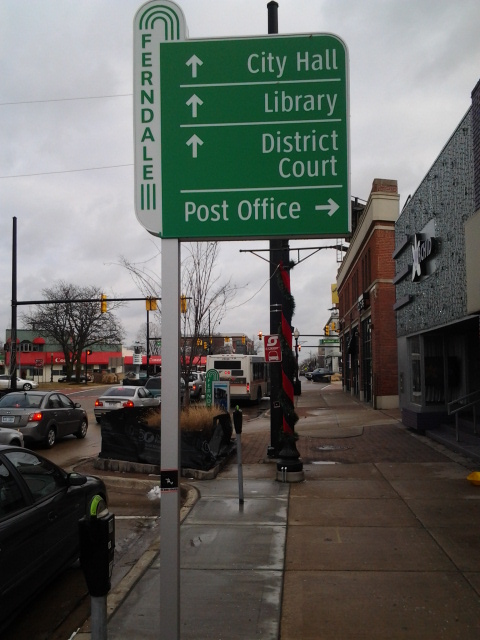
Automobile oriented way-finding on pedestrian alley.
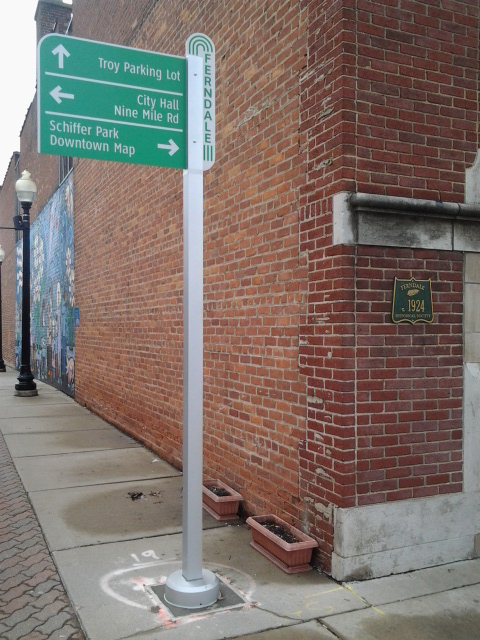
Pedestrian oriented way-finding on street
There is one final sign type that completed the sign system. The Parking directional signs carry the Ferndale marquee logo, and then have a “P” in a circle along with an arrow. This effectively serves a purpose to direct people to parking while reinforcing the visual identity of the sign system.
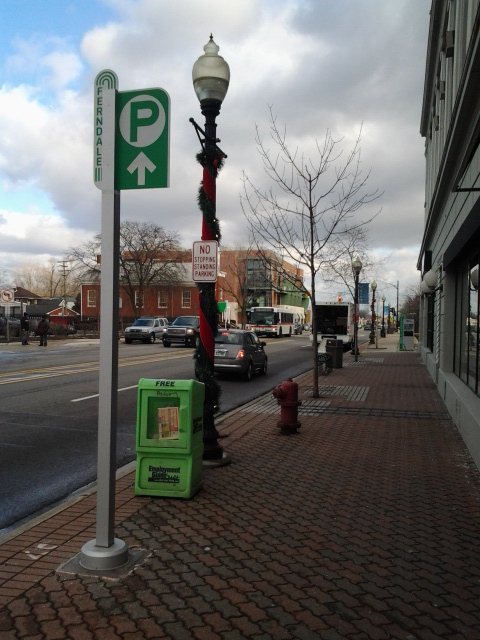
Parking directional signs carry the visual identity of the overall sign system.

Business listings and map for the downtown.

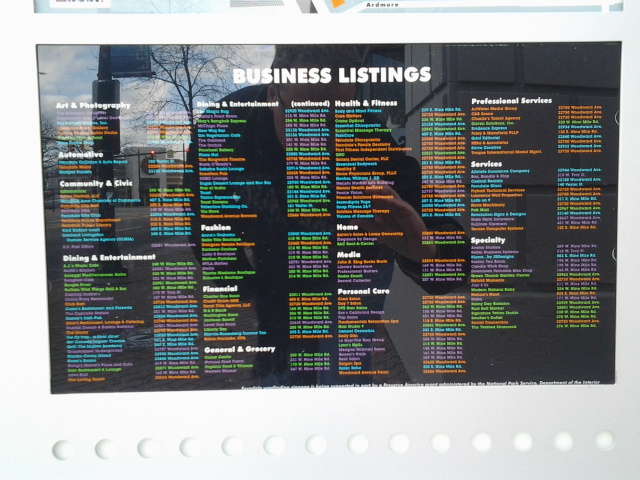
Detail of map with downtown broken into 4 color-coded districts.
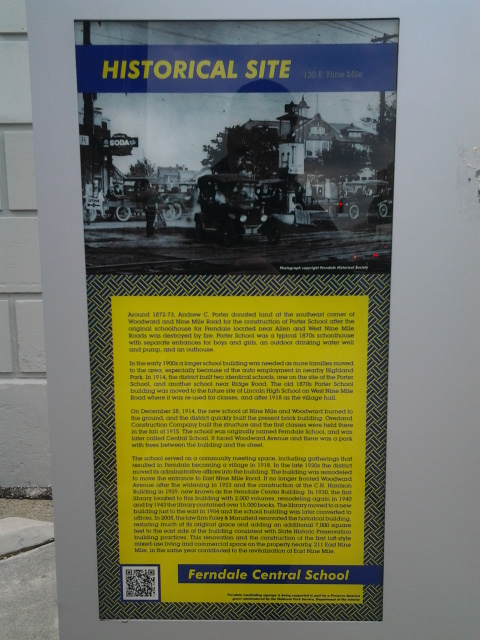
Historical marker recognizing the varied uses at the corner of Woodward Ave and 9 Mile Road. The marker describes the Ferndale Central School.
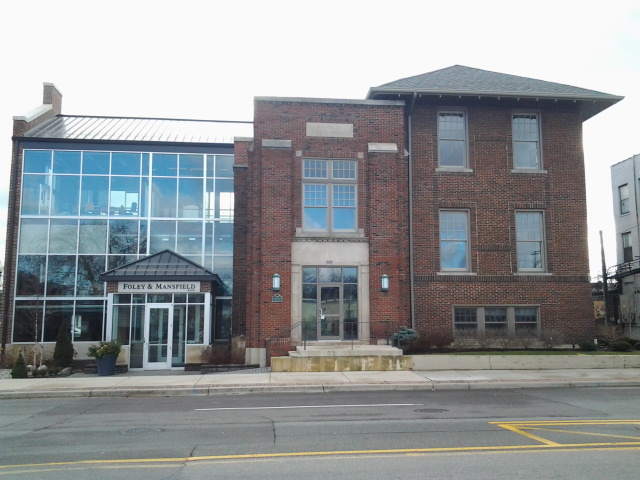
An adaptive use project made this a home for a law firm in 2004.
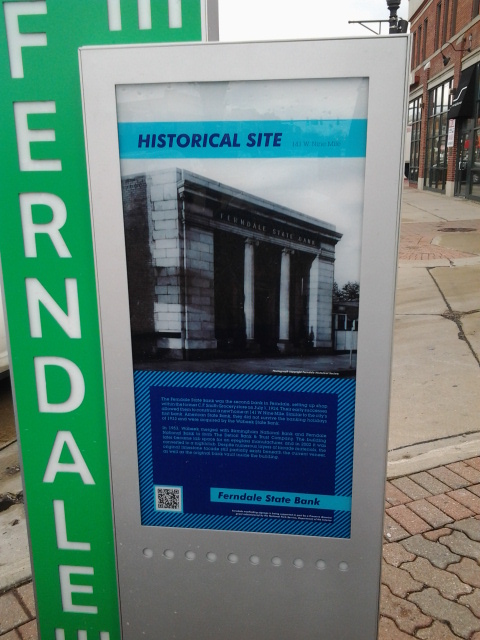
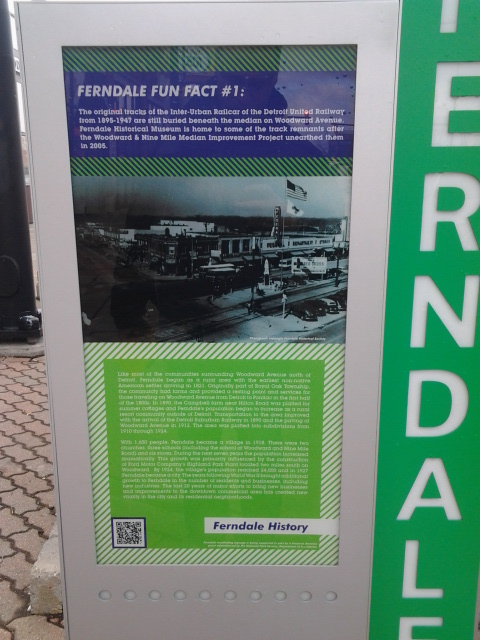
Another historical marker recognize the Ferndale State Bank.
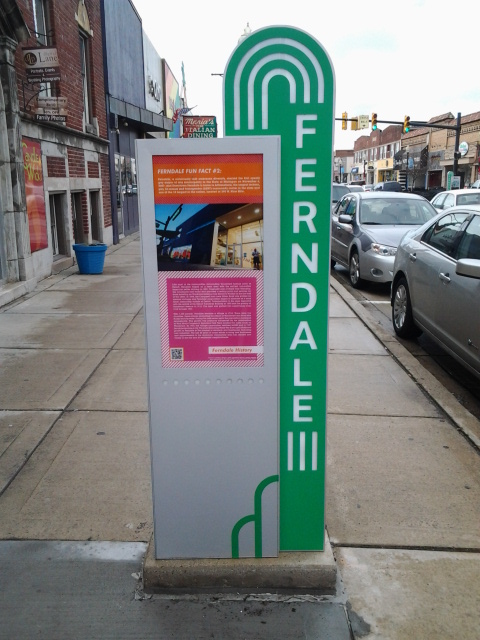
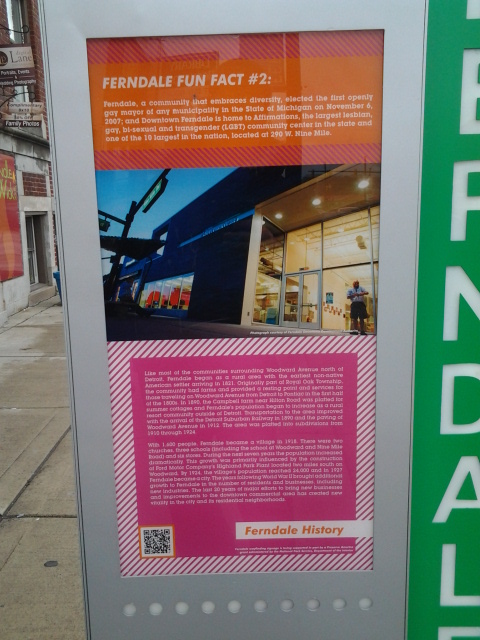
One other marker has a Ferndale Fun Fact and additional info on Ferndale history.

Office of the Ferndale Downtown Development Authority (DDA) that undertook the way-finding sign project.
Visit in 2014
For the Main Street America conference in 2024, the Opening Reception was held in downtown Ferndale. The sign board as people arrived read: “Ferndale Loves Main Street Welcome to Our GAMSA Town.”
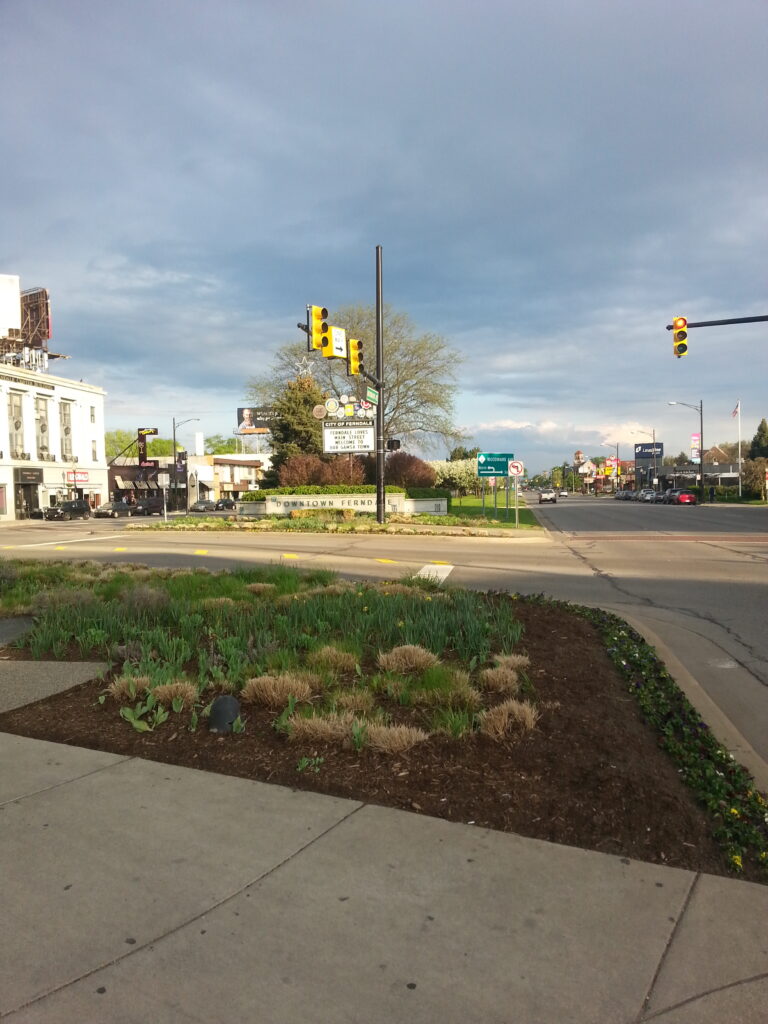
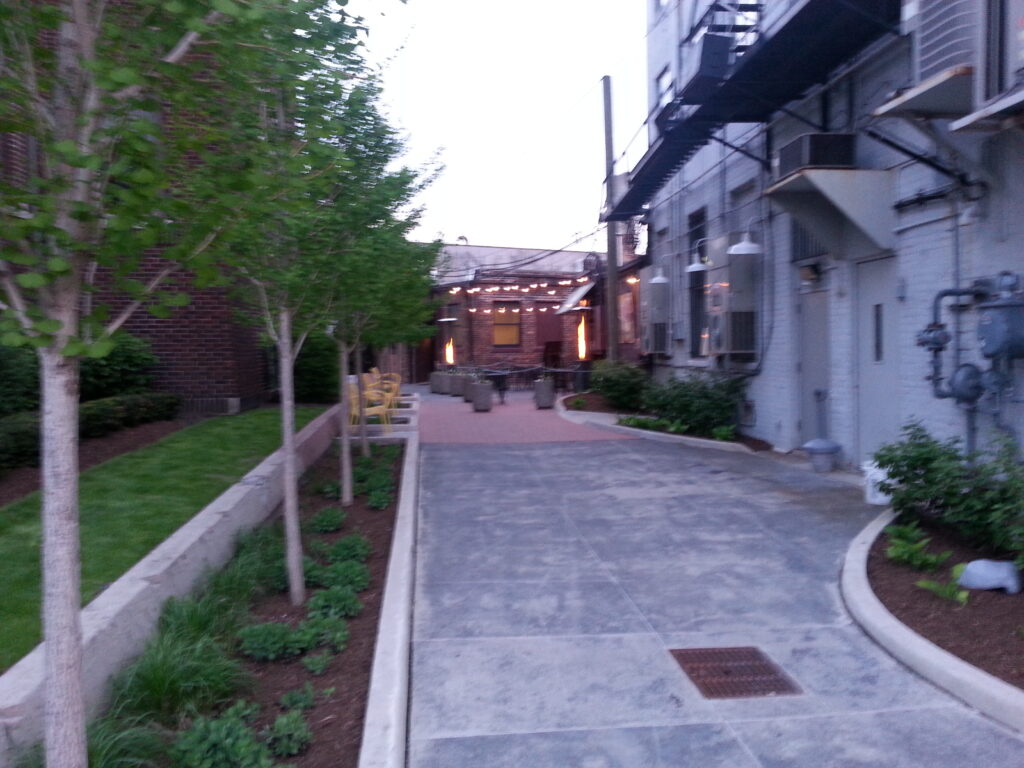
As we walked around enjoyed seeing this new pedestrian walkway beside a building that has been adaptively reused.