
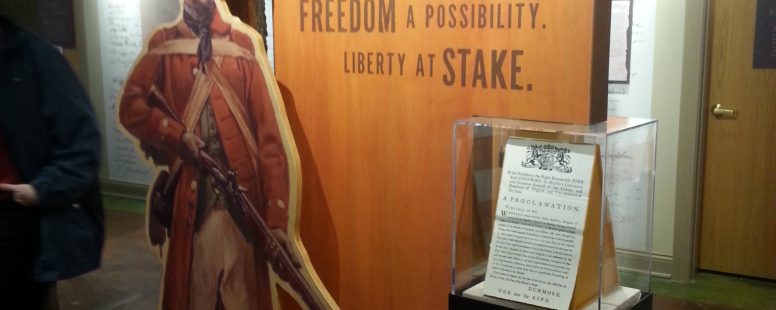
Muster Grounds – Abingdon, Virginia
By 1779, the patriots’ rebellions against the British had developed into a full-fledged war throughout the colonies. The British, in hopes of maintaining control, launched a “southern campaign.” Lord Charles Cornwallis led the charge to suppress the revolutionary movement in the south. By 1780, Cornwallis had moved into George and South Carolina and began advancing on North Carlonia and Virginia. Major Patrick Ferguson covered the western flank, recruiting American-born loyalists along his route, and threatening those who opposed him.
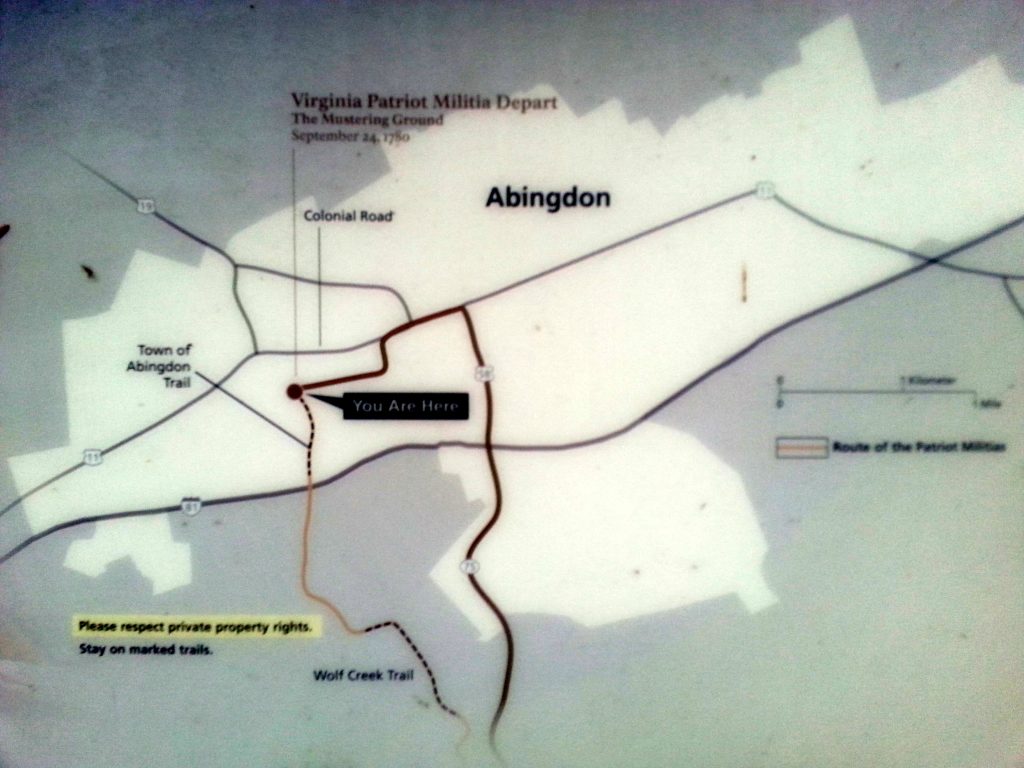
As the American Revolution dragged into its fifth weary year in 1780, this quiet corner of the colonies was thrust into the fray. An incendiary threat by British Major Patrick Ferguson provoked the people of this area to action. Angered by Ferguson’s threat to “march his army over the mountains, hang their leaders, and lay their country waste with fire and sword” if they didn’t join the British, these people instead cast their lot with the revolutionaries.
Determined men on horseback filled this muster ground on September 24, 1780. Their goal, hunt down British Major Patrick Ferguson and his 1,000 loyalist soldiers. Called to action by American Colonel William Campbell, 400 men from the surrounding area joined the patriots and began their march south from here. The patriots prevailed when they battled Ferguson’s loyalist troops atop Kings Mountain in South Carolina. The patriot’s victory at Kings Mountain prompted British General Sir Henry Clinton to declare it “the first link in a chain of evils that … ended in the total loss of America.
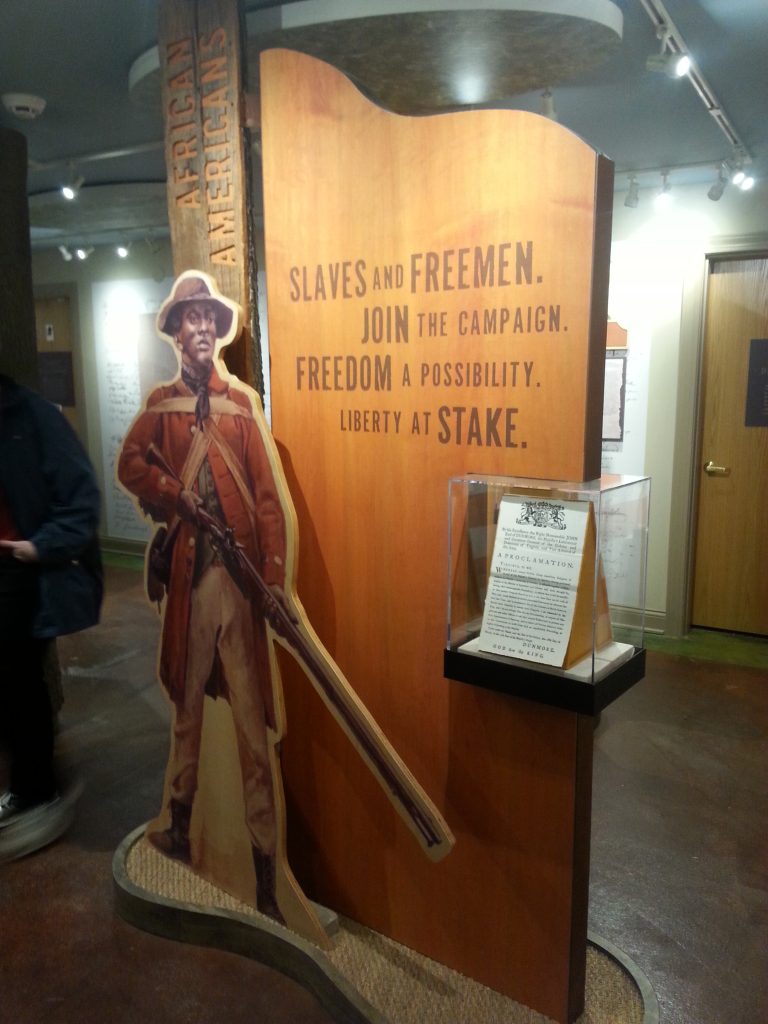
Exhibits tell the story of how people gathered together for the fateful march.
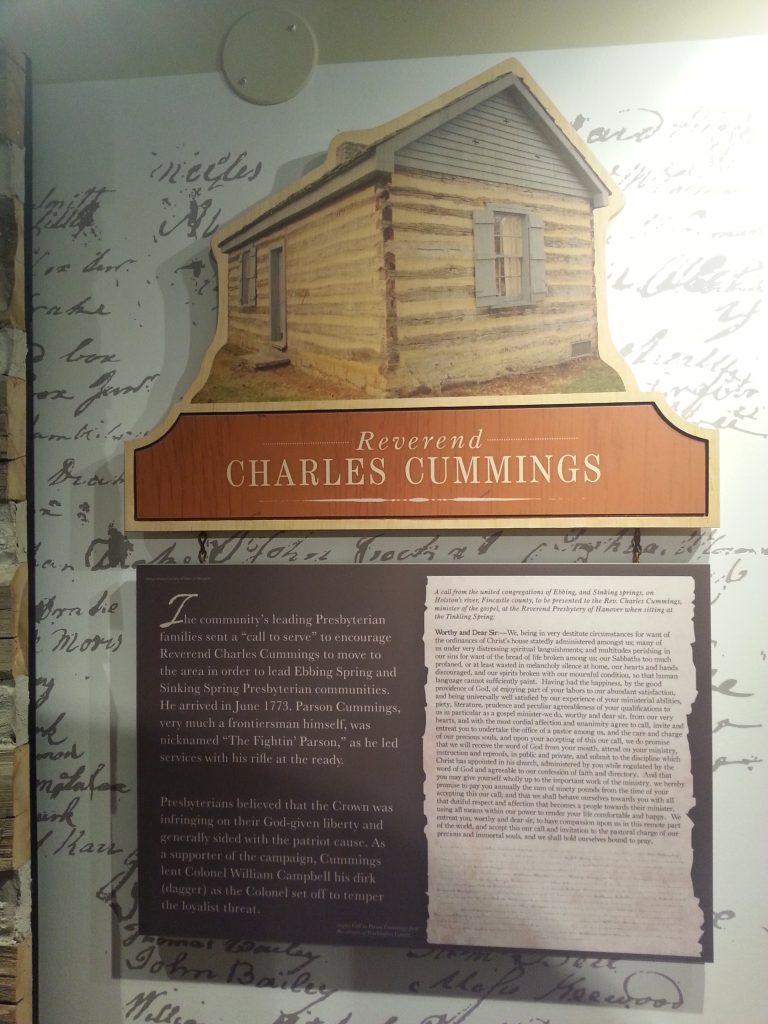

Areas of settlement in ca.1760 showed German, Scots-Irsh and shared occupation areas.

OVERMOUMOUTAIN TRAIL
- ABINGDON MUSTER GROUNDS, VIRGINIA. Each year thousands participate in anniversary
events and follow in the footsteps of the Overmountain Men from the northern trailhead at the Muster Grounds. - BLUFF CITY, TENNESSEE. Known in 1780 as Choate’s Ford, this is the area where Virginia militia crossed the Holston River on the morning of September 25, 1780. Today, displays identify and explain Choate’s Ford and its history.
- SYCAMORE SHOALS STATE HISTORIC AREA, TENNESSEE. A Visitor Center here has historic interpretation, displays, and a theater. Annual events celebrate the site’s Overmountain legacy. Fort Watuga, a reconstructed 1770s fort, provides glimpses into frontier life.
- SHELVING ROCK, TENNESSEE. This historic encampment site is relatively untouched since 1780. Here militiamen stored their gunpowder under the large cave-like rock formation to keep it dry.
- YELLOW MOUNTAIN GAP, NORTH CAROLINA. Yellow Mountain Gap, which reaches 4,682 feet, clearly illustrates the difficult terrain the men faced. Visitors may park and walk on foot to this point which is the highest spot along the route.
- GILLESPIE GAP, NORTH CAROLINA. The Museum of North Carolina Minerals has an exhibit about the Overmountain Victory National Historic Trail and provides related programs for visitors.
- NORTH COVE AND TURKEY COVE, NORTH CAROLINA. These two locations were used for encampments on the same night – September 29th, 1780 – after the patriot force split into two.
- MCDOWELL HOUSE, QUAKER MEADOW, NORTH CAROLINA. The McDowell House stands close to where the North Carlina and Virginia militias met on their campaigns. The house was built by McDowell descendants in 1815, after the Revolutionary War.
- BEDFORD’S HILL/CANE CREEK, NORTH CAROLINA. A month before the Overmountain men camped here en route to Kings Mountain, a skirmish occurred close by between loyalists and patriots. An historic marker identifies this Cane Creek battle site located along State Route 64.
- MARLIN’S KNOB, NORTH CAROLINA. On October 3rd, 1780 the militia force camped near Marlin’s Knob. Not far south, the Britain Church grounds include a cemetery where veterans of the Kings Mountain battle are buried.
- GILBERT TOWN, NORTH CAROLINA. Both patriot and loyalist forces used Gilbert Toton as a camp site on different dates in September and October 1780. It was from this location that Ferguson issued his threat, spurring the patriot militia into action.
- ALEXANDER’S FORD, NORTH CAROLINA. It was at this location that campaign leaders assessed their troops after more than a week of traversing the mountains and received intelligence as to the location of Ferguson and his army.
- THE COWPENS, SOUTH CAROLINA. Patriots stopped here to rest and eat a meal on the evening of October 6, 1780. They then continued on through the night to Kings Mountain and battle. Today, this area is a National Battlefield where exhibits and events depict critical moments in Revolutionary War history.
- KINGS MOUNTAIN, SOUTH CAROLINA. This National Military Park preserves the Kings Mountain Battleground. Here the patriot force fought and defeated Ferguson’s loyalist troops on October 7, 1780, after two weeks of tracking his whereabouts.
- ELKIN, NORTH CAROLINA. This is the site of the muster ground for the Surry County, North Carolina militia who gathered here on September 27, 1780. This site is certified as the eastern trailhead of the Overmountain Victory National Historic Trail.
- TORY OAK, NORTH CAROLINA. For generations a large oak tree stood in Wilkesboro, North Carolina. Locals called it the “Tory Oak” as many tories (British supporters) were hung from it during the contentious Revolutionary period. Today a new oak has been replanted to mark the location.
- FORT DEFIANCE, NORTH CAROLINA. Built after the Revolutionary War by Kings Mountain veteran William Lenoir this house is close to the site of a frontier fort of the same name. The area is certified as part of the Overmountain Victory National Historic Trail and is open to the public.


Looking out the window from the visitor center is an old stone wall. One does not need to imagine much what the gathering of militia looked like at this site.