Downtown – Louisville, Kentucky
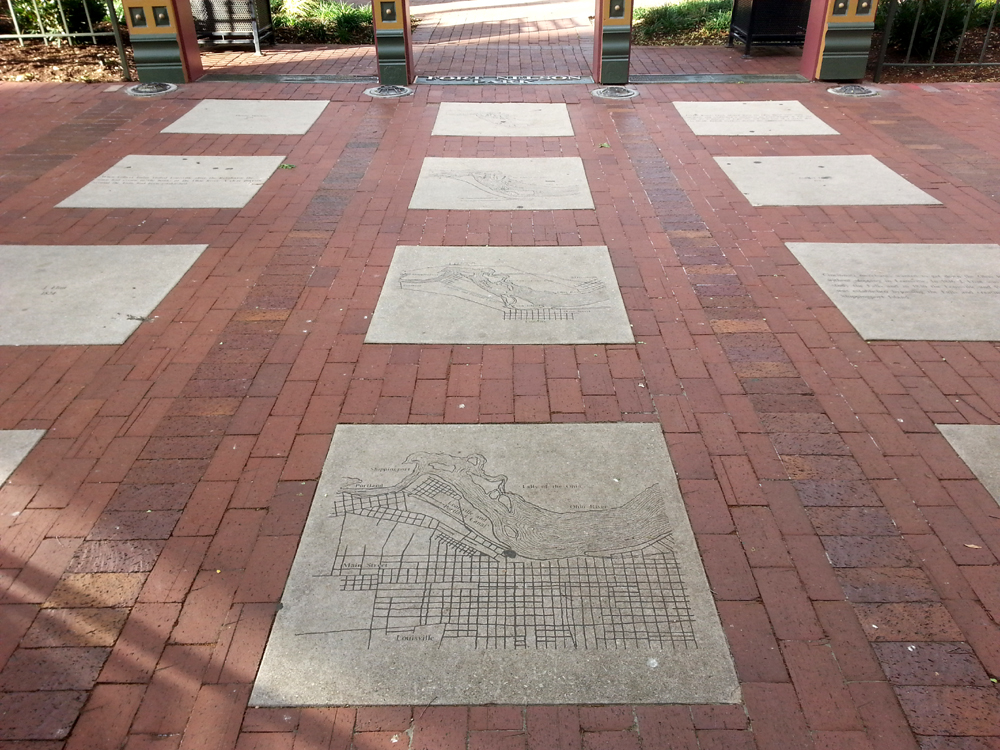
George Rogers Clark floated down the Ohio River with sixty civilians and established a settlement on Corn Island. It was not only the beginning of Louisville, but also part of a secret plan to invade British territory during the American Revolution.
Early maps of the Falls of the Ohio detailed the river because it was so important to transportation. This map shows the three railroads entering the City — the Louisville and Portland; the Louisville and Nashville; and the Louisville and Frankfort.
A sidewalk installation with laser engraved stones shows early maps and tells the story of the founding and development of the city.


Handsome multi-story brick buildings and a solid street wall define the downtown in most places. An effort has also been made to bring in brick pavers and other street and landscape enhancements to make the area more walkable and welcoming.
THE GALT HOUSE. A world-famed inn operated here from 1835 until it burned in 1865. Host to notables, such as author Charles Dickens, it was scene of assassination of USA Gen. Wm. Nelson, Sept. 1862, by USA Gen. J.C. Davis. Sherman and Grant met here March, 1864 to plan invasion that led to the “March to the Sea” Traditions carried on at new Galt House at 1st and Main, 1869-1921.

ABOUT 21c MUSEUM HOTEL. 21c Museum Hotel Louisville, opened in 2006, is a combination boutique hotel, contemporary art museum and restaurant. Building on its mission of engaging the public with contemporary art and supporting the revitalization of American downtowns, 21c Louisville, designed by architect and interior designer Deborah Berke, features more than 9,000 square feet of light-filled museum galleries, state-of-the-art meeting, and both indoor and outdoor event spaces. The hotel incorporates 90 guest rooms-including a one-bedroom 21c Suite with a terrace-that embrace the founders’ ethos of living with art. The museum exhibits the work of living artists and is open free of charge to the public. These spaces serve as a key link to historic Museum Row in downtown Louisville. 21c’s restaurant, Proof on Main, led by chef Levon Wallace, emphasizes the unique culinary identity and ingredients of Kentucky and surrounding area. 21c Museum Hotels can also be found in Cincinnati, Ohio and Bentonville, Arkansas. For more information visit 21cMuseumHotels.com

Ned Kahn (American), Cloud Machines, 2006. Site-specific installation for the 21c Museum Hotel

Cracking Art (Belgian, French, and Italian), Penguin, 2005. Recycled plastic. Sculpted from recycled plastic, the fleet of four-foot-tall birds serves as a playful reminder of the importance of sustainability and environmental conservation. The sculptures migrate throughout 21c each day and night.

This multi-media art installation captured live video of people sitting or passing by in the hallway and juxtaposed visualizations against them. This served the intended effect of bringing people in to the making of art.

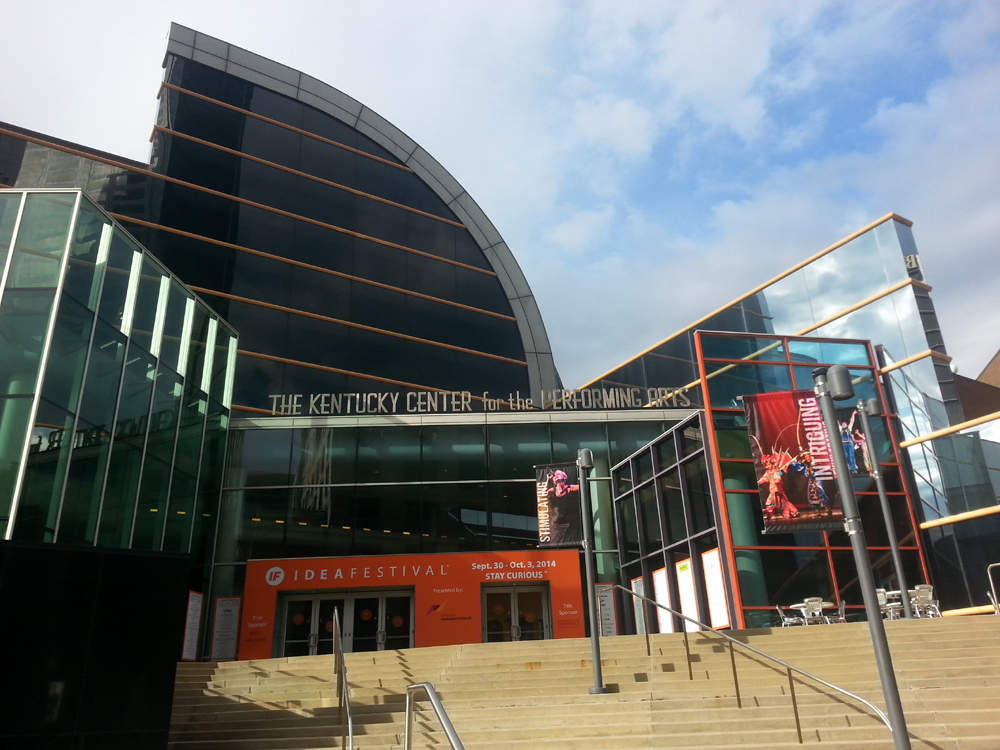
THE KENTUCKY CENTER FOR THE PERFORMING ARTS. This is a major cultural venue located in Louisville, Kentucky. Serving as Kentucky’s premier performing arts center since 1983, it hosts a wide variety of performances, including ballet, Broadway shows, opera, and orchestral music. The facility houses several theaters, including Whitney Hall and the Bomhard Theater. The center is a hub for community programs and major events.
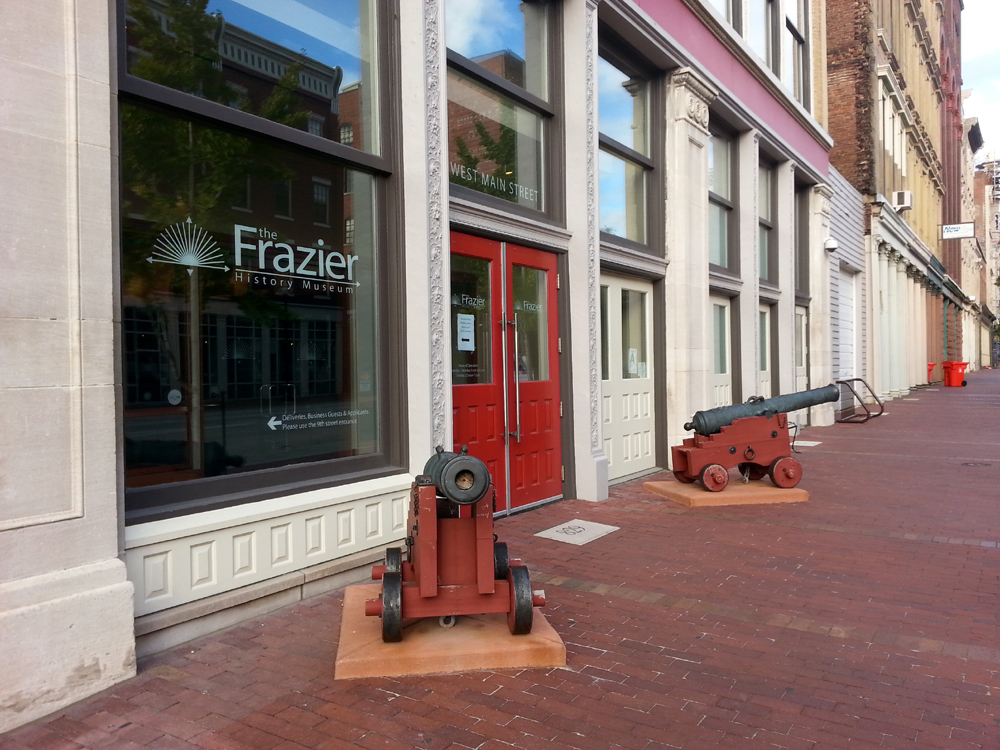
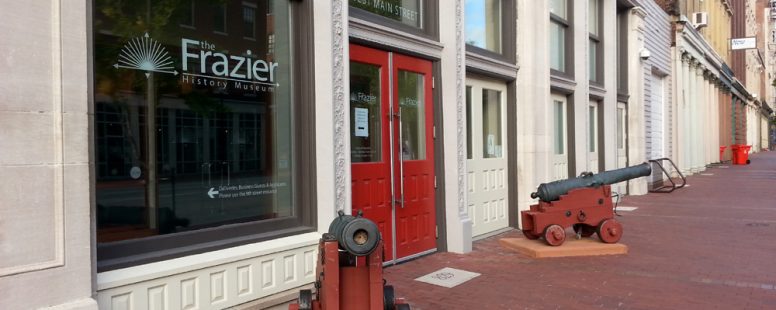
FRAZIER HISTORY MUSEUM. This museum located in an adaptively reused historic building downtown, has a small but well curated and presented collection.

MAIN STREET VISITOR CENTER. This low-key storefront is one of the visitor centers downtown.

LOUISVILLE VISITOR CENTER. The more formal and modern visitor center is a few blocks away witha unique green cantilevered open topped canopy.
EVAN WILLIAMS KENTUCKY’S 1st DISTILLER. Kentucky’s distilling industry founded near this site in 1783 when Evan Williams built the 1st commercial distillery. By converting grains into whiskey, products of pioneer Ky. were more easily shipped to world markets. Skilled craftsmanship and limestone water are credited for Kentucky’s leadership in distilling. Arrived in Ky. as early as 1781. Williams was picked in 1797 to serve on Louisville’s first elected Board of Trustees and was appointed Harbor Master for Port of Louisville same year. He was also major contractor in this area and built Jefferson Co. Jail and Co. Clerk office in 1803. Died here Oct. 15, 1810.

ART + CRAFT MUSEUM
Sit-In Demonstration Sites Markers Project. This project preserves an important part of Louisville’s history. Designed by nationally recognized sculptor Ed Hamilton, each marker bears a logo depicting student protesters to symbolize the civil rights movement in Louisville, the South and the nation in the 1960s. Fourth Street was Louisville’s primary corridor of restaurants, department stores and theaters. Through the 1950s, most white-owned establishments downtown excluded African Americans or treated them differently as customers for example, denying them the opportunity to try on clothes, to sit at lunch counters and to enter movie theaters. By winter 1961, small-scale demonstrations and efforts to secure legislation opening all such facilities had failed.
The stirrings of protest activity that swept the South in the 1960s inspired African American teenagers who became the “foot soldiers” of the struggle against discrimination in public accommodations in Louisville. Mass demonstrations in spring 1961, a voter registration drive and a campaign to unseat an un-sympathetic mayor and elect a new board of aldermen ultimately led to the passage of the public accommodations ordinance – the first such law in the South.
Today, many of the businesses where demonstrations were held are gone, have relocated or been torn down. In the absence of a physical presence, these markers will preserve the history of the civil rights movement and tell the little known story of one of Louisville’s greatest achievements.
- Marker Locations
- Walgreens Drugstore, 526 South Fourth Street
- Stewart’s Dry Goods, 510 South Fourth Street
- Kaufman-Straus, 427 South Fourth Street
- Blue Boar Cafeterias, 410 West Walnut Street, 644 South Fourth Street
- Kentucky Theater, 651 South Fourth Street
- Mary Anderson Theater, 610 South Fourth Street
- Ohio Theater, 655 South Fourth Street
- Penthouse/United Artist Theater, 625 South Fourth Street
- Rialto Theater, 616 South Fourth Street
- Brown Hotel, 335 West Broadway
- Brown Theater, 315 West Broadway


Two images juxtapose the development of Louisville and how it views itself. One is nostalgic referring to the railroad that connected to Louisville to the outside world, with the single word progress. The other tells a deeper story about how Louisville is “A place where you never know what you’re going to walk into.” Then four pillars of Fame, Adventure, Success, and Creativity are emphasized. The two self-styled civic images speak to their different times and more importantly the different values.
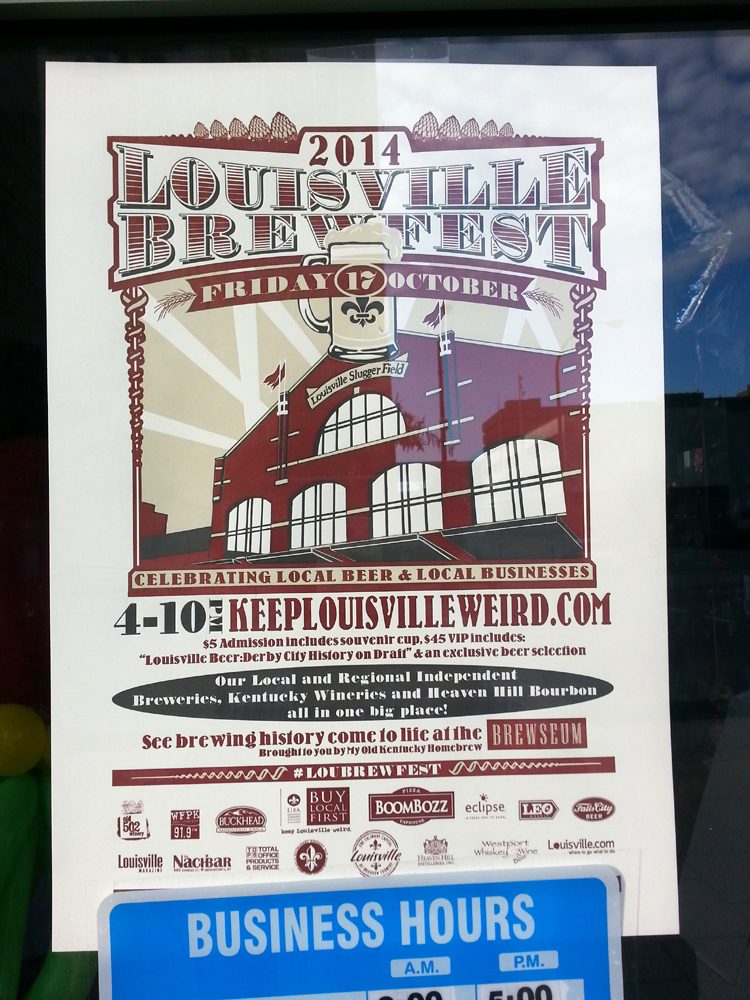
This new vibrant and creative scene is exemplified by events like the Louisville Brewfest. The website domain keeplousvilleweird.com is an effort to borrow from the popular and successful Keep Austing Weird campaign. The effort to celebrate local beer and local businesses is very self conscious. This extends to independent breweries, Kentucky wineries, and bourbon producers.
Another event that captured the ever changing landscape of Lousville is Resurfaced. This pop-up temporarily activated part of the downtown on a few short weeks.


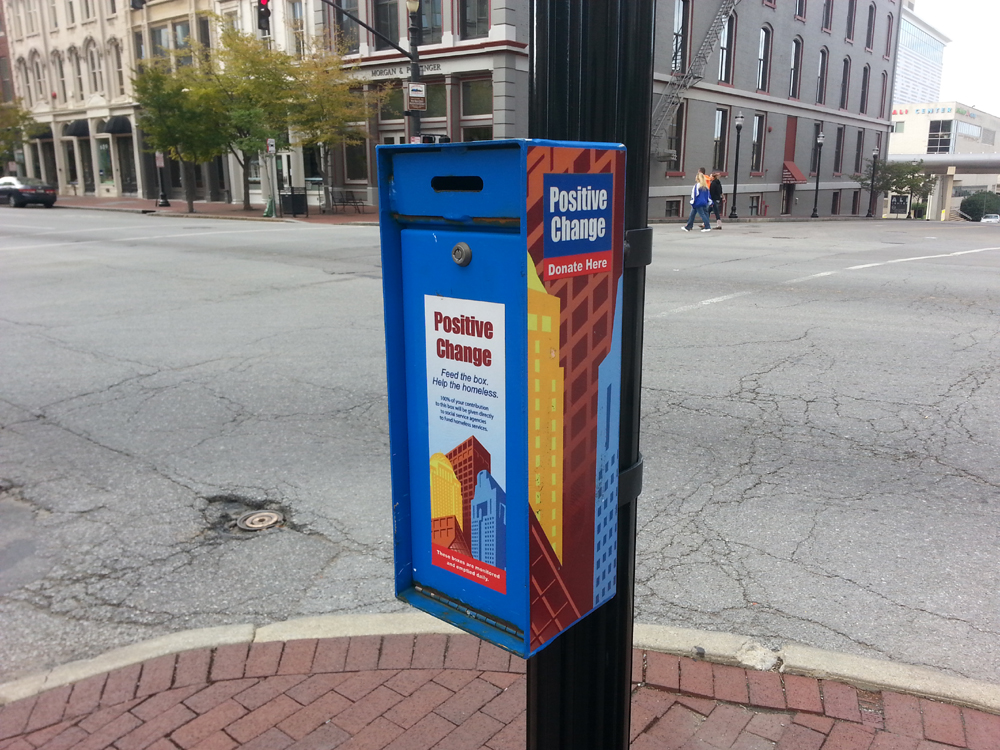
This “Positive Change” collection box implored people to “Feed the box. Help the homeless.” 100% of contributions made in the box was given to social service agencies to fund homeless services. This sent a supportive message to the unhoused, and also gave generous people an opportunity to give towards and important cause.