

Funeral of Doug McIntosh – Detroit, Michigan
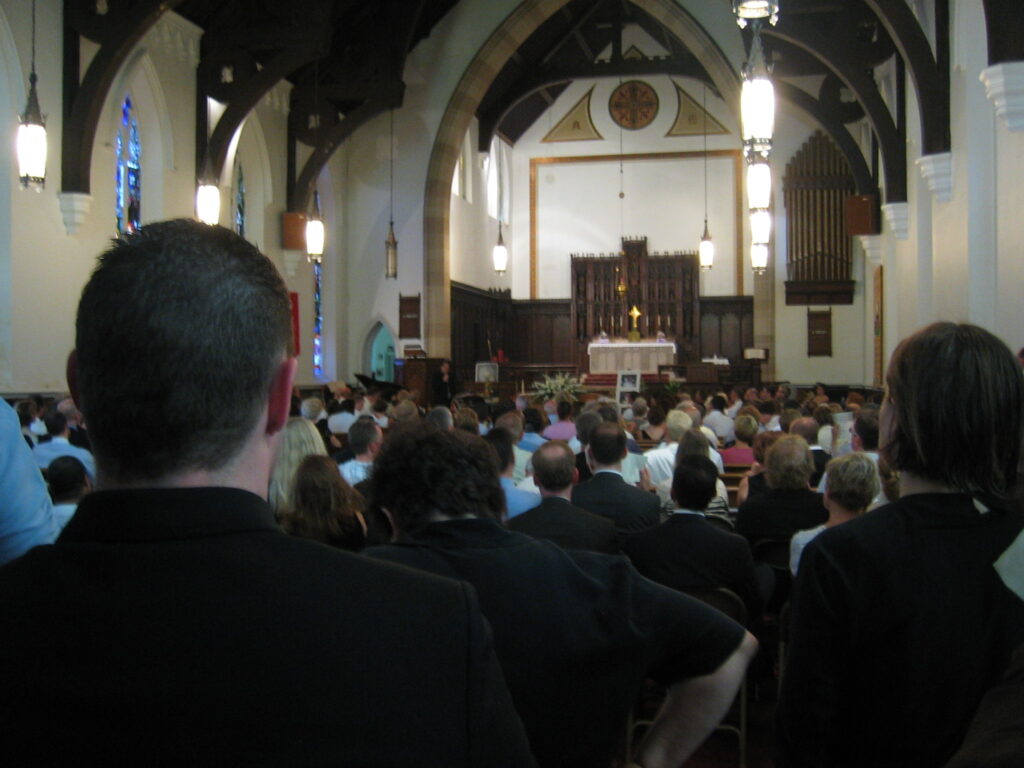
The funeral of Doug McIntosh at the Church of the Messiah in Detroit was very well attended. It spoke the the large number of people touched by his extraordinary life.
A presentation on the major projects that Douglas McIntosh was involved in was prepared and presented at a gathering organized by the Architectural Salvage Warehouse of Detroit in 2006.
Of buildings that existed in the CBD in 1976, over 45% demolished in the last 30 years.
Reinvestment gain strength in the late 1990s. If you follow year at bottom, see in maps above more and more projects as the city is rediscovered.
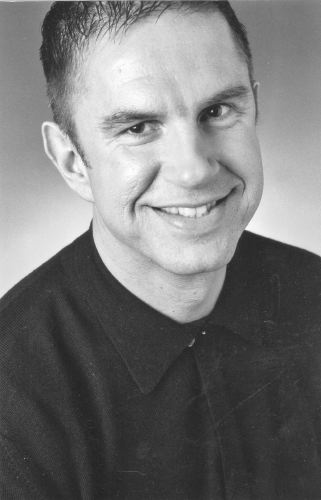
Doug worked through organizations, sometimes some with only 2 or 3 people. Had some long-term causes like Human Rights Campaign and Preservation Wayne. Also provided support for this organization, ASWD, from the time it was created.
Demolition persisted – notably through Hudson’s
Gleaner’s Temple on Woodward was another notable demolition, after which WSU was forced to be more sensitive to historic buildings.
Early plan from 1995 involved redevelopment of west side of Woodward north of I-75 and across from what some of you may know as Crosswinds.
Another plan advocated for retention of buildings on Park Ave when slated for
demolition to make way for stadium.
Working on a large scale, proposed World Trade Center for same area, incorporating historic buildings like Hudson’s and Book Cadillac in various different schemes.
These plans incorporated mid-sized development near the landmark Ralph Adams Cram Cathedral Place on Woodward one block south of Warren.
North of New Center near Studebaker plant proposed infill as catalyst of redevelopment of landmark factory buildings nearby – one of which where the Model T was invented.
West of Woodward (WOW) brought stakeholder and owners of historic buildings together to impact stadium plans. One scheme showed stadium at Grand River and I-75 very near where a hockey stadium is proposed today.
Involved with Heidelberg project, proposing an educational/interpretive center attached to one of these internationally known buildings.
Opening of the Detroit Opera House in 1996 made downtown ripe for redevelopment. Broadway plan helped to guide that and capture potential. Led to several spin off projects in the years to follow. GM Opera House Cafe one of these – a handsome cafe tucked inside the Opera House. Post on Broadway across the street was another – giving this building more of a presence facing Grand Circus Park.
Impacted areas other than just downtown. Michigan State Fairgrounds Master Plan was one example of this.
Back downtown, the Moose Hall, still undeveloped was considered for multiple uses including blues club and restaurant – a use still awaits this place.
Across from Orchestra Hall, Small Plates and the lofts above in the Eureka Building were an award-winning project – bringing part of the Broadway plan to fruition.
4731 Gallery and artist studios brought life to an area of Grand River that had not seen it for some time.
Back downtown again, the historic Manufacturers Bank building was transformed into Club Panacea – a blend of the ultra-modern and the old.
Not just about buildings. North Corktown Master Plan of 2002 laid the groundwork for comprehensive efforts to bring this neighborhood back. This plan is still being used today.
One of the most known Detroit landmark buildings, the Michigan Central Depot, and surrounding area were also subject for speculation regarding their redevelopment.
Once on the theme of landmark buildings, this continued, with one of the earliest plans advanced for the Book-Cadillac. Floor plans were largely based on childhood memories visiting there with his grandmother. Called for a mix of hotel rooms and condos – just as are being completed today.
Unlike Book Cadillac, plans for the Park Shelton were able to be brought through to completion. Rental units went straight to condos, capturing the rising tide of interest in ownership in the greater downtown area.
Building on earlier work in Corktown and by the Studebaker plant, the Place Making book emphasized the importance of neighborhoods.
Another landmark tower was taken on with these plans for the Broderick Tower – which are just now being brought to fruition.
Still able to work on a fine scale, the China Club plan called for preservation and a new modern development across from Comerica Park on Adams. Some of you may know Cheli’s Chili Bar which is located here today.
Statler Building was yet another landmark that was focused on, though this one unfortunately could not be saved and succomed to the wrecking ball – today a gravel parking lot is on this Grand Circus Park fronting parcel.
This notable project in Toronto was in many respects Doug’s proudest project. Had he been given the time, perhaps this could have been brought to Detroit.
This was among the hardest of buildings to redevelop in areas like Midtown already well along the way of redevelopment with over $1.5 billion in investment in the last decade. Came up with this innovative design, tacking an addition on to a fairly non-descript building.
Continued to think on a large scale – with a plan for townhomes in the Lafayette Park neighborhood – itself receiving landmark designation around this time. Yet another neighborhood plan was developed, this for the Lafayette East Village, just south of Gratiot and very near Doug’s home in the West Village.
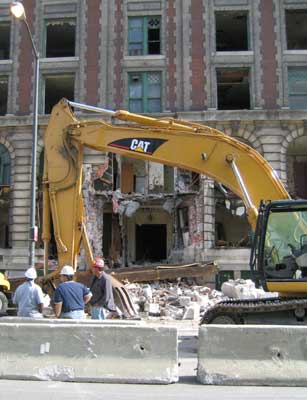
GM investment in Renaissance Center brought increased attention to buildings nearby, such as the Currents restaurant/bar with rooftop seating. The race to the Super Bowl brought with it significant losses – like the demolition of the Madison-Lenox in 2005.
Showing expertise in historic modes, added to existing homes, and built new estates for clients in the Grosse Pointe area.
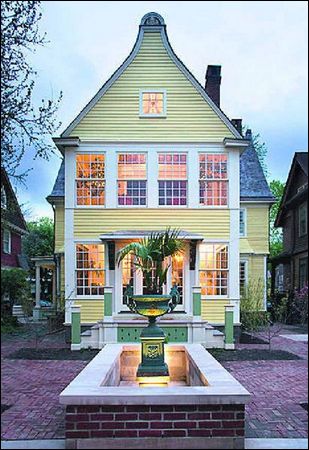
Perhaps the greatest undertaking and certainly most personal was the sensitive restoration of the Julius Melchers house in the East Village near Indian Village. This is the place that Doug McIntosh called home and it is here he died at a much too early age of 46 in 2005.