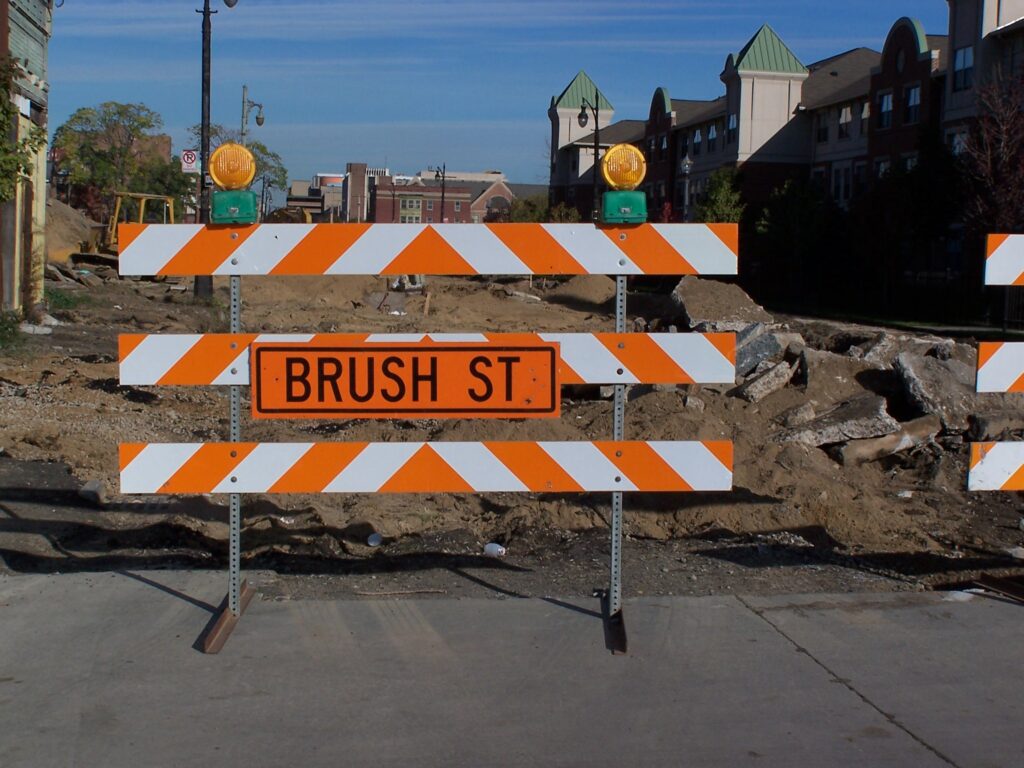
Brush Park – Detroit, Michigan
In 2005, Brush Park was a neighborhood just on the edge of downtown that was still in the midst of a reinvention. Many vacant buildings were partially or wholly boarded up. Some had restoration work already underway.


The spur for a lot of this development was the construction of the Crosswinds condos along Woodward Ave a few years prior. That and construction of Comerica Park and Ford Field directly across Interstate 75 from the neighborhood, meant that this was quickly becoming a desirable location to live again. The condos spurred investment in historic buildings with a wonderful reddish orange brick building with octagonal bays and stone banding one of the first to be fully restored.
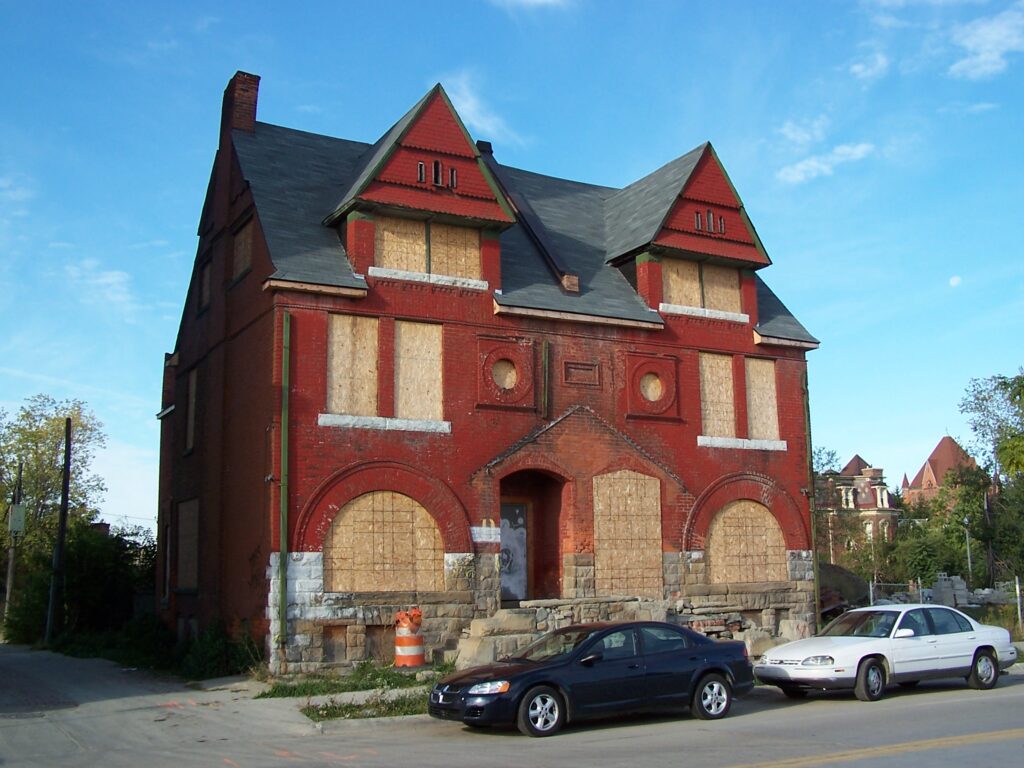
This handsome duplex was perfectly symmetrical. A party wall between the two halves is seen rising above the roof plane.


his Italianate Villa has an entry tower between two intersecting gables. The open round arched windows with missing keystones on the second floor speak to the extreme neglect in this building.


The Ransom Gillis House with Ruskinian Gothic detailing is in the very early stages of being stabilized and rescued. This building would undergo one of the most dramatic and positive reinventions of any building in the neighborhood – proving that no building is ever too far last to be saved with enough time, will, and money.


Looking down the block several of these sturdy brick buildings have been stabilized. One has had a new mansard roof framing and sheathing while waiting to be covered. Keeping water out is crucial to bringing historic buildings back from the threat of demolition.
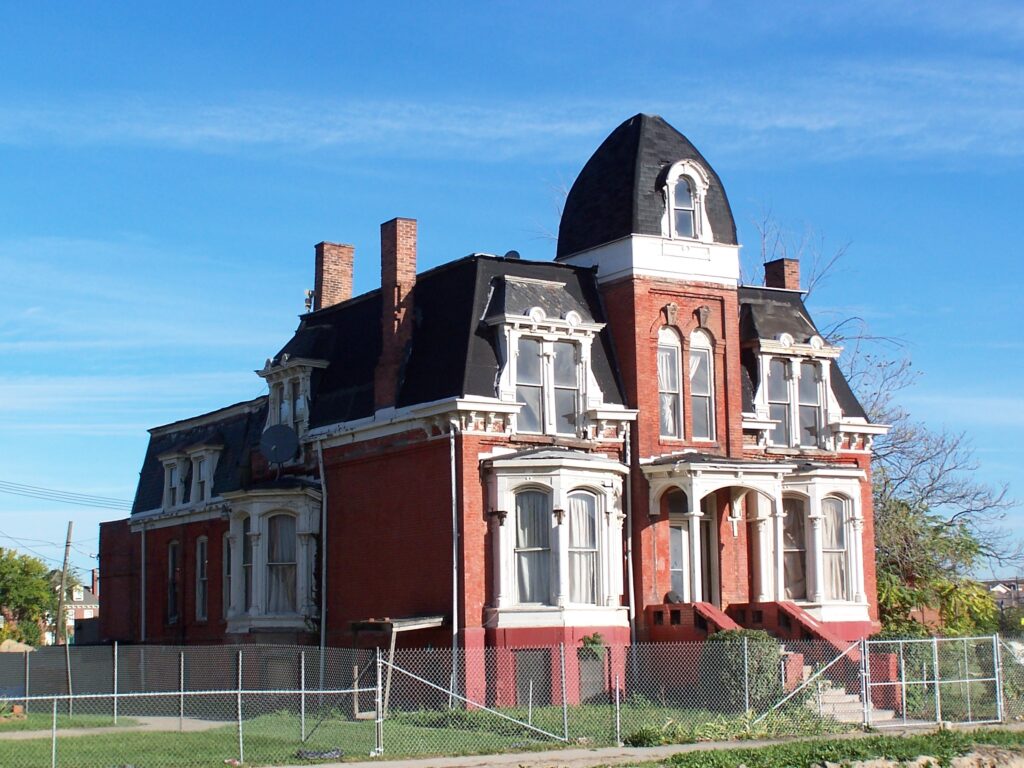
This Second Empire building has a coved roof tower, bay windows flanking either side of the entrance that continue into the foundation level, and distinctive wall dormers that rise to the second floor.


Eastlake inspired brick house with canted corner, large bargeboards and round arched windows on the second floor has much of its character intact. New windows respectful of the historic fabric help to ensure it is protected from the harsh Michigan weather.
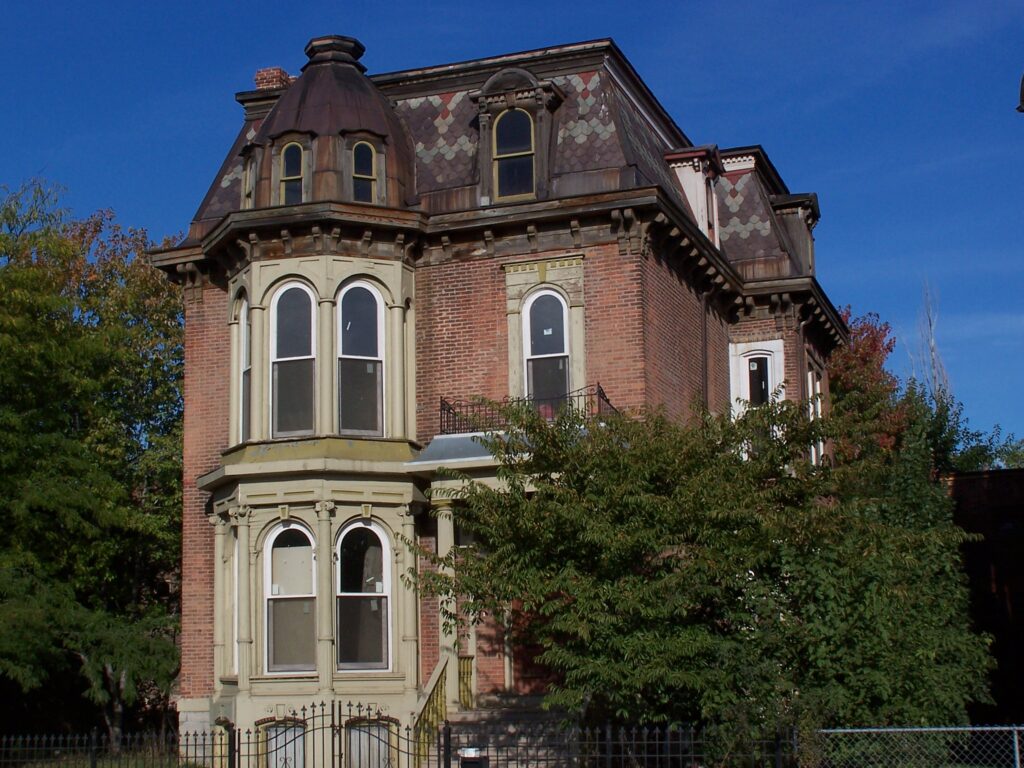
Another Second Empire house has polychromatic slate tiles in the roof, an octagonal tower projecting through the roof line and supported by bay windows below, and a bracketed cornice.
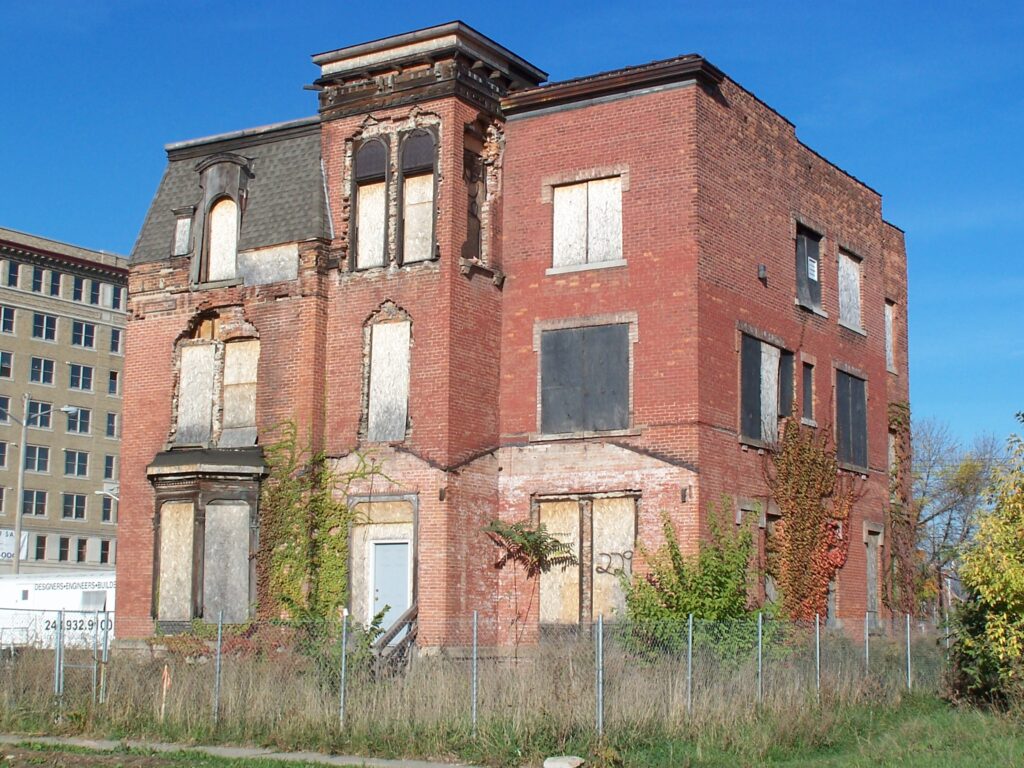
Other buildings are barely holding on such as this brick shell where nearly all of the architectural detailing has been removed, at times compromising the structure keeping the building standing. The ghost lines are visible for the bay windows and roof on the ground floor and over the central tower entrance.
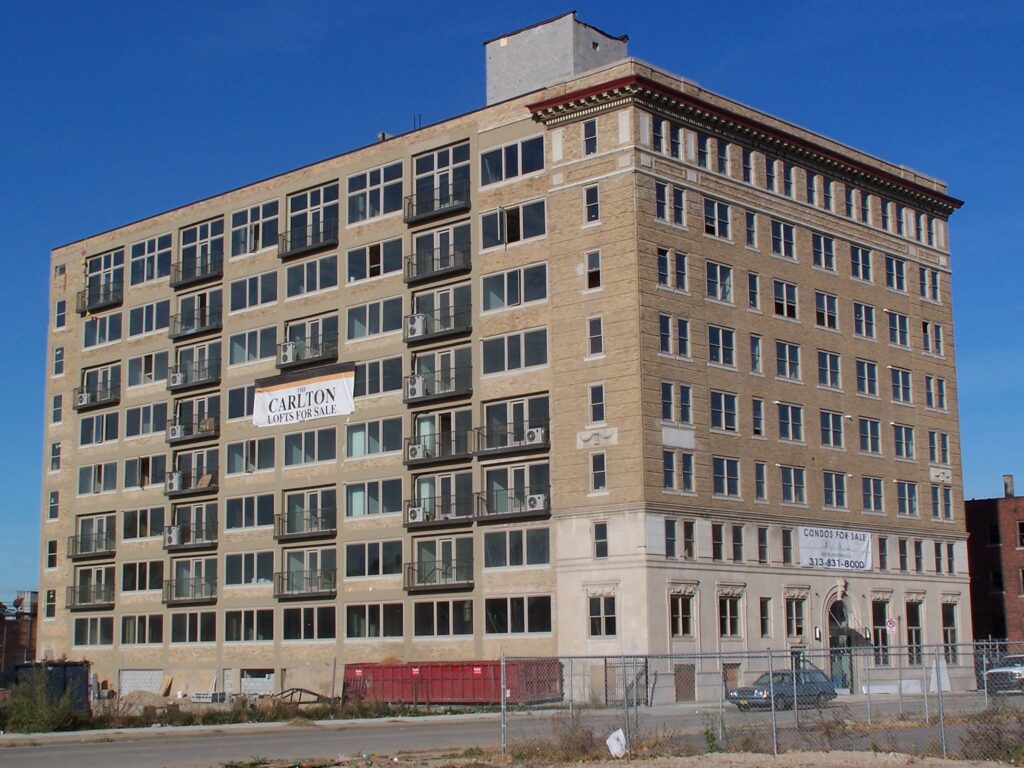
The Carlton lofts are the end product of a successful rehabilitation. These light filled units provide a nice opportunity for people seeking city living and city views.
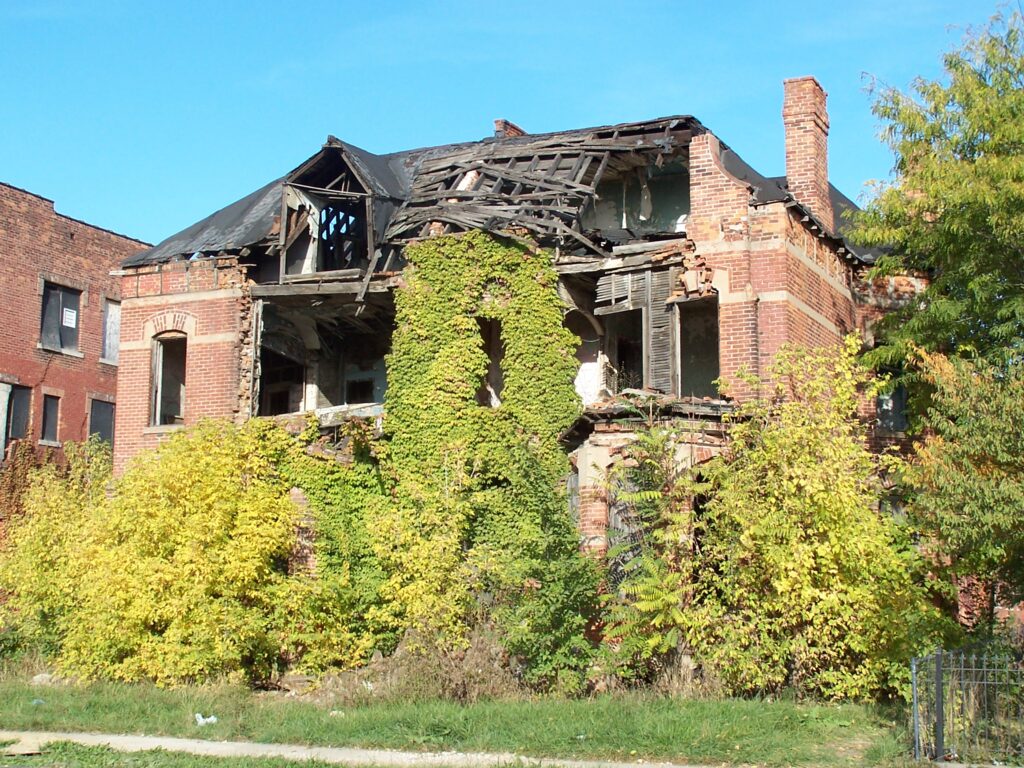
Not too far away the burnt out shell of another building shows how the twin forces of weather and nature are gradually eating away at the remaining historic fabric.