
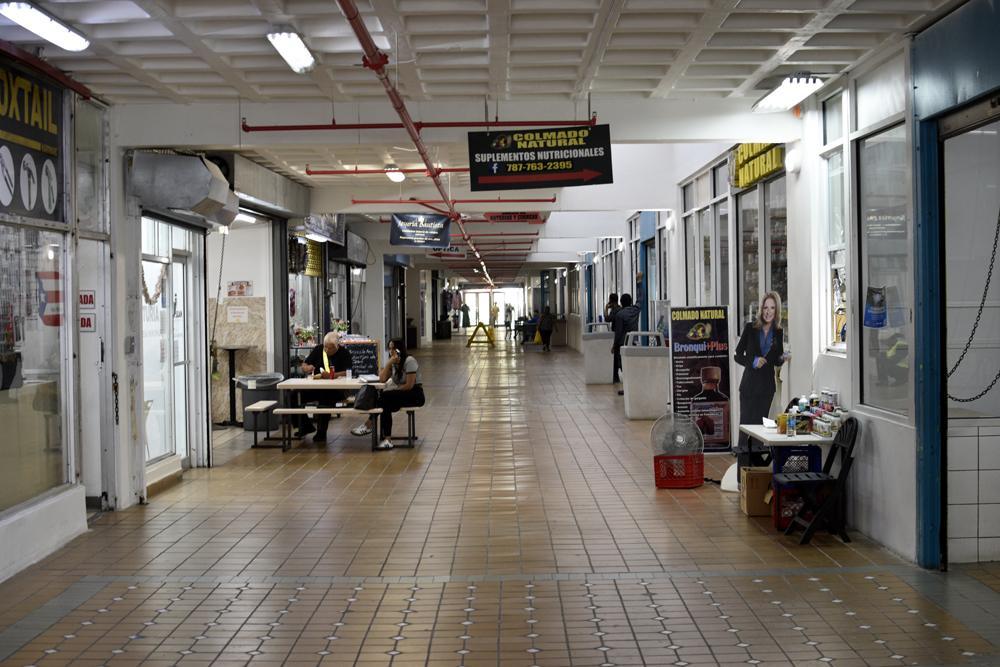
Plaza del Mercado de Río Piedras (Río Piedras Marketplace) is in San Juan, along Paseo de Diego and Calle Arzuaga in the historic center of Río Piedras (San Juan, PR 00925). This is the largest traditional public marketplace in Puerto Rico. On the right is Colmado Natural Health FOOD, a local natural supplement and herbal remedy shop (marked by the hanging overhead sign and promotional display), alongside other small stalls, a jewelry shop (Joyería Bautista), and local eateries. Situated just a block away from the previous Río Piedras street views, the market is a long-standing community hub known for fresh tropical produce, local fondas (cafeterias serving traditional Puerto Rican comfort food), botanicas, and specialty vendors.
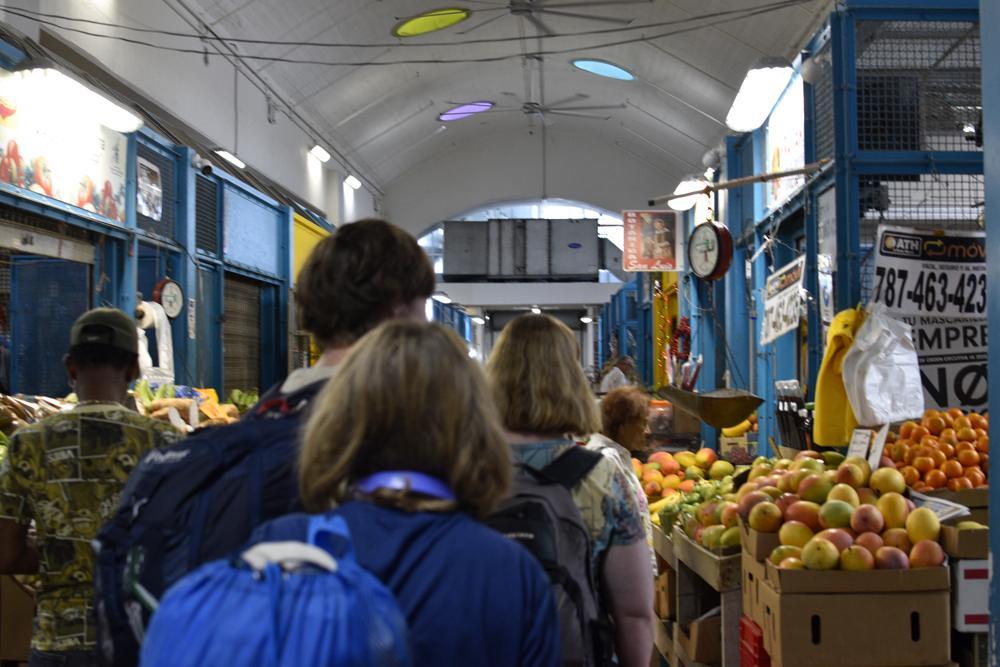
This is the main produce hall inside the Plaza del Mercado de Río Piedras. Located inside the market complex at 1114 Calle Vallejo, this aisle showcases the fresh fruit and vegetable stalls (verdurería). The hall is instantly recognizable by its barrel-vaulted ceiling perforated with colorful, circular skylights (designed during the market’s late-1990s renovation by Davis, Fúster Arquitectos) and rows of blue metal vendor cages. Local placeros (market vendors) display crates of fresh tropical and seasonal goods—including mangoes, citrus, plantains, and root vegetables (viandas)—weighed on traditional hanging scales.
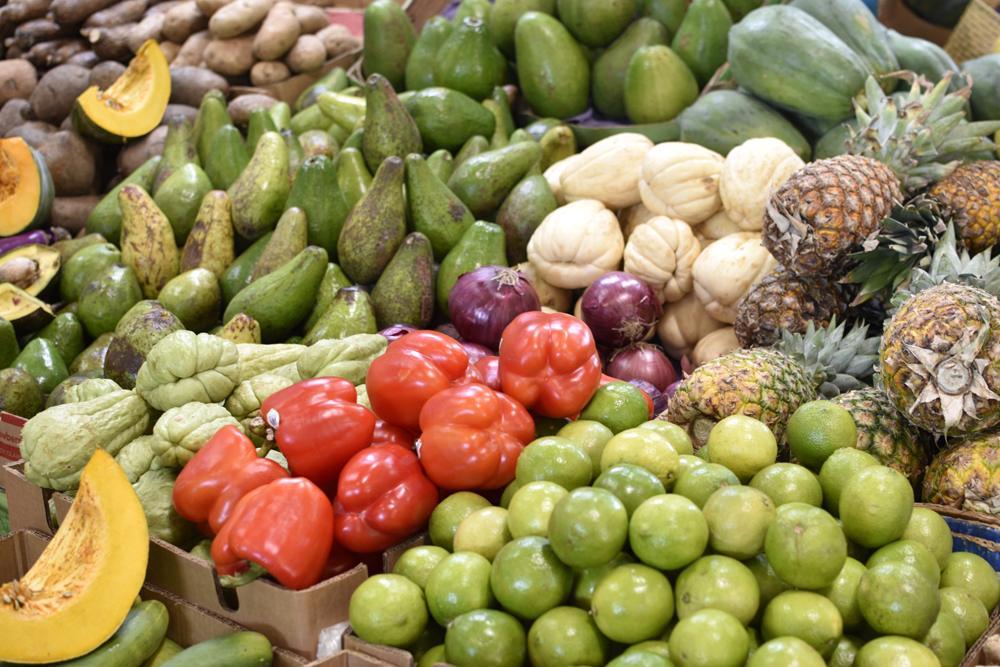
This is a colorful display of fresh tropical produce and staple ingredients (viandas and vegetables) at a vendor stall inside the Plaza del Mercado de Río Piedras in San Juan, Puerto Rico.
- Tropical Fruits: Large, smooth-skinned Caribbean avocados (aguacates del país) fill the center-left, alongside fresh pineapples (piñas), unripe green papayas (lechosa) in the upper right, and a pile of limes (limones verdes) in the lower right.
- Vegetables & Squash:
- Chayote (chayote): Both light-green/white and darker-green varieties are stacked in the middle and upper sections.
- Calabaza (calabaza): Cut wedges of Caribbean pumpkin with bright orange flesh appear on the far left.
- Red Bell Peppers & Red Onions (pimientos rojos and cebollas lilas): Essential aromatics for making traditional Puerto Rican sofrito.
- Root Vegetables (Viandas): Brown starchy tubers—such as yautía (malanga) and ñame (yam)—are piled in the upper-left corner.
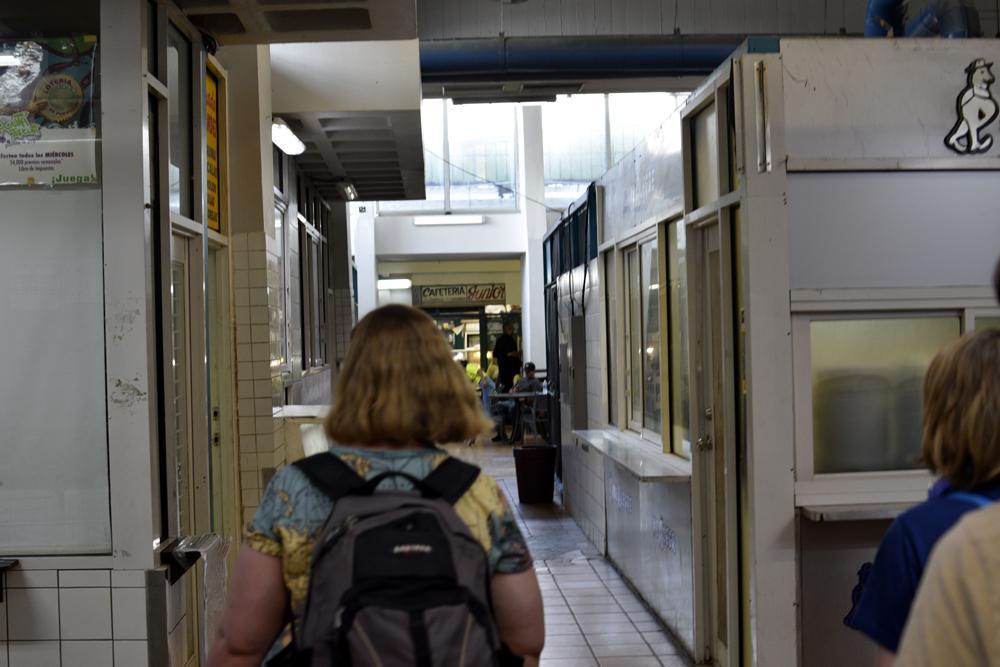
This is the food court and butcher/deli corridor inside the Plaza del Mercado de Río Piedras. Walking down the interior aisle lined with tiled stalls—historically housing butcher shops (carnicerías), fishmongers, and lottery booths—leading directly into the market’s central dining atrium (área de fondas). Straight ahead at the end of the corridor is Cafetería Junior, one of the market’s traditional sit-down lunch counters serving classic Puerto Rican home cooking (comida criolla), coffee, and sandwiches.

This is the “El Platanal” skylight canopy above the central dining courtyard inside the Plaza del Mercado de Río Piedras. Looking directly upward from the central atrium and dining area (área de fondas), just beyond the corridor shown in the previous photo. Titled “El Platanal” (The Plantain Grove), this translucent, multi-toned green and yellow skylight installation was created by Puerto Rican artist and architect Imel Sierra (in collaboration with Zaitay Gil) around 2000–2001 as part of San Juan’s public art program during the market’s major renovation by Davis, Fúster Arquitectos. The angled steel trusses and gridded translucent panels filter the bright Caribbean sunlight into soft shades of yellow and green, evoking the canopy of plantain leaves while naturally illuminating the bustling seating area below
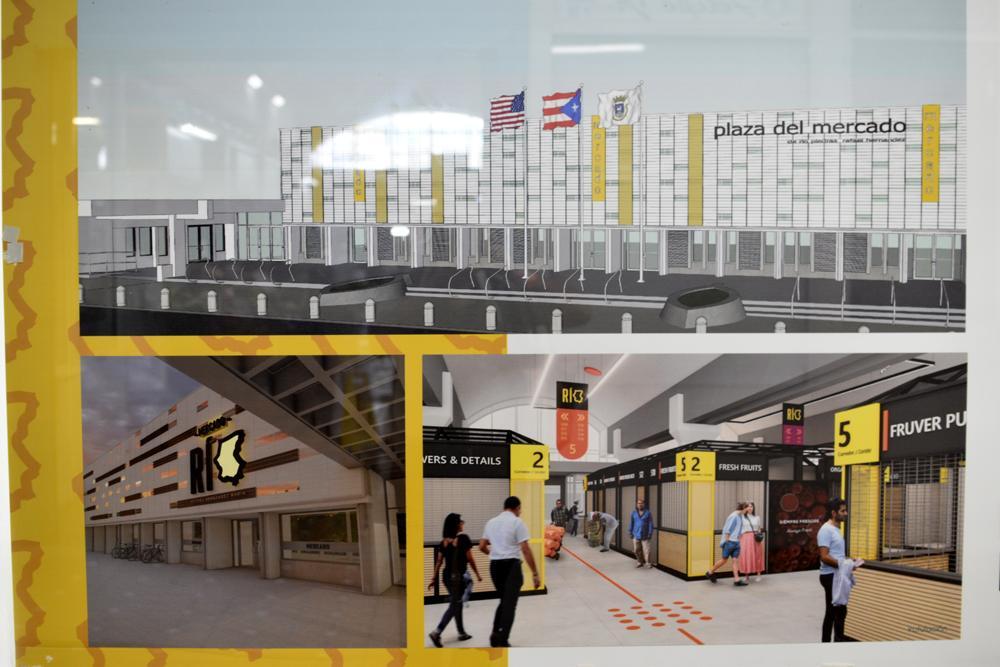
These are the architectural renderings for the $6.9 million renovation of the Plaza del Mercado de Río Piedras (Rafael Hernández Marín), displayed on-site inside the market. Unveiled by the Municipality of San Juan, this revitalization project—rebranded under the identity “Mercado Río”—aims to modernize the historic marketplace with upgraded infrastructure, safety and accessibility enhancements, and refreshed retail spaces. The renderings illustrate a contemporary louvered exterior facade accented with yellow vertical panels, modern “Mercado Río” signage featuring a silhouette of Puerto Rico, and an updated street-level pedestrian plaza with planters and seating. Shows a redesigned version of the barrel-vaulted produce aisle from your earlier photo—retaining the arched ceiling and circular skylights while replacing the older blue vendor cages with sleek black-and-yellow numbered stalls, updated wayfinding signage, and patterned floor markings.
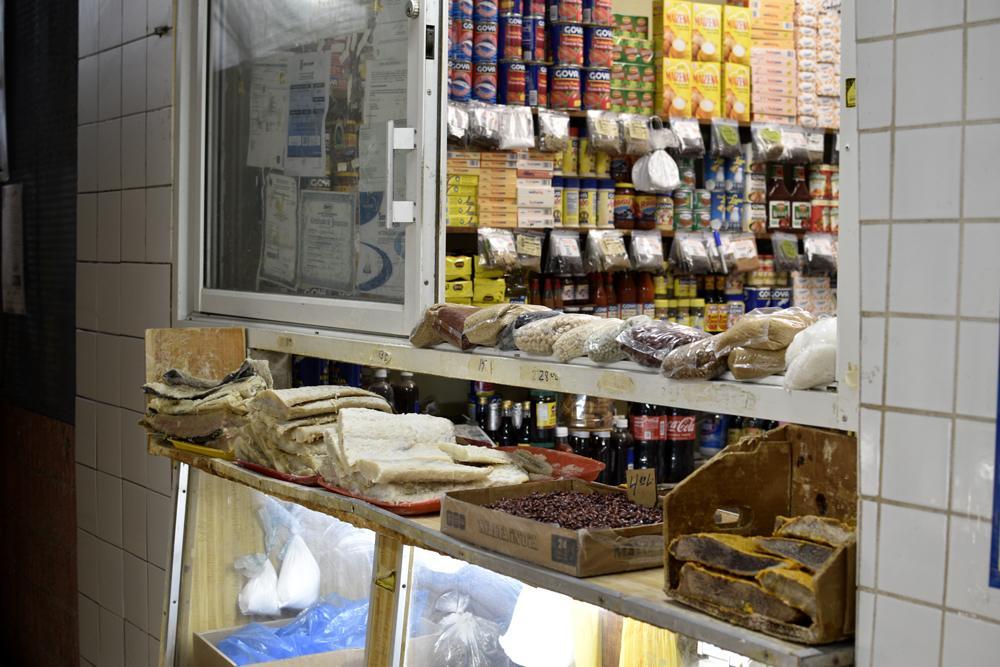
A traditional dry goods and provisions stall (colmado / provisiones) features staples and goods.
- Salted Codfish (Bacalao): Stacked in thick, salt-cured fillets on red trays along the left counter—a foundational ingredient in Puerto Rican dishes like bacalaítos (codfish fritters) and serenata de bacalao.
- Dried Beans & Grains: Bulk dried red kidney beans (habichuelas coloradas) displayed in a cardboard tray on the counter, alongside pre-bagged legumes, rice, and grains lined up on the window ledge.
- Cured / Seasoned Provisions: Thick slabs of seasoned cured fish or meat packed in a cardboard box on the far right.
- Puerto Rican Pantry Essentials: The interior shelves are stocked with local household staples, including Goya canned goods, yellow boxes of Maizena (cornstarch, used for making majarete or crema de maicena), canned Vienna sausages (salchichas Carmela), spices, and bottled hot sauces.
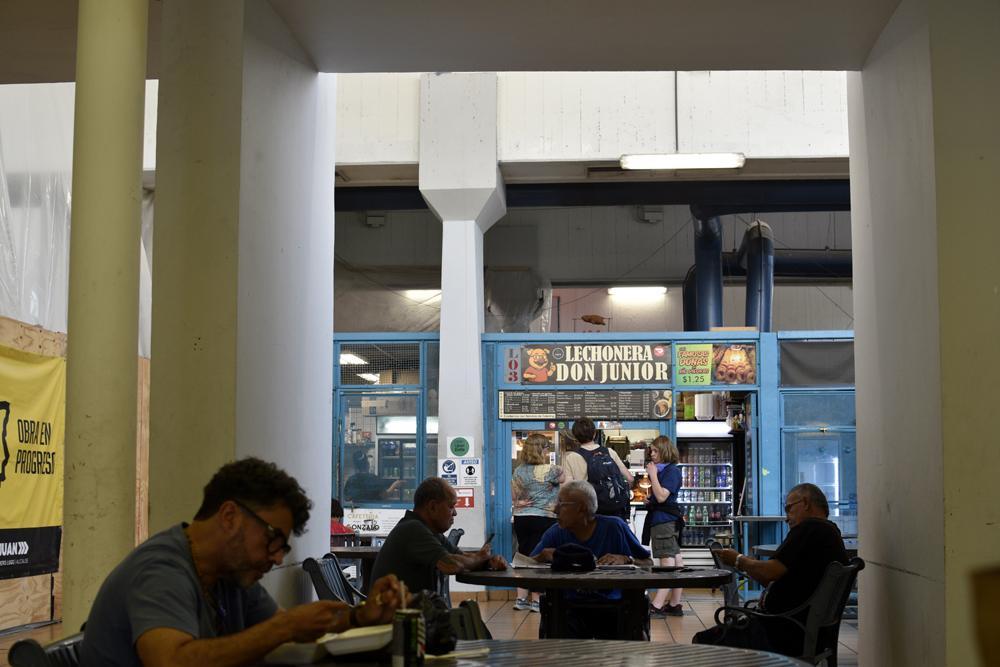
Lechonera Don Junior (Local 103) in the central dining courtyard (área de fondas) of the Plaza del Mercado de Río Piedras Situated directly beneath the “El Platanal” skylight atrium, looking across the communal seating tables toward the blue metal counter stalls. Lechonera Don Junior is a classic market fonda specializing in traditional Puerto Rican roast pork (lechón asado), arroz con gandules (rice with pigeon peas), pasteles, morcilla (blood sausage), and fresh donuts (famosas donas).
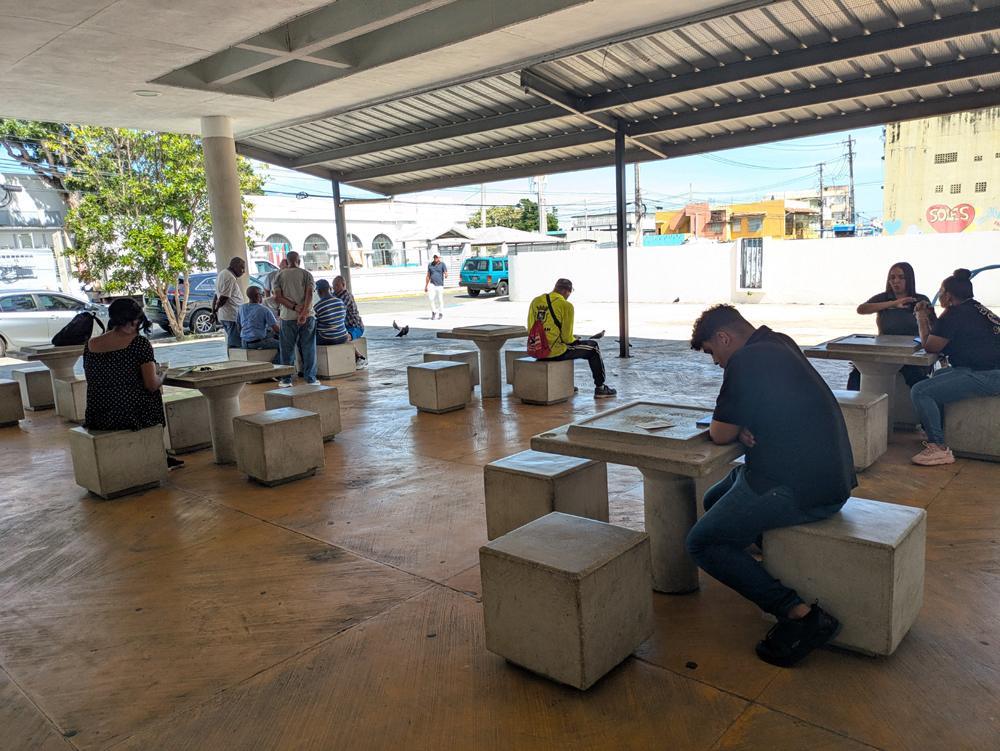
The outdoor domino pavilion is on the exterior grounds of the Plaza del Mercado de Río Piedras Located under the covered portico along the perimeter of the market complex (near Calle Vallejo and Calle Arzuaga), looking out toward the adjacent parking area and neighboring Río Piedras storefronts. The pavilion is outfitted with permanent cast-concrete domino tables and cube stools—complete with raised edges to keep tiles from sliding off and built-in cup holders—where local regulars gather daily to play. Dominoes is one of Puerto Rico’s most popular social pastimes, and public market pavilions and town plazas across the island serve as traditional neighborhood gathering hubs for lively four-player matches.