
Wyandotte’s Historic Marx Theatre
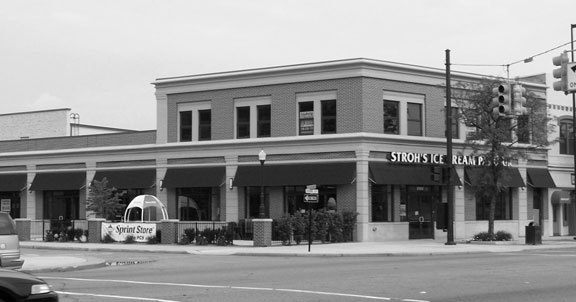
We started our series last week with the Eureka Iron & Steel Works headquarters. This week we travel two blocks south on Biddle Ave. and cross the street to see the historic Marx Theatre at the north-west corner of Biddle Ave. and Sycamore St. Except when all you see is the Stroh’s Ice Cream Parlor, don’t be surprised, because a theater has not been on this corner for over 75 years.
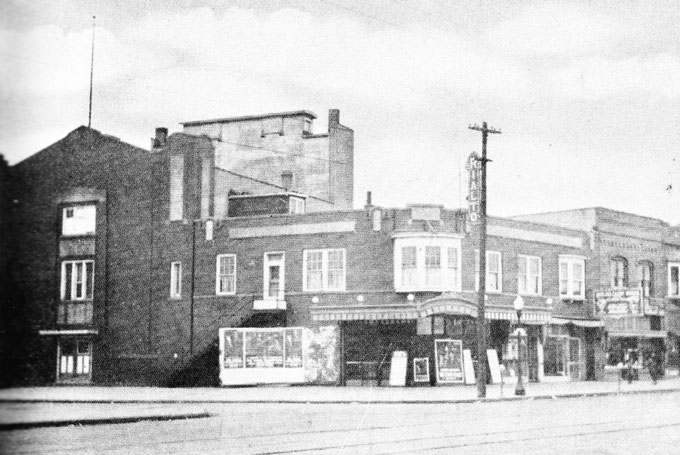
The Marx Theatre was first built on this site in 1896. The theater had removable seats allowing for dancing parties, commencements, and local musical spectacles to occur.
The auditorium measured 36 X 50 feet, accommodating 350 people on the first floor and 250 above. The house had a steel ceiling painted a light blue, with surrounding bands of brown and darker blue. Walls were decorated in terra cotta, with relief’s in the shape of empire wreaths and gilded. When complete, this was one of the most spectacular buildings in Wyandotte.
This theater was destroyed by an equally spectacular fire in June 1908 that threw sparks so far into the air that owners of houses several blocks away had to climb on their roofs and put out small fires the sparks had caused to prevent their houses from burning down too.
A second theater, also named the Marx Theatre, was built on this site and opened in 1910. A decade later the name was changed to the Rialto and in 1931 the block was razed to make way for a new Kresge Dime Store.
Over the past several decades there has been a surge of interest in historic theaters, with restoration of historic theaters helping to create action and vitality in historic downtowns in which they are located.
If Wyandotte had the Marx Theatre today, then this too would undoubtedly be a major attraction and anchor for our community. Instead, the demolition of this building in 1931 to make way for a retail store, took away one of Wyandotte’s precious resources.
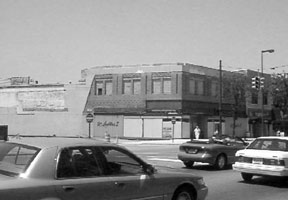
And time did not treat the building that replaced the Marx Theatre very well. The Kresge Dime Store, a rough equivalent to drug stores that we have today, was replaced by McLaughlin’s and underwent a modernization that disfigured the building with a band rising from the sidewalk on the south side and along the roof line and another band created by enameled panels placed between the first and second floors.
A local developer, Johno Norian, entered the picture and helped to transform this battered retail store into the showpiece that it is today.
Unlike the Eureka Iron & Steel Work’s Headquarters that had significant associations with Wyandotte’s history, people, and early businesses and organizations, the 1931 Kresge Dime Store was a simple retail building that replaced a much more historic theater that had previously been located on the site.
Had Mr. Norian attempted to restore the retail building to look like it appeared in 1931, he might have been eligible for state and federal tax credits to support rehabilitation of historic buildings.
Instead, he hired an architect that provided a face-lift for the building by applying a new brick façade, pilasters between the first and second floors, and a cornice between these floors and just below the roof line – not unlike what was done to the Eureka Iron & Steel Works headquarters 50 years ago.
Whether this treatment was appropriate aesthetically or financially is unclear. What is clear is that this is just the latest installment for this visible corner in Wyandotte, that has had two theaters and a few retail stores. It will be interesting to see 50 and 100 years from now how this newest addition fares, and how well it will survive the test of time.
Next week we travel north on Biddle to visit Wyandotte’s historic Arlington Hotel.
As published in the Downriver Review.