
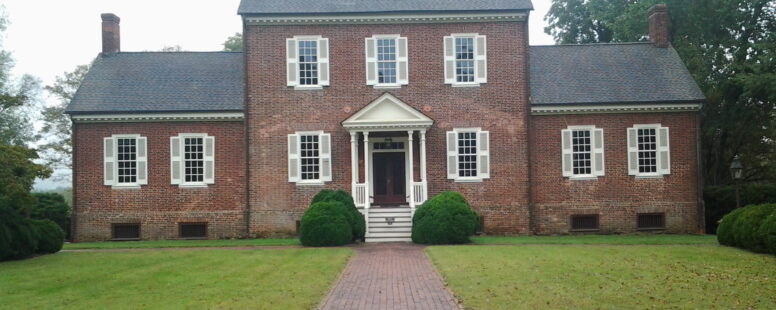
Visit to Hillsborough, North Carolina

Early in our visit we encountered a plaque for the Boone Trail Highway and also “The Trading Path” from 1700. The Old State House was started on an expedition of frontiersmen under Col. Richard Henderson for Kentucky, led by Daniel Boone on March 17, 1775. Buried nearby in Hillsborough are a signer of the declaration of independence, two governors, and two chief justices. The plaque claiming all of this was made from the U.S.S. Maine, linking to another period of American history.

William Alexander Graham was speaker of the House of Commons, U.S. Senator, Governor of North Carolina, Secretary of the United States Navy, a member of the State Convention of 1861, Senator of the Confederate States of America, and arbitrator of the Maryland and Virginia line. His grave was marked by a handsome obelisk.
Francis Nash had has house in Hillsborough. He was a Patriot general in the American Revolution. He was mortally wounded at Germantown in 1777.
Thomas Burke, while Governor of North Carolina, was captured in Hillsboro by David Fanning and his Tories, on September 12, 1781. He was taken to Charleston, South Carolina. Edmund Fanning who was born in New York and graduated from Yale, had his house in Hillsboro destroyed by “Regulators” in 1770. Later he went on to be a Loyalist, British General, and Governor.
The Regulators were defeated at Alamance on May 18, 1771, one of their members were hanged near Hillsboro on June 19, 1771.

Hillsboro boasts an attractive Orange County Farmers’ Market Pavilion. The day we arrived it was lightly raining. The pavilion height was sufficient to allow pop-up tents to be sled in underneath.


The Colonial Inn is one of the most recognizable historical structures in Hillsborough. From 1938 to 2001, it was known for its great food, historic atmospher, southern hospitality, and the legends which surrounded it. The Colonial Inn had many names and owners. After the Stoud family went bankrupt in 1868, it was possible that the Strayhorns ran the hotel for Brown and Latimer.
- list">
- Spencer’s Tavern or Orange Hotel (built in 1838)
- Strayhorn Hotel (c. 1870)
- Occaneechee Hotel (1888-1908)
- Corbinton Inn (1908-1946)
By 2012 it had fallen into disrepair but hopes continued for its preservation and reopening.

Ayr Mount is a Federal-era plantation house built in 1815 in Hillsborough, North Carolina by William Kirkland. Kirkland, named the house in honor of his birthplace, Ayr, Scotland. The house is in the Classical American Homes Preservation Trust collection. Inside is elaborate Federal period woodwork and plasterwork found throughout the house. Ayr Mount also was the first major residence built of brick in this area of predominantly colonial era wood-frame/" class="glossaryLink" data-cmtooltip="d2b6b5fd560bece918ec81cb845229ee" target="_blank" >wood frame houses. At the time of its construction at the end of the War of 1812, Ayr Mount was considered one of the finest residential structures in Piedmont North Carolina.
 3 in full-screen"/>

Poet’s Walk is a mile long trail that exposes the cultural heritage and natural beauty of the Eno River Valely. Along the way are meadows, woodlands, rest stops, and occasional glimpses of Ayr Mount. The walk will link with the Mountains to Sea trail along the Eno River.
The Trading Path view along the Poet’s Walk connected with an earlier period of history.


Occoneechee Speedway was one of the first two NASCAR tracks to open. It closed in 1968 and is the only dirt track remaining from the inaugural 1949 season. It is located just outside the town of Hillsborough, North Carolina.
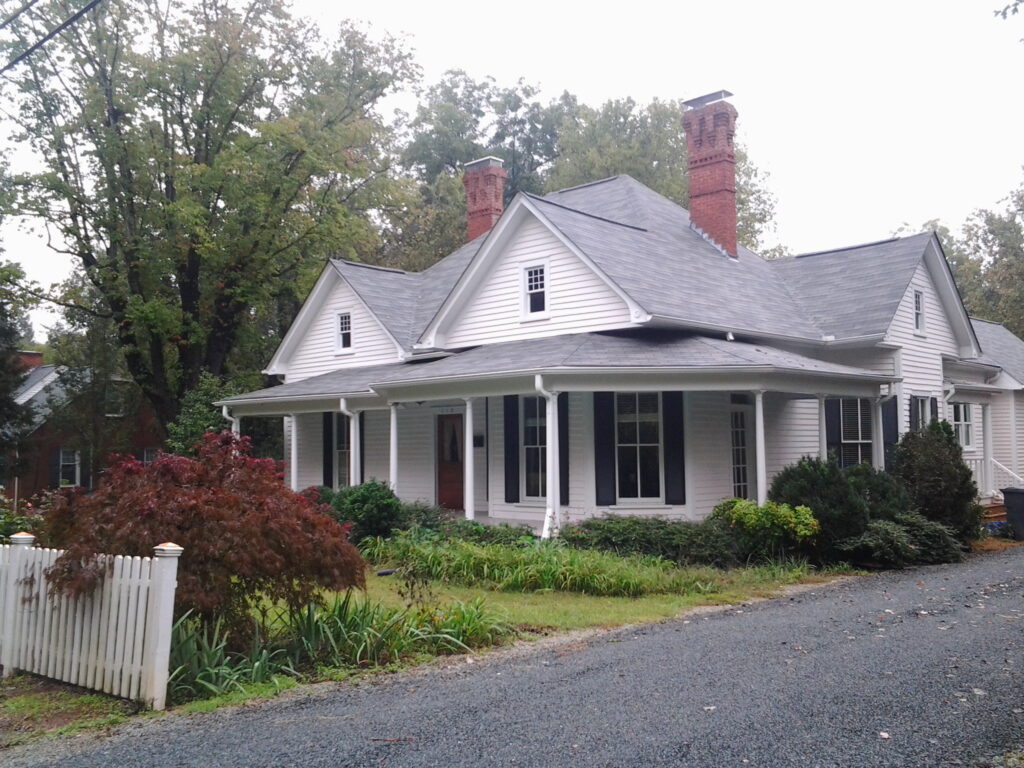
This handsome hipped-roof/" class="glossaryLink" data-cmtooltip="08b149cc56b8ed7b7d56c9c3b136bc36" target="_blank" >hipped roof bungalow has double front gables and a side gable.

A visit to North Carolina would not be complete without seeing a tobacco warehouse.