

Pontifical Shrine of the Blessed Virgin of the Rosary of Pompeii – Pompeii, Italy

As we approached the Pontifical Shrine of the Blessed Virgin of the Rosary of Pompei, the bell tower drew our eye to the shrine. This is a major Catholic place of worship and one of the most important shrines in the world. The shrine was co-founded by Bartolo Longo and his wife, Countess Mariana di Fusco, and construction began in 1876. It was elevated to a major papal basilica in 1901 by Pope Leo XIII.

Three altars radiate off of the transept – the product of a renovation to the original building.

A small dome rises above the transept.

In one of the side chapels is a painting that depicts the moment Saint Francis of Assisi receives the stigmata—the wounds of the crucified Christ—during a period of prayer on Mount La Verna in 1224. This subject was a popular one for artists, and the image shown is attributed to the painter Ponziano Loverini.
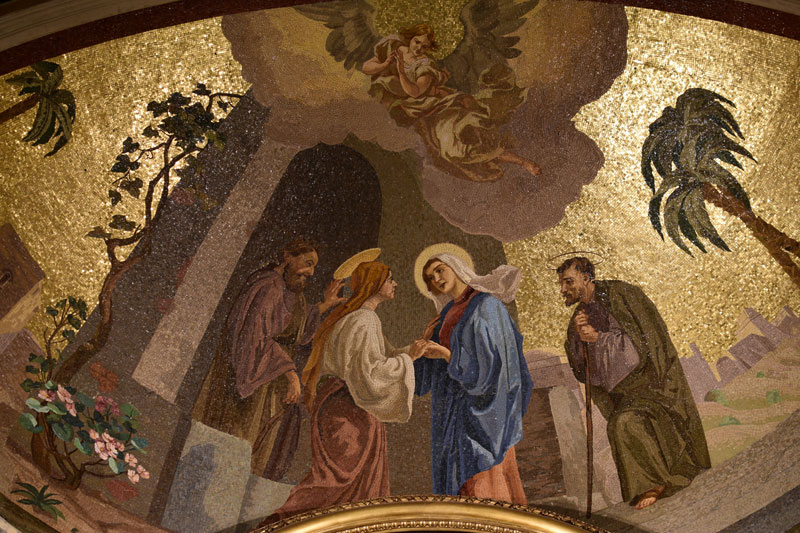
The mosaic is part of the extensive artwork that adorns the interior of the shrine, which is a major Marian pilgrimage site in Italy. The specific scene in the mosaic is the Visitation, where the Virgin Mary (in blue) visits her cousin Elizabeth (in white), as described in the Gospel of Luke. Saint Joseph is depicted on the right.
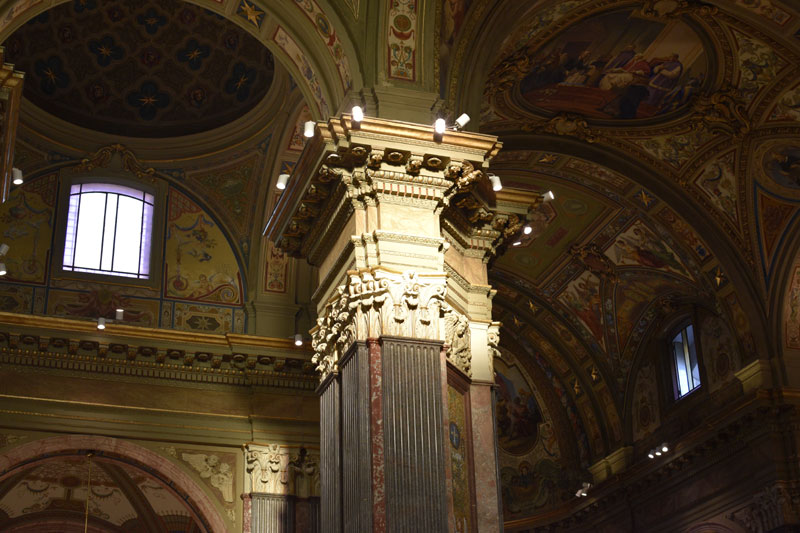
The interior features rich decoration, including polychrome marble, frescoes, and mosaics. The architecture is primarily in the Neoclassical style. The image shows one of the large columns with an ornate capital, a vaulted ceiling with decorative frescoes and coffers, and large arched openings into other parts of the church, consistent with descriptions of the basilica’s interior.

This painting, “Saint Joseph’s Death in a Solemn Tone,” is by the Italian painter Ponziano Loverini. It is located in the Chapel of Saint Joseph within the Pontifical Shrine of the Blessed Virgin of the Rosary of Pompeii. This painting is in one of the side chapels of the large basilica.

This image displays a section of the ornate, frescoed dome interior of the Pontifical Shrine of the Blessed Virgin of the Rosary of Pompei. The central artwork in the image is a mosaic depicting the Presentation of Jesus in the Temple, with other surrounding murals showing different religious scenes.

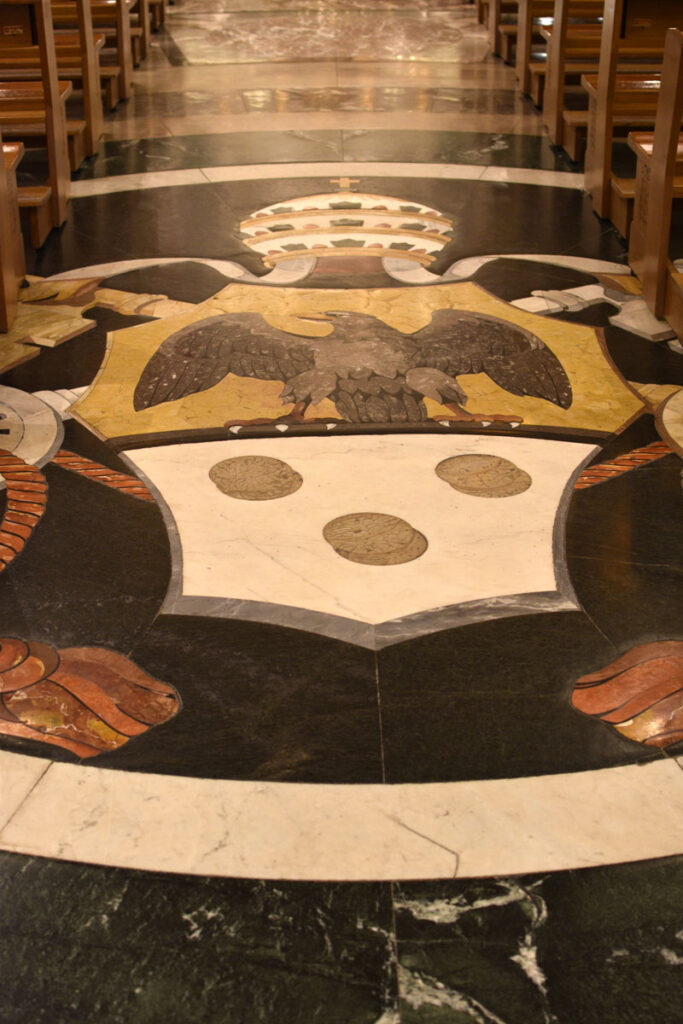
The marble floor inlay in the Pontifical Shrine of the Blessed Virgin of the Rosary of Pompeii features a coat of arms displaying a crowned, black, double-headed eagle holding a scepter and orb, with an escutcheon on its breast containing three circles (bezants or plates). The emblem is associated with a noble Italian family, likely the Rizzo or Riccio family of Naples, and not the official seal of the Shrine itself. The coat of arms for the Holy See or the specific papal arms (Pope Leo XIII, who elevated the shrine to a basilica) are different and primarily seen on the facade of the building or specific vestments.

The focal point is the painting of “Our Lady of the Rosary,” which is displayed above the high altar and surrounded by roundels representing the mysteries of the Rosary. It attracts millions of visitors annually and is known for the numerous miracles attributed to the venerated painting of the Madonna and Child handing rosaries to Saint Dominic and Saint Catherine of Siena, which is located on the high altar.

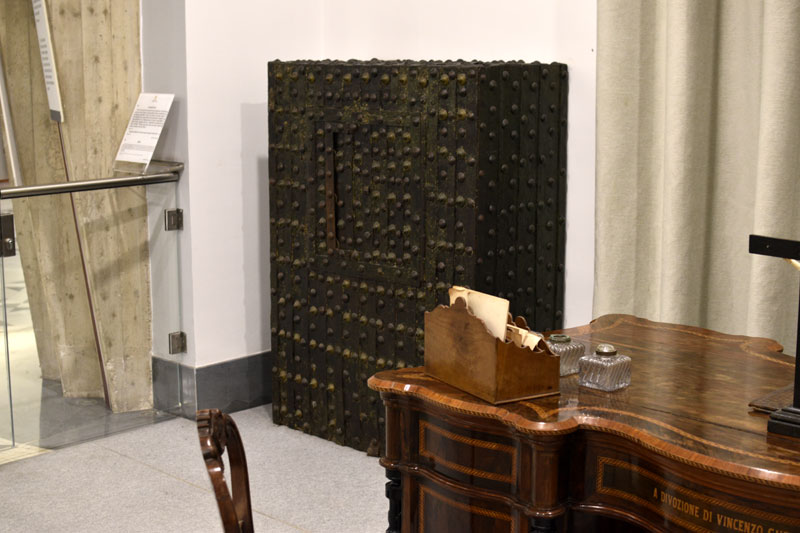
The desk and safe are artifacts representing the life of Bartolo Longo, founder of the shrine.


The Shrine holds a commanding view from the Pompeii Archeological Zone with the mountains in the distance.