

Downtown – Kent, Ohio

Hometown Bank Plaza is a scenic community gathering park located at 203 N Water St. This central plaza was constructed and donated as a gift to the people of Kent by Hometown Bank. It was built in 1998 to celebrate and commemorate the financial institution’s 100th anniversary of community banking in the region (the bank was originally incorporated in 1898). The park served as a key anchor in the long-term revitalization of downtown Kent. The large covered pavilion in the center is the Hometown Bank Plaza Stage. It serves as a prime outdoor venue for cultural events throughout the warmer months:
- Free Concert Series: The stage hosts the annual Hometown Bank Summer Concert Series, regular performances by the Kent State University Orchestra, and local Beatles tributes.
- Local Festivals: It functions as a main performance area during major citywide gatherings, such as the Kent Heritage Festival and the popular Kent Blues Fest.
- Corporate Support: The banner hanging from the truss notes sponsorships from local municipal partners and major area employers, including AMETEK.
The park features a beautifully landscaped layout optimized for relaxation. A dense multi-colored bed of petunias and seasonal annuals anchors the entryway path. Scattered wooden picnic tables and matching dark-coated metal benches sit beneath mature shade trees, offering views of the stage.


Hanging flower baskets on lampposts help to give a cheerful and welcoming feeling to the downtown. A brick border along the street, and staggered concrete pavers further enrich the public realm. In something not as common – all of the sponsors who make the planters possible are recognized on a donation sign mounted to a street pole.

The downtown wayfinding is bold, flanked by colored strip panels to either side of the metal frame. Businesses and attractions in the District are grouped by category.
- Dining
- Shopping
- Services
- Trails
- Parks
- Parking
Listings are keyed to a letter and number location on the map grid. They are further organized by street.
The parking section identies three categories:
- Free parking with hourly restrictions
- Permit parking except nights and weekends
- Paid parking PARTAgarage
The directory is easily changeable set within a metal frame that can be adjusted or removed to update the underlying panel.

This vibrant “GROW” mural is located on the side of the Kent Cycle building. The public art piece covers the tan brick side wall of the building. It spells out the word “GROW” in oversized white capital letters, layered over a stylized, geometric backdrop of abstract plant stems, flowers, leaves, and sunbursts in bright shades of yellow, light blue, and teal.

Star of the West Flour Mill grain elevator and silos located at 162 N. Water Street in downtown Kent. Constructed in 1936, this concrete grain elevator stands as one of the tallest structures in Kent. Its connected silos have a capacity to store up to 140,000 bushels of grain. Originally known as the Williams Brothers Mill (founded in 1879), the complex was operated for decades by the Star of the West Milling Co. to produce commercial pastry and cake flour for massive national brands like Pepperidge Farm and Heinz. The milling operations officially ceased at this site around 2016. A major historic fire in December 2022 devastated parts of the adjacent wood and brick mill buildings, but these prominent white concrete silos survived intact and remain a vital centerpiece of downtown redevelopment discussions.

This is the intersection of East Main Street and South DePeyster Street in downtown Kent, Ohio, looking northeast from the public parking lot near the Kent Stage. The tall, multi-story brick building visible in the background is the historic Acorn Corner (formerly the Franklin Hotel, built in 1920) located at 132 E. Main Street. This five-story landmark was beautifully restored by developer Ron Burbick and anchors Kent’s boutique pedestrian district. The colorful post sign on the left marks pedestrian paths leading to Acorn Alley, Heritage Park, the Portage Hike & Bike Trail, and the Cuyahoga River.
May 4 Memorial at Kent State University

In 1968, Richard Nixon won the presidency partly based on a campaign promise to end the Vietnam War. Though the war seemed to be winding down. on April 30, 1970, Nixon announced the invasion of Cambodia, triggering protests across college campuses.
On Friday, May 1, an anti-war rally was held on the Commons at Kent State University. Protestors called for another rally to be held on Monday, May 4. Disturbances in downtown Kent that night caused city officials to ask Governor James Rhodes to send the Ohio National Guard to maintain order. Troops put on alert Saturday afternoon were called to campus Saturday evening after an ROTC building was set on fire. Sunday morning, in a press conference that was also broadcast to the troops on campus, Rhodes vowed to “eradicate the problem” of protests at Kent State.
On May 4, 1970, Kent State students protested on the Commons against the U.S. invasion of Cambodia and
the presence Ohio National Guard called to campus to quell demonstrations of the Guardsmen advanced, driving students past Taylor Hall. A small group of protesters taunted the Guard from the Prentice Hall parking lot. The Guard marched back to the Pagoda.
At 12:24 p.m., Ohio National Guard troops fromCompany A, 145th Infantry, and Troop G, 107th Armored Cavalry, turned in unison to face the Prentice Hall parking lot. For 13 seconds, 28 guardsmen fired 67 shots toward demonstrators, spectators, and passerby. Guardsmen killed Jeffrey Miller, 218 feet away, Allison Krause, 326 feet away, William Schroeder, 350 feet away, and Sandra Scheuer, 396 feet away.

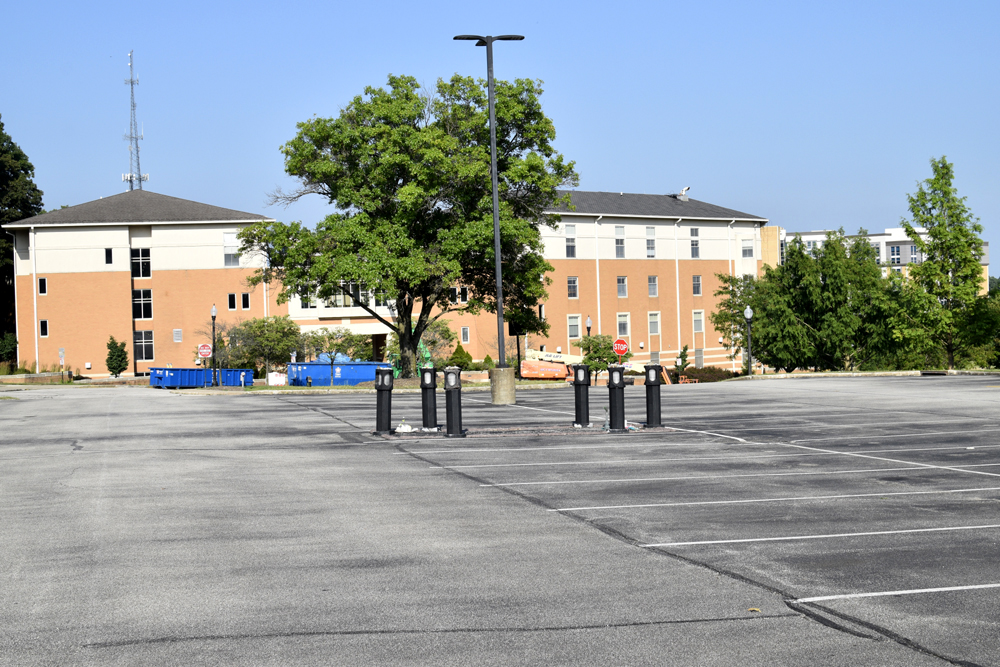
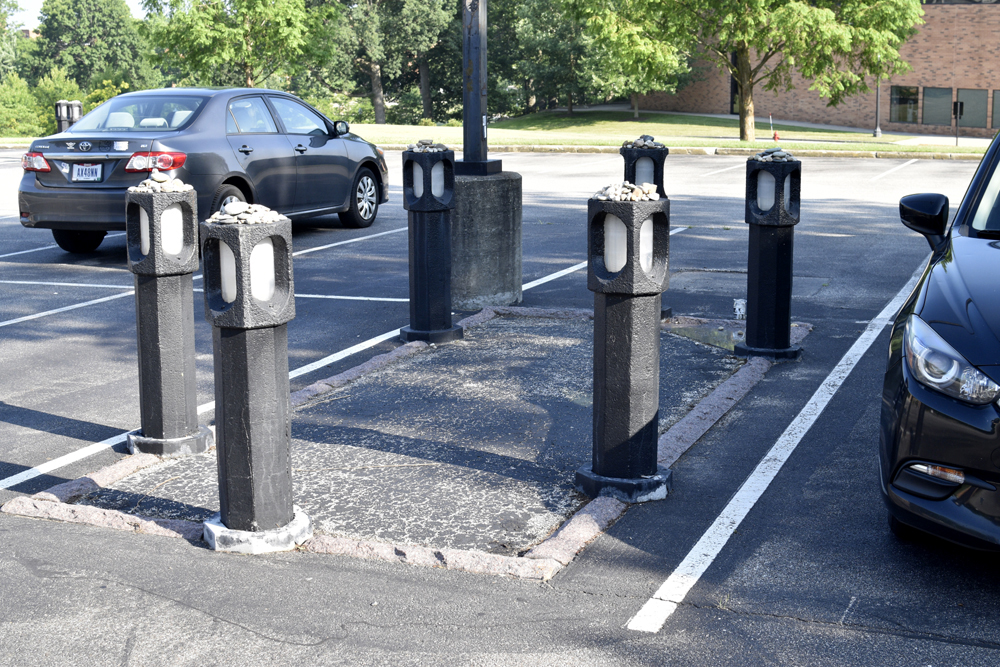

Guardsmen firing from the top of Blanket Hill at the Pagoda wounded Joseph J. Lewis closest at 75 feet away, John R. Cleary, at 105 feet, James Russell, Thomas M. Grace at 163 feet, Alan Canfora at 176 feet, Dean R. Kahler at 250 feet, Douglas Alan Wrentmore at 296 feet, Robert Follis Stamps at 488 feet, and Donald Scott Mackenzie at 603 feet away.
The Report of the President’s Commission on Campus Unrest concluded that the shootings were “unnecessary, unwarranted, and inexcusable.” Twenty years later in May 1990 the Governor of Ohio lamented how “a distant war in the name of democracy had invaded so close to home as to threaten democracy.”
In 2016, the site was named a National Historic Landmark – the highest level of designation available to a historic site in the US. A plaque to commemorate this designation notes how “the deaths of four Kent State students are testament to the importance of democratic dialogue over armed conflict.”


The memorial, white quite understated, has granite set stones with the words inquire, learn, and reflect inscribed upon them.