

Cornell University – Ithaca, New York

We visited campus in May to prepare for a return during the fall term in 2004 and our final year of graduate school. While visiting we made stops at some of our favorite sites including Sage Chapel.
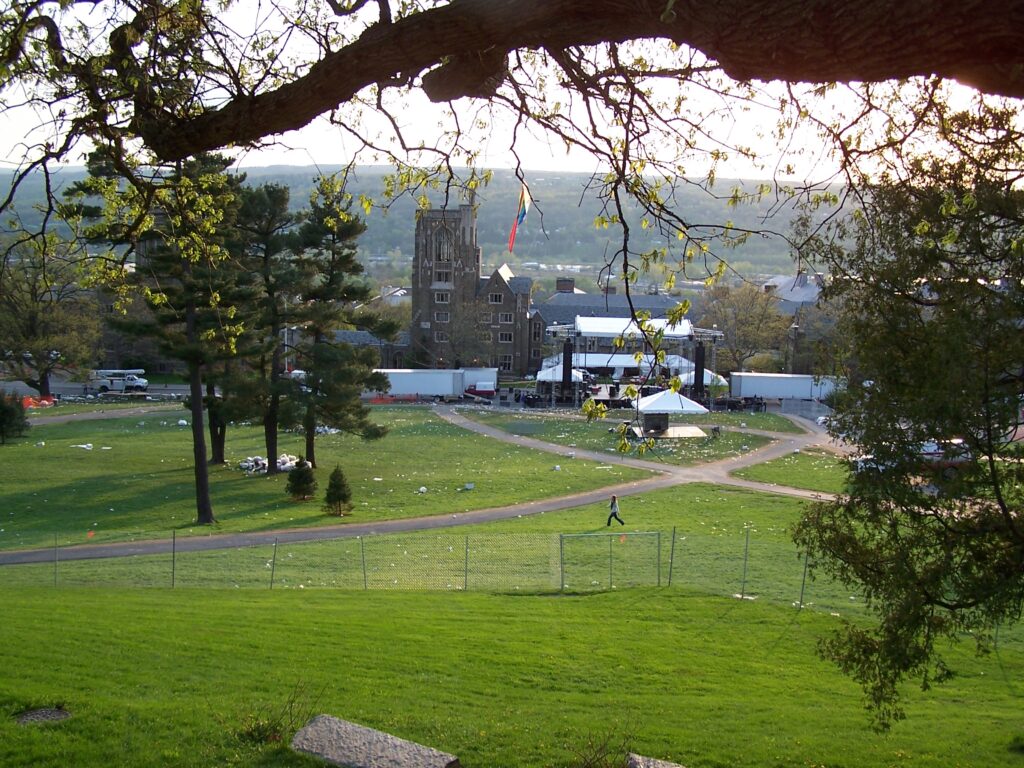
Libe Slope was being cleaned up following the end of the school year concert held here. The stage in the distance, litter, and crowd control fences underscore what a big event this is each year. The following year in 2005 we were on hand for Snoop Dogg.
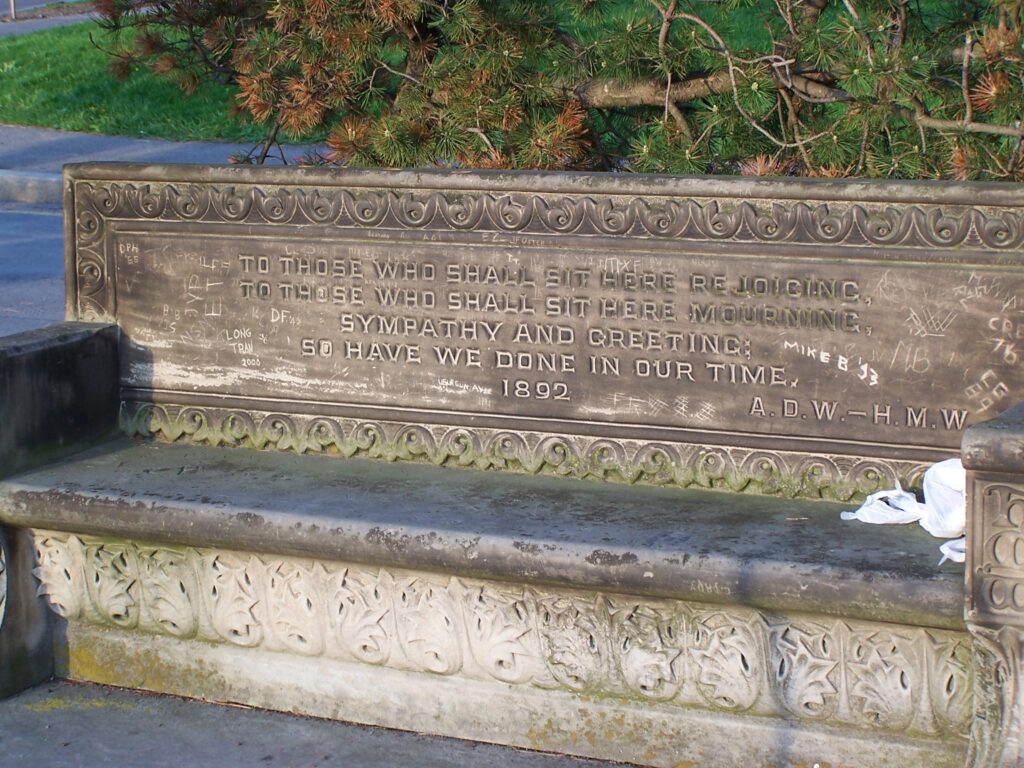
One of our favorite benches overlooking Libe Slope has the inscription from first university president A.D. White in 1892.
To those who shall sit here rejoicing, To those who sit her mourning, sympathy and greeting; So have we done in our time.

This view of the back of the Ezra Cornell statue captured some unfortunate graffiti with the question “Do you think the trees are beautiful?”
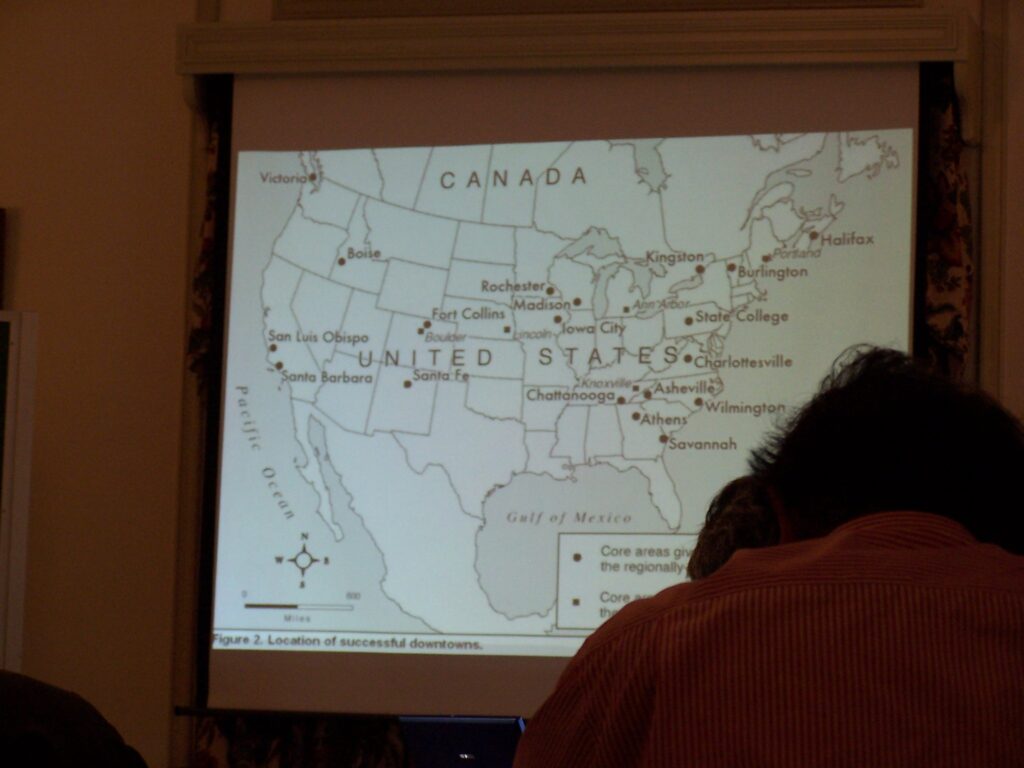
We sat in for part of a symposium on Second Cities. It was very interesting to see and hear successful downtowns highlighted. We were familiar with several already including Ann Arbor near where I grew up. Others I would only have a chance to visit years later including Chattanooga, Asheville, Savannah, Burlington, Portland, and Santa Barbara.

The exedra on campus, especially at night, had an ethereal quality with the white marble and the black darkness in the distance.
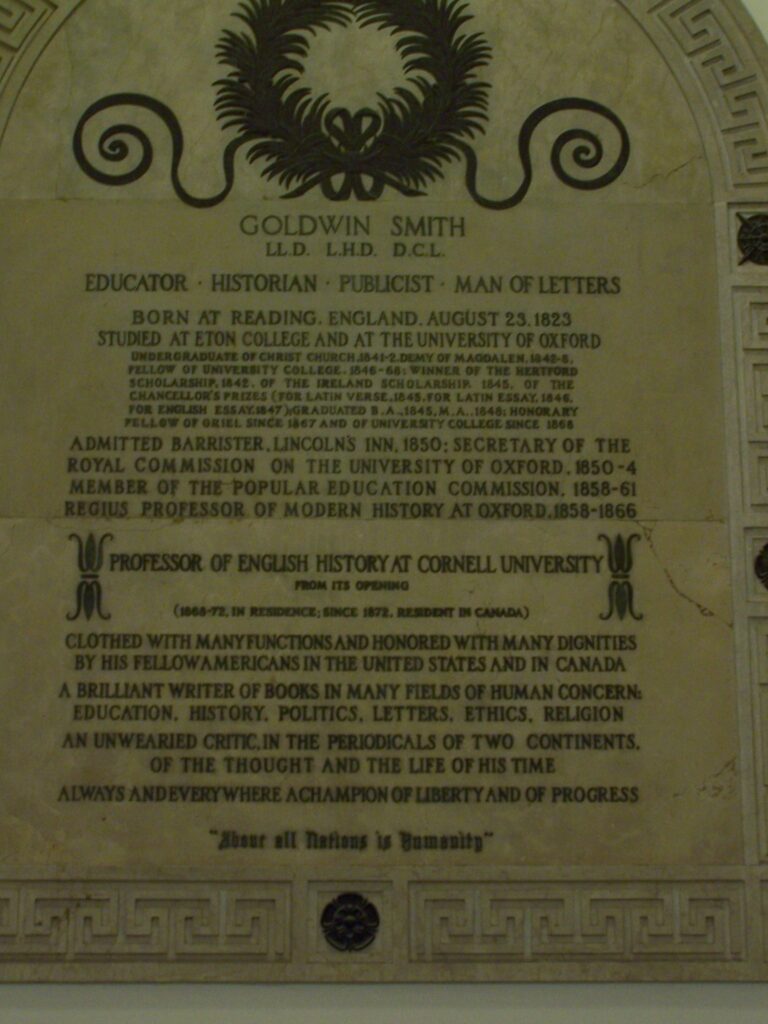
Goldwin Smith was a respected professior of English History at Cornell University from the time of the university’s founding. Few professors receive such a tribute as this.

The one-time entry gate for the university is now off a side street on College Ave and the street is identified as a “Dead End” as there is no vehicular outlet for any car passing through the gate. The inscription carved on a granite stone is quite moving:
So Enter
That Though Mayest Become
More Learned and Thoughtful
So Depart
That Daily Thou Mayest Become
More Useful to Thy Country And to Mankind

College Town is set on steep slopes to one side of the gorge separating the town from the university. Increasingly the university has become involved in acquiring properties in College Town. There is also a small dining and service cluster of businesses here.
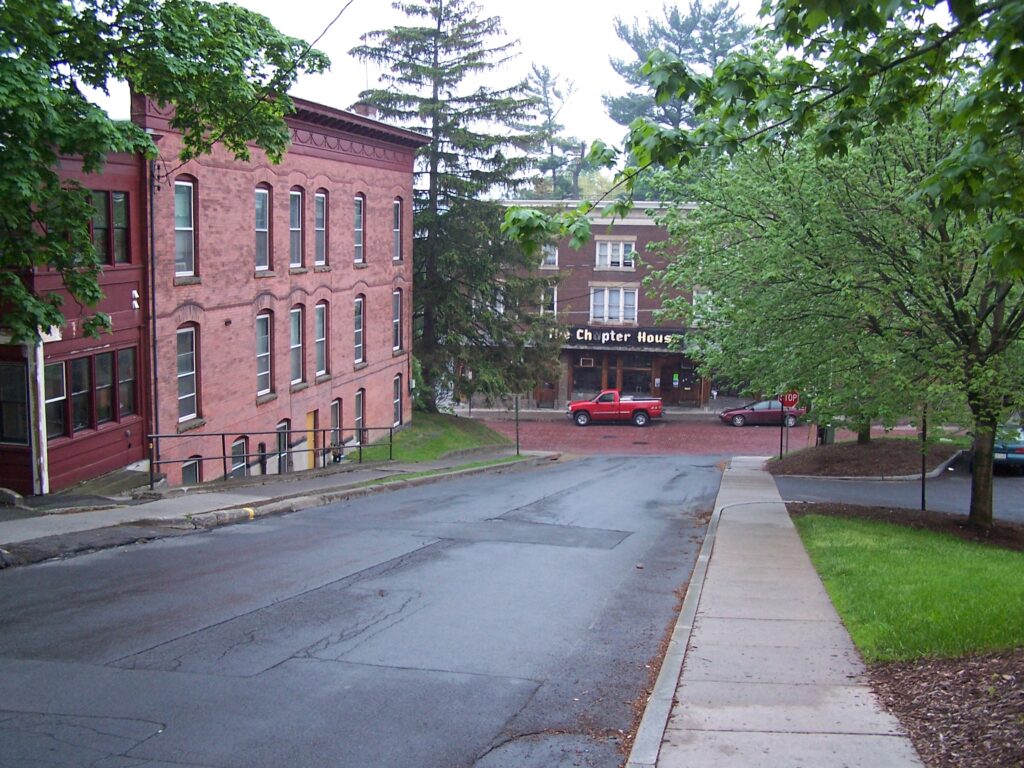
One of the favorite spots for students in my program was at The Chapter House. Once a week or more frequently groups would gather here in the evening. Regrettably a fire led to the closing of this Ithaca institution.

The residential buildings on campus took the character of Collegiate Gothic architecture on other great college campuses. Where Cornell differed is that this architecture was concentrated in just a few areas instead of being pervasive across campus. Still it makes for picturesque spots to enjoy.
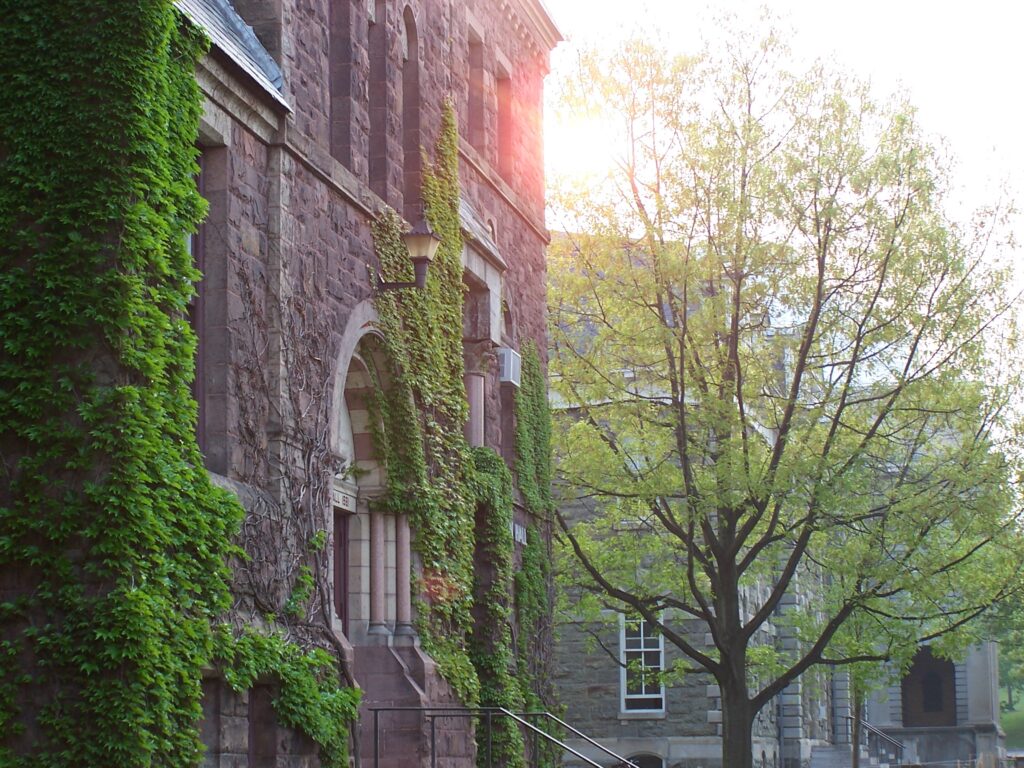
Rand Hall was built in memory of Jasper Raymond Rand, Addison Crittenden Rand and Jasper Raymond Rand, Jr., a member of the class of 1897. In the distance is Sibley Hall. Together Rand and Sibley are home to most of the College of Architecture, Art, and Planning.

In the gorge across the street and behind Sibley Hall, we came across this curious sign with the word “care” written on it. What this means in this particular context is unclear. Just beyond the sign was a steep slope that precipitously dropped off towards the cliff and water in the gorge.
Return Visit in August 2004

We returned in August 2004 for the start of the fall term. This was my last academic year at Cornell. The Green Dragon in the basement of Sibley Hall was an eclectic though inviting gathering place for students of the different academic departments to gather. A small cafeteria operated from here giving a critical piece of place activation – food.

We would often stroll through the cemetery near campus. On one of those strolls we found this headstone completely embedded within a tree.

I had many classes on the ground floor of Sibley Hall. This is where all of my Architecture History classes were held in 2004 and 2005.
Final Day in Ithaca
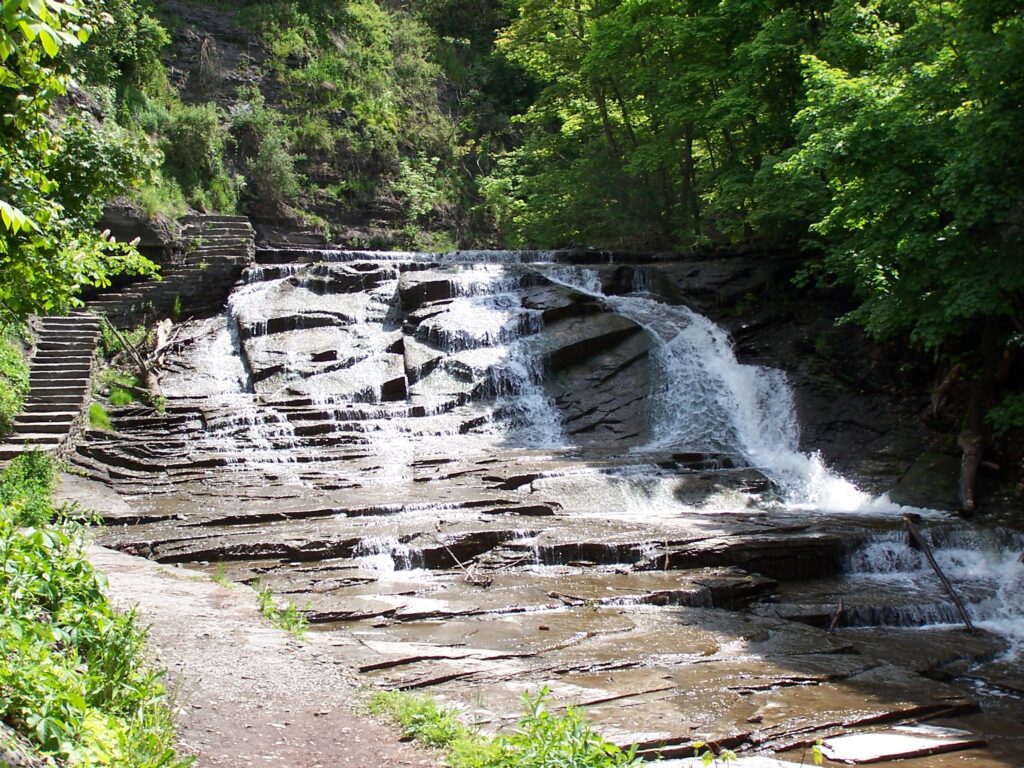
Our last day in Ithaca was Saturday, May 28, 2005. We walked up the gorge one last time to campus.
Graduation started in the stadium. Given we were in the College of Architecture, Art, and Planning we were the first alphabetically in the procession into the stadium. Somehow I managed to get as near to the front of the line as possible meaning I effectively got to lead the graduate students in. This also meant I had a front row center seat for commencement.


A smaller ceremony was held on the Arts Quadrangle just outside of Sibley Hall. This is where degrees were conferred. After a few quick photos we made our way back down the hill, packed the car, and headed home to Michigan. My time as a student in Ithaca officially ended.

