

Baths of Caracalla – Rome, Italy
The Baths of Caracalla (Terme di Caracalla), are an ancient Roman public bath complex in Rome, Italy. The baths are located near the ancient Appian Way, south of the Circus Maximus in Rome. Construction of the vast complex began around 212 AD under Emperor Septimius Severus and was completed by his son Caracalla in 216 AD. They were the second-largest public baths in the city and remained in use until the aqueducts supplying them with water were severed in 537 AD during the Gothic War.
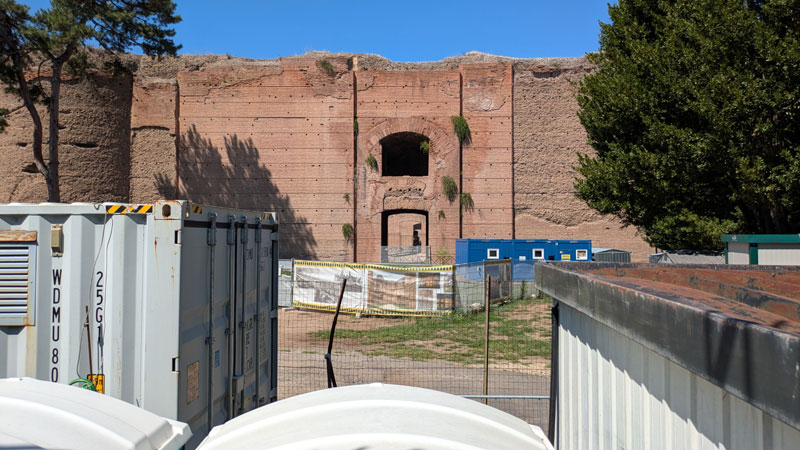
The complex was a masterpiece of Roman engineering, designed to accommodate up to 1,600 bathers at a time. It covered 25 hectares (62 acres) and included not only hot, warm, and cold baths (caldarium, tepidarium, frigidarium) and an Olympic-sized swimming pool (natatio), but also gymnasiums, libraries, and gardens. The structure utilized millions of bricks, which were originally covered with marble veneers, mosaics, and stucco.


The impressive scale and innovative design, particularly the barrel vaults, served as inspiration for architects throughout history, including the designs for the original Pennsylvania Station in New York City and the Chicago Union Station. Today, the ruins are a major tourist attraction and a UNESCO World Heritage Site. In the summer months, they are often used as a dramatic backdrop for open-air opera and ballet performances.
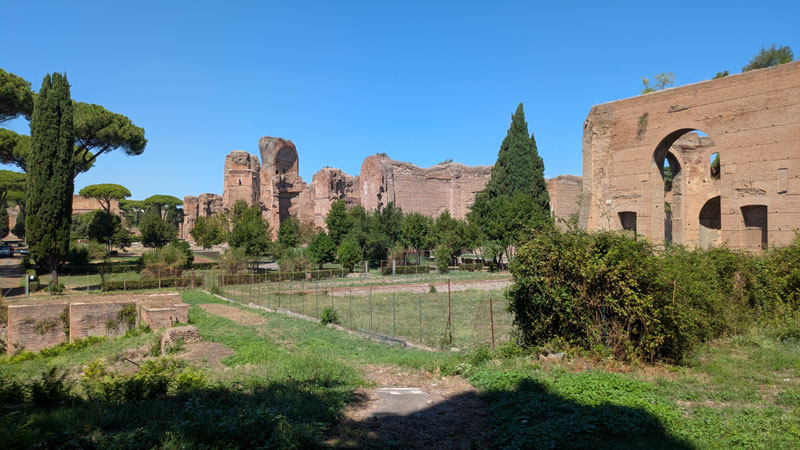
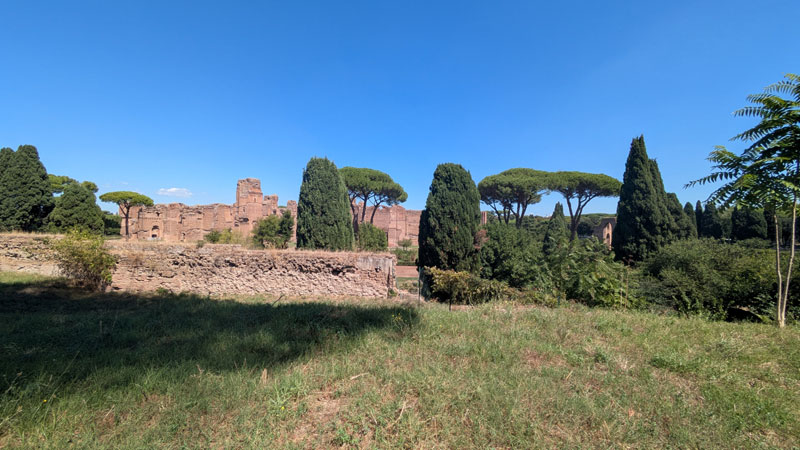
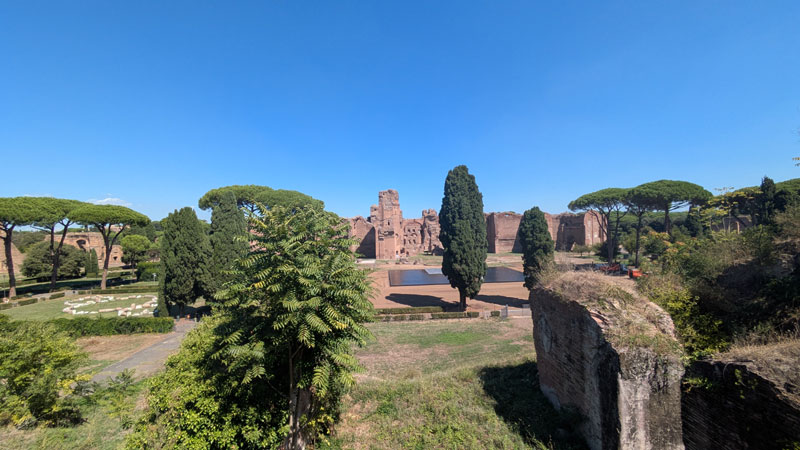
As we continued to walk along the exterior – the ruins blended with the landscape, receding into the distance. Given their sheer scale and volume, the gradual diminution was almost theatrical.