
Downtown – Medford, New Jersey
In 1758, John Burr sold to James, Philo, and Vincent Leeds. The blank" >target="_blank" >bounds contained the site of the village of Vincentown. Other names used in the early period include Brimstone NEck and later Quakertown. Finally, it adopted the name of its most prominent citizen and was called Vincent’s Town. This was subsequently shortened to Vincentown.

Riley/Garwood House. This classic 18th century Georgian house-of/" class="glossaryLink" data-cmtooltip="1072d96c44cb8d9cef20766b65776eec" target="_blank" >house of bond/" class="glossaryLink" data-cmtooltip="870a6987eccf6dfe6d24cfdabf0b5744" target="_blank" >Flemish bond brick was built c. 1785. Note the belt-course-2/" class="glossaryLink" data-cmtooltip="82e9683aeb4c4dd10620732aff4a60ea" target="_blank" >belt-course/" class="glossaryLink" data-cmtooltip="3f82ed052bd58ca6d208924f09def0a0" target="_blank" >belt course on the 2nd floor and the water table brick details on the first floor.


Pop Shop is a creative adaptation of a historic-building/" class="glossaryLink" data-cmtooltip="42ceffa810dd81ef87f7ce8c18d33674" target="_blank" >historic building. The architectural character is retained, while adding some colors to give an indication of what is inside.

ARTery is a business providing classes for children.


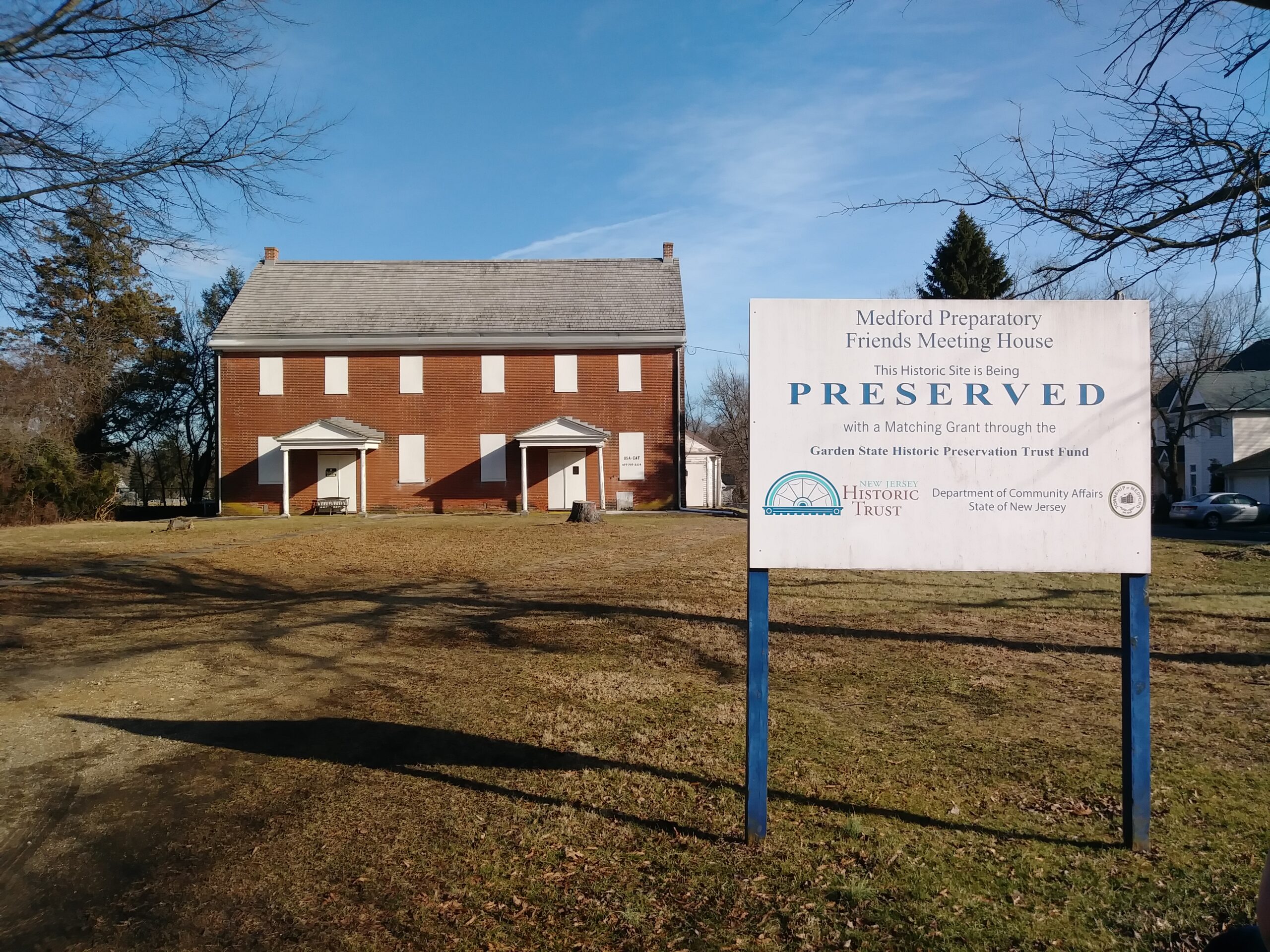
Friends Meeting House. Built in 1852 following a theological dispute that led to a separation between orthodox and Hicksite Friends in 1827. Friends reunited under one yearly meeting in 1955.

Today the “Village Green” is the site of a building that once housed a pharmacy. In the 1950s Samuel Alloway operated a soda fountain and drug store here until 1958. The Post Office operated here from 1960 to 1981. Finally, it was apartments from 1982 to 2014.


The Stratton/Braddock House. Isaac Stratton, son of Mark Stratton built this house ca. 1750. The bricks are in Flemish bond. It was probably built in two sections.
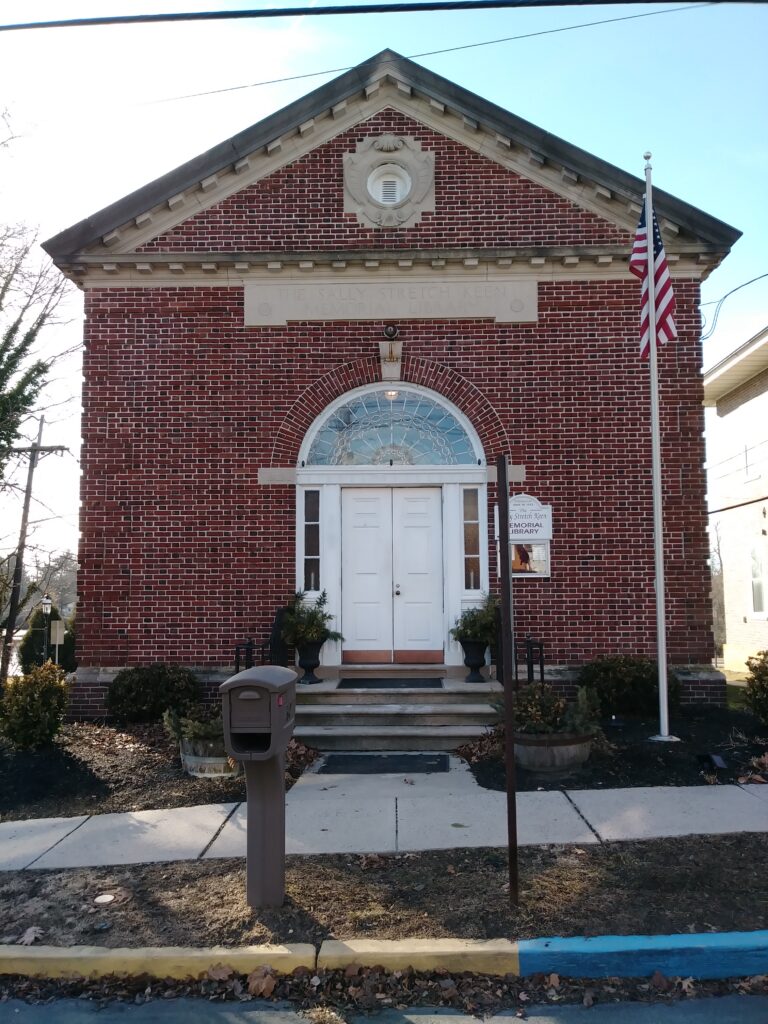

The Sally Stretch Keen Memorial Library.


This small one-room shop wedged between buildings has a cabinet-window-2/" class="glossaryLink" data-cmtooltip="c5ac4ace703a9f48958d53bd7b0d2497" target="_blank" >cabinet-window/" class="glossaryLink" data-cmtooltip="4795d37592d15fe5cf559bea5962977d" target="_blank" >cabinet window and just enough room for a single shopkeeper or artisan to do their work.


The Vincent Fire Co. Building was constructed in 1914. It has distinctive hipped-roof/" class="glossaryLink" data-cmtooltip="08b149cc56b8ed7b7d56c9c3b136bc36" target="_blank" >hipped roof and flared-eaves/" class="glossaryLink" data-cmtooltip="0f6ea5beeee55dbaf78970b874062588" target="_blank" >flared eaves. At the roof peak is a lantern rising above it, lightly for alarm bells. The cupola also has wide eaves and a distinctive profile. The bay doors on the ground-floor/" class="glossaryLink" data-cmtooltip="0bd3e9a7406c0906583ae59b501af8e8" target="_blank" >ground floor were filled in with windows and door when converted for alternate uses.


Two-story Italianate house with cornice/" class="glossaryLink" data-cmtooltip="4b37640d49cc675e4fe9d72220782b8d" target="_blank" >bracketed cornice and cupola.
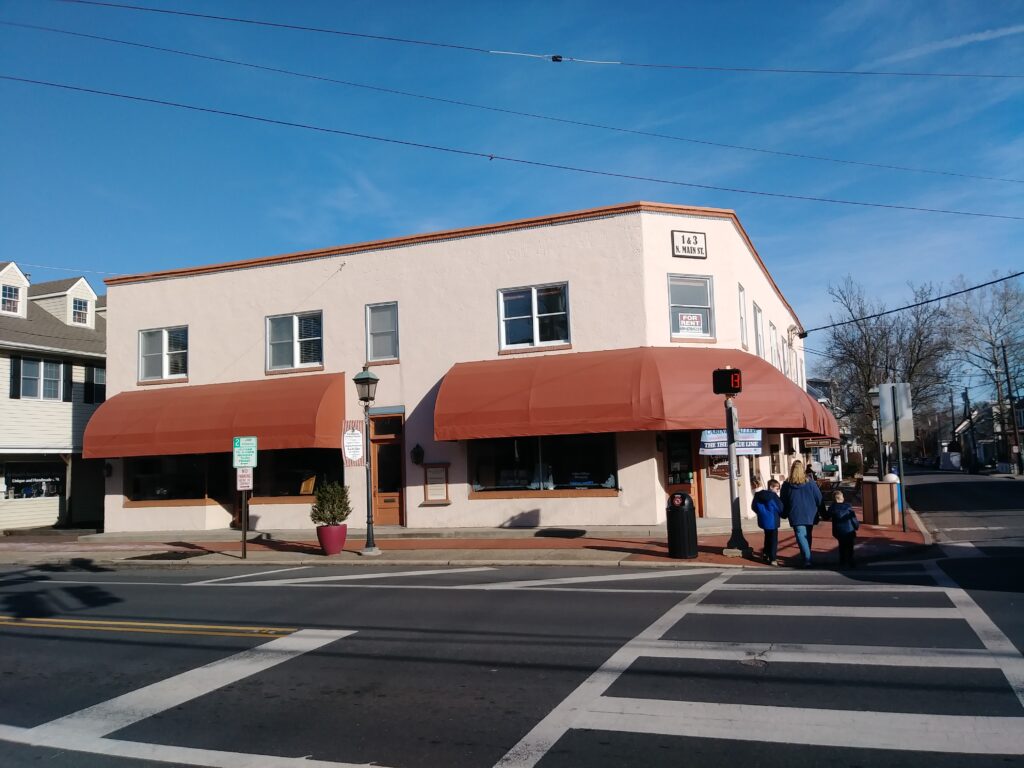
This two-story commercial building with canted-entrance/" class="glossaryLink" data-cmtooltip="775cd7f3aba460bf456431883a70b95a" target="_blank" >canted entrance has fine cotta-2/" class="glossaryLink" data-cmtooltip="91d68f0dc983938e1e05a7c799848dcf" target="_blank" >terra-cotta/" class="glossaryLink" data-cmtooltip="9a55ce3f4927337251d6a506f7a97069" target="_blank" >terra cotta molding on the second below just beneath the coping. The large waterfall awnings detract from the character of the building. Something with a pattern would full the space better and draw the idea to the business below.


Vicentown Bridge deck built 1915 with Medford Concrete Co. as contractor.
heading">Streetscape Elements

The “Welcome to Historic Medford” banner has artwork by Justin Gibbs.

Medford Village parking wayfinding sign.

The brick sidewalks are trimmed with a darker color brick. Antique lamp posts with banners further reinforce the image of Medford as an historic town.