

Downtown – Farmington, Michigan
Having grown up in and around Farmington in the first decade of my life, it was memorable to return and see the town again.
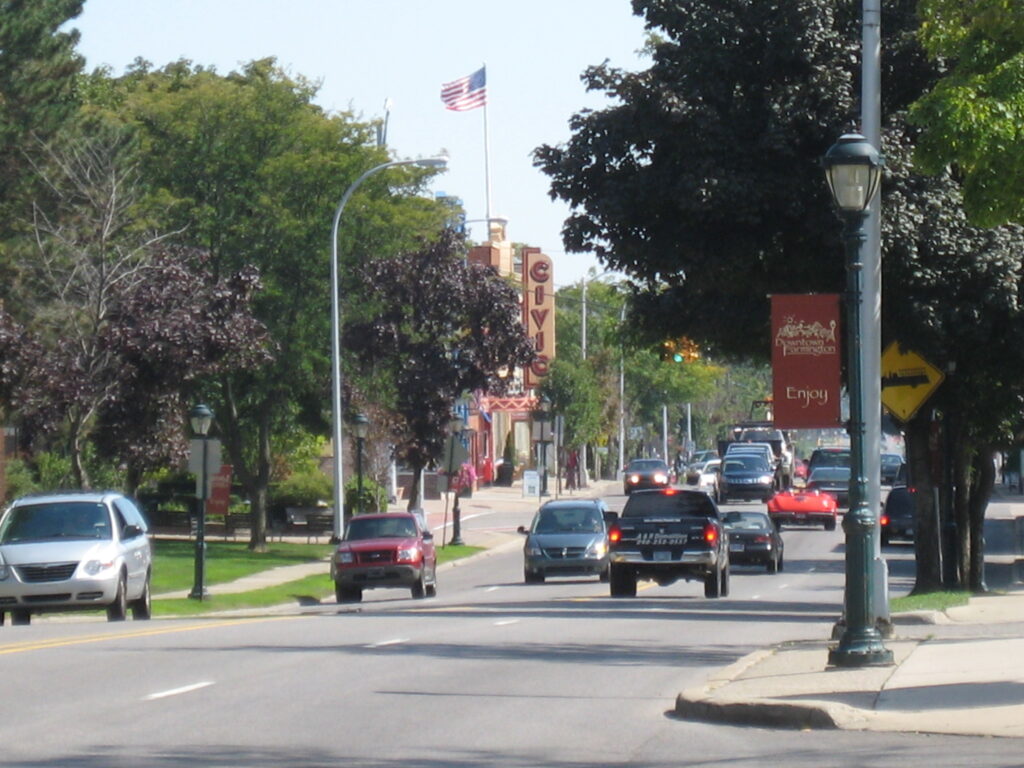
A view of the leafy tree lined Grand River Ave with the Civic Theater marquee in the center.
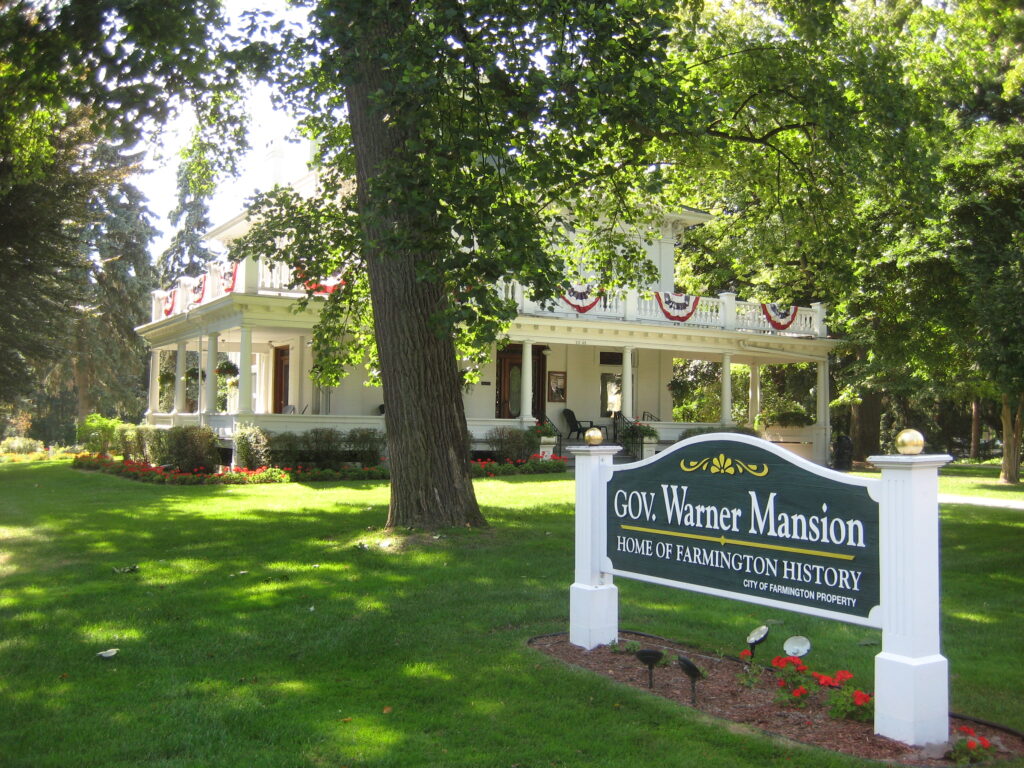
Iconic historic buildings like the Gov. Warner Mansion anchor Farmington in the distinctive history. Built around the time of the Civil War, it is where Fred M. Warner lived. He served as governor of Michigan from 1905 to 1911. As a Republican governor he advocated for progressive causes including regulation of railroad and insurance, conservation, food inspection, child labor laws, direct primary elections, and woman’s suffrage.


Outbuildings include an 1867 barn, gazebo, and ornamental gardens with brick-lined pathways.


In the core are attractive and well cared for historic homes in every direction. The detailing incorporates Greek Revival, Victorian, and folk housing themes. Noticeable is the absence of modern building materials.

A map clearly shows the Original Historic District designated by the Farmington Historical Commission in 1970. Highlights on the map include.
- First Post Office
- Approximate Site of First School
- Site of First Saw Mill
- Oldest Frame House in Farmington
- Site of First Tavern
- Quaker Meeting House
- Masonic Temple – Old Town Hall
- Quaker Cemetery
- Oakwood Cemetery
- Site of First Methodist Church Building
- Original Village Center
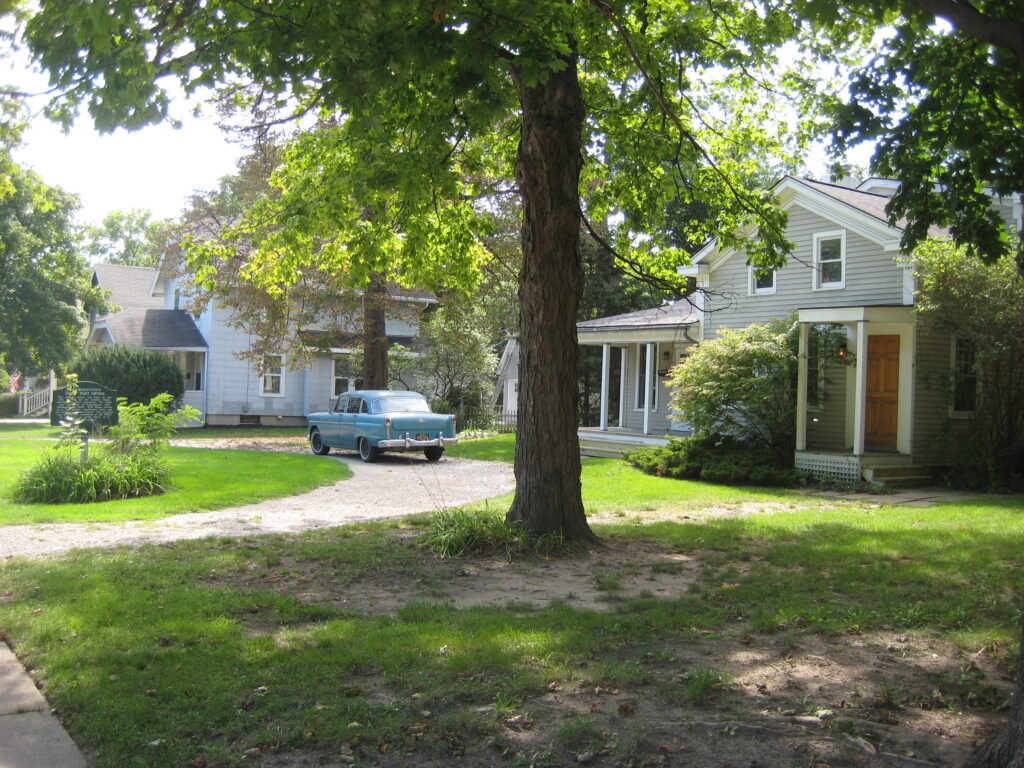
Farmington’s First Post Office, while no longer serving that function, was first built as a house in 1825 for Dr. Ezekiel Webb, who was Farmington’s first physician. He was appointed as Farmington’s first postmaster in 1826.
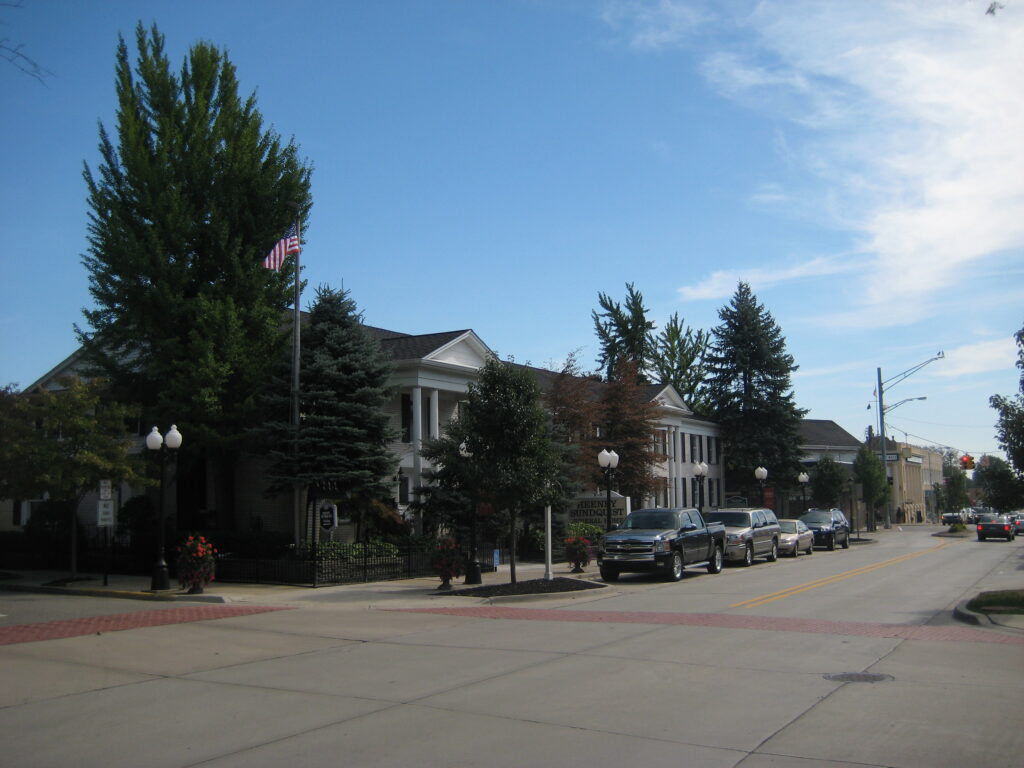
The Farmington Masonic Temple and Farmington Township Hill were constructed in 1876. The Township government occupied the first story of the building until 1963 when a new Township facility was constructed. The building is influenced by both Victorian and French Renaissance architecture.
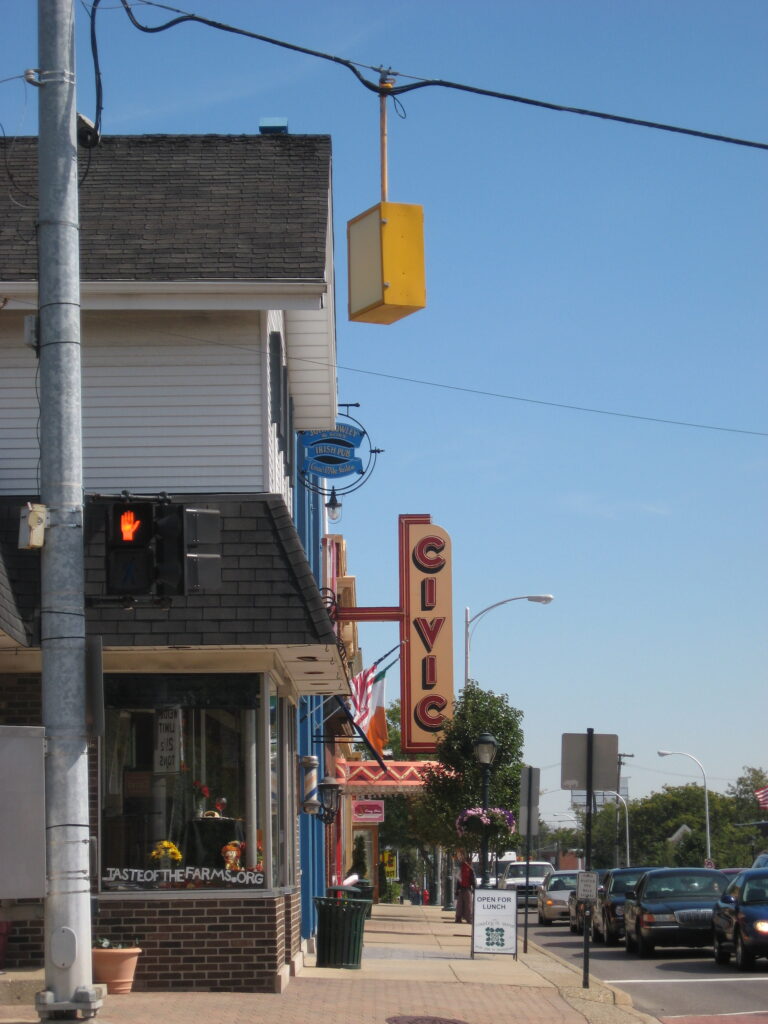
The storefront on the left is where I would get my haircut as a young boy.
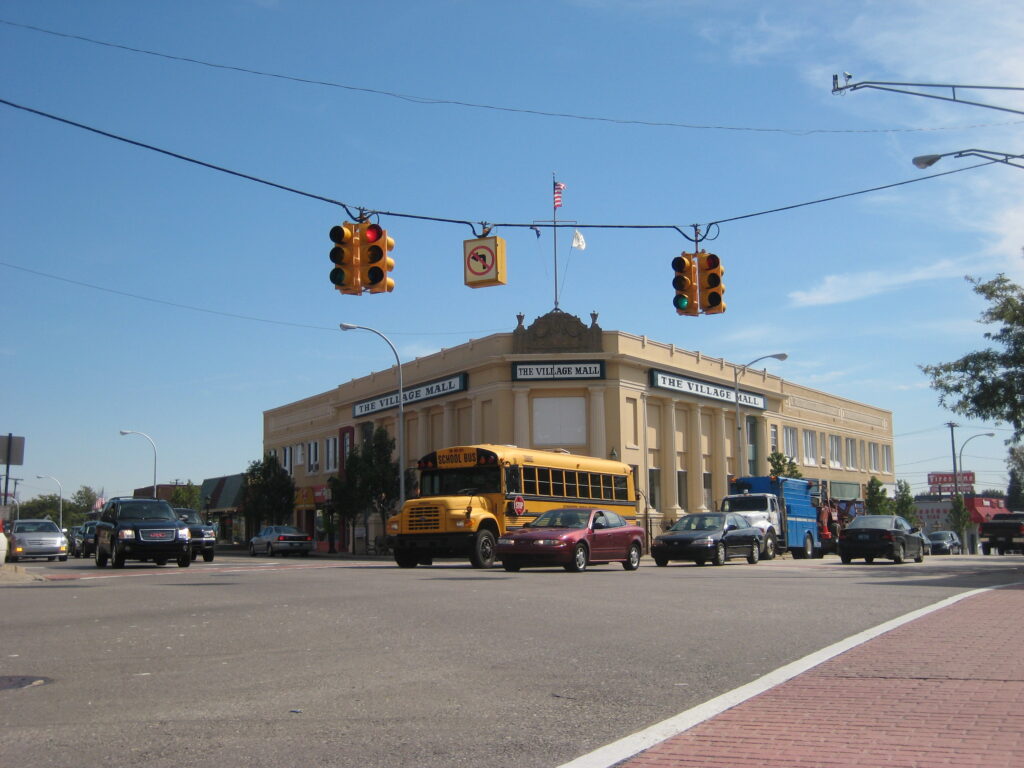
The Village Mall with its fluted Doric columns, parapet, and frontispiece with urns, swag, and mast-shaped flag pole holds a position of privilege on a 100% corner.
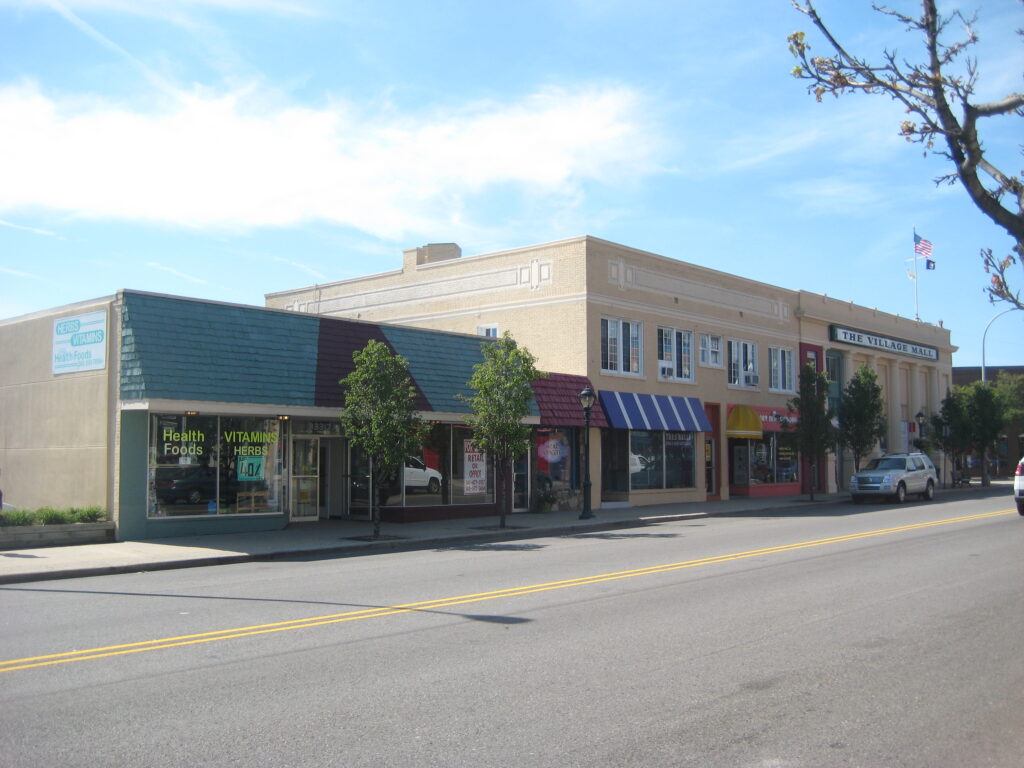
From the buildings in the historic core, infill makes a nod to earlier forms, while being more suburban looking in materials, layout and configuration. This juxtaposition is clear just beyond The Village Mall with a squat one-story building with shed roof.
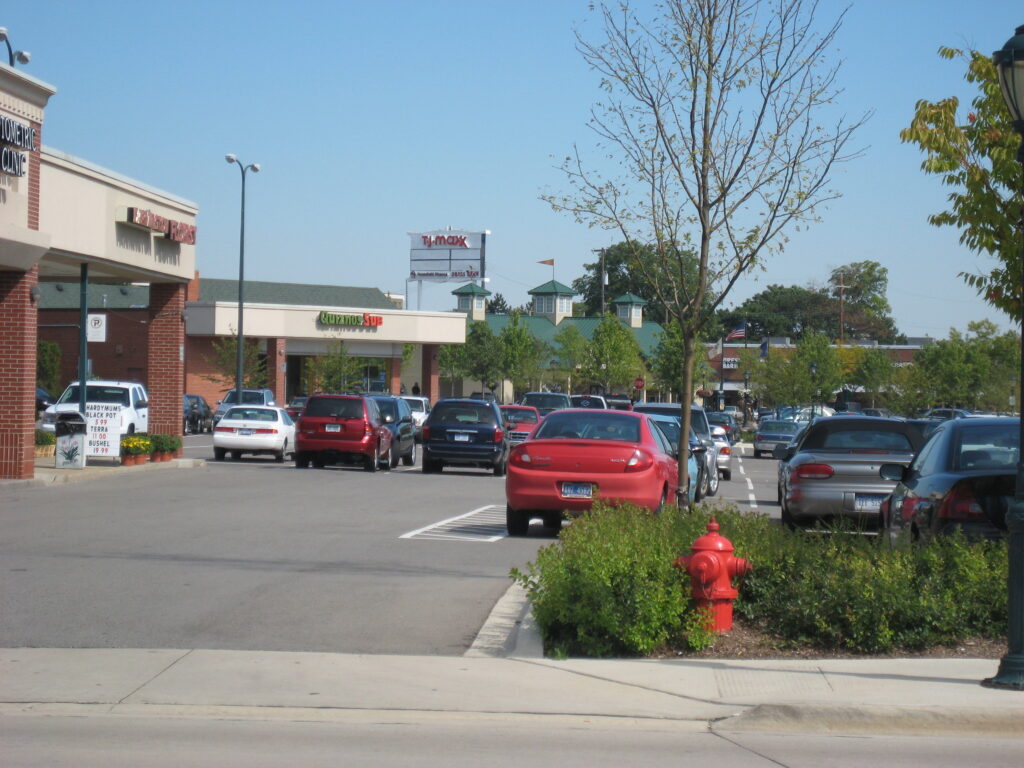
The modern development is visibly different from historic buildings in the core. It also appeals to cars more than pedestrians.
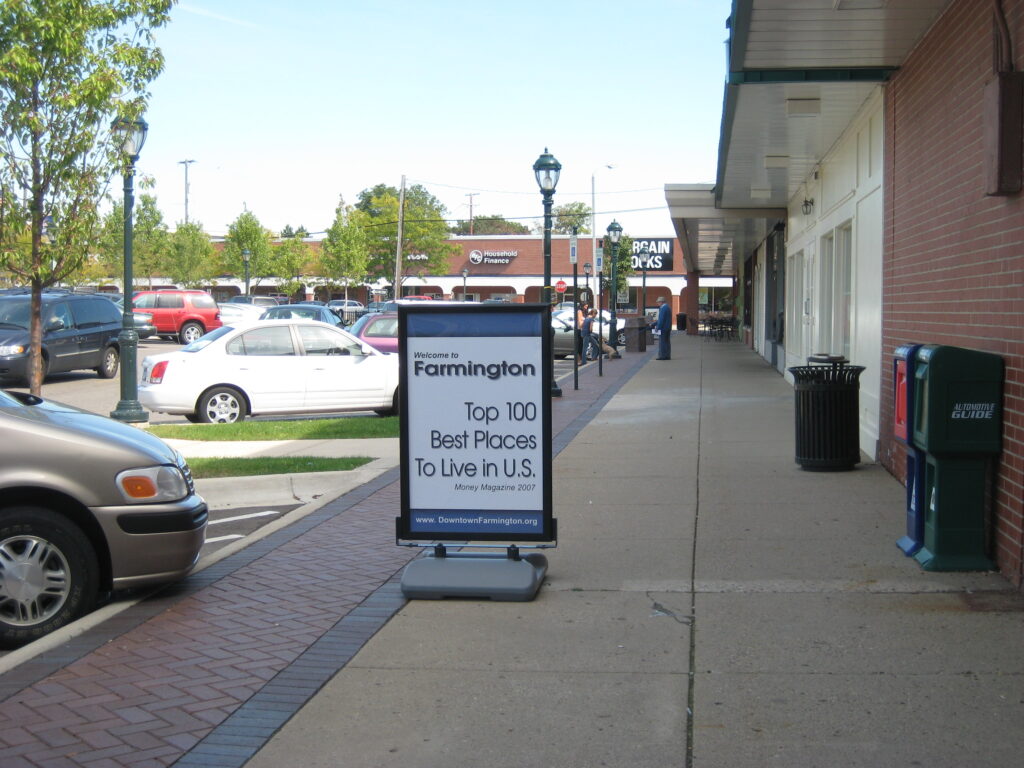
Farmington was proudly named one of the Top 100 Best Places to Live in the US by Money Magazine in 2007.


Also in the center of town is Riley Park and the Walter E. Sundquist Pavilion that serves as a gathering place in downtown Farmington. This was dedicated October 21, 2005. The location also serves as home of the Farmers Market on Saturdays from 9-2pm.
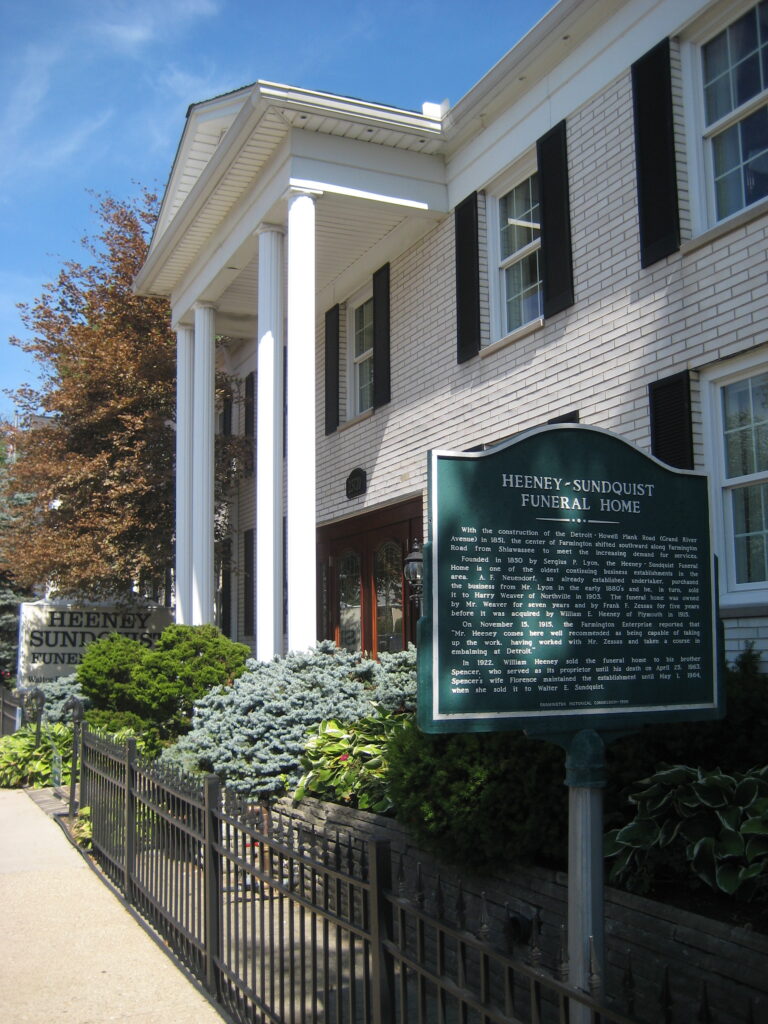
Fittingly the Sundquist Pavilion namesake is one of the most historic businesses in a historic town. The Henney-Sundquist Funeral Home was founded in 1850 by Sergius P. Lyon. Ownership passed from owner to owner. Walter E. Sundquist purchased the business on May 1, 1964.
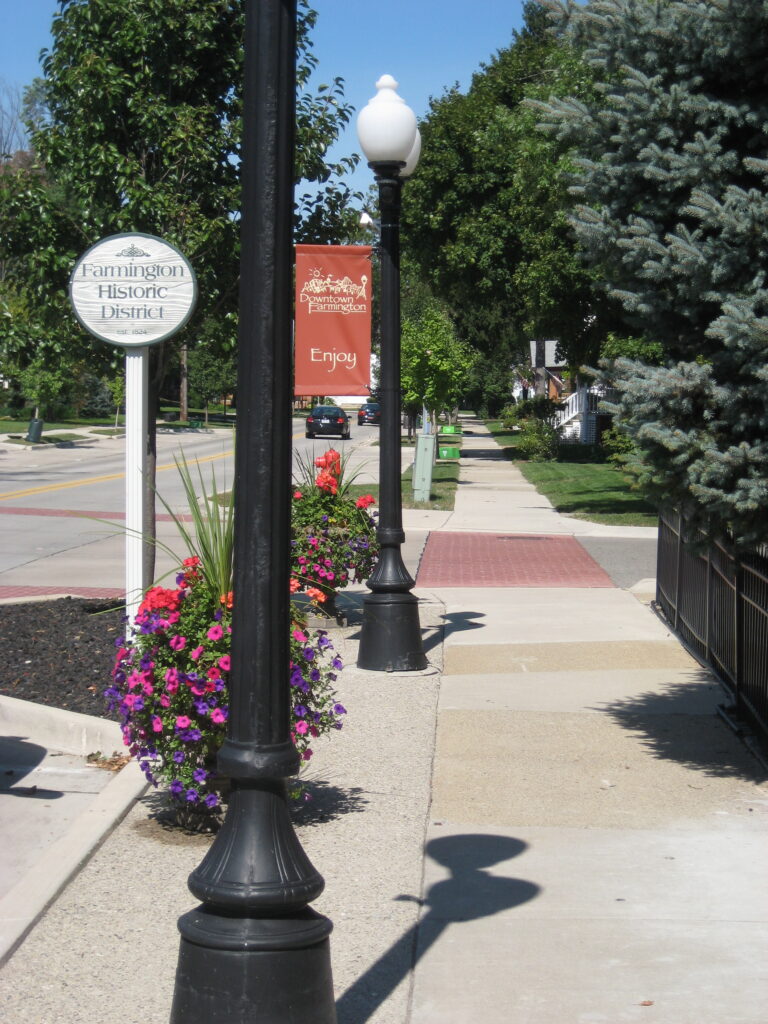
One last photo captures the thoughtful attention to detail. Historic street lamps, a Downtown Farmington banner with the word “Enjoy,” attractive planters, a “Farmington Historic District” carved wood sign on wood post, and brick crosswalk delineating the pedestrian space. Details like are the end product of people who care and work together to make Farmington among the best places to live in the US.