
Wayne State University President Dr. Reid Legacy – Detroit, Michigan
This past week I had an opportunity to participate as an blank" >target="_blank" >glossary/audience/" class="glossaryLink" data-cmtooltip="7154337f95972ee3da2501724b596bd7" target="_blank" >audience member on a panel discussion regarding the tenure of Dr. Irvin Reid and president of Wayne State University on WDET 101.9FM. A few thoughts I was unable to express on the air, follow in text.
Dr. Reid has probably made the greatest impact of any person on the campus of Wayne State since Minoru Yamasaki. His McGregor Memorial Conference Center in 1958, adding a stunning modernist edifice which secured Wayne’s reputation as an important urban campus.
Enter Dr. Reid forty years later. The Fitness Center on campus was a good indication of what was to follow. True, the space it was located on had some architectural interest and value for its vast openess and emptiness – a sort of quadrangle for a campus designed on more modern than classical terms. In the eyes of Dr. Reid this was a missed opportunity for the university community though. So in this place and under his direction a world class fitness facility was added – paving the way for a more friendly residential campus that would emerge.
Still a commuter campus primarily, Dr. Reid retained Albert Kahn Associates to create a Master Plan. In this plan they called for increasing residential population to truly give a sense of campus, and offer an alternative to living in apartments off campus or commuting every day. No one could expect the rush of interest this would generate in on-campus housing. As a graduate student in planning/" class="glossaryLink" data-cmtooltip="654124a8a4885ff0ba7601f82a8849bc" target="_blank" >urban planning myself in 2001-2002, I witnessed first hand the need and demand for suitable housing in a search for my own apartment. And, while the new residences followed my time at Wayne, they benefit current and future students.
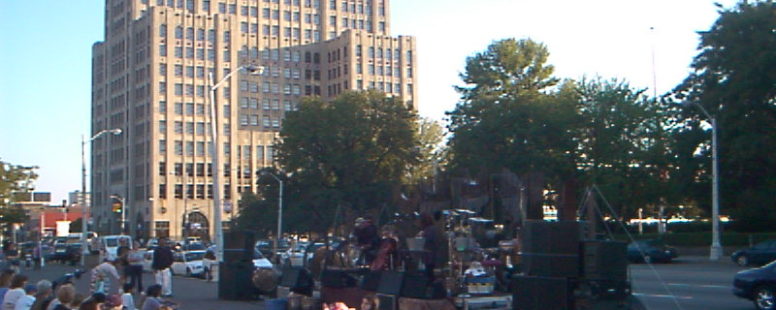
Building of the Welcome Center on Woodward Avenue starting in 2001, also when I was a student, gave Wayne a presence on Woodward and in the Cultural Center. Previously Wayne was hidden behind the Detroit Public Library. A few years later, acquisition of the Maccabees Building then owned by the Detroit Public Schools was a veritable coup. Efforts were made to sensitively upgrade and restore this building as well.
Creation of the TechTown area north of campus, helped to create a “linkage” (in planning parlance) between the university and New Center. Bringing in new businesses and a school, created nice synergies with the university and much needed activity for this district. Preserving existing buildings was happily a part of plans along with construction of new buildings that served as infill on what had been vacant and empty asphalt parking lots. Spillover effect was felt in a number of other preservation projects.
Perhaps Reid’s greatest legacy and accomplishment was in reversing the legacy of an earlier design project ill conceived from the start – University Towers. Located on the site of the former Vernor’s distillery, this bland corporate office styled building was intended for use as residence house/" class="glossaryLink" data-cmtooltip="4d8d702b37a7ba2341c578ad4aae854c" target="_blank" >hall. It’s disproportionate scale and glowing gold fenestration made it an obvious target for criticism and symbol of encroachment by the university on this mostly 2 and 3 story residential neighborhood. While not built under Reid’s tenure, he found opportunity to reverse this atrocity of design by infill housing which essentially wrapped around this T-shaped building. In 2007 the hideous black metal fence fronting a whole block of Woodward went down and buildings began going up, kissing the sidewalk edge.
Dr. Reid’s impact on the physical growth and development of the Wayne State campus is vast and sweeping. Starting with solid planning, then continuing with an aggressive program of building, he helped transform this commuter campus into one with a greater residential focus. The impact of these changes will be felt for decades ahead. Visionary as well as pragmatic, utilizing historic buildings in Tech Town and the Maccabees Building cemented Reid’s reputation as the first president in a while to understand the value of preservation.
Wayne State grew from a residential area with academic units residing in single-family houses as recently as the 1950s and with a few legacy buildings from this era remaining today. Yet from this neighborhood rose up an institution of worldwide significance. Thus inscribed in Wayne’s DNA is destruction and demolition in order to bring about creation, or “planning with a meat ax” as Robert Caro described of New York’s Robert Moses. Reid’s innovation instead has been planning on a big scale, yes, but also using a scalpel to enhance existing buildings whether through preservation or infill development sensitive to the urban environment where this made sense. These are values that his successor will hopefully further emulate – fueling the resurgence of Midtown, surrounding neighborhoods, and all of Detroit by extension.