
In order to make some of a fortification, it is important to think about its intended purpose and the nature of the technology at the time it was being built. Thinking about the historical context of the fortification makes “reading” its features a lot more rewarding.
El Morro’s walls, ramps, and plazas all served specific purposes. Understanding what the parts of a fortification are and how they were used reveals much about the history of this place.
1. Artillery Ramp.The massive artillery ramp was used to move artillery, ammunition, and troops between the Santa Barbara Battery and the main plaza. The artillery pieces had to be hauled up or down the ramp by hand, with ropes, pulleys, and winches. Landings were included in the ramp to allow the straining soldiers a place to rest.
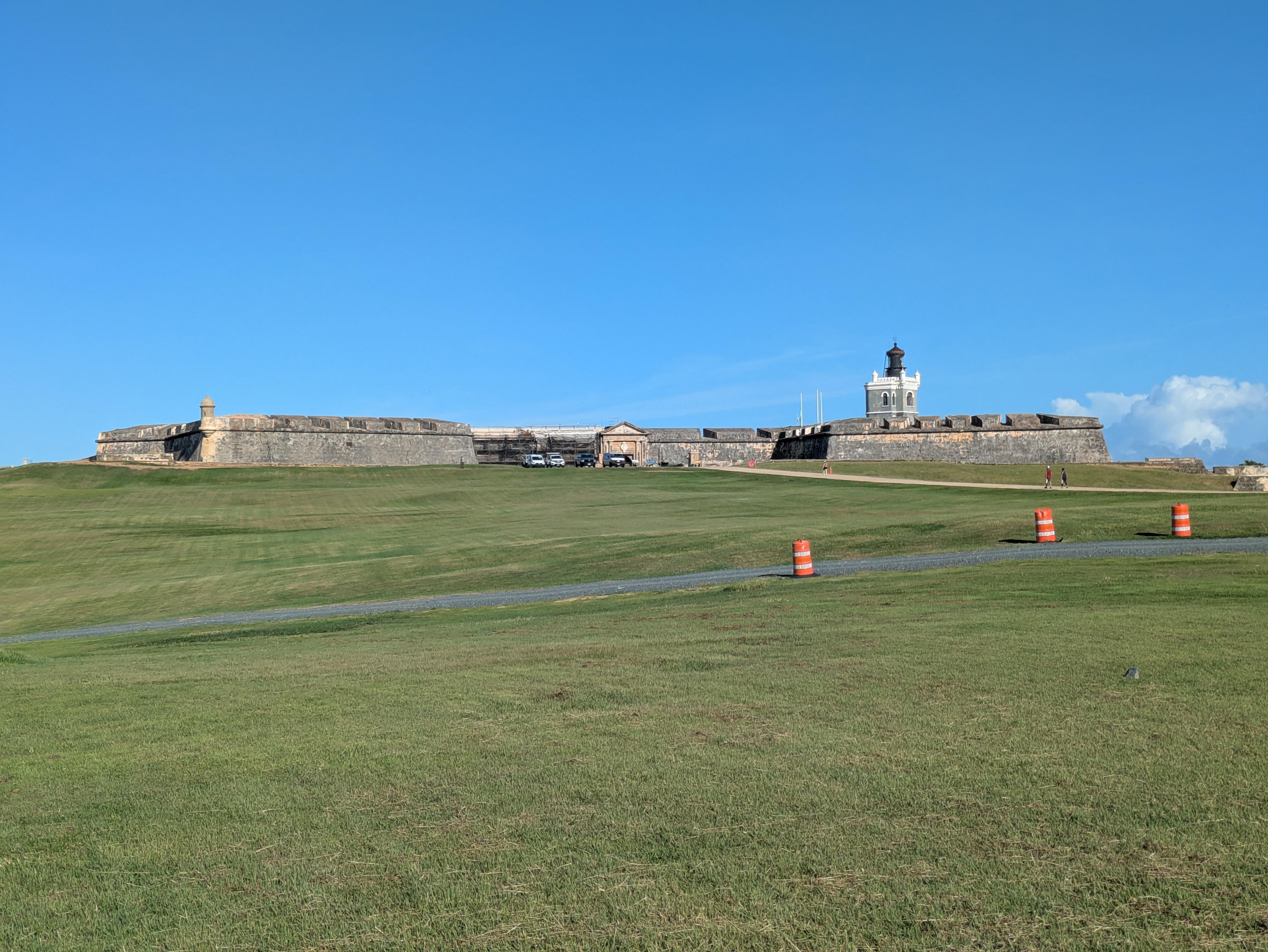
2. Esplanade. The large open field that spread out in front of the fortress, called an esplanade was a key feature of military architecture of the 1700s. The esplanade was kept clear of buildings, trees, and shrubs anything that might provide cover for the attackers. Further, the esplanade was sloped towards the fortification to keep the attackers under the fire of the defenders until the last possible moment. The overlapping fields of fire from the hornwork ensured that any attacking force suffered a withering hail of musket and cannon balls before they could reach the walls.
3. Thickness of the walls. The thickness of the walls varied depending on the vulnerability of the area to enemy attack.
4. Santa Barbara Battery. With emplacements for nearly 40 guns, the “Y-shaped” Santa Barbara Battery was the strongest of all El Morro’s batteries. Artillery mounted here would target the rigging and sails of attacking ships.
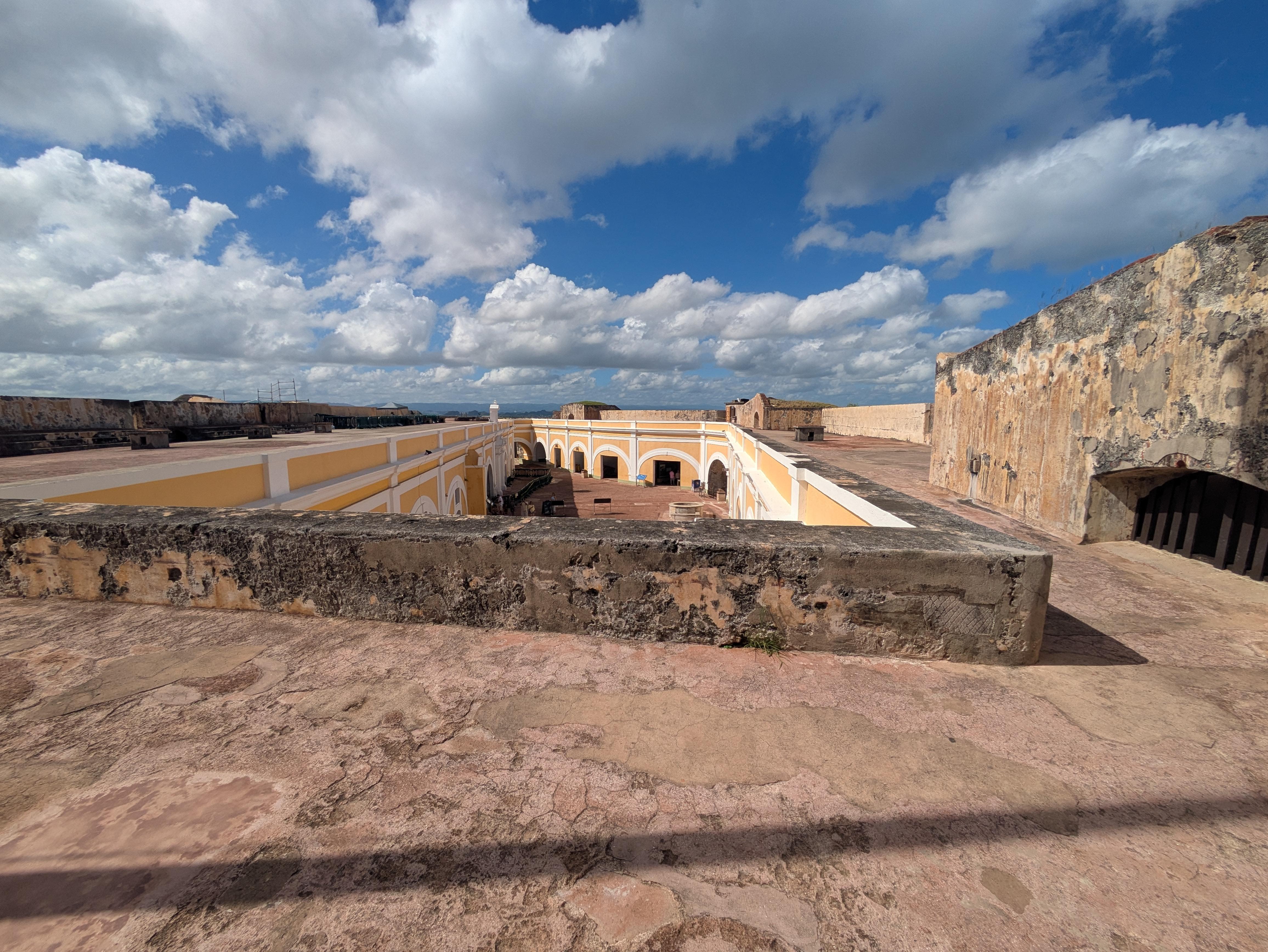
5. Main Plaza. El Morro’s main plaza was the parade ground and assembly point for the fortification’s garrison. Around the perimeter of the plaza are the barracks, officers’ quarters, chapel, kitchen, and powder magazine, as well as casemates that housed artillery pieces. Located below the plaza were three cisterns, which could hold over 200,000 gallons of rainwater collected from roofs and deck surfaces.
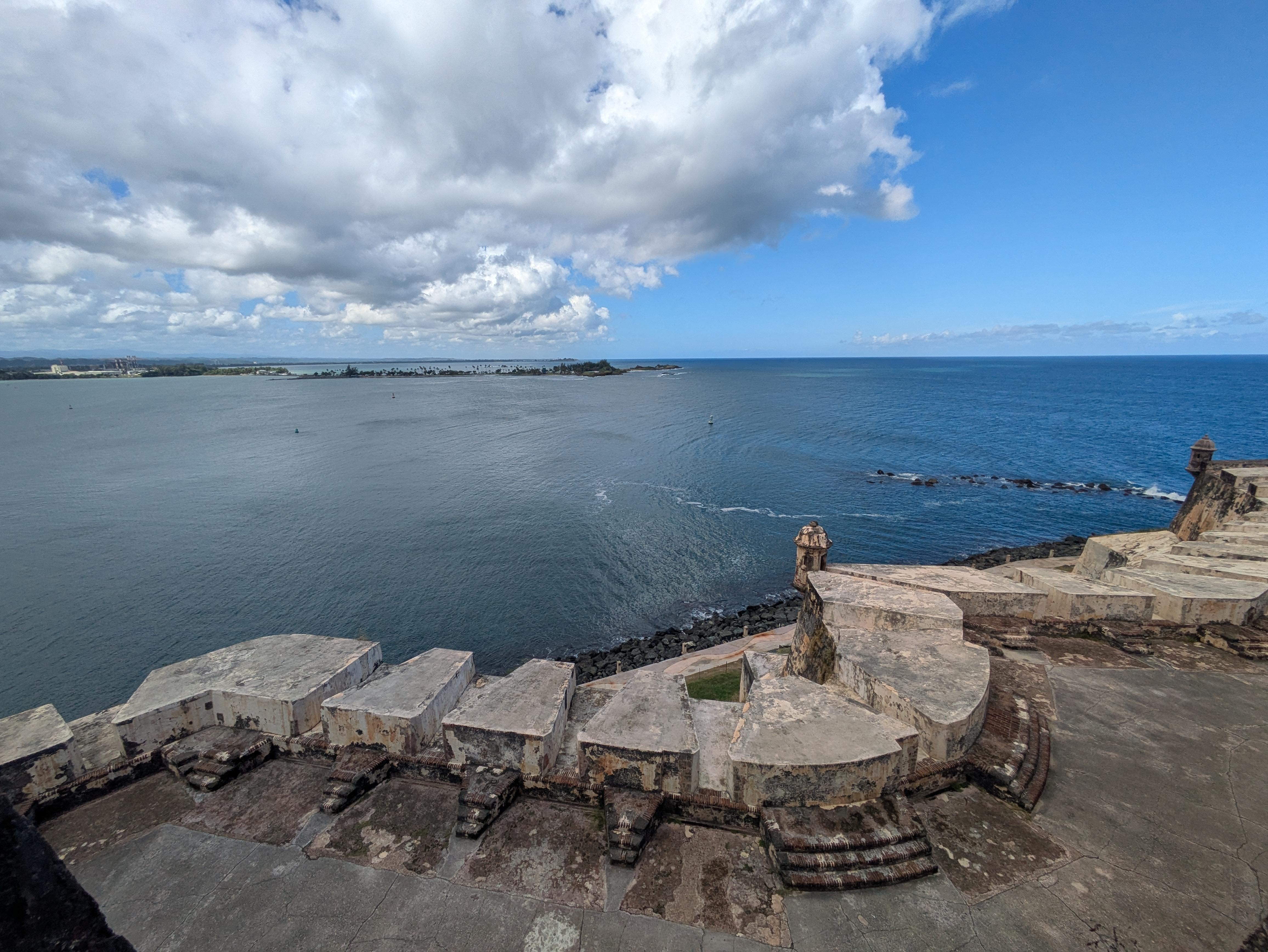
Embrasures. Openings in the walls called embrasures, allowed cannon to fire through them, while providing protection to the gunners.
Artillery Ramp. The ability to shift artillery and supplies from level to level is an important consideration in military architecture. El Morro’s ramps show how Spanish engineers solved the problems of moving heavy cannon around the fortress.