
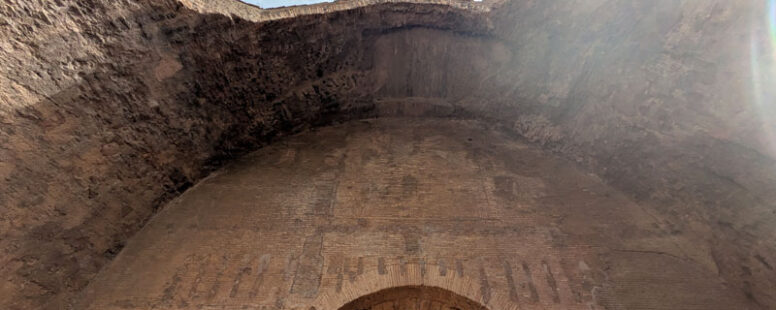
Terme Di Diocleziano – Rome, Italy
The Baths of Diocletian were the largest imperial public baths in ancient Rome. Construction began in 298 AD under Emperor Maximian, appointed Augustus of the Western Roman Empire, as a tribute to co-emperor Diocletian. They were completed by Constantine’s father in 306 AD. The baths survived the first sack of Rome in 410 AD but were abandoned after their water supply was cut off by the Ostrogoths in 537 AD. Over the next thousand years, the structure served as an extensive source of building materials for other projects. Part of the complex was later transformed into the Basilica di Santa Maria degli Angeli e dei Martiri and a convent, with works potentially following Michelangelo’s design.
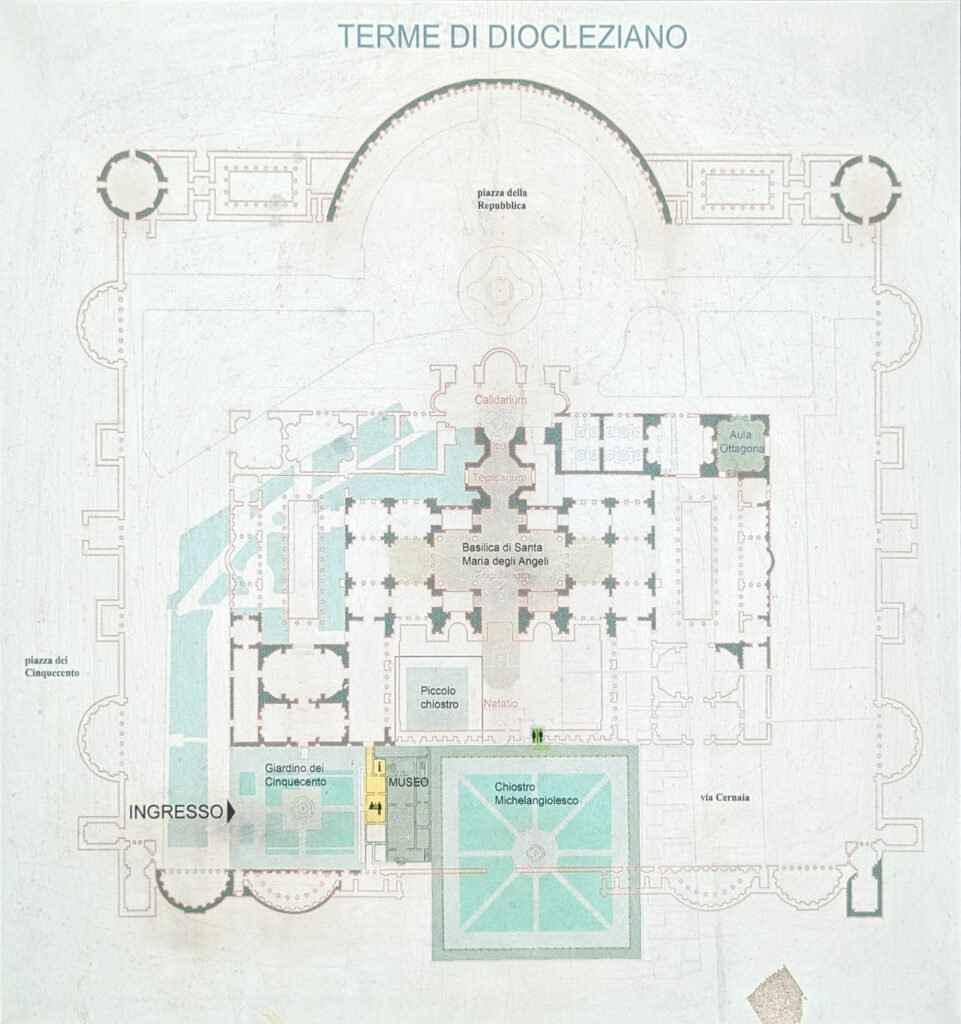
Within the extent of the massive Terme di Diocleziano (Baths of Diocletian) are the Basilica di Santa Maria degli Angeli and the Museo Nazionale Romano.
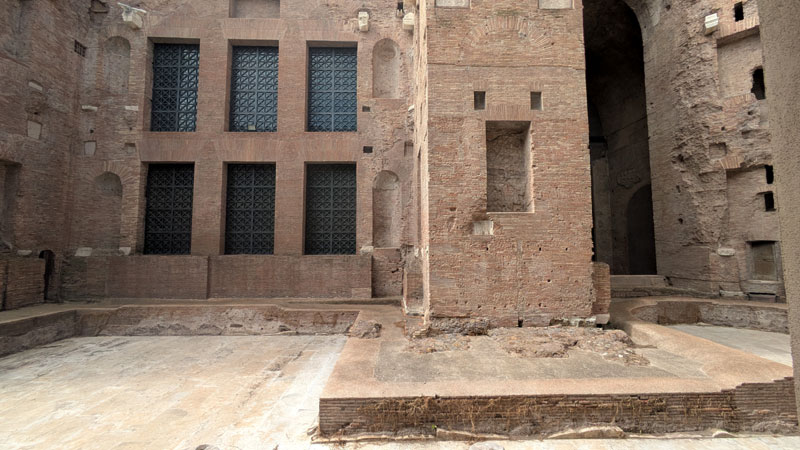


The mosaic in the image is a Roman floor mosaic, known as the Hercules and Achelous mosaic. It is housed in Hall XI of the Baths of Diocletian (Museo Nazionale Romano, Terme di Diocleziano) in Rome, Italy. The mosaic depicts scenes from a battle, specifically Hercules as the winner in his fight against the river god Achelous for the right to marry Deianira. The large mosaic, which measures 80 square meters, originally comes from the Villa of Nero in Anzio and dates to the 3rd century AD.
Basilica di Santa Maria degli Angeli
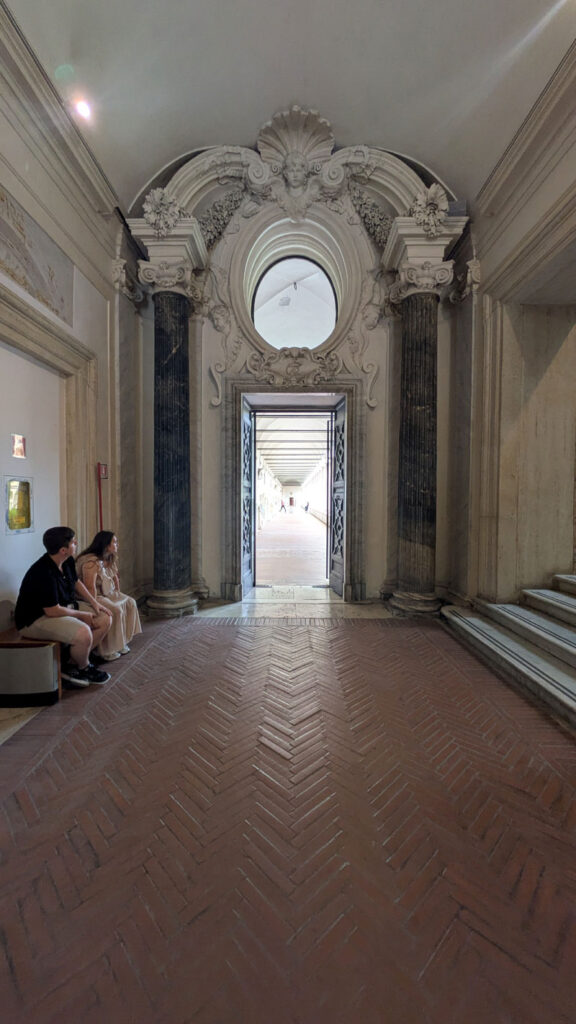
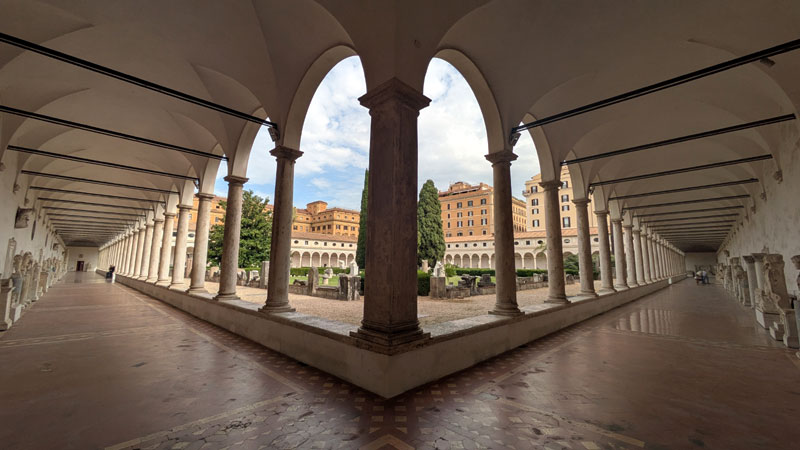
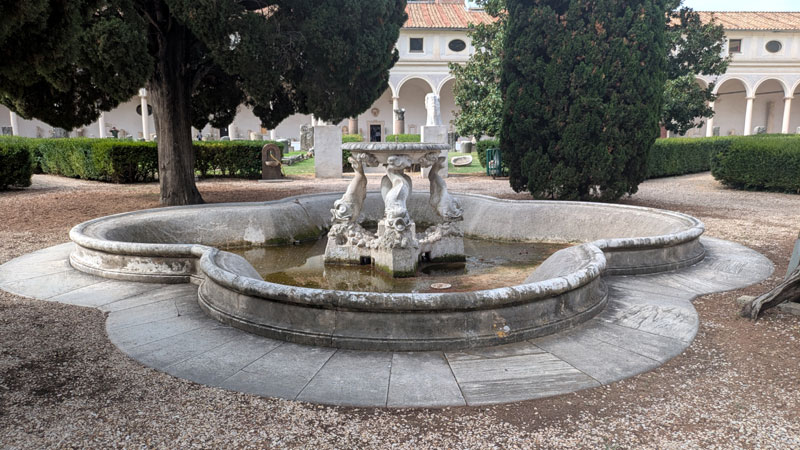
This portal flanked by columns with an elliptical light overhead, enters on to the impressive cloisters.




Museo Nazionale Romano
One of the best ways to view the full extent of the Terme di Diocleziano is to visit the Museo Nazionale Romano. Set within the baths, the grand architecture unfolds across several of the galleries.


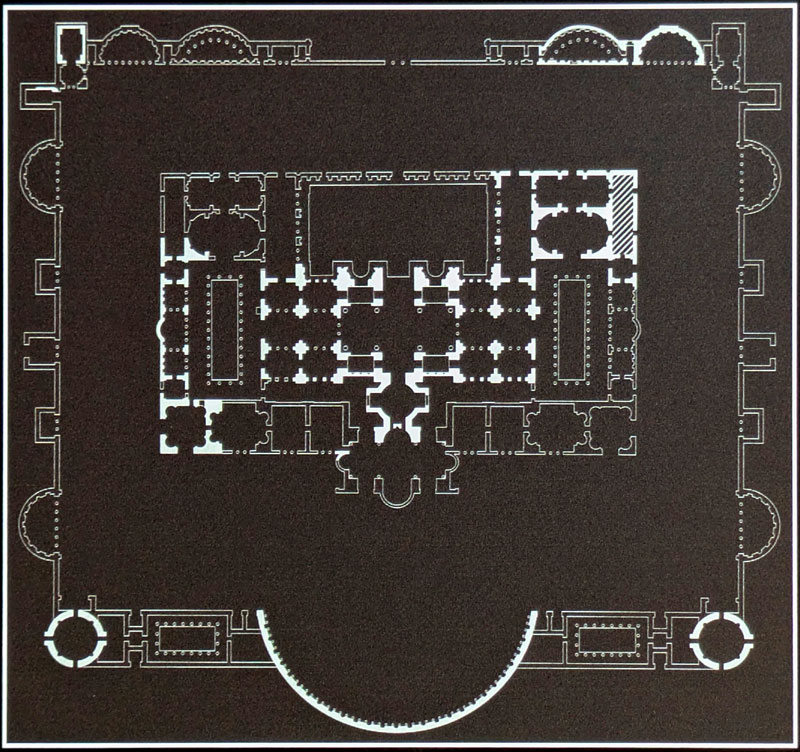
This map shows the outline of the baths and what portions of the building are still remaining.
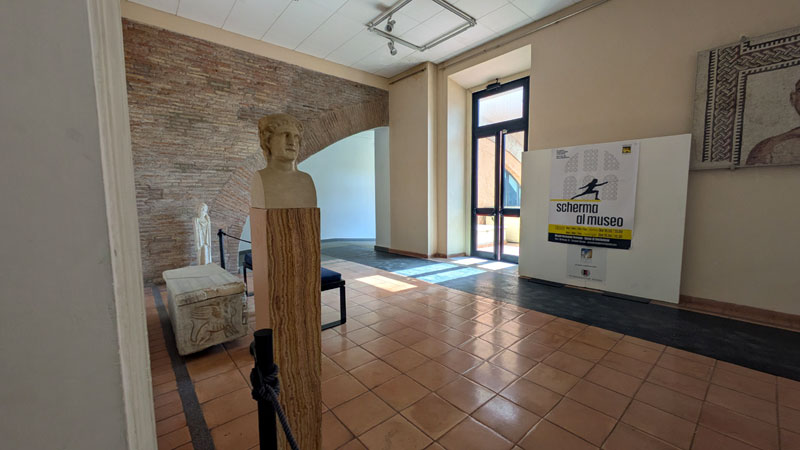
There are times when the structure of the museum proper is integrated within the historic architecture of the baths. This is seen in the photo above with a gallery with artifacts in the foreground and the large arch from the original structure in the background.


Display cases like this hold fragments.