Observatory – Portland, Maine

Isaac Kremer/ June 25, 2021/ museum, preservation

<blank" >target="_blank" >figure class="wp-block-image size-large">height="768" src="http://isaackremer.com/wp-content/uploads/2021/09/PXL_20210625_195048085.MP_-1024x768.jpg" alt="" class="wp-image-95053" srcset="http://isaackremer.com/wp-content/uploads/2021/09/PXL_20210625_195048085.MP_-1024x768.jpg 1024w, http://isaackremer.com/wp-content/uploads/2021/09/PXL_20210625_195048085.MP_-300x225.jpg 300w, http://isaackremer.com/wp-content/uploads/2021/09/PXL_20210625_195048085.MP_-768x576.jpg 768w, http://isaackremer.com/wp-content/uploads/2021/09/PXL_20210625_195048085.MP_-1536x1152.jpg 1536w, http://isaackremer.com/wp-content/uploads/2021/09/PXL_20210625_195048085.MP_-2048x1536.jpg 2048w, http://isaackremer.com/wp-content/uploads/2021/09/PXL_20210625_195048085.MP_-800x600.jpg 800w, http://isaackremer.com/wp-content/uploads/2021/09/PXL_20210625_195048085.MP_-400x300.jpg 400w" sizes="(max-width: 1024px) 100vw, 1024px" />

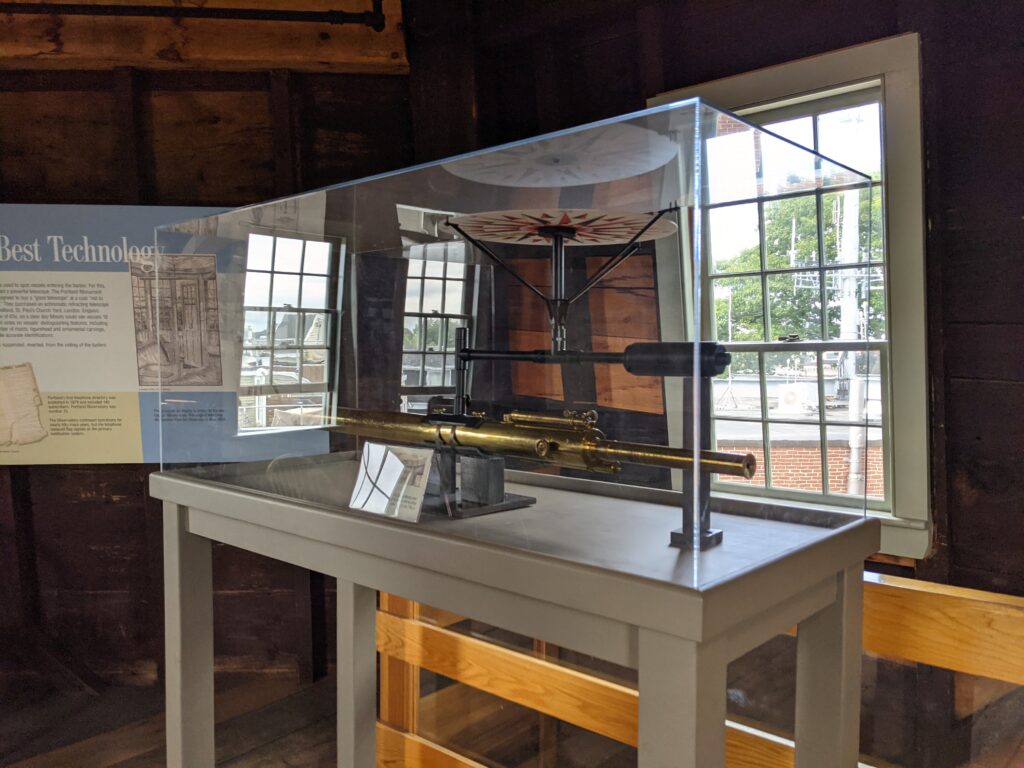
Lemuel Moody constructed the Observatory to improve communications between seafaring vessels and merchants on land. His signal tower was completed in 1807. A signal system identified vessels sailing into the harbor so merchants could prepare. Ships would hoist a glossary/flag/" class="glossaryLink" data-cmtooltip="93da28cdd46979e7878e212891f2d0f6" target="_blank" >flag when sailing into the harbor. Captain Moody would use a powerful achromatic refracting telescope to spot vessels and their flags as much as 18 miles offshore, and for a yearly subscription fee would hoist an identical flag at the top of the Observatory. This would give merchants on the waterfront time to secure wharf space and arrange for workers to offload cargo, improving the efficiency of harbor operations. By 1848 over 100 ship owners and captains subscribed to Moody’s service.

Lemuel Moody

Three times a day Moody would climb the steps to the top of the Observatory and to make his observations. He also recorded temperature, wind velocity and weather conditions – supplying weather reports for the newspapers. These observations continued from 1816 through his death in 1845.
loading="lazy" decoding="async" width="1024" height="768" src="https://isaackremer.com/wp-content/uploads/2021/09/PXL_20210625_204741926-1024x768.jpg" alt="" class="wp-image-95055" srcset="http://isaackremer.com/wp-content/uploads/2021/09/PXL_20210625_204741926-1024x768.jpg 1024w, http://isaackremer.com/wp-content/uploads/2021/09/PXL_20210625_204741926-300x225.jpg 300w, http://isaackremer.com/wp-content/uploads/2021/09/PXL_20210625_204741926-768x576.jpg 768w, http://isaackremer.com/wp-content/uploads/2021/09/PXL_20210625_204741926-1536x1152.jpg 1536w, http://isaackremer.com/wp-content/uploads/2021/09/PXL_20210625_204741926-2048x1536.jpg 2048w, http://isaackremer.com/wp-content/uploads/2021/09/PXL_20210625_204741926-800x600.jpg 800w, http://isaackremer.com/wp-content/uploads/2021/09/PXL_20210625_204741926-400x300.jpg 400w" sizes="auto, (max-width: 1024px) 100vw, 1024px" />

The Observatory and its surroundings took on social and entertainment functions thanks to a dance house/" class="glossaryLink" data-cmtooltip="4d8d702b37a7ba2341c578ad4aae854c" target="_blank" >hall, a alley/" class="glossaryLink" data-cmtooltip="f6f591aae9a207eec4a4d4b830e2ebf9" target="_blank" >bowling-alley-2/" class="glossaryLink" data-cmtooltip="5821947e97a7c2bb30b768ba35c7f187" target="_blank" >bowling alley, a stable and a banquet-hall/" class="glossaryLink" data-cmtooltip="f189a26906398b842dfc82df9450d3b3" target="_blank" >banquet hall that Moody built for public use. Visitors would pay twelve and a half cents to climb to the top of the Observatory and take in the view.

Master carpenter Paul Redlon built this scale study model, with a gin-pole/" class="glossaryLink" data-cmtooltip="acb285159e4616efe49242a6b15071f4" target="_blank" >gin pole, working platforms, and moving parts, to show how 19th-century workers may have raised the Observatory.

The Historic American Buildings Survey prepared detailed architectural-drawings/" class="glossaryLink" data-cmtooltip="78169fede7f9605ca83d8212f40c1316" target="_blank" >architectural drawings in 1936. The Works Progress Administration provided a restoration crew that stabilized the building in 1939. Another restoration effort occurred from December 1998 to March 2000. Over one hundred craftspeople, architects, timber restorers, engineers and builders worked to make improvements. This included using a heavy crane to house the cupola for rehabilitation.

Should you have an opportunity to tour the building, by all means please do. The knowledgeable guides greatly enhance the experience of visiting this landmark building. And the views, as may be expected, are spectacular.

Share this Post

About Isaac Kremer

IsaacKremer.com is the personal website of Isaac Kremer, MSARP, a nationally recognized leader in the Main Street Approach to commercial district revitalization with over 25 years of experience. Kremer, New Jersey's first certified Main Street America Revitalization Professional (MSARP), has served as founding executive director for organizations like Experience Princeton and the Metuchen Downtown Alliance, which won a Great American Main Street Award under his leadership. He recently became director of the Royal Oak Downtown Development Authority in Michigan.